transgressive

Unsettling Chapters: King Apocalypse

In “The Hollow Men,” T.S. Eliot famously wrote, “This is how the world ends/ Not with a bang but a whimper.”

It’s obvious that Eliot never read any Stephen King!

King has destroyed the world many times over, and by many different means (plague, cars, cell phones, even exploding meth labs), and each time it is most certainly with a bang. My personal favorites are The Stand and The Mist, but there’s something for everyone on his buffet of world-ending visions.

Any longtime reader of King’s knows that his strength is character development. His end-of-days narratives are so strong not because of the impending doom but for how his characters respond to it.

For example, The Stand is horrific when Captain Trips decimates the globe, but heroic when its survivors stand up to Randall Flagg. The Mist enthralls with the interpersonal conflicts that emerge within the grocery store. I’m not afraid of fog-shrouded aliens, but I’m terrified of religious extremism in closed quarters.

Another favorite trick of King’s is what I call the extrapolated horror. “Trucks,” the short story that inspired the film Maximum Overdrive, focuses first on the ordeal of the survivors holed up in the diner. In many ways, the story is quite silly (a semi-trailer apocalypse!), but where it haunts the reader is its ending: The moment when you realize that all the horror that has come before is merely the opening act for something far, far worse.

This is a small sampling of King’s apocalyptic works:

The Stand

The Mist

Under the Dome (sort of)

“Night Surf” (prelude to The Stand)

King has also penned his fair share of dystopian literature:

“The Long Walk”

“The Running Man”

“The Children of the Corn”

With more than 100 novels, stories and screenplays to his name, King’s bookshelf is long. Pull one or two down from the shelves this Halloween. Believe me, the end of days never sounded so good.
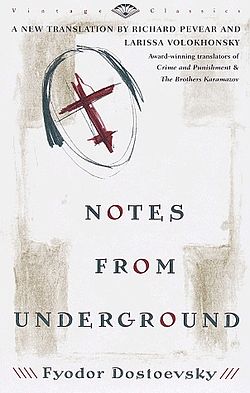
Unsettling Chapters: Notes from Underground

“I am a sick man… I am an angry man. I am an unattractive man.” Is there a better opening line in literature?

Most importantly, this sentence establishes the tone that defines Fyodor Dostoyevsky’s Notes from Underground. Considered to be the first modern novel, there is no other work that as deftly captures the anxiety of despair and inadequacy.

Our narrator, the Underground Man, guides us through a dark and unpleasant world, recounting his drab civil servant’s life and the many insults that have shaped his misanthropy. Through this, he unearths the philosophy of the underground. It is a grim, but honest view, and with no connection to the surface world, the Underground Man simmers in his despair.

Actually, I’m not sure “simmer” is a strong enough word. The Underground Man doesn’t experience pain so much as he consumes it. He recalls past injustices when there is no fresh ones to sustain him. Misery exudes from his pores, his breath, his clothes, and rather than opening a window, he basks in the stench of his humiliation.

But his ordeal has only begun.

We come to section two, “Apropos of the Wet Snow,” in which the true horror is set in motion. Here, we get more action and less confession. Following a series of insults, the Underground Man encounters a young prostitute, Liza, and for a time, redemption—and through redemption, meaning—seems possible.

Inevitably, though, you remember that you’re reading Dostoyevsky, and things become even darker than they were before. Watching the Underground Man abase himself is one thing. Watching him do it to another is harder to bear.

But of course, this is necessary to Dostoyevsky’s theme. Denigration is a team sport, and it relies on the consent of both victim and aggressor. That’s why, sadly, in the cycle of abuse, victims become abusers. We need Liza in the story to serve as witness to the Underground Man’s suffering. We need her to offer him redemption, or else he remains only a victim (which would be neither believable nor compelling). Ultimately, he is a conspirator in the surface world that has forced him underground.

And with true Dostoyevsky flair, Liza reminds us that there is no bottom. We meet the Underground Man, and we believe him to be the nadir of humanity. And then he meets Liza. We can only imagine what other characters are waiting offstage, unseen, but their suffering no less palpable.

So, this book may not be everyone’s mug of Russian Caravan, but it should still make your to-read list (especially if you’re a fan of unsettling literature). Notes from Underground is a link to the past, as it shows us that modern anxieties aren’t so new. It’s a classic work of existential philosophy. And artists and analysts alike should read this as a guidebook to the darkest shadows of the subconscious.

Notes from Underground is available as a free ebook through Project Gutenbeg.

Unsettling Chapters: House of Leaves

We are all familiar with the parameters of dream logic—the mental space where things are out of place or time but follow an alternative, interior logic. You know, like you’re catering a dinner for all your ex-girlfriends in a gothic castle, and for some reason Dog the Bounty Hunter is pitching you a show about vigilante sea lions. You wake up and wonder: “Why did that make sense?”

It’s a fun diversion that is, unfortunately, difficult to replicate in waking consciousness. But you can come close by reading Mark Z. Danielewski’s House of Leaves, a 2000 horror novel that is more of an entity than a book.

Designed with multiple fonts and colors, footnotes within footnotes and text running backward, forward, upside down, even spiraling, the physical layout of the text manipulates the novel’s pacing and creates a somewhat interactive experience.

It’s probably as close as we’ve come to reading with 3-D glasses.

The narrative is equally layered and complex, and academics have taken multiple stabs at this book. I would guess it’s had the most scholarly treatments of any horror novel since Frankenstein. Therefore, I won’t even attempt to offer an academic account, as I don’t have anything particularly profound to say on that front (and would bore myself to tears in the process).

What I can speak to is the effect Danielewski creates by inviting the reader into a story that they can’t quite trust. We have multiple unreliable narrators; the ever-shifting dimensions of a house; drug-impaired testimony; unverifiable videotapes; and the ravings of a half-mad blind man. (He also borrows the Lovecraftian theme of geometry-induced madness, not to mention a mysterious tome.)

Can we trust what we see and read? Hell no. And that’s why House of Leaves is so unnerving.

I think of it as a literary haunted house. Every October, people line up outside strip malls, warehouses and amusement parks to navigate dark, disorienting hallways. They know they won’t be harmed, but will experience the thrill of uncertainty.

The same with House of Leaves. It elicits a visceral reaction in a way few other books can. We’re aware of what Danielewski is doing. When we need to rotate the book to read the text, we know it’s to recreate the impossible geometry of the staircase. When there is one word of text on a page, it’s to replicate the cavernous quality of the basement and to force us to read slower.

But we’re affected just the same, as when we’re knowingly manipulated inside a haunted house.

House of Leaves is not a quick read. It is an experience. If you started reading it today, I don’t know that you could finish it by Halloween. But I feel confident in saying that you’re not supposed to read it that quick. This is a book to be absorbed. It should age along with you.

Read correctly, you will internalize the disorientation. You will want to measure the length of every hallway in your house to find inconsistencies. To make sure, every day, that the dimensions of your world haven’t changed while you were sleeping.

Because in Danielewski’s world, they do change. Sometimes they’ll shift right under your feet, and they might even swallow you whole.

Unsettling Chapters: All the Names

As I’ve expressed in previous posts, loss of one’s identity is one of the more unsettling outcomes a story can provide. With life such a fleeting thing, rarely does one’s name live far beyond their years.

Fair enough. To be lost to the ages is understandable, but for some, the worst fate is to be forgotten in your own time. It’s a unique flavor of despair, born of an imbalance between social needs and social disconnect.

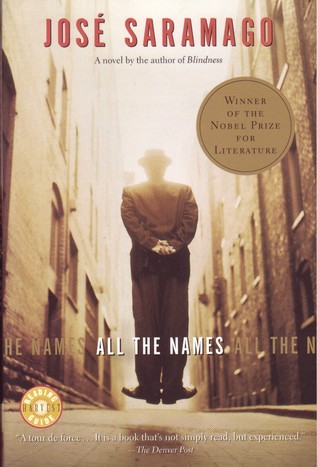
Nowhere is this curious space more poignantly explored than in José Saramago’s All the Names.

This book was published a year before Saramago, best known for the novel Blindness, won the Nobel Prize for Literature. All the Names is worthy of such honors.

The protagonist, one Senhor José, works in a nameless city (a stand-in for Lisbon in Saramago’s native Portugal) as a low-level clerk. Similar to Dostoyevsky and Kafka, Saramago presents us with a character caught in the gears of a drab, oppressive machine of unknown origin and inexplicable intent. He works for the Central Registry, which tracks the births, marriages and deaths of all citizens. Every life is reduced to an index card bearing these dates. The job of the Central Registry is to create, update and file each card.

“We all know that, however long old people may last, their hour will always come. Not a day passes without the clerks’ having to take down files from the shelves of the living in order to carry them to the shelves at the rear…”

José, who actually lives at the Registry building, makes nightly sojourns within its stacks. He hopes to escape his “bureaucratic alienation” by searching for meaning among the necropolis of index cards. Then one day, he finds something else. He becomes fixated on the card of an anonymous woman, and begins a clumsy search for her throughout the city.

Of course, what he’s really doing is working through an existential crisis. Or some other anxiety. The archives in the Central Registry are so large that clerks have become lost in their labyrinth. The metaphor is apt for José’s anxious mind. One bad thought, and then another. Disaster lurks eternal.

It’s unsettling to think that, in the end, we’ll be little more than forgotten statistics. The same goes for everyone we love and care for. We will all be forgotten. Time will make sure of that. What’s worse, though, is to feel societal mechanisms imposing anonymity while we’re still alive. To become a living ghost.

What makes All the Names successful, as with all existentialist writings, is that the answers seem more like questions. So, what is life if but a few dates typed onto an index card? Is there meaning or merely statistical data? Like Albert Camus, Saramago reminds us that the answer isn’t important—or even attainable. The meaning lies in the pursuit of, well, meaning.

Saramago empowers us with his narrative. He reminds us that in the face of mortality, victory is not an outcome. Victory is the fight itself. It is Senhor José taking those first bold steps into the archives, dwarfed by mountains of faceless information, to turn an index card back into a person.

I’m reminded of a favorite line from Camus’ The Plague: “And indeed it could be said that once the faintest stirring of hope became possible, the dominion of plague was ended.”

Indeed.

Unsettling Chapters: Pseudopod

The apocryphal saying goes, “May you live in interesting times.” Indeed, the publishing world is in something of a fugue state these days (or should we say the past decade).

But rather than a curse, I consider it a good thing. I’ve found that I prefer reading magazines and newspaper articles on my Nook.

Programs and Web sites like Calibre, Byliner and Instapaper have made long-form journalism accessible to wider audiences, and audio books and podcasts have opened up new literary avenues for both writers and readers.

The latter, in particular, have made it possible to “read” while driving or drifting to sleep.

And when it comes to audio horror, Pseudopod stands head and tentacles above the rest.

Launched in 2006, Pseudopod recently broadcast its 300th episode… and the body count continues to rise. Featuring weekly short stories from contemporary horror authors, occasional flash pieces and periodic classics, the podcast has something for everyone.

There are brilliant tales of ultraviolent, existential horror (“Counting From Ten,” “The Duel”); grim philosophy (“Some Things Don’t Wash Off,” “What Dead People Are Supposed to Do”); dark fantasy (“Goon Job,” “Full Moon Over 1600”); adventure, both internal and external (“The Primakov,” “The Greatest Adventure of All”); and Lovecraftian weird (“Hometown Horrible,” “Jihad Over Innsmouth”).

Those are only 10 of the 300-plus stories Pseudopod has produced, and the chills keep coming. Former editors Mur Lafferty and Ben Phillips seem like old friends, and host (and an initial contributor) Alasdair Stuart is in the class of Rod Sterling and Jack Palance. I’m awed, weekly, by his haunting delivery and thoughtful post-story editorials. Even when the featured story is so-so, Stuart’s commentary alone is worth the listen.

The podcast is free, and may be downloaded through a program such as iTunes. You can also access the entire archive of stories at the Web site.

Despite being free, Pseudopod is a professional, paying market, and it runs on donations from listeners. My suggestion, especially if you’re new to the program, is to order the archive discs (which also make great gifts). Sure, I’ve got my favorite episodes on my computer, but by purchasing the discs, I have a permanent hard copy and have supported a great cause at the same time.

Other must-listen stories include “Raising Eddie,” “Bag Man” and “The Hand You’re Dealt.” But with a few hundred stories to choose from, this podcast has something for everyone’s Halloween hit list.

Unsettling Chapters: The Church of Dead Girls

Frequent readers have probably noticed a pattern among the entries of Unsettling Chapters. That is, the overt theme of a story is more often a sleight of hand. Put another way: The thing is not really about the thing.

Lovecraft’s Old Ones are a manifestation of his insecurities. McEwan’s transgressions are a front for the anxiety of individuality in the face of rigid and arbitrary social mores. Murakami’s gore portrays mental disturbances rather than literal scenes.

And so it goes with Stephen Dobyns’ 1997 mystery, The Church of Dead Girls.

As with Birdman, Mo Hayder’s debut discussed on Oct. 5, the ghoul in this novel uses human corpses as an artistic medium. But while The Church of Dead Girls offers terror and thrills, it also has high-minded literary aspirations.

The thing is not really about the thing.

This is less a whodunit and more a sociological work. What are the fears and biases of small-town folk? What prejudices are lurking in the shadows? A rash of murders and missing teenagers brings them all to the surface. Things get ugly.

The Monsters Are Due on Maple Street” ugly.

Once threatened, the townsfolk begin pointing fingers in every possible direction. This compelling arc makes for a fascinating read. And gruesomely detailed horrors make this a must-read for Halloween.

Speaking of fingers, whatever happened to those missing left hands?

Read the book and you’ll understand.

Parts of this post are adapted from an earlier article of mine, “Thirteen horrifying reads for Halloween,” which appeared in the Boulder Camera in 2008.

Unsettling Chapters: The Wasp Factory

Welcome to The Wasp Factory, where by the age of 16 Frank Cauldhame has already killed three children, including his younger brother. These days the teenager passes his time killing animals on the tiny British island he shares with his father.

Other favorite activities? Long walks on the beach, going to punk-rock shows with his drunken dwarf buddy, Jamie, and gathering wasps in his elaborately engineered torture chamber.

This 1984 debut from Scottish writer Iain Banks stirred up a mess of controversy when it was initially released, and remains a dark and twisted read nearly a quarter century later.

Another great example of effective first-person POV, the narrator’s tale disorients and disturbs. No doubt, this is one of the greatest works of transgressive fiction I’ve ever read.

Like most works of suspense, the terror comes from what may happen rather than what actually happens. In this case, the novel’s tension — and greatest literary device — is Frank’s sadistic older brother, Eric.

Throughout the book, Eric, who has just escaped from a mental hospital, calls his younger brother from pay phones, each time closer to home, each time more psychotic, threatening to kill Frank upon his return. It’s a classic example of the shadow figure. We have a serial killer narrator, and he’s not even the craziest member of the cast!

Or is he…? The tension builds to a violent climax with a shocking twist that reframes the entire story. It’s the kind of ending that makes you want to go back to the beginning and read it all over again.

Parts of this post are adapted from an earlier article of mine, “Thirteen horrifying reads for Halloween,” which appeared in the Boulder Camera in 2008.

Unsettling Chapters: Lolita

When I think of what was controversial in the 1950s, I think of Elvis being filmed from the waist up. So, I went into Lolita thinking it couldn’t possibly be as scandalous as advertised nearly six decades later.

Wrong. Lolita makes To Catch a Predator seem like child’s play (so to speak). As oddly hilarious as it is disturbing, Nabakov’s classic is one of the most insightful accounts of pathology (what many refer to as Humbert’s unreliability) I’ve ever encountered, and still has the power to make the most hardened reader (i.e. me) queasy.

Reading this through the lens of a literary representation of mental illness, it’s easy to see Humbert’s source for pedophilia — his stunted sexuality from an age-appropriate childhood romance left unconsummated and forever associated with death and loss (and run-on sentences).

More subtle, though, is Humbert’s troubled conscience, which vacillates between self-awareness and self-fulfillment. Through carefully dropped hints, we realize that he is aware of Dolores’ vulnerability and her lack of interest in their adult activities. He knows what he’s doing is damaging the poor girl, but more often than not, his needs hijack his decisions.

The consequences fall squarely on the not-so-frail shoulders of 12-year-old Dolores Haze, who endures his abuse into her teen years. (Side note: Through Lolita, Nabokov paints a clear portrait of borderline personality disorder, which makes her story even more tragic.)

Still, through Humbert’s rationalizations, however twisted or self-serving, he does try to protect his stepdaughter in his own clumsy way. While his selfishness trumps all, his moments of lucid affection make him as close to sympathetic as can be (sympathetic enough that we’re rooting for him in his showdown with creepy Quilty).

What a tremendous book, and perhaps the greatest work of transgressive fiction. Nabakov’s play with language is remarkable (especially considering English was his second tongue), and the pain and desperation sweating through the pages of this novel make it timeless.

Troubling, complicated and a work of genius, this is an unsettling read for the ages.

Unsettling Chapters: The Keep

Most books inspire me to write, either because, “Damn, that book was so good, I want to do that, too,” or “Damn, I could do waaay better than that.”

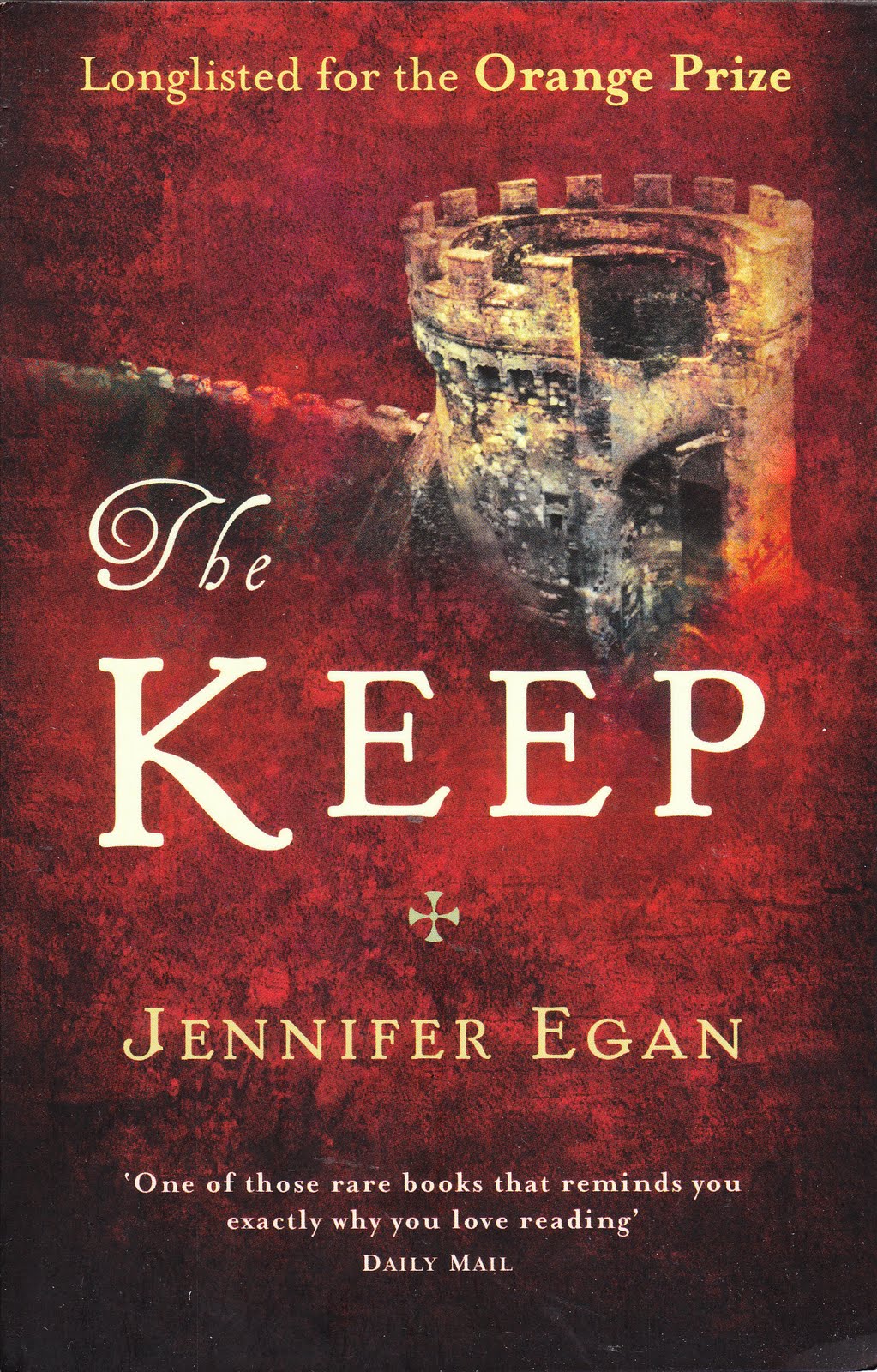
Then there are books like Jennifer Egan’s The Keep, which make we want to give up writing because nothing I could ever produce would come close to the genius of this book. The Keep has more levels than Scientology, and I was awed by the way Egan manages complex storylines and plot points.

The Keep begins as a gothic horror novel with a literary bent ala Joyce Carol Oates or Edgar Allan Poe. But soon, we learn that it’s a story-within-a-story. The primary storyline is actually the product of an inmate in a prison writing group (or is it more real than that?).

I often find metafiction horribly pretentious, but in Egan’s hands this device achieves a deeper complexity of character. The “fictional” tale is almost a confession, or at least catharthis, and the way the two narratives play off each other creates unbearable tension.

Finally, Egan includes a third narrative that completes the cycle of co-dependency that runs through the novel. Ultimately, this is a story of identity, exploration and imprisonment. What is real or not real doesn’t matter much. The question to answer is: What do we do with the demons that haunt us?

Or rather, Where do we keep them?

The best part is that Egan leaves these questions (and these narratives) half answered. There are no neat, tidy endings. No sunsets, no profound philosophical conclusions. There are only troubled, complex people in turn confronting and running from their ghosts.

For a book with so much surrealism, the lack of resolution at the finish gives it a stunning verisimilitude: Did we really believe we could ever completely outrun our ghosts?

At the end, I wanted the story to go on and on, which is the magic of any great novel. It leaves you imagining the characters as real people and you want to know how they turn out.

I was also left wanting for a map to figure out how Egan navigated the dark, twisting corridors of this complex, yet refreshingly enjoyable novel. Mark this down as a “must-read.”

Interestingly, there is a film version in the works. I’m not sure the narrative will hold up because of the limitations of cinema, but it will be worth a look. Just be sure to read the book first.

Unsettling Chapters: Joyce Carol Oates

Nobody does literary horror better than Joyce Carol Oates, and nowhere is the fear more palpable than in her 1994 collection of psychological terror, Haunted: Tales of the Grotesque.

Among the unrelenting terrors:

The title story, in which a woman recalls a haunted farmhouse from her youth, where she and her friend encounter something much more sinister than a ghost.

“Don’t You Trust Me?” an unsettling account of an illegal and controversial medical procedure — and the exploitation it brings.

And the disturbing “Extenuating Circumstances” is a mother’s confessional that reveals its excruciating conclusion like a mummy unwrapping its bandages (think David Foster Wallace’s “Incarnations of a Burned Child”).

This collection is also packed with signature Oates violence and revenge, and the tale of a macabre grocery store as discomforting as flakes of glass beneath the skin.

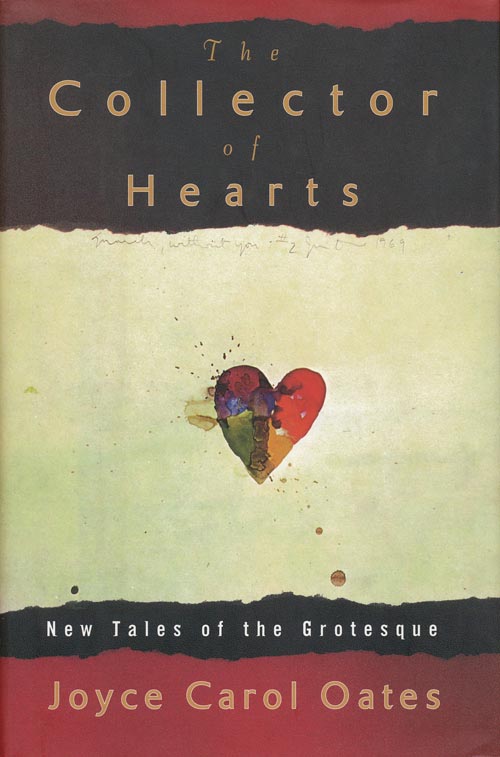
Diehards should also read the sequel, The Collector of Hearts: New Tales of the Grotesque, which has its moments, but doesn’t stand up to the original. The book starts strong, with the Twilight Zone-ish “The Sky Blue Ball,” which I think I devoured in a single breath. Haunting and mysterious, this one’s got a Creep Factor of 10.

She hits this high note again with the title story, a classic bit of Oates’ caught-in-the-spiderweb nightmare. From the start, we can guess the fate of our protagonist. And we ache throughout the piece, hoping it goes the other way.

Some of her other collections include The Female of the Species: Tales of Mystery and Suspense, a collection of short stories about female killers, and The Museum of Dr. Moses.

And fear not, fans of Joyce Carol Oates: We’re not through with the author just yet. We have another Oates entry planned closer to Halloween.

Parts of this post are adapted from an earlier article of mine, “Thirteen horrifying reads for Halloween,” which appeared in the Boulder Camera in 2008.