nonfiction

Review: The Jefferson Rule

The Jefferson Rule: Why We Think the Founding Fathers Have all the Answers

David Sehat

Cue the broken record. From now until November of next year, we’re going to hear a lot about the Founding Fathers, The Jefferson Rulethe Constitution and its authors’ intentions. You can be sure that Thomas Jefferson will be cited a time or two million. But be they coming from the right or the left, the middle or the fringe, all appeals to Revolutionary politics will have two things in common: they will be accurate and they will contradict each other.

The notion of the Founding Fathers as a single intellectual entity is post hoc myth-making, according to historian David Sehat. Though we have attached a unified set of principles onto the architects of our government, Sehat writes, “The founding era was, in reality, one of the most partisan periods of American history.”

In fact, it would be quite recognizable to the cable news generation. The Constitution was not a consensus of guiding principles, but rather a compromise, much like today’s Congress in which legislation that does manage to get passed is mutilated beyond recognition.

Likewise, there was dispute over the intention of the Constitution before the ink had dried on Rufus King’s signature.

“The Founders had agreed on the wording but did not necessarily agree on what it meant or even its purpose,” Sehat writes.

This was evidenced by the feud between Jefferson and Alexander Hamilton, the former believing its intent was to limit federal power, the latter believing it emboldened a national government.

Jefferson won that battle, and with his presidential victory, “he rhetorically turned the founding era into one of political purity that he himself had channeled.” (Ironically, Jefferson eventually incorporated many of Hamilton’s ideas, and his Louisiana Purchase, which doubled the size of the country, was viewed by many at the time as unconstitutional.)

Though the myth was complete, the debate was not. The struggle between states’ rights and federal power festered until it went septic in the antebellum era.

The slavery issue was the litmus test for the Constitution. The Dred Scott ruling confirmed that the protections of the Constitution did not extend to slaves, who were considered property. A constructionist reading of the document would render the federal government powerless to intervene on slavery, and in addition to advocating for states’ rights, Jefferson himself had owned slaves, creating a challenge for Lincoln in his debates with Stephen Douglas.

With the outbreak of the Civil War, Sehat writes, the litmus test was failed. “Constitutions are supposed to keep citizens from killing one another,” he writes. “But Americans killed Americans on a spectacular scale in the Civil War. And the Founders had left little guidance on what to do about it.”

The framers lost relevance for a time after the war, but like a pop group that invents a revolutionary sound, then falls out of favor, the Founding Fathers made a comeback in the 20th century. They have since become sacred cows — they are referenced on the campaign trail and their words wielded as weapons, but they are never questioned.

That’s an issue worth raising, Sehat writes. “Because the Founders do not offer a stable reference to make sense of the present, their presence in American political debate has long been problematic.”

The Jefferson Rule is a stellar work of historical research and narrative storytelling. Sehat’s prose flows with an uncommon ease, at times reminiscent of Nathaniel Philbrick. But he also digs into the philosophical ramifications of his subject. It’s not simply a revisitation of historical events, but a work that drops us into the Revolutionary era to see that the Founding Fathers were not a like-minded council of sages with all the answers.

The words of the Constitution were not etched on stone tablets from on high, but rather drafted by a group of headstrong men who clashed with one another, varied greatly in their viewpoints and were capable of the same grandstanding, short-sightedness and pettiness as today’s politicians.

This book brought to mind the timeless essay by Stephen Jay Gould, “The Creation Myths of Cooperstown,” which studies the psychological need for origin stories. It’s an issue worth exploring, both in Gould’s classic essay and in Sehat’s book.

If you’re at all interested in political debate or American history, The Jefferson Rule is required reading.

Review: American Hysteria

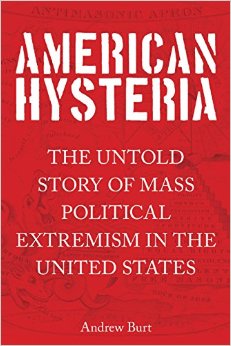
American Hysteria: The Untold Story of Mass Political Extremism in the United States

Andrew Burt

For most, Jade Helm 15 may sound like the newest MMORPG, but for Chuck Norris, recipient of many kicks to theAmerican Hysteria head, the upcoming military training exercise is something straight out of Gray State (in other words, B-grade survivalist porn).

“It is neither over-reactionary nor conspiratorial to call into question or ask for transparency about Jade Helm 15 or any other government activity,” Norris wrote in an op-ed for WND.

Sadly, it’s not just over-the-hill actors. Some politicians have been swept up in the paranoia as well. It’s disappointing, but not surprising. As Andrew Burt writes in his new book, American Hysteria: The Untold Story of Mass Political Extremism in the United States:

“Every few decades, a striking political phenomenon emerges, based upon the fear that a secret network has infiltrated American society and threatens destruction from the inside. Even more fascinating is the fact that this type of movement is not relegated to the fringes of the political arena — it routinely takes center stage.”

While there are plenty of examples to choose from, Burt focuses on five less-than-dignified instances of American witch hunts: the anti-illuminati and anti-mason movements from the country’s earliest days to 20th century’s Red Scare and its bastard sequel, McCarthyism, and finishing with the anti-Islam sentiment of the modern day (specifically, the anti-Sharia movement).

In this excellent study, Burt seeks the common ground between these manias. What he finds, not surprisingly, is that “hysteria arises at times of profound change in America’s national identity,” predictably when a fading social group is losing its leverage. They perceive an outside threat that has penetrated the establishment.

Jade Helm 15 is a perfect example. Since the Civil Rights movement, a culture war has been festering, particularly among aging white men threatened by new demographics and the embrace of multiculturalism.

This war went nuclear when Americans elected a black president who was acquainted with Islam. The enemy wasn’t at the gates — it was inside the White House!

So, despite the fact that routine military exercises have been occurring in Texas for years, under the direction of a black commander-in-chief, ostensibly sane politicians are buying into Norris’ nonsense.

This, Burt writes, is what separates hysteria from extremism. Extremism is always present, but generally marginalized. Political and cultural battles can be contentious, but they typically occur within an agreed-upon scope of reality.

The time to get nervous is when legitimate mainstream figures get caught up in the crazy (e.g. a viable presidential candidate believing that Obama and the CIA are plotting a takeover of Texas and Utah).

In other words: It’s time to get nervous.

But back to Burt. There is no knocking his narrative and reporting skills. American Hysteria is well-researched and -written, and I hope to see more from him in the future. He has written for such outlets as U.S. News & World Report, the Atlantic, Slate and Politico, but this is his first book-length work. My only knock on this book is the overlap between some of the episodes (e.g. the Illuminati and the Masons, the Red Scare and McCarthyism). I would love to see Burt take on other manias, such as the Satanic Panic, perhaps in later books.

After giving us the history of hysteria, Burt goes one further and offers us tips in handling the manias that haven’t happened yet. “The first rule of hand in approaching movements of hysteria is thus to accept them for what they are, rather than dismissing them outright, as is so often the temptation.”

As much as I am amused by Norris’ rants, it would be wrong to dismiss his views out of hand — not because there is any substance to his op-ed, but because there is something important to be learned from the subtext.

“Hysteria, after all, is about exclusion — it is the story of groups of men and women, like McCarthy and his supporters, confronting profound changes within American society and then excluding other groups as a result.”

To prevent the next Red Scare, we’ve got to recognize it in its infancy, understand the true interests of its followers and confront the unreasonable with reason.

It may work, it may not. The upshot of those times when it doesn’t work is that it makes for colorful history — a history skillfully explored by Burt in this must-read book. I can’t think of anything more patriotic than reading this book in time for July 4, to learn from our missteps to avoid repeating them again and again.

Review: “No One Helped”

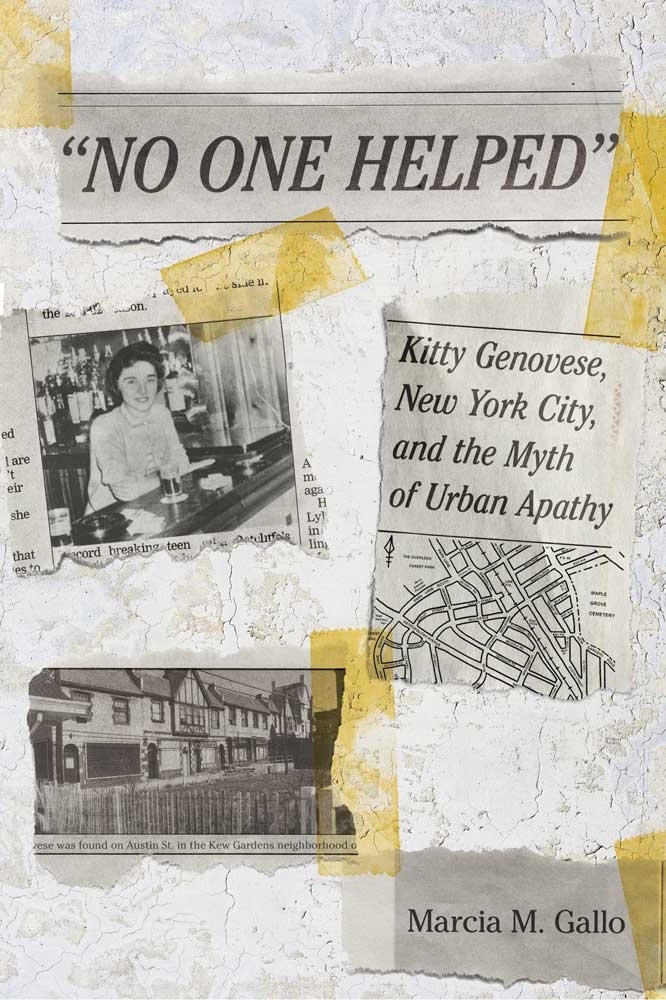
“No One Helped”: Kitty Genovese, New York City, and the Myth of Urban Apathy

Marcia M. Gallo

From an early age, I longed for the big city life. Growing up in a sleepy township that didn’t even have sidewalks will do thatNo One Helped to a kid. To dissuade me from fleeing the Rust Belt for bright lights and tall buildings, my parents served up the tale of Kitty Genovese, the New York woman who, in 1964, was famously murdered on a Long Island street while everyone just stood back and watched her die.

It terrified me. In my mind, I envisioned a crowded street, broad daylight, pedestrians having to sidestep this dying stranger as she pleaded with them for help.

It wasn’t difficult to imagine. Though not the best time for New York City, the 1970s and early ’80s was a fruitful period for dystopian cinema set in the metropolis. My impression of the city was shaped entirely by Escape from New York and Fort Apache, the Bronx.

Though the story of a woman left to die on the sidewalk stayed with me, I never actually learned her name until college, when we studied the case in psychology class. Many psychology classes, actually. At the time, the prevailing narrative was still treated as gospel: 38 neighbors watched and did nothing as Winston Moseley assaulted Genovese, left, assaulted her a second time, left, and came back a third time to finish the job.

It’s hard to fathom how this could happen, and of course, it didn’t. At least, not the way it was reported in 1964, and certainly not the way it had been mythologized by the time it reached my ears as a cautionary tale. A more accurate telling was done by Kevin Cook in 2014’s Kitty Genovese: The Murder, the Bystanders, the Crime that Changed America.

The focus of Marcia M. Gallo’s “No One Helped”: Kitty Genovese, New York City, and the Myth of Urban Apathy is not so much on the murder as the social incubator in which the narrative of urban apathy was spawned and evolved — and how, by focusing on the witnesses rather than the victim or perpetrator, Genovese “had been flattened out, whitewashed, re-created as an ideal victim in service to the construction of a powerful parable of apathy.”

The biggest omission from Genovese’s story, writes Gallo, a history professor at the University of Nevada, Las Vegas, is that she was a lesbian. Being young, pretty and white made her the perfect media martyr, so details of her romantic preference would have been inconvenient to the “ideal victim” narrative in 1964. As the story of her murder took on a life of its own, she became a nameless victim of urban decay — more of a plot device than a character in her own horror show.

“No One Helped” is on the shorter side, but Gallo deftly packs in a lot of information — and unpacks five decades of history. The chapters are like linked short stories, exploring in turn the history of Kew Gardens and the racial tensions of the time, the changing media landscape and the marketability of an erroneous New York Times article that fumbled the facts but resonated with “white flight” suburbanites.

As for Genovese, Gallo writes, the article “rhetorically reduced her to the chalk outline left on the sidewalk at a crime scene after a body has been removed.”

About those 38 witnesses? Only four were actually called to testify at the trial, and even fewer were aware that Genovese had been stabbed. The Times failed to mention the fact that Moseley’s initial assault was interrupted by a neighbor’s intervention, and his second assault took place in a darkened back hallway beyond the vantage point of any neighbors.

Gallo writes, “In all of the accounts that have followed in the story’s wake, what has rarely been noted is that there is only one actual eyewitness to Genovese’s death. That person is her killer, Winston Moseley.”

In reclaiming Genovese’s identity, Gallo reveals her personal connection to the case. She does so in a tasteful, informative manner, steering clear of navel gazing and drawing attention instead to the resonating significance of the story.

For all the horror of the Genovese murder, and its aftermath, it also gave birth to the 911 emergency response system and community policing efforts. It furthered the movement to reexamine our societal acceptance of intimate partner violence (some witnesses had dismissed the assault as a “lover’s quarrel”).

And it exposed racial bias in crime reporting. Just two weeks earlier, Moseley had assaulted another woman, murdered her and set her on fire. “Significantly, no photographs of Moseley’s earlier victim, Anna Mae Johnson, a young black woman, ever appeared. Within weeks she would fade from most popular versions of the story, as would her killer,” the author writes.

Most of all, for Gallo, the legacy of the Genovese murder still matters “because it raises the central question of how we engage with those around us, individually and collectively, when they need our help.”

Digging beyond the murder and the myth, Gallo has penned a remarkable portrait of Genovese and her enduring legacy a half-century later. Her murder inspired an entire branch of psychology, but perhaps her lasting impact on social science will be the study of media myth-making. No matter the fables and fallacies that have emerged, the impact of Genovese has endured.

I’ve been on the Long Island Railroad, and at the Kew Gardens stop, it’s impossible not to look down at the nondescript parking lot and the neighboring houses, all crammed together, and wonder how this could have happened.

After 50 years, we know it happened differently than we’ve believed, but the true story of the assault is still as brutal and horrifying, if different, than we imagined. Gallo succeeds in redirecting our attention from the “witnesses” to the victim, who became a footnote to the fable. “No One Helped” restores the individual who existed before the chalk outline.

Recommended Reads: Rich People’s Movements

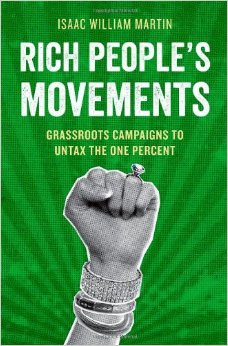
Isaac William Martin

Rich People’s Movements: Grassroots Campaigns to Untax the One Percent

Though originally published in 2013, tax season is the perfect time to reissue this compelling look at the anti-tax movement in America, as documented by rich peoples movementsa sociologist specializing in public policy and social protest. Rich People’s Movements begins with the Tea Party protests of 2010 and traces the history of anti-tax sentiment back to the Sixteenth Amendment. More than mere history, this book examines the ways the affluent borrowed the tactics of the poor and powerless, who, without the ability to confront power with money and influence, took to the streets to make their voices heard.

Why would those with power and influence rely on a protest movement? Martin answers this question and many more, such as why the working poor will sometimes rally to the defense of the 1 percent and their economic policies.

Also available is Martin’s new book, Foreclosed America, co-authored with Christopher Niedt. This is a collection of portraits of Americans who have lost their homes to foreclosure since 2007 — and a look at the housing crisis that still affects our economy and way of life.

Review: Words Onscreen

Words Onscreen

Naomi S. Baron

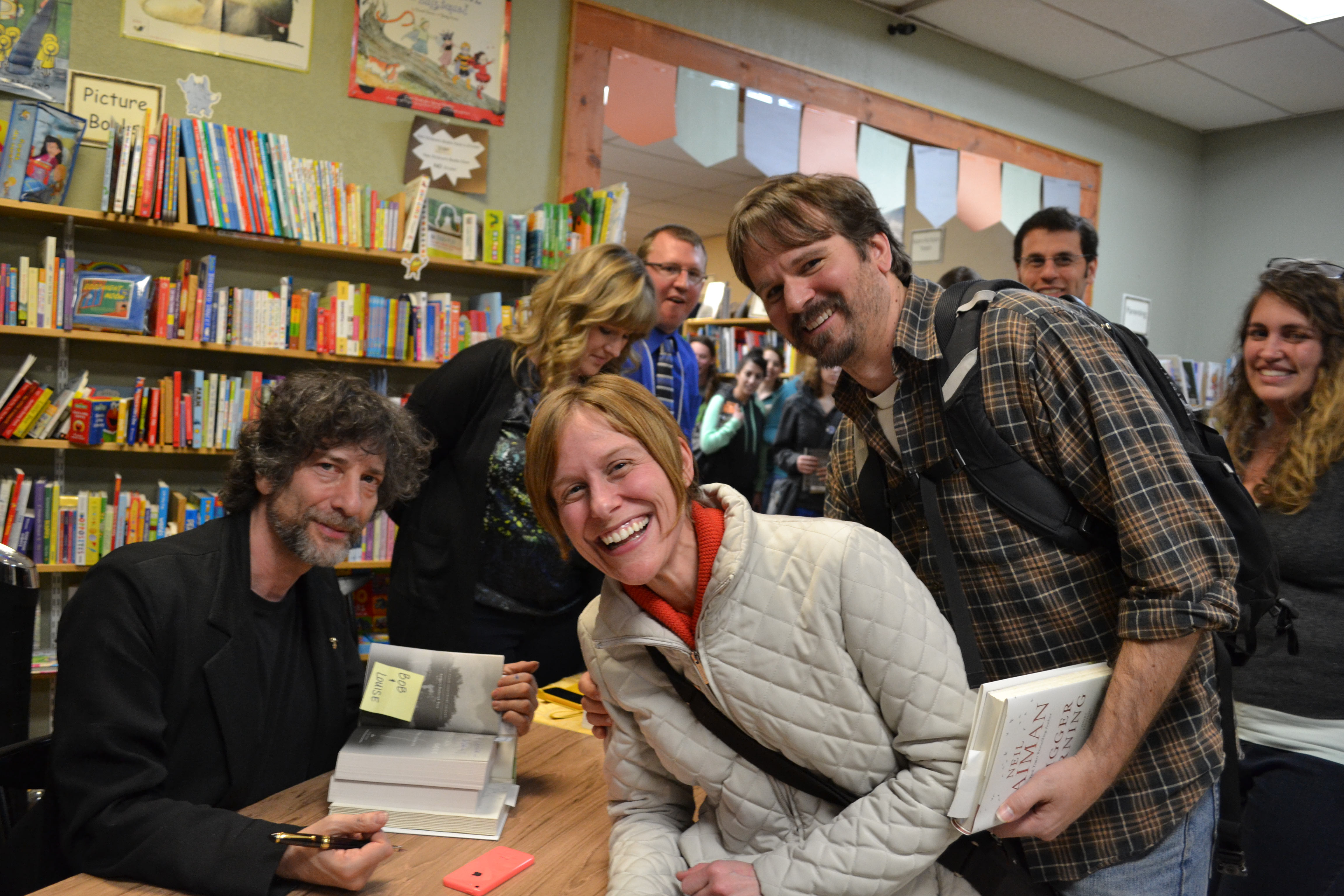
On Feb. 6, I waited in the cold for 7.5 hours to meet author Neil Gaiman at Old Firehouse Books in Fort Collins, Colo. An estimated 2,000 fans bravedWords Onscreen the elements to have the author of The Sandman graphic novels, Coraline and American Gods autograph his new hardcover collection, Trigger Warning: Short Fictions and Disturbances.

Despite the wait (and the fact that I was terribly under-dressed), everyone was jovial, and it felt more like a bibliophile block party than a reception line. Any weariness I may have felt was quickly (and repeatedly) dismissed with an idealistic sentiment voiced by many in attendance, “Isn’t it great to see this many people waiting in line for a book?”

Indeed, it was this very love of books that compelled me to read Naomi S. Baron’s Words Onscreen: The Fate of Reading in a Digital World, an impressive work of scholarship and social commentary by this professor of linguistics at American University.

One of Baron’s professed interests is “electronically mediated communication,” and Words Onscreen combines research, anecdote and history to explore the differences between the printed and digitized word. This isn’t a trend piece, but a wide-reaching study on reading, beginning with the inquiry that “if eReading is less well suited for many longer works or even for short ones requiring serious thought, what happens to reading if we shift from print to screens?”

Baron takes us to some expected places (studies on digital vs. print reading habits; the effect technology has on our brains; the digital democratization of information; emerging social norms for electronic devices) and some unexpected ones (the history of anthologies and abridged editions; the slow reading movement; the impact of the scroll bar on reading habits).

Scrolling and reading, if you’re curious, leads to “worse comprehension” of content.

Though Baron’s scope is wide, she never loses sight of her target. She successfully threads each narrative sojourn into the conversation of how we engage with text. One of her deeper philosophical meanderings concerns the definition of reading itself. Is the act of reading simply scanning our eyes across the page? What about those passages whose complexity or sheer beauty cause the reader to set down the book and meditate on those words? What about re-reading? Studies show that pausing while reading and re-reading leads to better comprehension of the material (not surprisingly).

Research is important, as it informs best practices for teaching and learning, but Baron admits the difficulties with measuring reading comprehension. Mere content recall provides only plot summary, and deep understanding takes both time and contemplation. Take, for instance, Gogol’s classic novel, Dead Souls.

“Some of the benefits of literature come from discussions with others or personal reflection at quiet moments. Payoffs may not surface until years later when, having lived and experienced more, we discover the relevance of Gogol’s world to ours. Try measuring that.”

Indeed.

Like many academic books (as opposed to general nonfiction), Baron tends to over-support some of her conclusions, citing studies with overlapping information, but that’s to be expected. The author has many insightful things to say throughout the book, but there’s not much in the conclusion that would be news to an academic audience.

For this, I don’t blame the author, but reality. There’s no closing the barn door on the Kindle or Nook (on which I read my digital galley of Words Onscreen), and it’s hard to predict the direction of accelerated technology. Also, there are many positives to digital reading to weigh against the negative, from minor conveniences (not having to carry five books on an international flight) to those of great importance (the facilitation of increased global literacy).

Baron instead advises instructors and avid readers on how to navigate the digital-print hybrid. Her criticisms of e-reading are fair and supported by research, and her tone is never melancholic or luddite. The ultimate takeaway from Words Onscreen is that the content matters more than the container, although Baron also makes a compelling argument for the container as totem.

For the roughly 2,000 bibliophiles in line with me at the Neil Gaiman signing, the container was still something of value: a beautifully printed and16277386370_74c41c8a45_o bound edition with a personalized signature in permanent ink.

As Baron points out, it’s not just the text on the pages that matter. We fall in love with the smell of books, the crispness of the paper, unique typefaces that digital readers can’t reproduce. We can underline, highlight, write in the margins. Some keep their books in pristine condition, while others dog-ear, fold and break-in a book like they would a new baseball glove. Their utility extends beyond the reading. Bookshelves provide memories for the reader, a conversation spark for guests and ready access to favorite works.

There is something lost in the translation from print to digital.

For me, it calls to mind Harlow’s monkeys. If all they needed was food, then the monkeys wouldn’t object to curling up with a wire mother. Except, they needed the nurturing touch of the cloth mother. For the same reason, meal replacement shakes or futuristic food pills will never take the place of an actual dinner, because eating is not just about the absorption of nutrients.

With technology advancing at a bullet’s pace, who knows what will come of books in the future. It’s clear from Baron’s research that the format of what we read affects how we read, but it’s hard to predict where that will take us.

Wherever we end up, Words Onscreen should serve as an important guidebook. It’s a wonderful and important book, no matter how you read it.

Flawed Apologies

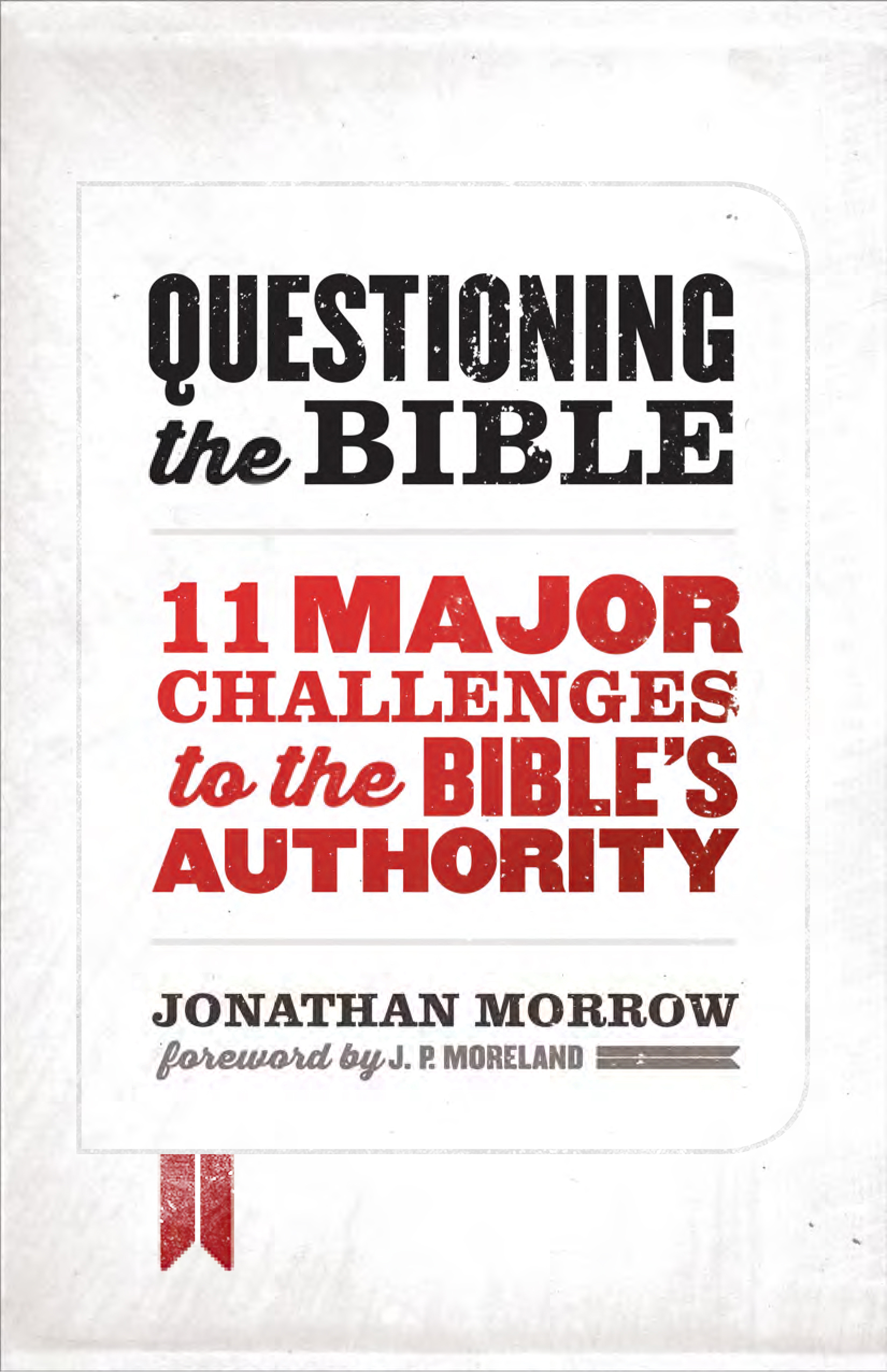
Questioning the Bible: 11 Major Challenges to the Bible’s Authority, Jonathan Morrow

Did God Really Command Genocide?: Coming to Terms with the Justice of God, Paul Copan and Matt Flanagan

Every theological discussion between believers and nonbelievers eventually comes to the same impasse: The point at which all argumQuestioningtheBibleents and evidence have been exhausted and one must render a verdict. Here, the believers appeal to faith, while the nonbelievers draw conclusions based on the empirical evidence.

If there’s a bridge between these banks, I’ve yet to find it.

But I’m hopeful, and I recently read two apologetics in pursuit of fresh insights and new perspectives. This is what I found.

Jonathan Morrow—a Christian author and founder of the nonprofit Think Christianly—functions as something of a biblical ombudsman in his new book, Questioning the Bible. This is an admittedly ambitious task, and at the top, I’d like to commend Morrow on the effort. His narrative is earnest and thoughtful, even if his arguments are flawed, and whatever your preconceived notions, you will find something challenging in this book.

In particular, I appreciate the spirit of open-mindedness in the early-going.

“Real Christians aren’t supposed to doubt, are they? Unfortunately this is a common misunderstanding in many churches, and tragically many young Christians are growing up without a safe place to ask the tough questions and wrestle with their doubts.”

Morrow’s plan is to meet doubt on its own terms, and defend the Bible through logic rather than faith. It’s a bold plan.

Unfortunately, the execution is weak.

The first flaw is that Morrow uses the Bible as source material to confirm the legitimacy of, well, the Bible. This is circular logic, despite the author’s denials.

“In summary, if you can get Moses, Jesus, and Paul saying essentially the same thing, then I think you can consider this question settled: biblical faith is not opposed to reason and evidence.”

Well, it was already understood that Moses, Jesus and Paul were pretty much playing for the same team. The corroboration of their testimony is to be expected.

Morrow undermines his arguments with glaring contradictions. One of the biggest concerns the writing of the Gospels. Scholars date their writing to somewhere between the 60s and the 90s—three decades or more following the crucifixion of Jesus—and Christian scholars generally assign a timeline beginning in the 50s. Either way, why the delay? The significance of this time gap is that, considering the unreliability of memory and eyewitness accounts, it calls into question whether we can treat the Gospels as historical fact.

Morrow handles this fairly well at first: “Remember that this was an oral culture and most people in the ancient world could not read.”

OK, that makes sense. For emphasis, Morrow writes, “We have established what the earliest Christians believed about Jesus. But why think any of this should be written down and collected in a predominantly oral culture and have the title ‘scripture’ attached to it?”

In the very next chapter, only 10 pages later, in fact, this changes. Morrow argues that we can trust the validity of biblical documents because (emphasis in the original text) “the earliest Christians understood that covenants in the ancient world were written documents and believed Jesus the Messiah had inaugurated the New Covenant.

(Insert sound of needle scratching across record.)

Wait, what?

Morrow writes, “…it would be only natural and even expected that the apostles write down the New Covenant teachings from God through Jesus the Messiah. The Hebrew Scriptures reveal many examples of God’s revealed redemptive activity needing to be written down for future generations to learn from or be reminded of.”

One would think a question or two about the savior’s murder and resurrection might be on the test, and per Jewish tradition, it was expected that Christ’s followers would have etched it in papyrus.

So why didn’t the apostles take notes? Why was it left to others to write the New Testament? Morrow fails to acknowledge these obvious questions and doesn’t seem to recognize (or think his target audience will notice) the contradiction.

To summarize: In response to challenges that the Gospels are unreliable because they were written years after the events they describe and were not written by the people who were there, Morrow’s defense is that it was an oral culture: “…why think any of this should be written down… and have the title ‘scripture’ attached to it?”

Then, in arguing for the Gospels’ authority, he writes that Christ’s followers would have “expected” the apostles to write it all down, as was standard operating procedure with covenants.

Yet the apostles didn’t do this.

Morrow’s argument is limping at this point, and he stumbles into the standard pitfalls of the Cosmological Argument and Intelligent Design. Morrow claims there is “significant scientific evidence that undermines the plausibility of Darwinian evolution and points toward Intelligent Design”—yet doesn’t cite any of this “significant scientific evidence.”

Up to this point, Morrow has given us an interesting book—flawed, certainly, but interesting—and in the grand scheme is harmless. I would have given Questioning the Bible a more positive review had he maintained this tone.

Then in a chapter titled “Is the Bible Sexist, Racist, Homophobic, and Genocidal?”, Morrow takes the offensive—emphasis on offensive—in defense of the Bible’s most indefensible passages.

First up: the Bible’s approval of slave-keeping. In a shocking bit of spin-doctoring, Morrow states that “Christianity did not invent slavery,” and, well, everybody else was doing it. Then he attempts to qualify the different varieties of bondage: “The two biggest causes of slavery in the ancient world were war and poverty, not skin color.”

I did a spit-take when I read that. Slavery comes in many forms (race-based slave trading, sex trafficking, exploitation of migrant workers, etc.), but the end result is the same: It’s forcing another person to labor against their will for your benefit. Whatever the motivation of the oppressor (racial or not), Morrow can’t sugar-coat the Bible’s endorsement of the ownership and forced labor of another human being.

Unless Christianity had a good reason to tolerate slavery? “The immediate abolition of slavery would have created serious cultural problems,” Morrow writes. Sure, but then he audaciously quotes John Mark Reynolds—an academic officer at Houston Baptist University—that abolishing slavery “could have been a worse evil” than slavery itself.

Uh, anyone else getting uncomfortable?

So twisted is Morrow’s utilitarian logic that slavery becomes a vehicle of economic and social benefit, in which the most impoverished of God’s creations “typically became slaves to provide sustenance,” much like the poor in modern America: “If we haven’t solved poverty in the most prosperous country the world has ever seen, then how much more challenging would war and poverty be in a severely under-resourced community.”

True, but we’re not talking about the existence of poverty or the relationship of poverty and exploitation. We’re discussing the Bible’s green light on slavery.

“Jesus came to set captives free, restore, heal and transform—that is the good news of the kingdom of God,” Morrow writes.

Yet, slavery continued.

If that’s the good news, I’ve got some better news: The Thirteenth Amendment of the United States Constitution. “Neither slavery nor involuntary servitude, except as a punishment for crime whereof the party shall have been duly convicted, shall exist within the United States, or any place subject to their jurisdiction.”

That sentence accomplished what apparently Jesus couldn’t or wouldn’t do.

For biblical contrast, try Ephesians 6:5: “Slaves, obey your earthly masters with respect and fear, and with sincerity of heart, just as you would obey Christ.”

Back to the Constitution. Morrow claims that “Atheism did not lay the groundwork for inherent human dignity and equality; it borrows that from a Judeo-Christian worldview. If you remove God from the equation, you also remove inherent human dignity and equality.”

Yet, it was a secular document that actually freed American slaves—and their liberation didn’t result in the “evil” societal collapse Reynolds warned us of. (I do, however, want to be clear in separating Reynolds’ comments from Morrow’s beliefs. I certainly don’t think Morrow prefers slavery to abolition, but rather that he’s made a poor choice in selecting sources to make his point.)

Next, Morrow takes on genocide, particularly Deuteronomy 20:16-18 (in which God advises his followers to “save alive nothing that breathes” and completely destroy the Hittites, Amorites, Canaanites, Perizzites, Hivites and Jebusites).

Once again, Morrow utilizes semantic chicanery. First, he gives God a pass, since it was an isolated event that was “unique, geographically and temporally limited, and not to be repeated.” He argues that Canaanites, practitioners of idolatry, had it coming, since “God had given them 430 years to change their ways.”

Then, Morrow, as he tried with slavery, attempts to change the definition of genocide: “While Israel carried out this judgment against a specific people… their actions were not motivated by racial superiority or hatred. Therefore the language of ethnic cleansing and genocide is inaccurate. Idolatry, not ethnicity, is the issue here.”

Dude, that’s still genocide, which Merriam-Webster defines as “the deliberate and systematic destruction of a racial, political, or cultural group.” How exactly does killing all the Canaanites not qualify? By blaming it on idolatry?

Finally, in an act of desperation, Morrow attempts to rationalize or reinterpret God’s instructions by claiming that “rather than the total destruction of everything that breathes, the main targets were the key military centers.” He theorizes that most of the women and children in the city probably escaped unharmed.

This rose-colored revisionism—suggesting that God’s commandment to “save alive nothing that breathes” didn’t include women and children—undermines Morrow’s claims elsewhere in the book that the Bible is inerrant.

Or is it only inerrant when it’s convenient?

For some reason, biblical literalism does apply when it comes to homosexuality. Morrow takes the view that being gay isn’t the worst sin—it’s just a sin, and hey, we’re all sinners. (How generous of the author to grant that gay people aren’t as bad as suicide bombers.) Better yet, “there are plenty of people who have struggled with and overcome same-sex attraction. And as long as at least one has ‘changed’ then change is at least possible for those who struggle with same-sex attraction.”

Morrow writes, “They have hope” in the form of honoring God through celibacy or heterosexual marriage, if not outright change.

Gee, that is good news! I’ll be sure to pass on to all of my sinful gay friends that Morrow has gifted them with a bright future of celibacy and sham marriages!

Next we come to the sexist parts of the Bible. How does Morrow justify these? I won’t waste any ammo on this one. Morrow has enough bullets to shoot himself in the foot once again.

I’ll grant him this: I respect Morrow’s bravery in attempting to defend the Bible’s most unsavory parts. It’s not easy, and he doesn’t shrink from the challenge. But his semantic maneuvering is inadequate to convince any rational reader.

I love philosophy and religious discussion, and at times, Morrow proves himself capable of both. He begins the book with an open, inquisitive and welcoming voice, but as his arguments unravel, his thinking becomes less logical and his tone more troubled and intolerant.

I don’t believe that Morrow is ill-natured or ill-intended, but that he overreaches in his attempt to defend everything in the Bible with logic. It’s an ambitious effort, but one that, not surprisingly, fails in its mission.

Likewise, apologists Paul Copan and Matt Flanagan fail to offer fresh insights on biblical interpretation in Did God Command Genocide?. Their task seems less daunting than Morrow’s, as they are only addressing the passages concerning genocide rather than the entire book.Genocide

But where Morrow embarks on an earnest intellectual inquiry, Copan and Flanagan have clearly put their conclusions ahead of their questions. The result is a scriptural shell game attempting to exonerate the almighty from the more unseemly bits of his book.

Again, we’re dealing with God’s directive to “completely destroy” those pesky Canaanites. In their attempt to gloss over this troubling fact, Copan and Flanagan turn to WIlliam Lane Craig’s argument of appropriation, which suggests that God does not necessarily endorse everything that’s in the Bible. “That is, God is not always affirming what the human author affirms.”

Sooo, which parts of the Bible are legit and which are “jk”?

The authors come to curious conclusions, but their flawed arguments reveal it to be wish fulfillment rather than critical thinking. Like Morrow, it can be summarized as the Bible is the word of God when denouncing homosexuality, but human interpretation when ordering the deaths of women and children.

When God’s words are inconvenient, Copan and Flanagan argue that there is a “textual God,” and that his words “have nothing to do with God’s character, who is nonviolent and loving.” But our basis for understanding that God is “nonviolent and loving” is from God’s words, certainly not from his alleged creations. Why is it that we are to believe God’s claims in some places but not others? And how do Copan and Flanagan know which is which?

Of course, they’ll argue that the answer is in this book, but nothing in its pages would stand up to academic scrutiny.

The authors even admit that biblical texts have been misused for ill purposes. My question to the authors: How could a perfect being provide imperfect or incoherent instructions? And if there were misunderstandings resulting in violence and oppression, wouldn’t a “nonviolent and loving” being want to clarify what they meant?

In defending their position, Copan and Flanagan fling about every argument they can think of, hoping something will stick. They argue that God didn’t command us to “slaughter” the Canaanites, only Joshua. And it’s not as if God was writing a blank check: Israel was forbidden from attacking other nations—only the Canaanites.

I’m sorry to have to break it to the authors, but that’s still genocide.

So which is it? Did God not command genocide? Did he only say it was OK for Joshua? Is he cool with mass murder, but only if the victims are Canaanites? Clearly, Copan and Flanagan have some more work to do. You can’t argue that God didn’t command genocide by admitting that God commanded genocide, but putting qualifications on it.

Another sad argument is that the Canaanites were sinners. Israel wasn’t allowed to attack them until they scoffed at the laws of God without repent. Those sins? Just some good old-fashioned incest, bestiality, child sacrifice and, of course, homosexuality.

Ah, there’s the old chestnut of prejudiced wingnuts: homosexuality is on par with incest, bestiality and child sacrifice. And apparently, according to the authors, God meant what he said about homosexuality, but not genocide.

I’d still like to know who their Deepthroat is. Who is the inside source providing them these brilliant insights?

And like Morrow, they fall back on semantic gymnastics: Since the Canaanites were slaughtered for their disobedience, not their ethnicity, it’s not technically genocide.

The authors should be ashamed of themselves for making such a cowardly rationalization. This is the same sort of logic that allows people to gun down cartoonists for perceived blasphemy. Killing people will send you to hell, but killing certain people will get you paradise.

When rationalization fails, the authors turn to qualification. You didn’t take that “totally destroy” command for realsies? Oh, you took that literally? No, what God meant by “totally destroy” was “drive out.” Like, LOL.

Bill Clinton gave more convincing testimony to Kenneth Starr.

And to add insult to inanity, the authors again turn to Craig (for some reason), who argues that if the Canaanites had simply abandoned their city, they wouldn’t have been killed. “There was no command to pursue and hunt down the Canaanite peoples.”

So, it’s the fault of the vanquished. All they had to do was surrender their land, possessions and become willfully homeless and they would’ve been spared. The nerve of those Canaanites. They were clearly just asking for it.

I could go on, but it’s not worth dignifying Copan and Flanagan’s “argument.” Rather than supporting their thesis, the authors merely provide justification for horrific religious violence.

In both books, we inevitably come to the impasse of faith versus empirical evidence, and neither of them can bridge the divide between believers and nonbelievers. To his credit, Morrow raises some interesting questions and makes some good points along the way. Agree or disagree, I recommend giving Questioning the Bible a read. But despite his earnest effort, at the end we’re still standing on opposite banks.

Review: Being Mortal

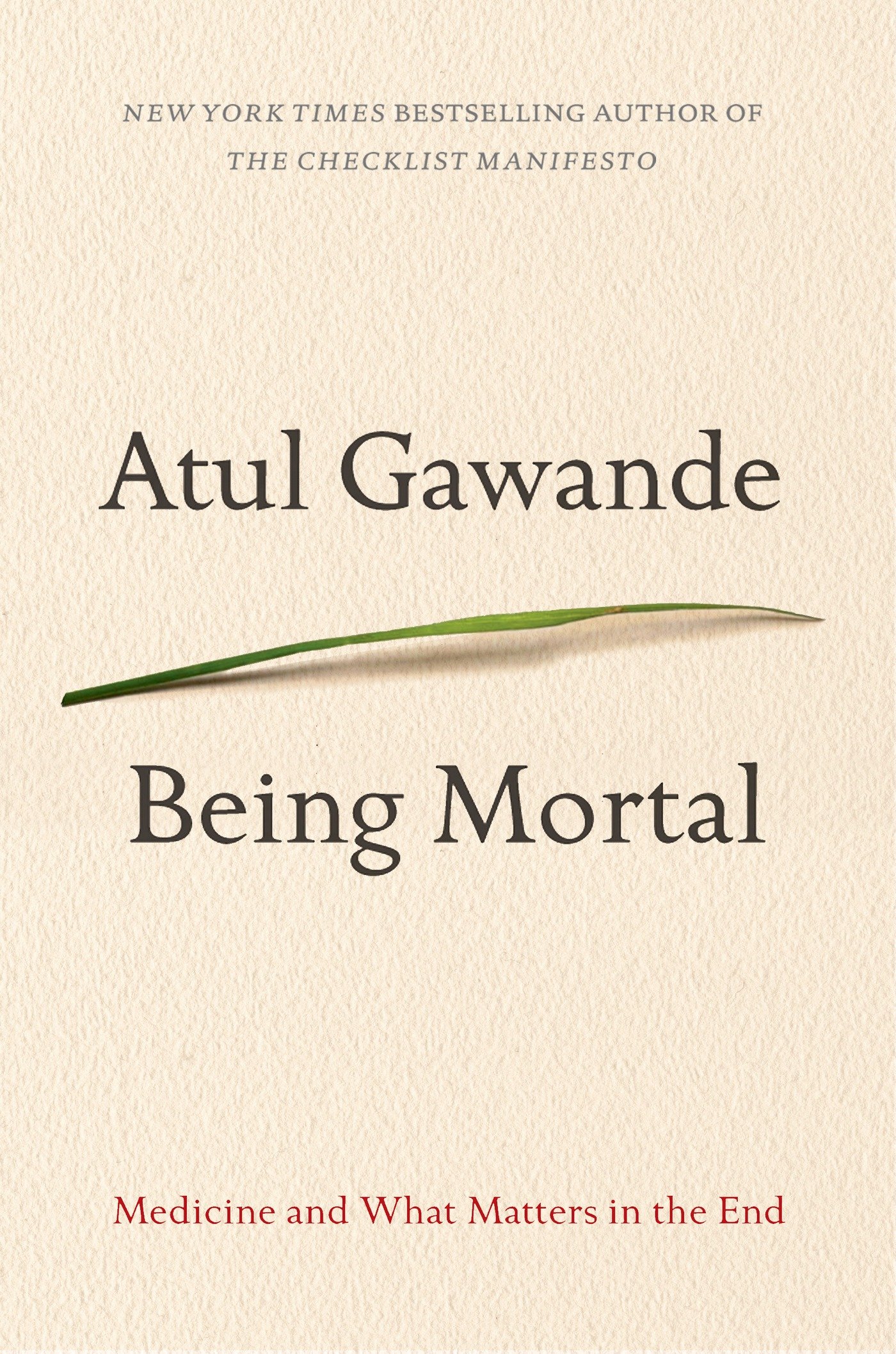
Being Mortal: Medicine and What Matters in the End

Atul Gawande

I believe strongly that doctors are women and men who work in a health-care facility of some kind, including Being Mortalhospitals, clinics, shelters, combat support hospitals, etc. Doctors, ahem, do not host talk shows. Medicine is a challenging, ever-evolving field of study and practice. One cannot be both a practicing doctor and a television personality.

That is, unless you are Atul Gawande.

On Feb. 10, PBS will break this rule when the Frontline documentary crew shadows the surgeon, author and New Yorker writer. The show is a tie-in with Gawande’s new book, Being Mortal, which chronicles the history and current state of end-of-life care, an issue that’s come to the fore through the proposing and passing of “death with dignity” initiatives in many states. Gawande takes us inside the nursing home, assisted living communities, to learn what these institutions are getting right and getting wrong, and to offer a view of the alternatives, such as hospice.

I have enjoyed most of Gawande’s writing, but I believe he’s surpassed his previous successes with Being Mortal. While his other books have been intimate and instructive, there is greater depth here that opens the author to his audience as never before. As the book progresses, it becomes a memoir, of sorts, of his father’s final years, a touching, factual documentation that delivers a bold-stroke illustration of his argument without overshadowing the narrative.

The focus of the book, however, is not on Gawande or his family. It is on the thousands of families struggling with end-of-life issues everyday. An indirect consequence of medical progress, Gawande argues, is that extending life has overshadowed sustaining quality of life, and in modern times, we have the luxury of distancing ourselves from our mortality.

“Technological society has forgotten what scholars call the ‘dying role’ and its importance to people as life approaches its end,” Gawande writes.

Being Mortal begins with a scholarly frame: the author calls up one of my favorite books, Tolstoy’s The Death of Ivan Ilyich, drawing attention to the relationship between the titular character and his butler, Gerasim. Without falling down the rabbit hole of Tolstoy’s existential treatise, the takeaway for Gawande is at what point do we stop pursuing cures (which agonized Ilyich) and provide comfort instead (as offered by Gerasim).

As Gawande puts it: “…it is clear that there are times when the cost of pushing exceeds its value.”

Defining when it’s that time is an uncomfortable topic, and as the author explains, it leads to many difficult conversations, but is important for the benefit of the dying as well as their caretakers.

The Frontline episode should be fantastic, as the show usually is, and will hopefully wean Americans off the junk food of television doctors Oz, Phil, et al. and snake-oil salesmen like Eben Alexander.

Instead of junk food, Gawande gives us science, history and heart in a page-turning treatise on the way we die now, and how we could do it better.

Dispatches from the War on Drugs

Two new books explore the macro and micro effects of failed drug policy

In 1996, Dan Baum published the definitive account of America’s complicated relationship with psychoactive Drugs Unlimitedsubstances. Smoke and Mirrors: The War on Drugs and the Politics of Failure is an exhaustive, apolitical narrative history of the war’s origin, evolution and cost, and though public opinion has changed (a recent Pew Research study found that Americans now favor treatment over prosecution and are against mandatory minimum sentencing by a two-to-one ratio), the book remains an important document of the human toll of the drug war.

I bring up Baum’s work because Drugs Unlimited: The Web Revolution That’s Changing How the World Gets High, by UK journalist Mike Power, is its 21st century bookend. At the time Smoke and Mirrors was penned, the Internet was in its infancy, data transfer rate was measured in kilobytes and computer literacy was limited.

In the decades since, the Web has expanded the chemical landscape, altering which drugs we do, how we acquire them, and in an effort to stay a step ahead of the law, Power writes, producers, suppliers and consumers have shifted into the wildly erratic world of “research chemicals”—legal alternatives to and analogues of illegal compounds sold widely over the Internet.

The consumption of psychoactive plants is nothing new (the earliest known head trip dates back about 13,000 years), but until the 1970s and ’80s, recreational drug users had only a handful of chemicals to choose from. In 1971, the United Nations identified just 234 legal substances; 243 new compounds have been identified in just the past four years.

Accelerated culture, indeed.

These new chemicals are often untested, of shady origin and composition and can be far more lethal than their outlaw counterparts. They’ve also inspired media-invented “epidemics” of bath salts and synthetic marijuana—fueling a digital age reefer madness that keeps drug policy mired in the past.

But Drugs Unlimited is as much about hypertext transfer protocol as politics. The psychonauts who once explored inner-space have journeyed into cyberspace, and the market has moved from the corner to the CPU.

Power’s narrative is thorough and engaging, but at times can be too thorough, particularly when it comes to the chemical names. For example, Power is compelled to include a complete stock list from a chinese distributor, which includes more than 90 compounds with names like 5-MeO-DALT, Methiopropamine (MPA), Fluoromethamphetamine (and its analogues), Desoxypipradrol (2-DPMP) and so on.

Granted, he does this for effect: “Among that unreadable alphabet soup of drug names there are hallucinogens, stimulants, empathogens and cannabinoids. Working out which of them are legal or which have been outlawed in various countries would require thousands of hours of legal time or case law study.”

This certainly helps shed light on the challenges facing consumers and law enforcement, but at times, the emphasis on product names can be overwhelming.

Aside from that, Power crafts an accessible narrative that is one of the most important books of the millennium. What Baum did for the American drug war, Power does for the U.K., from the digital age to the Deep Web.

The Triangle: A Year on the Ground with New York’s Bloods and Crips

Kevin Deutsch

While Drugs Unlimited operates at a broad level, The Triangle goes micro. For a harrowing year, journalist Kevin The TriangleDeutsch shadowed the gang-bangers of Hempstead, Long Island, in a place known as the Linden Triangle—ground zero of a 2012 turf war that turned an already rough neighborhood into a slaughterhouse. Forget the stereotypes of suburban Long Island. Think The Warriors rather than The Great Gatsby.

Dramatically reconstructed from interviews, legal records and first-hand experience, The Triangle is as fast-paced and action-packed as a first-rate thriller—a literary narrative as entertaining as it is troubling. The cast includes leaders, hitters and corner crews from both the Bloods and Crips; the terrorized residents of Hempstead; cops, criminologists and others in the justice system; and a minister who leads midnight prayer groups on the corners.

Deutsch stitches together their stories with a novelist’s skill. He’ll (rightfully) earn high marks in the press for his research and daring, but his ability to manage this Dostoyevskian cast without disrupting the narrative flow is worth noting.

Racial and social problems emerge that are intrinsic to the drug war. Incarceration and surrounding gentrification has turned Hempstead into an island of poverty. The gangs are the biggest employers in the Triangle, and those who would oppose the gangs are financially trapped in their territory.

Deutsch doesn’t give us an easy out. The reader is forced to confront the capriciousness of life in Hempstead, the social and legal conditions that created it and the self-defeating strategies of the gangsters that maintain a vicious status quo.

There is something heroic about the ability to survive in this environment, particularly in defiance of hateful neighbors (one Nassau County government official recommends that they “carpet-bomb Hempstead”: “Let the blacks and Hispanics go back to New York City. They’re better off there. Long Island isn’t that kind of place.”) Yet, Deutsch is wise to avoid romanticizing thug life, and not afraid to reveal the cowardice of its so-called soldiers:

Tyrek, leader of the Crips set, earned his membership by stabbing a pregnant teenager in the stomach. His ace card in the turf war is a suckerpunch, not a fair fight. J-Roc, a rising soldier in the Bloods, talks a big game, but struggles to intimidate a senior citizen. Ice, leader of the Bloods, helps promising kids get an education, yet orders the kidnapping and gang-raping of his rivals’ sisters, girlfriends and mothers.

Sadly, for all the lip service about honor, the Crips and Bloods mostly prey on the vulnerable. The true casualties of this war are the women in the crossfire. “The gangsters see sexual violence as a strategic and tactical weapon, as important to their arsenal as guns and blades,” Deutsch writes in the chapter “Extreme Tactics,” which includes the retaliatory abduction and gang rape of a female Crips employee.

At least the victim, in this case, actually works for the gang. That is not a prerequisite. Flex Butler, a Crips lieutenant, brags about assaulting the 15-year-old sister of a guy who’d stolen $2,000 worth of cocaine.

“‘[He] was hiding from us,’ Flex says. ‘So we got his sister when she was walking home from school. She fought hard, but there was a lot of us.’”

So yeah, these are not sympathetic characters. Deutsch doesn’t condemn, patronize, glorify or victimize, but presents the residents of Hempstead in all their unresolved moral complexity. For the most part, he avoids the cinematic histrionics common to gang narratives. The lone exception is D-Bo, a promising kid whose attempt to escape the corner gets a bit of the Hollywood treatment. Much is made of the timing of a confrontation with his gang (even though he’d been at home for a month), which leads to a chase scene, a misunderstood shooting and a dramatic exchange between the corner boy and the officer who tried to help him escape while awaiting the paramedics.

But I’ll forgive Deutsch this one instance of going for the heart strings. Otherwise, this is an unflinching look at the fear, fame and futility of gang warfare.

Strong writing, compelling characters and front-line reporting make this an entertaining read, but Deutsch’s detached, yet compassionate handling of the material makes The Triangle an important one as well.

Both Drugs Unlimited and The Triangle are worthy books on their own, but for anyone with a love of history, sociology or just damn good journalism, this is a one-two combination that, together, offers a wide perspective of the War on Drugs.

Review: Is There Life After Football?

Is There Life After Football?: Surviving the NFL

James A. Holstein, Richard S. Jones and George E. Koonce, Jr.Is There Life After Football

I couldn’t have known it at the time, but in one night I met two athletes who would become prominent figures in the modern NFL concussion narrative: Mike Webster and Jack Tatum. At the time, Tatum was recently retired, but Webbie was still playing for my hometown Steelers, and of the seven or so players I met at this banquet, these are the only two I remember.

Because I bleed black and gold, I was happy to meet Webster. I remember him being incredibly friendly, shaking hands with both my father and me and penning a thoughtful autograph. But as cool as that was, I was really excited to meet the notorious Tatum, the icon of NFL villainy for permanently paralyzing wide receiver Darryl Stingley.

This had earned Tatum one of the coolest sports nicknames of all time, and he was at this banquet promoting the first of his three autobiographies, They Call Me Assassin.

Tatum didn’t just look mean–the air around him chilled, the energy darkened. Something repulsive oozed off of him and kept the crowd at a distance. He didn’t crack a smile, had none of Webster’s warmth. When I handed him my autograph sheet he literally just signed his name. No message, no greeting. Just “Jack Tatum.” He was terrifying, and I came away from that encounter star-struck.

Of course, my opinions of both men are much different now.

Nevertheless, both men symbolize the celebrity and consequence of football’s golden age: Tatum the intimidating aggressor whose ferocity and win-at-all-costs mentality are prized attributes and Webster the tough-as-nails scrapper who attained on-field glory at the cost of his mind, body and dignity off of it.

In the past decade, we’ve learned about the long-term health risks of playing professional football. With every early death, suicide and descent into darkness and bankruptcy, it becomes more difficult to enjoy a Sunday slugfest with a clear conscience. In another two decades, we may not recognize professional football, because we’re just now recognizing the toll it takes on its players.

An important new book on the subject, Is There Life After Football?, considers not only the physical and neurological toll of the sport, but also the psychological impact of job-mandated violence, short careers, and the wild financial swings common among players.

Penned by two sociologists and an unexpected scholar (former Green Bay Packers star George Koonce–that is, Dr. George Koonce), Is There Life After Football? provides a sobering and insightful view of this transition through the personal anecdotes of Koonce and the research of Holstein and Jones. Most jarring is Koonce’s admission of a reckless act at the end of his career. It wasn’t exactly a suicide attempt, but he did drive his car off the road just to see what would happen.

This anecdote is all the more poignant when considering the recent driving death of Rob Bironas.

Though not as accessible as the prose styles of Malcolm Gladwell and Michael Lewis, the authors do a great job of distilling difficult material into a digestible form. It’s also a treat to read for anyone who enjoyed watching those plucky Packers of the 1990s. Juxtaposing those dynamic teams with Koonce’s experiences gives the book a Behind the Music vibe.

The takeaway is the same. Just as those we see on stage and screen are real people, so too are the men behind the facemasks.

Perhaps in a box, somewhere, at my parents’ house is a slip of paper with Webster and Tatum’s autographs. If I ever find it, I’ll frame it, perhaps donate it to a museum, where it can memorialize a different time, alongside bare-knuckle boxing and Crack the Whip as American pastimes whose time has passed.

Best of 2014

Happy New Year, coming to you live from gate B-11 at Charlotte Douglas International Airport (en route from Pittsburgh to Denver).

Tis the season for arbitrary year-end best-of lists. Even the New York Times, with its battalion of bookworms, can’t cover and judge all new titles. I read more than 50 books this year, more than 30 of which were new releases. From this tiny sample, how can I present a definitive list of best books of the year? 

What I can do is highlight the finest books that reached my nightstand or my Nook. So here, in no particular ranking, are my top reads of 2014.

Spectacular Science Writing

The Humor Code: A Global Search for What Makes Things FunnyThe Humor Code

Joel Warner and Peter McGraw

“We’re here to explore the dark side of humor, how comedy can divide and degrade,” write Warner and McGraw. “Here,” in this case, is Denmark, but also Japan, Palestine, Peru and beyond. For more than two years, this odd couple of comedy—Warner a journalist (Westword, Wired, Slate) and McGraw a humor researcher/marketing instructor (at the University of Colorado at Boulder)—traveled the world to learn what incites nasal milk projectiles in other cultures.

Specifically, the intrepid twosome tested whether McGraw’s Benign-Violation Theory (BVT) of humor applied to an international audience.

For that, Warner and McGraw visit a humor science library in Japan; deliver clown therapy to a Peruvian barrio alongside Patch Adams; interview notorious Danish cartoonists; participate in laughter yoga (yes, that’s a thing); attend comedy festivals; and McGraw even gives stand-up comedy a try in Denver’s toughest room.

That’s a lot to fit into a single book, but you’ll want to read every word. The Humor Code is an engaging blend of science writing, travel writing and narrative nonfiction. This is one of the best books you will read this year, and it is deserving of major awards.

The Tale of the Dueling NeurosurgeonsThe Tale of the Dueling Neurosurgeons

Sam Kean

The Tale of the Dueling Neurosurgeons is a brisk and engrossing read, and Sam Kean’s most impressive yet. He digs deep into the archives of psychology to discover little-known and sometimes forgotten gems that have had a great impact on modern science. You will laugh. You will learn. At times you will pick your jaw off the floor and ask yourself, “That happened?”

If you’ve never read Sam Kean, start now. You will devour all three of his books in a week. If you’re a longtime fan, prepare to be wowed once again.

And if you’re a judge for any of the big literary prizes, in the name of all that is just and good, start etching Sam’s name into the trophy.

Faith and Wisdom in Science

Tom McLeishfaith and wisdom in science

McLeish explores the history of both scientific discovery and biblical narrative, finding commonalities in the ways humans in each arena are awestruck and inspired by the natural world. There is room, he argues, for the sublime in science. The earliest scientific studies were not the cold, heavily controlled research we have today, he writes, but passionate probes of the natural world. There has since developed a rift between the science and humanities. Science got custody of the brain in the divorce, and humanities, the heart.

If you still feel the sublimity of mountain peaks, marvel at existence at the subatomic level or can be moved to tears by a sunrise, you’ll enjoy Faith and Wisdom in Science.


Dystopian Literature

Justice, Inc.

Dale Bridgesjustice-inc-cover

In the introduction to his short story collection, Justice, Inc., Bridges prepares us for the satirical rapture he is about to unleash: God, discouraged by his failed attempts to kill off the human race, comes to the realization that “…when left to their own devices, they appeared to do a fair job of exterminating themselves.”

And thus the chain catches on the death-coaster, drags it to the summit and lets that fucker drop.

Hang on.

These are masterful tales of human obsolescence, cruel absurdities and species self-deliverance. In Bridges’ world, justice is self-imposed, whether or not his characters realize it. You want the convenience and savings of a Wal-Mart? Fine, but you have no one else to blame when you wake up in a world controlled by Wal-Marts. Punishment fits the crime.

Justice, Inc. manages to be both observational and engaging, philosophical yet lyrical at the same time. You’ll find yourself caring as much for the characters and their plights as for the underlying philosophy within each tale.

Bridges writes not with a pen but a skewer, piercing the absurdity of our cosmic sitcom with clarity and humor. Justice, Inc. is philosophical satire in the vein of Vonnegut and George Saunders—fellow madmen who have stared into the abyss and come away laughing.

Ominous Realities

Eds. Anthony Rivera and Sharon LawsonOminous Realities

Once again, Grey Matter Press has delivered the anthology goods. Take “On the Threshold,” an eerie, Lovecraftian tale of science and madness from William Meikle. Keeping up the intensity is “Doyoshota,” by Ken Altabef, a haunting intersection of conspiracy and cacophony that makes tinnitus sound like a Beethoven sonata.

Eric Del Carlo’s “We Are Hale, We Are Whole” is deserving of any “best-of” anthology, a smart, thoughtful piece of writing that should be a must-read for anyone attempting to world-build within the confines of a short story. It also takes a philosophical bent about quality of life, aging, health care and sacrifice.


Best Biography

Happy Clouds, Happy Trees: The Bob Ross Phenomenon Happy Cloud, Happy Trees

Kristin G. Congdon, Doug Blandy and Danny Coeyman

Beloved painter Bob Ross is all the more mysterious for the minimal amount of unauthorized or paratextual materials surrounding him. Mostly, what we know of Ross comes from his TV program. The mystique of the painter’s life has fueled his cultish following, and the authors do a wonderful job of exploring the man, his devotees and that ineffable thrill of creation. Bob had a word for it.

He called it joy.

An Infuriating American: The Incendiary Arts of H.L. Mencken

Hal CrowtherAn Infuriating American

The tone of this extended essay is established up front by a quote from the subject himself, H.L. Mencken:

“To the extent that I am genuinely educated, I am suspicious of all the things that the average citizen believes and the average pedagogue teaches.”

Mencken, one of America’s finest journalists, was also a world-class iconoclast, and the tone and spirit of his work is captured wonderfully in this short study by Hal Crowther, himself an esteemed author (and 1992 recipient of the H.L. Mencken Award). Mencken should be required reading for everyone (particularly prospective journalists), and An Infuriating American is as good an introduction to the writer as you’ll find.

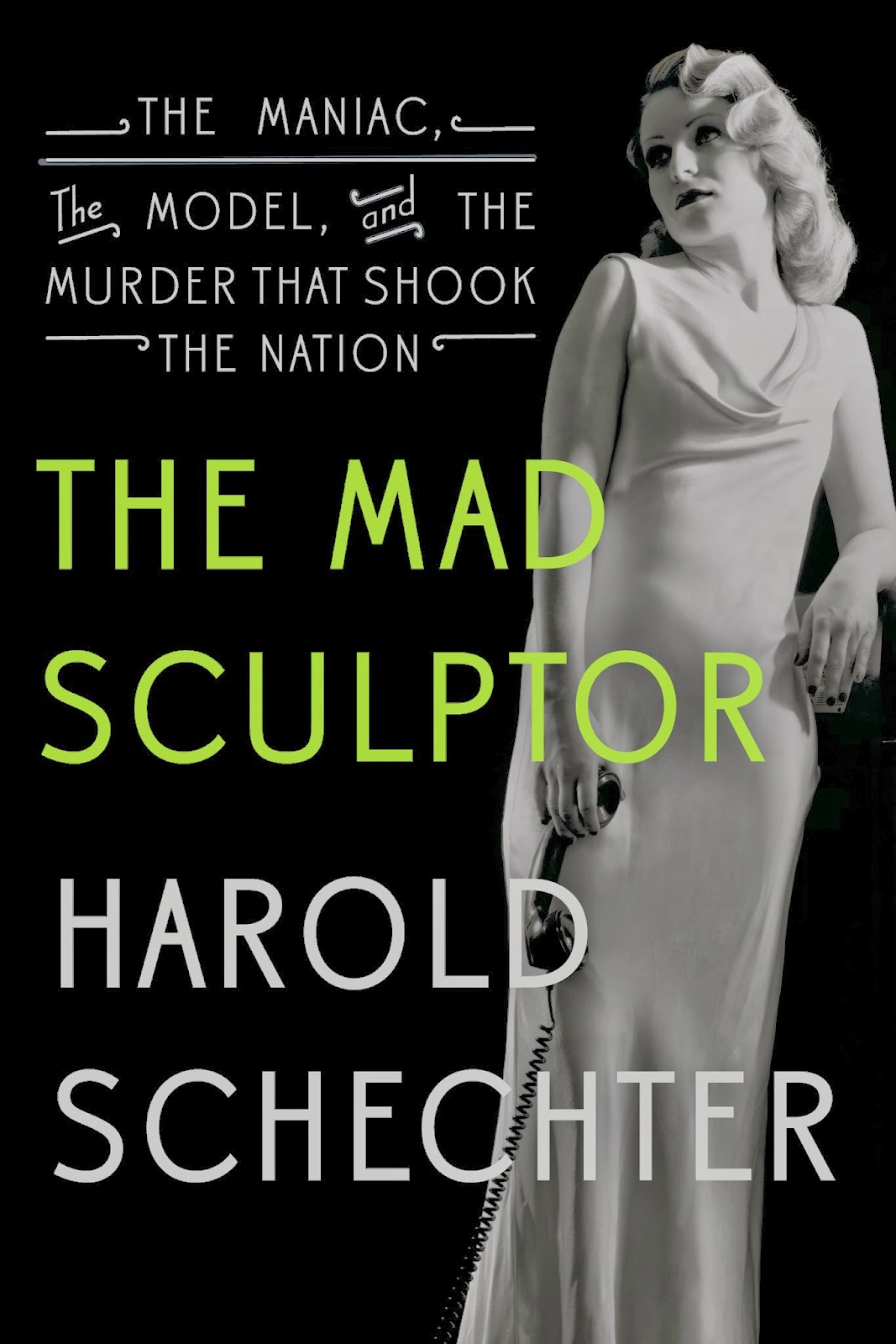
The Mad Sculptor: The Maniac, The Model, and the Murder that Shook the Nation

Harold SchechterThe Mad Sculptor

“You can certainly learn as much about a society by which crimes people are obsessed with at a particular time,” says Schechter. “I think, in a general way, the crimes that become national obsessions, that strike a deep communal chord, symbolize the particular cultural anxieties of the moment.”

In the 1920s it was poisoners; in the ’70s Charles Manson personified the worst fears of the counterculture; the ’80s had phantom Satanists and the ’90s belonged to the serial killer; and today we have the rampage shooter.

But in the 1930s, it was the sexual deviant that haunted and titillated the public.

Enter Robert George Irwin, the subject of Schechter’s new book.

Irwin was a troubled and talented artist whose stunted psychosexual development (and religious obsession) fueled romantic fixations, violent outbursts, numerous hospitalizations and an attempted self-castration. It climaxed with a vicious triple murder in 1937, made all the more newsworthy because one of the victims, Veronica Gedeon, was a pulp magazine cover girl.


Notable Nonfiction

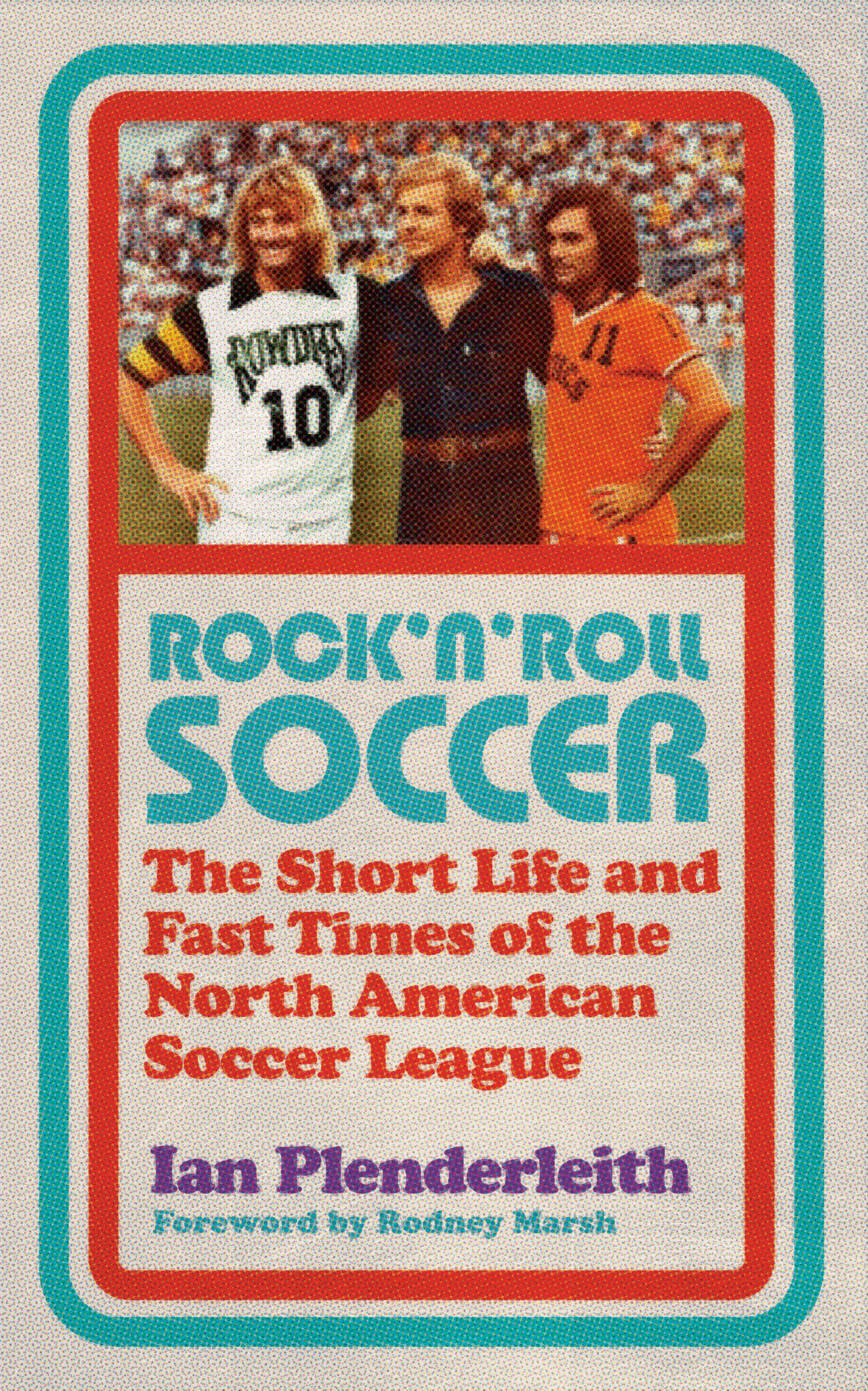
Rock ‘n’ Roll Soccer: The Short Life and Fast Times of the North American Soccer League

Ian PlenderleithRock n Roll Soccer

The groundwork for today’s soccer popularity was laid by the North American Soccer League, the subject of Rock ‘n’ Roll Soccer. Plenderleith documents the folly, effrontery and ultimate failure of the NASL—an impressively thorough tome that benefits from solid research and a witty outsider’s perspective (though now living in America, Plenderleith is British and brings a European’s passion and insight to football writing).

Rock ‘n’ Roll Soccer is an excellent work of sports journalism and, regardless of whether you follow football or futbol (or both), it is worthy of any fans’ bookshelf.

The Perfect KillThe Perfect Kill: 21 Laws for Assassins
Robert Baer

It was not hard to get me to pick up The Perfect Kill. Advice on how to pull off a flawless assassination? From a CIA insider? Sign me up. But before you begin stockpiling your arsenal, don’t think of this as a modern-day Anarchist Cookbook, but rather an engaging work of military history—an insider’s view of the Middle East through the eyes of an assassin.

While the subject matter alone is interesting, Baer’s writing makes this a thrilling read from start to finish. He has a narrative voice that is concise, informative and though he occasionally drifts toward the conspiratorial (which isn’t a bad thing), he tempers it by clearly defining what is fact and what is conjecture.


Illuminating Lit

Beautiful You

Chuck PalahniukBeautiful You

Palahniuk took on male malaise with Fight Club and mocked cultural over-consumption with Choke. Snuff (ostensibly a novel about pornography) lampooned self-destructive excess and exploitation in a manner that could very well have served as a hyper-sexualized predictor of the impending financial crisis of 2008.

In Beautiful You, he wanted to write what he calls gonzo erotica, and in the process has penned an anthem for an overstimulated, multi-tasking, computer-coma society.

Penny Harrigan is a nice Nebraskan girl working in New York City when she catches the eye of the world’s richest man, C. Linus Maxwell. Next thing you know, Penny is the talk of the tabloids and the envy of her coworkers.

Behind closed doors, however, is where Penny is truly transformed. Maxwell introduces her to a world of unimagined, if clinical pleasure. Penny has her reasons to question Maxwell’s motives (especially after a bizarre bathroom tryst with his bitter ex-lover), but is too enraptured with her new-found fame and sexuality.

Oozing with plot twists only Palahniuk’s sardonic tone could make palatable, Beautiful You aspires to remarkable levels of absurdity, but is it any more absurd than the daily inundation of product and marketing? Many reviewers have criticized the gratuitous satire in this novel, but is the idea of world domination via dildo really that far-fetched in a culture that has financially sustained multiple cable shopping channels for three decades?

We are a culture of instant gratification. We are a culture of distraction. We are the lab rats hammering away at the pleasure bar for a taste of sweet, sweet oblivion.

And much like Maxwell, Palahniuk is there wearing a lab coat, taking copious notes and holding up a funhouse mirror to our cage, so that we might catch a distorted glimpse of what we’ve become.

The Children ActThe Children Act

Ian McEwan

Fiona Maye is an experienced judge on the cusp of old age who is questioning her lifetime of restraint (as well as her decision not to reproduce). We enter her story mid-conversation to discover Fiona reeling from her husband’s proposed (and possibly in-progress) infidelity, just as she’s preparing for a high-profile case with a child’s life in the balance.

Cut to the courtroom, where a precocious teenager is refusing a blood transfusion on the grounds of being a Jehovah’s Witness. Invoking the Children Act of 1989, Fiona gives her ruling, the consequences of which ultimately lead to a spontaneous, classically McEwan mistake, one that risks undoing her marriage, her career and a lifetime of calculated decision-making.

The Children Act is a short, but dense novel, as is usually the case with McEwan. The man is a master of reflection and interiority. The opening chapter encompasses but a moment in a 30-year marriage, but lays bare its successes, failings and a lifetime of insecurities and second-guessing. The tragedies unfold in slow motion and a lifetime of torment is distilled into a bitter, lingering moment.


Quality Quickies

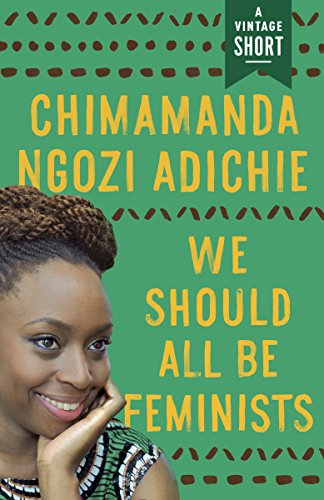
We Should All Be Feminists

Chimamanda Ngozi Adichiechimamanda-ngozi-adichie-we-should-all-be-feminists

This brief and brilliant essay (it comes in around 20 pages) from the celebrated author of Half of a Yellow Sun, is one of the most interesting pieces I’ve read all year. “Feminist” is a word long-since stripped of its original meaning: politicized, glorified, demonized. It’s got more ill-fitting baggage than an overhead compartment. Adichie cuts through the connotations to get at the core value of feminism and how it celebrates and benefits both men women.

It’s a call to arms to imagine a generation of children raised without the biases that, consciously and unconsciously, perpetuate gender norms. It’s a call to rethink masculinity so that the next crop of men grow up healthier than the last. It’s a call for all of us to “do better.”

The essay may be short, but the conversation it generates is long and important.

Legion: Skin Deep

Brandon SandersonLegion

StephenLeeds is afflicted with a mental disturbance wherein he has imaginary friends who enable him to solve crimes. His mental manifestations, which he calls “aspects,” have names, back-stories and seemingly a life of their own, though they are bound by the limits of Leeds’ finite knowledge and experience.

In Skin Deep, the second novella in the series, Leeds is coerced into locating the corpse of a tech worker who was in possession of dangerous information—while at the same time outwitting a devious businessman and avoiding the strike of a first-rate assassin.

What makes the Legion books so amazing is not so much the outer conflicts, but the inner ones. Who are we? How do we define who we are? Would we all be better served to, ahem, use our illusions? These are the deeper strings Sanderson plucks in the Legion series.

May there be many, many more.


Horrific Hits

The Winter People

Jennifer McMahonWinter People

What is it about New England that inspires isolated, small-town horror tales in which the blood runs as cold as the weather? I’m not sure what it is exactly, but having spent many a wintry a night in Maine, I am familiar with that feeling. And I can’t get enough of it.

Jennifer McMahon captures that frostbite feeling perfectly in this heartbreaker of haunted legends and legacies, curses and karma, and, more than anything, unendurable loss.

The Winter People is well-written and bursting with heart. There are mysteries at every turn, and reminders that grief can be deadly. Or worse. Like a modern retelling of “The Monkey’s Paw,” there are consequences for disrupting the dead, and The Winter People reminds that despair can drive even the most sensible among us to dangerous depths.

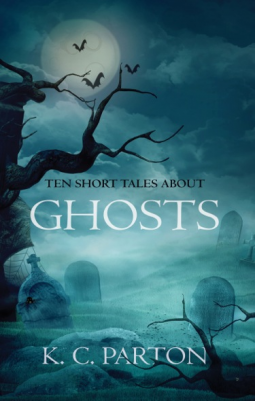
Ten Short Tales About Ghosts

K.C. Parton10 Short Tales About Ghosts

Typically, the hallmark of a great ghost story is that it unsettles the reader. When reading K.C. Parton’s collection of English ghost stories, however, one is filled not with dread, but comfort. These 10 tales are reminiscent of the kind my father would tell me over campfires—and those, of course, will always be my favorites.

Parton’s stories have that same appeal. These are not tales of terror, but subtle chillers made all the more spooky for their familiarity. Stories that make you think twice before cutting through the graveyard, not to avoid falling prey to a Saw-like killer, but for that abstract fear that tickles as much as it terrifies.

A big draw for me is that most of the stories have an industrial setting. Growing up in the Rust Belt, I was exposed to the real-life horror of the steel mills, and I found much ghostly inspiration in the rusted machinery, secluded warehouses and the imaginative possibilities of the graveyard shift. Parton’s stories fit that mold, which shouldn’t be surprising, as he came of age in England’s post-war factories.

These stories tap into that primal need for campfire tales—the kind that give goosebumps, sure, but leave you smiling in the end.

The Cutting Room

Ellen Datlow, editorThe Cutting Room

“With no dreams left to search for, I have only nightmares to anticipate.”

This is one of the most haunting lines from the tremendous opening story, “The Cutter,” by Edward Bryant. It sets the tone for all the delicious horror in Ellen Datlow’s latest anthology. Disturbing images and the blurring of reality is a common theme in this collection. Stephen Graham Jones’ chilling “Tenderizer,” for example, David Morrell’s “Dead Image” and the wonderfully titled “Filming the Making of the Film of the Making of Fitzcarraldo” by Garry Kilworth.

Anticipate many nightmares within these pages.