Recommended Reads 1.01.13

Welcome to a new year and a new installment of Recommended Reads. Here are some new releases to get you started on that 2013 reading list:

Unusual Uses For Olive Oil is the latest novel from the inimitable Alexander McCall Olive OilSmith, author of The No. 1 Ladies’ Detective Agency series. Detailing the further adventures of Professor Dr von Igelfeld, the novel evokes the joy of earlier installments in the series, such as The Finer Points of Sausage Dogs.

And as with that book, daschunds are featured prominently (as you can probably tell by the cover).

In 2012, Lawrence M. Krauss, director of the Origins Project at Arizona State University, published A Universe from Nothing: Why There is Something Rather Than Nothing, which details theories surrounding the origin of the universe.

PUniverseresenting scientific data in an accessible way, the paperback edition comes out today, featuring a new preface regarding the Higgs particle discovery and an afterword by the great Richard Dawkins.

Of course, this book will appeal to intellectual types, but is of value to all, as it engages the reader with the latest scientific theories.

Review: The Mourning House

Ronald Malfi, The Mourning House (Delirium Books)

Dr. Sam Hatch is a soul adrift. Since losing his wife and child a year before, mourning_househe’s tried to outrace his pain, literally, with a series of taped-together cars and sometimes his thumb. Now a transient, he squats for a night in a “vacant shell of a house” in Maryland.

Here is where the past catches up with Hatch.

Ronald Malfi’s The Mourning House (published Dec. 18 by Delirium Books as an e-book and limited edition hardcover) is a short tale of grief, obsession and the fragility of physical and mental structure. It is also a haunted house story, if there is such a thing (I’ll explain in a moment).

Malfi, whose previous novels include the IPPY-award winners Floating Staircase and Shamrock Alley, adds to this great literary tradition, and The Mourning House is a thoroughly enjoyable tale that is more of a character study than a plot-driven thriller. It hooked me with the opening chapter and kept me burning through the pages to the end.

It also got me thinking about the lure of the haunted house. Why is it such an enduring trope? There are the familiar literary explanations: the house as manifestation of the self (“The Fall of the House of Usher”); the lingering energy (aka back story) of past inhabitants (The House of the Seven Gables); the narrative tale that leaves you wondering whether the characters are occupying the house or the other way around (The Shining).

But The Mourning House is part of a lesser-discussed subgenre: the malleable or ever-shifting house. This also happens to be my favorite kind of haunted house story.

I don’t subscribe to the supernatural. I’m not afraid of ghosts, and I’ve yet to fall victim to a family curse. But “The 5 1/2 Minute Hallway” in Mark Z. Danielewski’s House of Leaves is one of the most terrifying passages I’ve ever read. Here, new residents of an old house discover that the interior and exterior dimensions of a hallway are incongruent. There is a geometric dissonance that disturbs the occupants (and the reader).

Malfi taps into that feeling of dissonance. Hatch isn’t visited by apparitions in The Mourning House, and there’s nothing a poltergeist could do that would torment him as severely as his own memories. What is troubling is that items around the house have moved while he was out; his closet seems to be of variable dimensions; and a curious subfloor is revealed beneath his feet.

Each morning, Hatch awakes in, essentially, a new house, and that, my friends, is the crux of great horror fiction. It tickles that spot in our lizard brains that burns for shelter. It’s why the haunted house is a timeless premise—and why I argue that there is, ironically, no such thing.

At the core of every haunted house story is a protagonist troubled long before they ever set foot in the house. The house becomes a metaphor, a hallucination, a projection of mental disturbance. The nature of the haunting reflects the nature of one’s troubles. For Hatch, the ever-shifting house is symbolic of helplessness and fragility. He was a successful doctor with a happy marriage, but in an instant it was taken from him.

Our homes are extensions of ourselves. That’s why home invasions are more traumatic than street muggings. For Hatch, it’s only natural that his haunting plays on his vulnerability. At any moment, the place where he should feel safest could shift forever. And he is helpless to do anything about it.

Malfi handles this masterfully in The Mourning House. The beginning and ending are magnificent, as is the bulk of what comes between. For the most part, the novel is well-paced, the prose solid and the action compelling. Here and there, scenes feel rushed or we get an overload of description without the emotional interiority that anchors us to the story (see chapter two).

But there’s no sense nitpicking over these few moments. Malfi is an excellent storyteller and a demon of description. This is a great piece of writing, and I recommend it for any fan of quality horror fiction or anyone who may fit that description on your holiday shopping list.

For more information, visit the Delirium Books Web site.

Audio Interview

Sorry for the delay in writing, but we’ve been busy prepping for the holidays. From now until Dec. 24, we’ll be posting a daily review of a literature-themed Christmas gift. You can make it a last-minute gift for the literary subversive in your life, or just enjoy the reviews for review’s sake.

We begin with an audio interview with best-selling author Carrie Vaughn, whose new novel, Kitty Steals the Show, would make the perfect stocking stuffer for the lycanthrope lover on your list.

Recommended Reads 11.13

With the holiday shopping season imminent, publishers are bringing out the big guns in coming weeks. Recommended Reads offers a sampling of some of today’s new releases, great for personal pleasure or holiday gifts.

Ian McEwan can turn any setting into a simmering pot of dread, but his best works tend to be set in war-torn 20th century Europe (The Innocent, Atonement). His new novel, Sweet Tooth, concerns Cold War intrigue and romance. Featuring a female protagonist, McEwan puts his young student to work undercover for MI-5. She finds herself engaged in cultural and emotional warfare.

The Inexplicables, the fifth installment of Cherie Priest‘s Clockwork Century series, finds Rector “Wreck ’em” Sherman about to be discharged from the orphanage. Feeling guilt over his friend’s death, Sherman plunges into a dystopia of drugs and the undead.

Stieg Larsson‘s Millennium Trilogy gets the graphic novel treatment, with each book in the series set to be re-imagined in two-part, hardcover illustration. Makes sense: Lisbeth Salander is a comic book wet dream, and the majestic vistas of Sweden should look amazing in ink. Today, Book One of The Girl with the Dragon Tattoo hits shelves. Illustrator Denise Mina has previously inked Hellblazer, A Sickness in the Family and other works of noir fiction.

Cue the Singularity: the enigmatic inventor and futurist Ray Kurzweil returns with How to Create a Mind: The Secret of Human Thought Revealed. Here, the author explores reverse-engineering the human brain, which could be applied to creating more intelligent machines for the bio-mech future.

The End of Righteousness

OK, the title of this book review is admittedly ambitious, but now that the election has finished, perhaps we can all sheath our knives for a week or so–and stop screaming long enough to breathe.

Or better yet, to read a good book.

To nurse that campaign hangover, I recommend moral psychologist Jonathan Haidt‘s new book, The Righteous Mind: Why Good People Are Divided by Politics and Religion. I read this over the summer, and I think it should be required reading for anyone running for office. And it’s the perfect antidote for any residual post-electoral rage.

Haidt begins with a simple, yet quite genius premise. He looked around at his countrymen, divided by a vicious culture war, and discovered more commonalities than differences. For all our diversity, American culture is quite homogenous. (No surprise: “Melting pots” are designed to synthesize many ingredients into a unified whole, not keep them separated.)

We have common experiences, languages, and yes, values. No matter what the campaign ads say, is there anyone on either side that doesn’t want the economy to improve, for their family to be safe from attack, to have excellent health care and receive a good education?

There are philosophical differences on how to achieve these goals, true, but when it comes down to it, all any sane person wants is to be happy, to provide for their loved ones and live a good life.

So why all the vitriol? How can a society with such common goals claw at each others’ eyes with such entitlement? How can we so easily demonize and dismiss someone who disagrees with us?

Well, it’s complicated, to be sure. But Haidt sifts through scientific research, anthropological findings and the evolution of intellectual thought to divine some underlying truths. One of the biggest is the notion that intuition guides our beliefs more than reason. This is why logical arguments are often ineffectual against deep-rooted beliefs–why discussions become debates, and debates devolve into bumper-sticker slogan shouting.

“…don’t take people’s moral arguments at face value. They’re mostly post hoc constructions made up on the fly, crafted to advance one or more strategic objectives.”

In other words, it is not evidence that shapes our worldview. We are naturally and subconsciously drawn to evidence that confirms are worldview. We intuit our morality first and support it with arguments later. That’s why it’s so easy to become entrenched in our beliefs and intolerant of opposing viewpoints.

The Righteous Mind does skew toward the academic, and can be challenging at times. But hey, nobody said bipartisanship was easy! Once you’ve grasped the science and moral theory, you’ll have a better grasp of Haidt’s conclusion.

And this is where the author truly shines.

“Part III: Morality Binds and Blinds” synthesizes all that came before and presents an insightful view of human beliefs and behaviors. How would conservatives fare without liberals? Liberals without conservatives? Haidt makes a compelling case that each would fail without the other. This book is worth it for this section alone.

Here, Haidt summons the great utilitarian thinker John Stuart Mill and his take on both sides of the aisle. “A party of order or stability, and a party of progress or reform, are both necessary elements of a healthy state of political life.”

Perhaps after reading this book, we’ll treat one another with a little more respect and a little less righteousness.

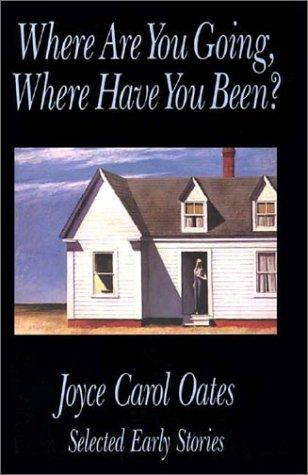
Unsettling Chapters: Where Are You Going, Where Have You Been?

As promised, we’ve come back to one of our favorite authors, Joyce Carol Oates–the queen of disquieting literature. For this Halloween installment of Unsettling Chapters, we’re discussing the Holy Grail of dark fiction, “Where Are You Going, Where Have You Been?

Nearly a half-century since its publishing in 1966, this remains the most disturbing story I’ve ever read. I was introduced to “Where Are You Going…” in college, where it was read aloud by our English teacher, and my former employer, Julie Papadimas.

What I remember most is gripping the side of my desk, trying to keep from screaming at Connie.

This is as visceral a reaction I’ve ever had to a work of fiction. I wasn’t just affected by this story. I was pissed. I felt sick. I wanted to dive into the pages and lock the front door.

Though a lot of readers, I’m sure, are familiar with the ending, I don’t want to spoil it for anyone who hasn’t read it. I will only say that halfway through the story, it dawned on me just how it had to end. You feel the bile rising in your throat, yet there’s no looking away. There’s no putting it down. There is only the suffocating gaze of Arnold Friend and his sociopathic schmooze.

This is not a trick-or-treat brand of spooky, but the essence of true fear. The rare story that forces the reader to accept their vulnerabilities and realize that we can’t always protect the ones we love. Can we even save ourselves?

“Where Are You Going, Where Have You Been?” unnerves me in a way similar to Flannery O’Connor. It’s fiction that replicates that moment on a roller coaster when the train is briefly suspended at the top, about to descend, but seemingly frozen in place. When you feel the bottom drop underneath, but you have yet to tumble after. The breathless space where time knots into an excruciating paralysis.

This is the way Oates entwines and consumes us. With the patient grace of a constrictor. And her grip has yet to slack.

I pray that it never does.

And finally, for a Halloween treat, you can read (or re-read) “Where Are You Going, Where Have You Been?” at the University of San Francisco’s Web site.

Enjoy, my Samhain sweets.

…And sadly, that brings us to the end of our 31 Days of Dread series. Tomorrow, like a post-rampage Hulk, we will return to our proper form as Ensuing Chapters, where we’ll produce a monthly column for Transgress Magazine and write semi-weekly blog posts.

Thanks for reading. If you have any suggestions for disturbing books or stories we may have missed, please send them along. We’re always looking for a new unsettling read… and we’ve got 11 months to kill until next October.

Unsettling Chapters: The Fall

I’ve always felt a deep kinship with Albert Camus. We both come from working-class roots, and we each found our way to journalism. That’s about where the similarities end. While I broke into newspapers as a music and features writer, Camus was editor of Combat, an underground political paper that was part of the French Resistance to Nazi occupation during World War II.
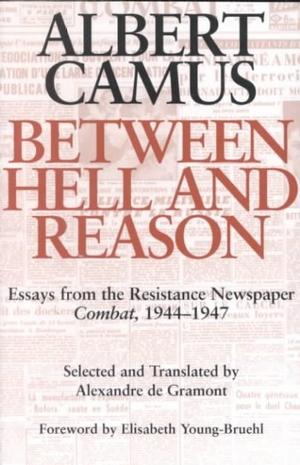
He and his co-workers were jailed and sometimes murdered. If you want to read some amazing and inspirational writing, pick up Between Hell and Reason, a collection of his war journalism. There is an immediacy to his writing, because he knew that every article could be his last.

If this book doesn’t get you up and off the couch (at least to go to the voting booth), nothing will.

However, that’s not the book I want to discuss today, although there is plenty disturbing about Nazi occupation. Truly, any Camus offering is unsettling, in the truest sense of the word, because that’s his intent. These are not pastorals. Camus does not soothe the reader with hugs and rainbows. He couldn’t care less about your spiritual nourishment.

Camus challenges the reader. He inspires the reader. Discomfited? Good. That’s a natural way to feel. The question is: What are you going to do about it?

So it goes in all his works, both fiction and non. My two favorite books of his, and two at the top of my all-time list are The Myth of Sisyphus and The Stranger. The Plague is one of his darker (and classic) works, but for our purposes at Unsettling Chapters, nothing matches The Fall.

Here we have the long-form confessional of Jean-Baptiste Clamence, who haunts the smoky confines of a lowlife bar in Amsterdam’s Red Light District. He tells his story to an unknown, unseen audience, and that juices the narrative with an intimacy and informality we don’t always get from Camus.
It’s also inherently unreliable. What do we make of Clamence and his wild tale of falling from grace? Can we believe it to be true? Is it the ravings of a madman or a drunkard? Clamence even says, when describing a motto for his house, “Don’t rely on it.”

I’ve read The Fall twice, and I’m still not convinced that “we’re” even there. At the end, there is a shift suggesting that Clamence has been having a dissociative episode and talking to himself the whole time: “Are we not all alike, constantly talking and to no one…”

Clamence takes us on a guided tour of Amsterdam, which is designed, he says, in the nature of Dante’s rings of hell. We move through the city via his dramatic monologue.

But though setting has an important part to play, it is the narrator’s interior landscape at center stage. Clamence presents the anxieties of his time, and they look very similar to modern anxieties. He speaks for the fragility of man, and how one’s descent is incremental.

Camus nails the pathway of anxiety and how we are our own worst interrogators. He touches on thought perseveration, self-sabotage and even has an incident of road rage—perhaps its first mention in literature?

In turns hopeful and hopeless, Clamence is a man buried under the rubble of his failings, held down by his own hand. It’s a reminder that we make poor choices, focus our attention on the things that scar us, and ultimately, author our own demise.

Now that’s an unsettling premise.

I don’t imagine a film version will displace It’s a Wonderful Life as a holiday tradition, but for anyone curious about the workings of a mind in distress, you should wind your way into this twisted narrative.

Unsettling Chapters: A Study in Emerald

Arthur Conan Doyle’s A Study in Scarlet, the first book in the Sherlock Holmes series, has to be one of the most adapted pieces of modern literature. Nearly every Holmes’ reboot begins with an updated take on this classic tale, which speaks to the brilliance of Doyle’s writing.

It’s a timeless tale of murder, deceit and the prototypical damaged investigators: the PTSD-stricken Watson and the mentally disquieted Holmes (pick your diagnoses: autism, OCD, bipolar, etc.).

For my money, the greatest adaptation of this story is “A Study in Emerald,” which appears in Shadows Over Baker Street, a mash-up of Sherlock Holmes and H.P. Lovecraft.

Penned by master storyteller Neil Gaiman, “A Study in Emerald” imagines the tale in a post-Lovecraftian landscape, 700 years following the epic struggle between humans and the Great Old Ones.

It shouldn’t come as a shock as to who won that inter-dimensional war, but the nature of the post-war dystopia might. As will the unexpected deviations from the original.

Is it truly unsettling? Not in the same way as most of the books we’ve previously discussed. But it is a bold venture by a gifted author, and the greatest mingling of two of my favorite mythos.

This story also appears in Gaiman’s Fragile Things, along with other favorites like “October in the Chair,” “Bitter Grounds” and “Strange Little Girls.”

For Halloween, Gaiman is offering a free audio book through All Hallows Read. It’s a program that promotes literacy by encouraging people to give someone a book for Halloween. Now through Oct. 31, in partnership with Audible.com, Gaiman is offering a free audio story of his, “Click-Clack the Rattle Bag.” Get yours at www.audible.com/ScareUs.

Unsettling Chapters: King Apocalypse

In “The Hollow Men,” T.S. Eliot famously wrote, “This is how the world ends/ Not with a bang but a whimper.”

It’s obvious that Eliot never read any Stephen King!

King has destroyed the world many times over, and by many different means (plague, cars, cell phones, even exploding meth labs), and each time it is most certainly with a bang. My personal favorites are The Stand and The Mist, but there’s something for everyone on his buffet of world-ending visions.

Any longtime reader of King’s knows that his strength is character development. His end-of-days narratives are so strong not because of the impending doom but for how his characters respond to it.

For example, The Stand is horrific when Captain Trips decimates the globe, but heroic when its survivors stand up to Randall Flagg. The Mist enthralls with the interpersonal conflicts that emerge within the grocery store. I’m not afraid of fog-shrouded aliens, but I’m terrified of religious extremism in closed quarters.

Another favorite trick of King’s is what I call the extrapolated horror. “Trucks,” the short story that inspired the film Maximum Overdrive, focuses first on the ordeal of the survivors holed up in the diner. In many ways, the story is quite silly (a semi-trailer apocalypse!), but where it haunts the reader is its ending: The moment when you realize that all the horror that has come before is merely the opening act for something far, far worse.

This is a small sampling of King’s apocalyptic works:

The Stand

The Mist

Under the Dome (sort of)

“Night Surf” (prelude to The Stand)

King has also penned his fair share of dystopian literature:

“The Long Walk”

“The Running Man”

“The Children of the Corn”

With more than 100 novels, stories and screenplays to his name, King’s bookshelf is long. Pull one or two down from the shelves this Halloween. Believe me, the end of days never sounded so good.