Horror

Unsettling Chapters: Fears Unnamed

Setting can be a literary minefield. When used correctly, it can create affecting works of art (think The Shining, The House of the Seven Gables or J.G. Ballard’s Concrete Island). But sometimes a writer can become so fixated on setting that they produce a literary still life that is beautiful to look at, but what about the characters? If two people are having a conversation on a bridge, do we really need a three-page description of the bridge?
Probably not, but when setting works to complement the narrative, it strengthens the reader’s bond to a location. My favorite book is Stephen King’s The Stand, mostly because of the first-rate character development: Larry’s sadness, Stu and Franny’s determination, the loneliness of Harold and Nadine. But I can still see those bodies crucified to telephone poles along the Nevada highway. When I moved to Boulder, Colorado, I walked along Pearl and Arapahoe Streets, imagining them the way King did in the novel. During a recent trip to New York, I took a drive through the Lincoln Tunnel and could think only of Larry’s gut-wrenching subterranean escape from a New York ravaged by Captain Trips.

Speaking of stellar post-apocalyptic settings, another master is British writer Tim Lebbon.

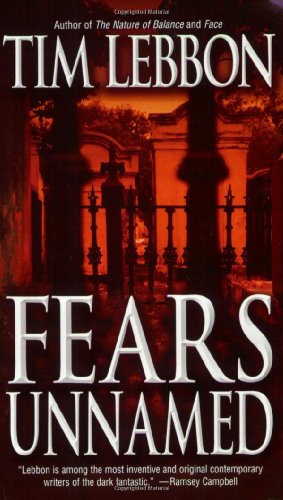
Lebbon is a highly decorated author of horror, fantasy and sci-fi. He’ll soon be releasing a new novel in the U.K., Coldbrook, and a collection of short fiction, Nothing as it Seems, but for this Halloween, we’re recalling his 2004 collection, Fears Unnamed.

The four novellas that make up this collection all rely heavily on setting, be it a dystopian landscape covered by a strange, unceasing snow; the interior of a plane crashing into the frigid ocean; or the homey English countryside under attack from some bizarre threat.

The story that stands out the most for me in this collection is “Remnants,” in which the narrator, Peter, is summoned by an old friend to join him in some unidentified, far-off desert. The friend, Scott, is an archeologist and has discovered what he believes to be a city of the dead. The story is more fantasy than horror, and in truth is as much an adventure tale in the vein of Poe’s The Narrative of Arthur Gordon Pym of Nantucket and H.P. Lovecraft’s At the Mountains of Madness.

Once there, the city becomes a central character:

“Spread across the floor of the depression in the land, seemingly growing from the ground, lay the remains of several large and dozens of smaller buildings. Sand and grit was skirted around bases and against walls, drifted up and through openings that may have been windows, may have been wounds.”

Setting takes on a greater role as we descend into the city’s streets. On the one hand, it’s a psychological riddle, a lost city occupied by ghosts, and is symbolic of Scott, who has gone mad in part due to the death of his son. On the other hand, the city is a physical place, and to navigate its throughways Peter must learn its history and overcome his fear of the spirits residing there.

The city becomes magical yet suspenseful, and through Peter’s efforts it becomes a place of memory and memorial. The buried dead are not forgotten here. This is a place inhabited by all the interred things, and the pain of it is too much for Peter to bear.

He has found the place where all the hurt is buried, and ultimately Peter’s antagonist is not his old friend, but the city itself. “I plunged into the tunnel without a backward glance. If I turned I may have seen something impossible to ignore, a sight so mind-befuddling that it would petrify me, leaving me there to turn slowly to stone or a pillar of salt.”

Lebbon’s achievement is that he not only takes us to this otherworldly place, but makes it somehow familiar.

And for those who’ve had enough of the summer heat, dig into “White,” a fictional freeze-out that delivers chills in more ways than one.
Unsettling Chapters: Mo Hayder

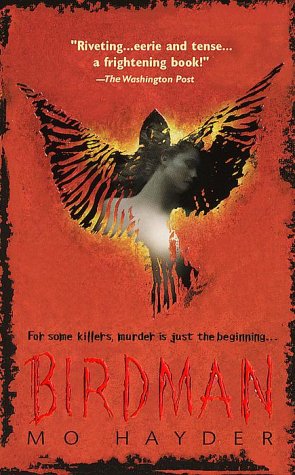
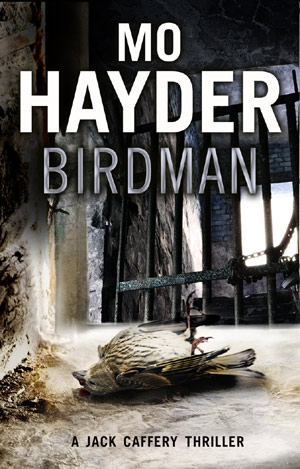
You’re more likely to find English author Mo Hayder’s 2000 debut novel, Birdman, filed under crime or mystery than horror, but don’t let that fool you. This book is more gruesome, sadistic and delivers more chills than almost anything you’ll find on the horror shelves.

Birdman contains just about all the elements a fan of subversive literature could ask for: graphic violence, necrophilia, torture, mutilation, the creepy next-door neighbor, the tormented detective with a troubled past, an unsolved child murder that haunts the entire tale and you’ll never guess how the birds come into play.

Befitting its tagline, “For some killers, murder is just the beginning…” this book will disturb the most hardened of readers.

Hayder published a sequel, The Treatment, themed around child pornography, which futhered the torment of her protagonist, Jack Caffery, and his quest to find his missing brother. Unfortunately, The Treatment failed to hit the same high notes as Birdman, but was bold enough to leave us with a white-knuckle cliffhanger that left fans clamoring for resolution.

However, Hayder went another direction with subsequent books, Tokyo and Pig Island, which are stand-alone novels unconnected with the Jack Caffery series. They failed to live up to the promise of her debut, but Hayder showed a willingness to push limits, taking us to gangland Japan and to the remote island home of a reclusive Scottish cult.

In 2008, Hayder returned to Jack Caffery with Ritual, the first in her Walking Man series. The fourth installment of the series is set for publication in 2013.

Unsettling Chapters: Poppy Z. Brite

Unsettling Chapters is a month-long celebration of dark fiction brought to you by Ensuing Chapters book blog and Transgress digital magazine. Every day through Halloween, we’ll feature reviews, discussions and recommendations of some of the most frightening books ever printed. Check back or subscribe to our feed for your daily dose of darkness.

When Poppy Z. Brite published her debut novel, Lost Souls, in 1992, the young writer was heralded as horror’s fastest rising star. Twenty years later, in semi-retirement from fiction writing, Brite’s career has taken unexpected turns, and she has quietly put together one of the more interesting literary careers of contemporary authors.

For one thing, that’s the last usage of the pronoun “she” you will read in this piece. Brite, who has always prominently featured gay and bisexual characters in her writing, identifies as a man and has begun transitioning. Brite prefers to be addressed with male pronouns, and we are happy to oblige.

With that out of the way, let’s get to important matters: his writing.

From 1992-94, Brite published two merciless novels and a stellar collection of short stories (Wormwood). He didn’t make a splash in the horror world. It was an atomic bomb. And just at the right time. The genre had grown stale, with old masters losing steam and horror cinema bottoming out. Anne Rice was probably the exception as far as freshness and popularity, but her books and films were too appealing to the mainstream to appease darker tastes.

And then there was Brite.

Brite attracted a loyal goth following with his fractured tales of loners, transients and outcasts of all variety. This was horror for the disenfranchised, and his books made heroes of society’s rejects who found themselves drawn, through their outsider-ness, into fugues of violence and evil.

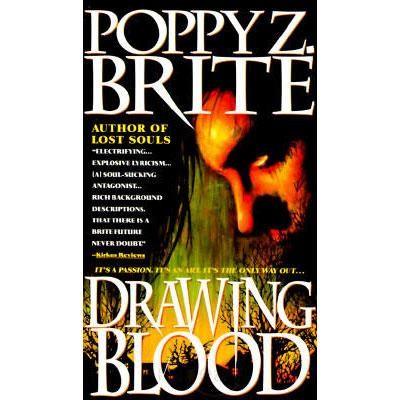
My favorite of his books is 1993’s Drawing Blood, which features two homeless youth—cartoonist Trevor McGee and computer hacker Zachary Bosch—who cross paths and form a romantic bond inside an abandoned house. Together, they are tortured by and confront Trevor’s haunted past (along with a little help from the music of Charlie Parker).

It gets even better: Legend has it that, in 1994, a man firebombing a mail store in Los Angeles set himself on fire. Inside the store, waiting to be shipped, were original copies of Drawing Blood. The books supposedly absorbed the smell of his burning flesh and became collector’s items, with copies of the $7 paperback selling for hundreds of dollars.

But this novel doesn’t need urban legends to succeed. Brite is at full-strength in this novel. He captures the humanity of his outsider characters, the weirdness of his short fiction and the depravity of the world with both existential and supernatural elements.

Speaking of Brite’s short fiction, Wormwood, his first collection, is another of my Halloween staples, especially the tales “Angels” and “His Mouth Will Taste of Wormwood.”

Following this remarkable opening run of books, he published Exquisite Corpse, which eased back on the gothic elements, but retained the horror. In later years, Brite has kept the dark but added comedy to his writing. He has a series of novels set in restaurants, and his nonfiction appears regularly in the Times-Picayune and other publications.

Brite is currently semi-retired from fiction writing, but fans (both old and new) can still relish in his early works each Halloween.

Parts of this post are adapted from an earlier article of mine, “Thirteen horrifying reads for Halloween,” which appeared in the Boulder Camera in 2008.

Unsettling Chapters: Marabou Stork Nightmares

Unsettling Chapters is a month-long celebration of dark fiction brought to you by Ensuing Chapters book blog and Transgress digital magazine. Every day through Halloween, we’ll feature reviews, discussions and recommendations of some of the most frightening books ever printed. Check back or subscribe to our feed for your daily dose of darkness.

For all the horror film and literature I consume, people sometimes assume that I scare easy. Well, not so much. Horror has its visceral thrills, but for me, it’s more of an aesthetic experience. I enjoy the atmosphere more than the scares, and find humor in the most gruesome onscreen butchering. In general, I’m a tough nut to disturb.

Which brings us to Marabou Stork Nightmares.

Don’t consider this a recommendation. Consider this a challenge.

This novel has the distinction of being the only book that has kept me up at nights as an adult. The reader survives this book as much as they enjoy it. Be warned, this is a tense work of psychological brutality that forces you to confront human nature. It’s a case study of devolutionary psychopathology, of working class nihilism and the addictive lure of violence. And a stellar piece of literature you’ll never forget.

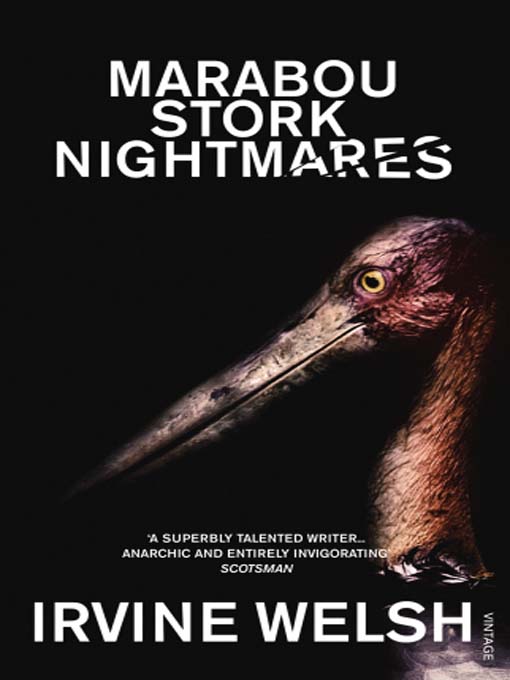
Of course, Irvine Welsh is best known for his debut novel, Trainspotting. Marabou Stork is his second full-length, first published in 1995. The story is narrated by Roy Strang, a comatose soccer hooligan with a troubled past. We experience the story from inside Strang’s head, which creates a narrative as compelling as it is disjointed. He oscillates through multiple levels of consciousness, which are represented visually with different fonts that run forward, back and sometimes up the page. This textual manipulation further immerses the reader in the nightmare.

When closest to death, Strang endures wild hallucinations centered on a safari in which he is hunting the marabou stork, a vicious scavenger that will eat other animals alive. Strang’s life story weaves throughout this psychedelic and troubling narrative, until the fractured shards of his memory come back together.

I once lent Marabou Stork Nightmares to a friend, an addict who was well-acquainted with the back alleys of hell, and he returned it two days later. He’d finished the book in less than 40 hours, in part because it was so good that he couldn’t stop reading—and in part because he was too troubled to sleep.

Any book that elicits this type of visceral response is a must-read for Halloween.

Welsh has also written a number of horrific short stories, most of which appear in his stellar collection The Acid House. Recommended stories include, “The Shooter,” “Eurotrash” and the delightful “Snuff.”

Parts of this post are adapted from an earlier article of mine, “Thirteen horrifying reads for Halloween,” which appeared in the Boulder Camera in 2008.

Unsettling Chapters: Edgar Allan Poe

If you’re like me, autumn is a state of mind rather than a season. The world is rich with color and wonder, at once thrilling and reflective. It’s a reminder that, yes, everything dies, but that, like the turning leaves, we are most beautiful at the last.

And if you’re like me, Halloween is not a day to dress up as somebody else, but rather the one day a year that the rest of the world sees things your way.

With that in mind, starting today, Ensuing Chapters and Transgress digital magazine are teaming up to make this autumn even better. To supplement your Halloween horrors, each day, from Oct. 1 through Samhain, we’ll be posting reviews and discussions of some of the most frightening books ever printed.

Think of it as a literary advent calendar for All Hallows’ Eve!

We’re calling it Unsettling Chapters. Ooooooh!

Some of these will be short stories, some novels, and whenever possible, we’ll include a link for readers to access works that are available online.

A few disclaimers:

To be clear, we’re talking about terrifying reads. This does not necessarily mean horror, though expect plenty of the genre to make the list. There will be short scares, epic thrillers, transgressive mysteries, literary horrors and more than a few classics. The common thread is that they will all be unsettling in some way.

It’s also worth noting that this is not a “best of” or any attempt at a definitive list. This is simply a collection of a few dozen literary works that have kept me up at night. There are plenty of books out there that I haven’t read yet. Please, offer suggestions of titles I’ve missed. I’m always looking for more good reads for myself… and for next year’s list.

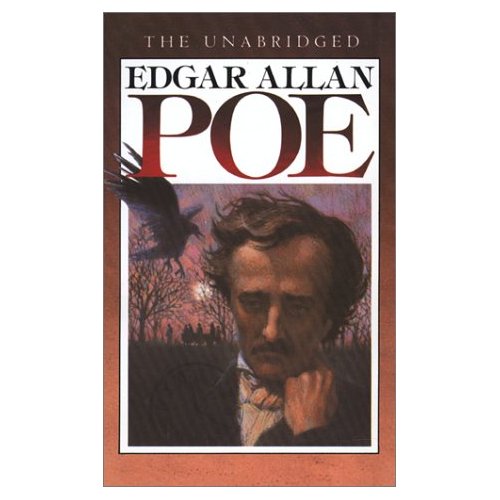
We begin this series with Halloween’s go-to author, Edgar Allan Poe. It’s difficult to actually specify a particular book of his, as there are hundreds of collections of his work, themed and otherwise, sometimes complete, sometimes not. You really can’t go wrong with any of them, and for our purposes, we’re going to use my personal favorite, a leather-bound, early-’90s edition, The Complete Tales and Poems of Edgar Allan Poe.

It’s just not autumn without a dirge or two from Poe. This anthology gives you plenty to choose from—the ghoulish, the grotesque and those gloomy Gothic tales that warm the soul. Of course, his classics are all here, such as my favorite, “The Masque of the Red Death” (which terrified me as a child and chills me as an adult with its social commentary). There’s “Hop-Frog,” the ultimate revenge tale, and the haunting decay of “The Fall of the House of Usher.”

And Poe reminds us that love is eternal in one of his lesser-known and most demented pieces, “Berenice,” which revels in both the endearment and dangers of amateur dentistry.

Poe’s works are in the public domain, and you can download all of them for your e-reader at Project Gutenberg. Stories can also be read online through the Edgar Allan Poe Society of Baltimore, including the following recommended texts:

“Berenice”

“The Fall of the House of Usher”

“Hop-Frog”

“The Masque of the Red Death”

Parts of this post are adapted from an earlier article of mine, “Thirteen horrifying reads for Halloween,” which appeared in the Boulder Camera in 2008.