Fiction

Unsettling Chapters: Ian McEwan

This feature is dedicated to dark, existential works that disturb the reader’s foundation. For me, this is atmospheric writing with human monsters rather than otherworldly—that explore the darkness within rather than without.

So who better to feature, of course, than Ian McEwan.

McEwan was an early influence of mine, bringing a smart, lyrical sensibility to stories of depravity and darkness. He’s better known these days for his more subdued novels, but in the early days he was known for producing a twisted brand of literary dysfunction. None so dark as the offerings in his first collection of short stories, First Love, Last Rites, in particular its disturbing opening tale, “Homemade.”

It’s a touching tale of sex-crazed adolescence and a boy determined to lose his virginity. Worried he won’t be very good in bed, and that the woman he desires would lose interest, he decides to practice on his younger sister.

OK, those who haven’t read this story might think there should have been a “spoiler alert” before that last part. But what makes this story most disturbing is not the horror of the act of incest and sexual manipulation of a minor. It’s the ease with which McEwan spins the yarn—or rather the ease with which the reader assumes the voice of the narrator.

I have read this story a few times and tried to understand what makes it so troublesome, and I believe it comes down to these five elements:

Strong narration. “Homecoming” is told from the perspective of its “monster,” and this is a great example of the power of first-person narrative. With a third-person POV, it’s easy to dismiss a child rapist as a villain. But, as with much of Poe’s writing, it’s much harder to dismiss the character when you’re inside their head. The brother follows a “logical” thought process, slowly luring the reader deeper into his psychosis.

Passivity. The narrator is not the seeker of forbidden pleasures—at first. It is the narrator’s best friend who introduces him to alcohol, cigarettes, shoplifting, masturbation and, ultimately, the race toward sexual initiation that inspires him to rape his sister. He appears to be a relatively innocent and endearing kid—this is McEwan’s trap.

Normalcy. McEwan is the master at presenting the abnormal as normal, and treating evil as a continuum rather than a separate reality. He walks us through the psychological process of a regular teenager who devolves to the point that he commits incest. What makes the horror so disturbing is that it actually makes sense! (At least in the world the narrator devises.)

Unflinching. To quote Akira Kurosawa: “The role of the artist is to not look away.” McEwan never flinches as he guides us step by step through the seduction of Connie, the sister, first through childhood games and finally through play-acting “Mummies and Daddies.” It’s a very, very difficult read. Expect to do a lot of cringing.

Inevitability. There is no neck-bending reveal in “Homemade.” The narrator declares his intentions nine pages from the end, and the power of the ending is not its surprise but its inevitability. Of course it ended this way. It had to. The worst is that we’re left with no resolution, only the realization that the characters are now stuck in this world where this awful thing happened. Now what?

And isn’t that the way all unsettling fiction ends? Now what? It’s not death that’s scary. It’s the life that follows. It’s the existential anguish that cries, “How can I go on living after this?”

And this is why I’m such a fan of dark fiction. Don’t give me vapid redemption. Give me Sartre. Give me Camus. Give me Dostoyevsky. Give me McEwan. These are authors bold enough to look honestly at the world, to explore its shadowy corners, and rather than redemption, leave us with the burden of irredeemable lives. (Another great example is McEwan’s marvelous Atonement.)

“Homecoming” is one of McEwan’s many forays into incest. There was his debut novel, The Cement Garden, and much of his early work revolves around violation, usually sexual in nature (The Innocent, The Comfort of Strangers).

I highly recommend all of McEwan’s early work, but for chills on the back of your neck (and queasiness in the tummy), you can’t go wrong with “Homecoming.”

Unsettling Chapters: A Dirty Job

OK, we’ve featured some dark selections these first couple weeks of Unsettling Chapters, and even darker territory remains. 

For a breath of fresh air, today we’ll discuss a comedic piece, Christopher Moore’s A Dirty Job. As much a humor writer as a horror writer, Moore (perhaps best known for Lamb: The Gospel According to Biff, Christ’s Childhood Pal) penned this 2006 tome in response to the passing of his parents.

The light-hearted result is the tale of Beta Male Charlie Asher, who wakes up one day to find himself a Grim Reaper (we learn that Death relies on independent contractors to keep up with demand).

Hijinks ensue when he must protect his daughter Sophie (who has two hellhounds for pets) from the forces of evil. This is a rib-tickling romp playing off of traditional horror themes, and another fine effort from Moore, whom one might consider the Tom Robbins of the horror realm.

He has a long history of blending horror tropes with hilarity, dating back to his 1992 debut, Practical Demonkeeping. For those who prefer vampires with wit as well as bite, try his trilogy of Bloodsucking Fiends, You Suck and Bite Me: A Love Story.

Parts of this post are adapted from an earlier article of mine, “Thirteen horrifying reads for Halloween,” which appeared in the Boulder Camera in 2008.

Unsettling Chapters: Invisible Monsters

A close cousin of horror is transgressive fiction. These are novels, often dark or dystopian, that break cultural taboos for the sake of social commentary and satire. Considered to be a working-class style of literature, classical examples of transgressive literature include the Marquis de Sade, George Bataille, some work by Dostoyevsky and the Beat writers. Contemporary examples include Bret Easton Ellis and Irvine Welsh. Currently, the definitive author of transgressive fiction is Chuck Palahniuk.

I have long admired Palahniuk’s writing, both for its satire and transgressive nature, and Invisible Monsters, one of his earliest works, is considered to be among his most disturbing and poignant. It’s an endless buffet of sexual disorientation, body modification, gender dysphoria, self-mutilation, fame-mongering, familial dysfunction, violence and manufactured reality.

But at its core, Invisible Monsters is about identity. Who determines one’s identity? Who defines who or what one is or is not? This can be sexual, biological, superficial. Identity is a personal, subjective thing. It’s also one that manifests physically. For these characters, mutilation is the method of self-expression, either by accident (Brandy), by gender reconstruction surgery (Evie) and by their own hand (the narrator, Shannon).

Palahniuk exaggerates these tropes to the degree that they become fabulistic, and because of that, he had difficulty getting the book published. At the time, Palahniuk was a bit of a mystery. Here’s a book that begins with a spinning shotgun and a room on fire, and it ends with… Well, time is a relative component of Invisible Monsters, so who the hell knows where it ends!

What we’ve learned of Palahniuk in the ensuing years is that his over-the-top approach is a monstrous distortion of our culture. In this way, he teaches us the value of the grotesque in satire. Shannon is a fashion model who intentionally disfigures herself, Brandy a homosexual who uses an accident as pretense for gender reassignment surgery. These are people who tear themselves apart, and the pieces don’t quite fit when put back together again.

In life, the deepest wounds are the ones that are self-inflicted, and it is the characters’ own hand that pours in the salt.

As if the novel wasn’t surreal enough already, this summer Palahniuk released an updated version of Invisible Monsters featuring new and rearranged chapters.

And if that’s not enough to help you reach your disturbance quota, check out his collection of loosely connected stories, Haunted, one of my favorites. Full of splatterpunk thrills, it’s a bloodbath worthy of the Grand Guignol.

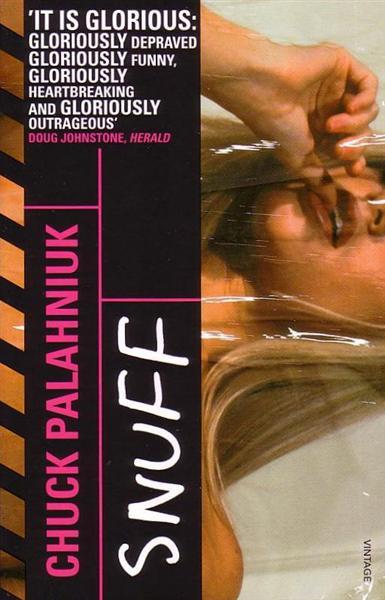
His 2008 novel, Snuff, is another ick-inducing read, this time taking on the world of pornography. You can read my review of it here.

Unsettling Chapters: Piercing

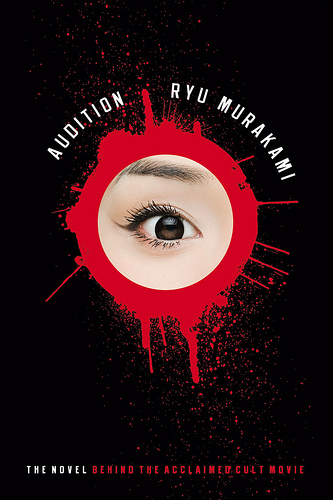
Ryu Murakami is on the cutting edge of Japanese literary fiction and horror fiction (and the Japanese have a knack for producing quality horror). Murakami (not to be confused with Haruki Murakami, a dark author in his own right) might be best known to American audiences for the disturbing film adaptation of his novel Audition.

What I like about his fiction is both its incredibly dark, disturbing qualities, but also his exploration of psychological distress. The finest example of this is the short novel, Piercing.

Piercing begins with Kawashima Masayuki, a new father, suffering from insomnia and staring down into the crib of his sleeping daughter. He is sweating and holding an ice pick. Yes, an ice pick. Every night he repeats this ritual, fighting the urge to stab his child with the weapon.

He doesn’t say it by name, but Murakami is writing about a very common, yet misunderstood condition: obsessive-compulsive disorder.

People unfamiliar with OCD often recognize it or ridicule it by its popular caricatures (comically repetitive actions), while in truth, these outward manifestations (or compulsions) are symptoms rather than the disease.

The true horror of OCD lies in the obsessions, which are more difficult to portray in books and cinema. Here, the sufferer visualizes upsetting fantasies: committing acts of violence against loved ones; performing self-mutilation; throwing oneself off a high structure.

Or holding an ice pick to the throat of a sleeping child.

It’s easy to see why the truth about OCD is seldom discussed and not really understood. The obsessions are irrational and disparaging (who would want to hurt themselves or their loved ones?) and therefore difficult (and shameful) to explain or discuss. And even once you get over those hang-ups, are you any closer to understanding why the brain would act as its own worst enemy?

As someone interested in narratives of psychological distress (and someone with OCD) I find this to be a rich subject matter. What I love about Murakami is that he explores this disorder without naming it in his novel. Rather than explaining away Kawashima’s actions, the reader is left struggling to figure out why he has such twisted fantasies.

Of course, a great novelist will only use this as a launch pad for a deeper story. Murakami sends his protagonist on a journey. The result is a surreal and disturbing trip into one man’s psychosis. In fact, we seldom return to the catalytic event that spurred this journey. Instead, we follow Kawashima’s descent into a nightmare world with numerous twists, trysts and the surreal imagery associated with Japanese horror.

And as the title suggests, Murakami explores various uses of the word “piercing,” from ice picks to body art—but especially the penetrating nature of our darkest insights.

Unsettling Chapters: Institutionalization

A timeless trope of horror media is the mental institution, be it Halloween’s Smith’s Grove, Alice Cooper’s From the Inside, Dr. Seward’s sanitarium in Dracula or any of a thousand basic cable ghost-hunting shows. And it’s not difficult to understand why.

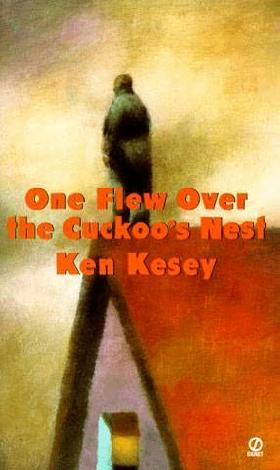
There isn’t any part of a mental institution that can’t be manipulated to induce terror. Of course, there is the fear of the inmates, but also the fear of the doctors or the administration (see One Flew Over the Cuckoo’s Nest). And a rundown asylum serves as an excellent backdrop in any creative work.

But my diagnosis is that the greatest fear we have of institutions is something more primal. It’s not the fear of the inmates or the caretakers or the troubled spirits that haunt the Rubber Room. It’s much simpler than that. It’s the fear of confinement, the horror of institutionalization.

That’s probably not much of a newsflash. Shocker: most people are afraid of being locked up in a tiny cell and treated like they’re criminally insane! But I think what I’m getting at is the universality of mental illness and its close relationship with horror. I bet that more people are afraid of losing control of their faculties than are afraid of death.

I would also guess that a fair number of horror writers and readers can credit their love of the genre to their own struggles with inner demons. (For a great social history of institutionalization, read Foucault’s Madness and Civilization.)

Prior to becoming a journalist, I worked for seven years at an inpatient detox facility in Boulder, Colorado. My experiences there were ineffable, and from the time I started as an addictions counselor to the present, I have tried to write about events there through both fiction and nonfiction.

Every attempt has been a false start.

Turns out, it’s a tough world to describe without becoming sensationalistic, sappy or overly scientific.

However, there are two writers who capture the horror of institutionalization in a magnificent way: Russian heavyweights Anton Chekhov and Fyodor Dostoyevsky.

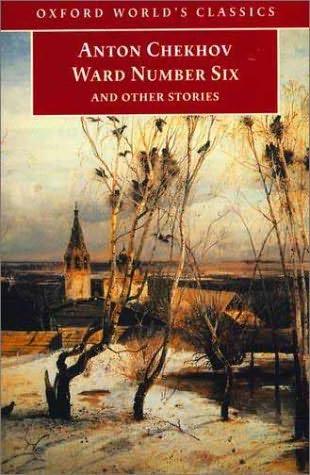
Let’s start with Chekhov’s novella, Ward No. 6, which draws us into this world almost as if the reader were an incoming patient. The first four chapters provide an overview of the institution and introduce its inhabitants. We meet the main character, Dr. Andrey Yefimitch, in chapter five, and here, we gain fresh perspective. We switch from patient to doctor as he becomes our lens through which we view the mentally ill, most strikingly through his interactions with Ivan Dmitritch. Yefimitch evolves through their awkward meetings. We feel his internal struggle with life both inside and outside the ward, and watch him blur the ever-permeable line between the diagnostician and the diagnosed.

It’s not surprising. In the high-stress environment of an institution, it is inevitable that one becomes part of the environment. As Yefimitch says, “‘I am not ill at all, it’s simply that I have got into an enchanted circle which there is no getting out of.’”

This gets at what I believe lies beneath the surface of every creative work featuring an
institution, be it a mental hospital, a prison, a nursing home. We’re not afraid of the inhabitants. We’re afraid of joining them.

On par with Ward No. 6 is Dostoyevsky’s The House of the Dead, which is based on the author’s four years incarcerated in a Siberian work camp. Here, Dostoyevsky gives us one of his darkest and most direct novels.

The first thing that strikes me is that The House of the Dead begins not with the institution, but with the setting around it. We get an idyllic description of Siberia, which is hardly what one would expect with a Russian prison narrative. And like Chekhov, Dostoyevsky provides us with a guide: Alexandr Petrovitch Goryanchikov.

We meet the city on page one, the protagonist on page two, and through the latter we enter the prison itself.

Another daring decision Dostoyevsky makes concerns the narration. Despite being told through the lens of an inmate, the narrator is not telling his own story. Instead, the novel consists of pages retrieved from Alexandr Petrovitch’s notes, as discovered by the narrator and offered along with his comments and perceptions.

There are two advantages to this that I see. The first is that the distance allows for dispassion. By serving as a filter between us and Alexandr Petrovitch, the narrator avoids sentimentality and sensationalism. The second is that by using the found manuscript, we still have the thrill of suspense. If the narrator were telling his own story, we’d at least know that he is alive at the time of the telling. But with a found manuscript, we’re wondering throughout what may or may not happen to its author.

The manuscript also gives us a segmented view of Petrovitch’s life in prison rather than his entire incarceration story. While there is a linear flow to the book (beginning with Petrovitch’s entrance to prison and concluding with his release), the arranging of the book by themes allows Dostoyevsky more freedom when fictionalizing his incredible experiences.

Both books weigh heavy on the reader, but this does not, I believe, imply despair. At once dreary and hopeful, the texts blur the line between inside and out, and cause the reader to reconsider preconceived notions of institutions. In Ward No. 6, we see the institution as a reflected image, as those on the outside find themselves drawn inward. In The House of the Dead, we get a first-hand account of the lives of the incarcerated. Though describing the outcast, Dostoyevsky startles the reader with a milieu that’s surprisingly familiar.

It leaves one rethinking the nature of institutions and builds on our fear of captivity. What role would we assume in a Dostoyevskian drama? Are we the doctor? The visitor? The inmate?

Sure, the traditional horror memes are nice, but true terror oozes from the pages of Ward No. 6 and The House of the Dead. These are heavier reads, and you might not finish them by Halloween. But for my money, there aren’t many settings more frightening than a 19th century Siberian prison.

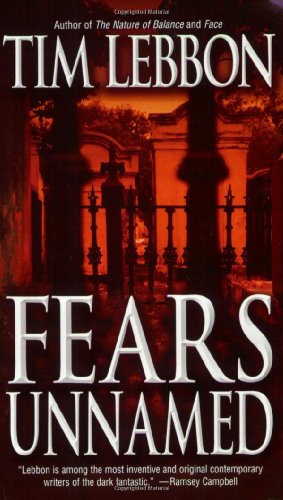
Unsettling Chapters: Fears Unnamed

Setting can be a literary minefield. When used correctly, it can create affecting works of art (think The Shining, The House of the Seven Gables or J.G. Ballard’s Concrete Island). But sometimes a writer can become so fixated on setting that they produce a literary still life that is beautiful to look at, but what about the characters? If two people are having a conversation on a bridge, do we really need a three-page description of the bridge?

Probably not, but when setting works to complement the narrative, it strengthens the reader’s bond to a location. My favorite book is Stephen King’s The Stand, mostly because of the first-rate character development: Larry’s sadness, Stu and Franny’s determination, the loneliness of Harold and Nadine. But I can still see those bodies crucified to telephone poles along the Nevada highway. When I moved to Boulder, Colorado, I walked along Pearl and Arapahoe Streets, imagining them the way King did in the novel. During a recent trip to New York, I took a drive through the Lincoln Tunnel and could think only of Larry’s gut-wrenching subterranean escape from a New York ravaged by Captain Trips.

Speaking of stellar post-apocalyptic settings, another master is British writer Tim Lebbon.

Lebbon is a highly decorated author of horror, fantasy and sci-fi. He’ll soon be releasing a new novel in the U.K., Coldbrook, and a collection of short fiction, Nothing as it Seems, but for this Halloween, we’re recalling his 2004 collection, Fears Unnamed.

The four novellas that make up this collection all rely heavily on setting, be it a dystopian landscape covered by a strange, unceasing snow; the interior of a plane crashing into the frigid ocean; or the homey English countryside under attack from some bizarre threat.

The story that stands out the most for me in this collection is “Remnants,” in which the narrator, Peter, is summoned by an old friend to join him in some unidentified, far-off desert. The friend, Scott, is an archeologist and has discovered what he believes to be a city of the dead. The story is more fantasy than horror, and in truth is as much an adventure tale in the vein of Poe’s The Narrative of Arthur Gordon Pym of Nantucket and H.P. Lovecraft’s At the Mountains of Madness.

Once there, the city becomes a central character:

“Spread across the floor of the depression in the land, seemingly growing from the ground, lay the remains of several large and dozens of smaller buildings. Sand and grit was skirted around bases and against walls, drifted up and through openings that may have been windows, may have been wounds.”

Setting takes on a greater role as we descend into the city’s streets. On the one hand, it’s a psychological riddle, a lost city occupied by ghosts, and is symbolic of Scott, who has gone mad in part due to the death of his son. On the other hand, the city is a physical place, and to navigate its throughways Peter must learn its history and overcome his fear of the spirits residing there.

The city becomes magical yet suspenseful, and through Peter’s efforts it becomes a place of memory and memorial. The buried dead are not forgotten here. This is a place inhabited by all the interred things, and the pain of it is too much for Peter to bear.

He has found the place where all the hurt is buried, and ultimately Peter’s antagonist is not his old friend, but the city itself. “I plunged into the tunnel without a backward glance. If I turned I may have seen something impossible to ignore, a sight so mind-befuddling that it would petrify me, leaving me there to turn slowly to stone or a pillar of salt.”

Lebbon’s achievement is that he not only takes us to this otherworldly place, but makes it somehow familiar.

And for those who’ve had enough of the summer heat, dig into “White,” a fictional freeze-out that delivers chills in more ways than one.

Unsettling Chapters: Mo Hayder

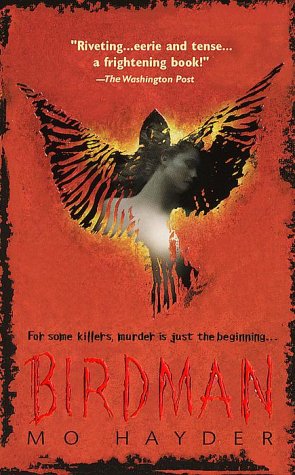
You’re more likely to find English author Mo Hayder’s 2000 debut novel, Birdman, filed under crime or mystery than horror, but don’t let that fool you. This book is more gruesome, sadistic and delivers more chills than almost anything you’ll find on the horror shelves.

Birdman contains just about all the elements a fan of subversive literature could ask for: graphic violence, necrophilia, torture, mutilation, the creepy next-door neighbor, the tormented detective with a troubled past, an unsolved child murder that haunts the entire tale and you’ll never guess how the birds come into play.

Befitting its tagline, “For some killers, murder is just the beginning…” this book will disturb the most hardened of readers.

Hayder published a sequel, The Treatment, themed around child pornography, which futhered the torment of her protagonist, Jack Caffery, and his quest to find his missing brother. Unfortunately, The Treatment failed to hit the same high notes as Birdman, but was bold enough to leave us with a white-knuckle cliffhanger that left fans clamoring for resolution.

However, Hayder went another direction with subsequent books, Tokyo and Pig Island, which are stand-alone novels unconnected with the Jack Caffery series. They failed to live up to the promise of her debut, but Hayder showed a willingness to push limits, taking us to gangland Japan and to the remote island home of a reclusive Scottish cult.

In 2008, Hayder returned to Jack Caffery with Ritual, the first in her Walking Man series. The fourth installment of the series is set for publication in 2013.

Unsettling Chapters: Man in the Dark

Unsettling Chapters is a month-long celebration of dark fiction brought to you by Ensuing Chapters book blog and Transgress digital magazine. Every day through Halloween, we’ll feature reviews, discussions and recommendations of some of the most frightening books ever printed. Check back or subscribe to our feed for your daily dose of darkness.

One of my all-time favorite records is Shotgun Messiah’s Violent New Breed, a dystopic industrial-metal assault that is as much manifesto as music. What you hear within its tracks is the sound of your inner demons clawing their way out through your throat.

That’s also how I would describe the writing of Paul Auster, best known for existentialist works such as The Invention of Solitude, Travels in the Scriptorium and The New York Trilogy. These grim tomes remind us that it is not the dark we are afraid of, but rather being left alone inside our own heads, which run riot in the small hours of night.

Which brings us to 2008’s Man in the Dark.

In this short novel, aging writer August Brill struggles with insomnia and attempts to lull himself to sleep by creating a story about a man named Owen Brick. It’s a dystopian tale of senseless war and a fractured America, which provides an alternate history to 9/11. The narrative of Man in the Dark shifts between Brill’s nocturnal counterfactuals and the despair of his waking existence. Recently widowed, he shares a house with his daughter and granddaughter (also recently widowed, in a manner of speaking).

The despair deepens as the source of the familial insomnia is revealed.

Despite being written in the first-person, Man in the Dark has the texture of a third-person narrative. Auster balances the two narratives (the waking and the counterfactual) along with interactions with other family members that expand plot points and keep us engaged in the story without focusing on the singular event driving this piece.

And of course, the fictional narrative within the narrative allows Brill to reveal insights into his life without the bias or sentimentality of confession. He uses Owen Brick as a stand-in for his own life.

When the climax comes, it feels inevitable. Auster achieves this result not with a clever twist (although there is an affecting shock at the end) but through the groundwork he lays throughout the novel. He transforms a simple first-person narrative into something more complex and complete, much as a reader would expect from a multi-character, third-person POV.

Most important for our purposes, Auster has penned a haunting work that reminds us that there is only one thing to fear in the dark—our own mind.

I recommend that you devour this book with Violent New Breed playing in the background.

And let those inner demons do their worst.

Unsettling Chapters: Marabou Stork Nightmares

Unsettling Chapters is a month-long celebration of dark fiction brought to you by Ensuing Chapters book blog and Transgress digital magazine. Every day through Halloween, we’ll feature reviews, discussions and recommendations of some of the most frightening books ever printed. Check back or subscribe to our feed for your daily dose of darkness.

For all the horror film and literature I consume, people sometimes assume that I scare easy. Well, not so much. Horror has its visceral thrills, but for me, it’s more of an aesthetic experience. I enjoy the atmosphere more than the scares, and find humor in the most gruesome onscreen butchering. In general, I’m a tough nut to disturb.

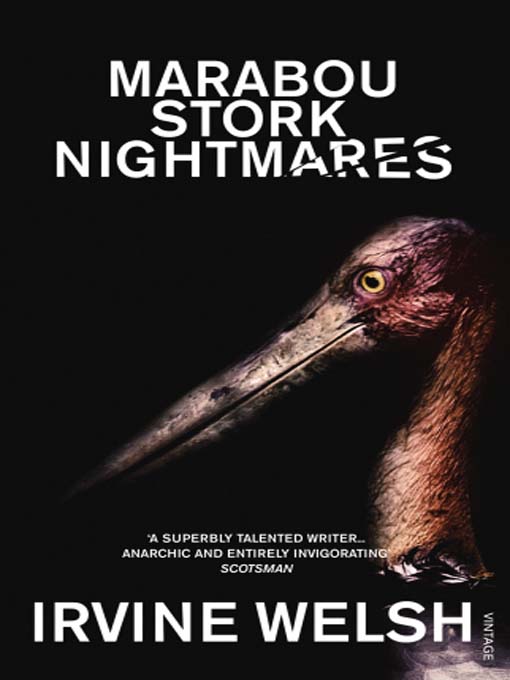
Which brings us to Marabou Stork Nightmares.

Don’t consider this a recommendation. Consider this a challenge.

This novel has the distinction of being the only book that has kept me up at nights as an adult. The reader survives this book as much as they enjoy it. Be warned, this is a tense work of psychological brutality that forces you to confront human nature. It’s a case study of devolutionary psychopathology, of working class nihilism and the addictive lure of violence. And a stellar piece of literature you’ll never forget.

Of course, Irvine Welsh is best known for his debut novel, Trainspotting. Marabou Stork is his second full-length, first published in 1995. The story is narrated by Roy Strang, a comatose soccer hooligan with a troubled past. We experience the story from inside Strang’s head, which creates a narrative as compelling as it is disjointed. He oscillates through multiple levels of consciousness, which are represented visually with different fonts that run forward, back and sometimes up the page. This textual manipulation further immerses the reader in the nightmare.

When closest to death, Strang endures wild hallucinations centered on a safari in which he is hunting the marabou stork, a vicious scavenger that will eat other animals alive. Strang’s life story weaves throughout this psychedelic and troubling narrative, until the fractured shards of his memory come back together.

I once lent Marabou Stork Nightmares to a friend, an addict who was well-acquainted with the back alleys of hell, and he returned it two days later. He’d finished the book in less than 40 hours, in part because it was so good that he couldn’t stop reading—and in part because he was too troubled to sleep.

Any book that elicits this type of visceral response is a must-read for Halloween.

Welsh has also written a number of horrific short stories, most of which appear in his stellar collection The Acid House. Recommended stories include, “The Shooter,” “Eurotrash” and the delightful “Snuff.”

Parts of this post are adapted from an earlier article of mine, “Thirteen horrifying reads for Halloween,” which appeared in the Boulder Camera in 2008.

Unsettling Chapters: Edgar Allan Poe

If you’re like me, autumn is a state of mind rather than a season. The world is rich with color and wonder, at once thrilling and reflective. It’s a reminder that, yes, everything dies, but that, like the turning leaves, we are most beautiful at the last.

And if you’re like me, Halloween is not a day to dress up as somebody else, but rather the one day a year that the rest of the world sees things your way.

With that in mind, starting today, Ensuing Chapters and Transgress digital magazine are teaming up to make this autumn even better. To supplement your Halloween horrors, each day, from Oct. 1 through Samhain, we’ll be posting reviews and discussions of some of the most frightening books ever printed.

Think of it as a literary advent calendar for All Hallows’ Eve!

We’re calling it Unsettling Chapters. Ooooooh!

Some of these will be short stories, some novels, and whenever possible, we’ll include a link for readers to access works that are available online.

A few disclaimers:

To be clear, we’re talking about terrifying reads. This does not necessarily mean horror, though expect plenty of the genre to make the list. There will be short scares, epic thrillers, transgressive mysteries, literary horrors and more than a few classics. The common thread is that they will all be unsettling in some way.

It’s also worth noting that this is not a “best of” or any attempt at a definitive list. This is simply a collection of a few dozen literary works that have kept me up at night. There are plenty of books out there that I haven’t read yet. Please, offer suggestions of titles I’ve missed. I’m always looking for more good reads for myself… and for next year’s list.

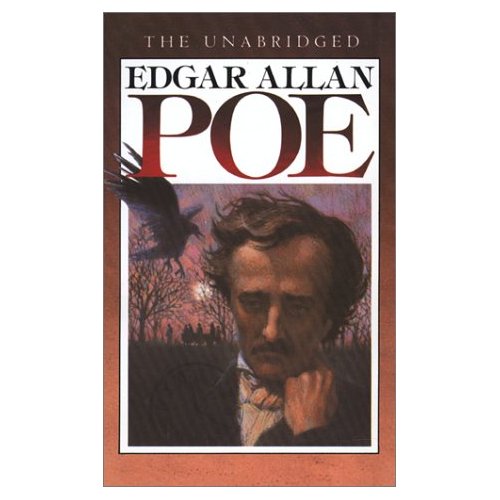
We begin this series with Halloween’s go-to author, Edgar Allan Poe. It’s difficult to actually specify a particular book of his, as there are hundreds of collections of his work, themed and otherwise, sometimes complete, sometimes not. You really can’t go wrong with any of them, and for our purposes, we’re going to use my personal favorite, a leather-bound, early-’90s edition, The Complete Tales and Poems of Edgar Allan Poe.

It’s just not autumn without a dirge or two from Poe. This anthology gives you plenty to choose from—the ghoulish, the grotesque and those gloomy Gothic tales that warm the soul. Of course, his classics are all here, such as my favorite, “The Masque of the Red Death” (which terrified me as a child and chills me as an adult with its social commentary). There’s “Hop-Frog,” the ultimate revenge tale, and the haunting decay of “The Fall of the House of Usher.”

And Poe reminds us that love is eternal in one of his lesser-known and most demented pieces, “Berenice,” which revels in both the endearment and dangers of amateur dentistry.

Poe’s works are in the public domain, and you can download all of them for your e-reader at Project Gutenberg. Stories can also be read online through the Edgar Allan Poe Society of Baltimore, including the following recommended texts:

“Berenice”

“The Fall of the House of Usher”

“Hop-Frog”

“The Masque of the Red Death”

Parts of this post are adapted from an earlier article of mine, “Thirteen horrifying reads for Halloween,” which appeared in the Boulder Camera in 2008.