Authors

Unsettling Chapters: Piercing

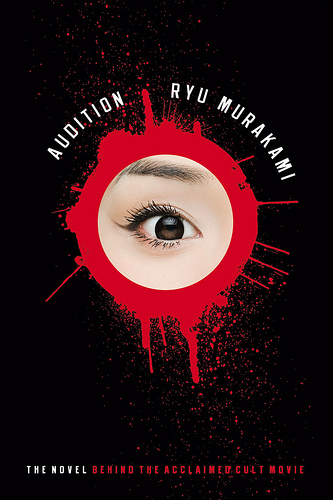
Ryu Murakami is on the cutting edge of Japanese literary fiction and horror fiction (and the Japanese have a knack for producing quality horror). Murakami (not to be confused with Haruki Murakami, a dark author in his own right) might be best known to American audiences for the disturbing film adaptation of his novel Audition.

What I like about his fiction is both its incredibly dark, disturbing qualities, but also his exploration of psychological distress. The finest example of this is the short novel, Piercing.

Piercing begins with Kawashima Masayuki, a new father, suffering from insomnia and staring down into the crib of his sleeping daughter. He is sweating and holding an ice pick. Yes, an ice pick. Every night he repeats this ritual, fighting the urge to stab his child with the weapon.

He doesn’t say it by name, but Murakami is writing about a very common, yet misunderstood condition: obsessive-compulsive disorder.

People unfamiliar with OCD often recognize it or ridicule it by its popular caricatures (comically repetitive actions), while in truth, these outward manifestations (or compulsions) are symptoms rather than the disease.

The true horror of OCD lies in the obsessions, which are more difficult to portray in books and cinema. Here, the sufferer visualizes upsetting fantasies: committing acts of violence against loved ones; performing self-mutilation; throwing oneself off a high structure.

Or holding an ice pick to the throat of a sleeping child.

It’s easy to see why the truth about OCD is seldom discussed and not really understood. The obsessions are irrational and disparaging (who would want to hurt themselves or their loved ones?) and therefore difficult (and shameful) to explain or discuss. And even once you get over those hang-ups, are you any closer to understanding why the brain would act as its own worst enemy?

As someone interested in narratives of psychological distress (and someone with OCD) I find this to be a rich subject matter. What I love about Murakami is that he explores this disorder without naming it in his novel. Rather than explaining away Kawashima’s actions, the reader is left struggling to figure out why he has such twisted fantasies.

Of course, a great novelist will only use this as a launch pad for a deeper story. Murakami sends his protagonist on a journey. The result is a surreal and disturbing trip into one man’s psychosis. In fact, we seldom return to the catalytic event that spurred this journey. Instead, we follow Kawashima’s descent into a nightmare world with numerous twists, trysts and the surreal imagery associated with Japanese horror.

And as the title suggests, Murakami explores various uses of the word “piercing,” from ice picks to body art—but especially the penetrating nature of our darkest insights.

Unsettling Chapters: Institutionalization

A timeless trope of horror media is the mental institution, be it Halloween’s Smith’s Grove, Alice Cooper’s From the Inside, Dr. Seward’s sanitarium in Dracula or any of a thousand basic cable ghost-hunting shows. And it’s not difficult to understand why.

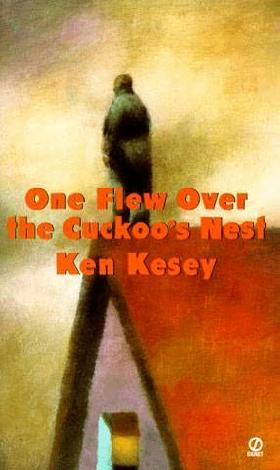
There isn’t any part of a mental institution that can’t be manipulated to induce terror. Of course, there is the fear of the inmates, but also the fear of the doctors or the administration (see One Flew Over the Cuckoo’s Nest). And a rundown asylum serves as an excellent backdrop in any creative work.

But my diagnosis is that the greatest fear we have of institutions is something more primal. It’s not the fear of the inmates or the caretakers or the troubled spirits that haunt the Rubber Room. It’s much simpler than that. It’s the fear of confinement, the horror of institutionalization.

That’s probably not much of a newsflash. Shocker: most people are afraid of being locked up in a tiny cell and treated like they’re criminally insane! But I think what I’m getting at is the universality of mental illness and its close relationship with horror. I bet that more people are afraid of losing control of their faculties than are afraid of death.

I would also guess that a fair number of horror writers and readers can credit their love of the genre to their own struggles with inner demons. (For a great social history of institutionalization, read Foucault’s Madness and Civilization.)

Prior to becoming a journalist, I worked for seven years at an inpatient detox facility in Boulder, Colorado. My experiences there were ineffable, and from the time I started as an addictions counselor to the present, I have tried to write about events there through both fiction and nonfiction.

Every attempt has been a false start.

Turns out, it’s a tough world to describe without becoming sensationalistic, sappy or overly scientific.

However, there are two writers who capture the horror of institutionalization in a magnificent way: Russian heavyweights Anton Chekhov and Fyodor Dostoyevsky.

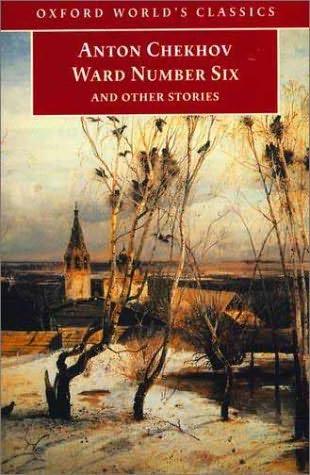
Let’s start with Chekhov’s novella, Ward No. 6, which draws us into this world almost as if the reader were an incoming patient. The first four chapters provide an overview of the institution and introduce its inhabitants. We meet the main character, Dr. Andrey Yefimitch, in chapter five, and here, we gain fresh perspective. We switch from patient to doctor as he becomes our lens through which we view the mentally ill, most strikingly through his interactions with Ivan Dmitritch. Yefimitch evolves through their awkward meetings. We feel his internal struggle with life both inside and outside the ward, and watch him blur the ever-permeable line between the diagnostician and the diagnosed.

It’s not surprising. In the high-stress environment of an institution, it is inevitable that one becomes part of the environment. As Yefimitch says, “‘I am not ill at all, it’s simply that I have got into an enchanted circle which there is no getting out of.’”

This gets at what I believe lies beneath the surface of every creative work featuring an
institution, be it a mental hospital, a prison, a nursing home. We’re not afraid of the inhabitants. We’re afraid of joining them.

On par with Ward No. 6 is Dostoyevsky’s The House of the Dead, which is based on the author’s four years incarcerated in a Siberian work camp. Here, Dostoyevsky gives us one of his darkest and most direct novels.

The first thing that strikes me is that The House of the Dead begins not with the institution, but with the setting around it. We get an idyllic description of Siberia, which is hardly what one would expect with a Russian prison narrative. And like Chekhov, Dostoyevsky provides us with a guide: Alexandr Petrovitch Goryanchikov.

We meet the city on page one, the protagonist on page two, and through the latter we enter the prison itself.

Another daring decision Dostoyevsky makes concerns the narration. Despite being told through the lens of an inmate, the narrator is not telling his own story. Instead, the novel consists of pages retrieved from Alexandr Petrovitch’s notes, as discovered by the narrator and offered along with his comments and perceptions.

There are two advantages to this that I see. The first is that the distance allows for dispassion. By serving as a filter between us and Alexandr Petrovitch, the narrator avoids sentimentality and sensationalism. The second is that by using the found manuscript, we still have the thrill of suspense. If the narrator were telling his own story, we’d at least know that he is alive at the time of the telling. But with a found manuscript, we’re wondering throughout what may or may not happen to its author.

The manuscript also gives us a segmented view of Petrovitch’s life in prison rather than his entire incarceration story. While there is a linear flow to the book (beginning with Petrovitch’s entrance to prison and concluding with his release), the arranging of the book by themes allows Dostoyevsky more freedom when fictionalizing his incredible experiences.

Both books weigh heavy on the reader, but this does not, I believe, imply despair. At once dreary and hopeful, the texts blur the line between inside and out, and cause the reader to reconsider preconceived notions of institutions. In Ward No. 6, we see the institution as a reflected image, as those on the outside find themselves drawn inward. In The House of the Dead, we get a first-hand account of the lives of the incarcerated. Though describing the outcast, Dostoyevsky startles the reader with a milieu that’s surprisingly familiar.

It leaves one rethinking the nature of institutions and builds on our fear of captivity. What role would we assume in a Dostoyevskian drama? Are we the doctor? The visitor? The inmate?

Sure, the traditional horror memes are nice, but true terror oozes from the pages of Ward No. 6 and The House of the Dead. These are heavier reads, and you might not finish them by Halloween. But for my money, there aren’t many settings more frightening than a 19th century Siberian prison.

Unsettling Chapters: Fears Unnamed

Setting can be a literary minefield. When used correctly, it can create affecting works of art (think The Shining, The House of the Seven Gables or J.G. Ballard’s Concrete Island). But sometimes a writer can become so fixated on setting that they produce a literary still life that is beautiful to look at, but what about the characters? If two people are having a conversation on a bridge, do we really need a three-page description of the bridge?

Probably not, but when setting works to complement the narrative, it strengthens the reader’s bond to a location. My favorite book is Stephen King’s The Stand, mostly because of the first-rate character development: Larry’s sadness, Stu and Franny’s determination, the loneliness of Harold and Nadine. But I can still see those bodies crucified to telephone poles along the Nevada highway. When I moved to Boulder, Colorado, I walked along Pearl and Arapahoe Streets, imagining them the way King did in the novel. During a recent trip to New York, I took a drive through the Lincoln Tunnel and could think only of Larry’s gut-wrenching subterranean escape from a New York ravaged by Captain Trips.

Speaking of stellar post-apocalyptic settings, another master is British writer Tim Lebbon.

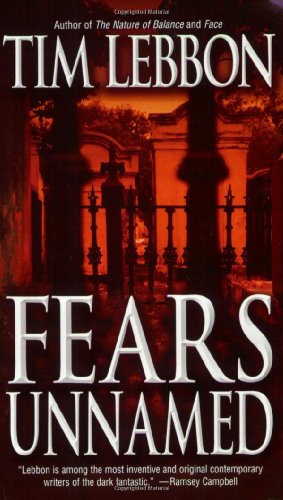
Lebbon is a highly decorated author of horror, fantasy and sci-fi. He’ll soon be releasing a new novel in the U.K., Coldbrook, and a collection of short fiction, Nothing as it Seems, but for this Halloween, we’re recalling his 2004 collection, Fears Unnamed.

The four novellas that make up this collection all rely heavily on setting, be it a dystopian landscape covered by a strange, unceasing snow; the interior of a plane crashing into the frigid ocean; or the homey English countryside under attack from some bizarre threat.

The story that stands out the most for me in this collection is “Remnants,” in which the narrator, Peter, is summoned by an old friend to join him in some unidentified, far-off desert. The friend, Scott, is an archeologist and has discovered what he believes to be a city of the dead. The story is more fantasy than horror, and in truth is as much an adventure tale in the vein of Poe’s The Narrative of Arthur Gordon Pym of Nantucket and H.P. Lovecraft’s At the Mountains of Madness.

Once there, the city becomes a central character:

“Spread across the floor of the depression in the land, seemingly growing from the ground, lay the remains of several large and dozens of smaller buildings. Sand and grit was skirted around bases and against walls, drifted up and through openings that may have been windows, may have been wounds.”

Setting takes on a greater role as we descend into the city’s streets. On the one hand, it’s a psychological riddle, a lost city occupied by ghosts, and is symbolic of Scott, who has gone mad in part due to the death of his son. On the other hand, the city is a physical place, and to navigate its throughways Peter must learn its history and overcome his fear of the spirits residing there.

The city becomes magical yet suspenseful, and through Peter’s efforts it becomes a place of memory and memorial. The buried dead are not forgotten here. This is a place inhabited by all the interred things, and the pain of it is too much for Peter to bear.

He has found the place where all the hurt is buried, and ultimately Peter’s antagonist is not his old friend, but the city itself. “I plunged into the tunnel without a backward glance. If I turned I may have seen something impossible to ignore, a sight so mind-befuddling that it would petrify me, leaving me there to turn slowly to stone or a pillar of salt.”

Lebbon’s achievement is that he not only takes us to this otherworldly place, but makes it somehow familiar.

And for those who’ve had enough of the summer heat, dig into “White,” a fictional freeze-out that delivers chills in more ways than one.

Unsettling Chapters: Poppy Z. Brite

Unsettling Chapters is a month-long celebration of dark fiction brought to you by Ensuing Chapters book blog and Transgress digital magazine. Every day through Halloween, we’ll feature reviews, discussions and recommendations of some of the most frightening books ever printed. Check back or subscribe to our feed for your daily dose of darkness.

When Poppy Z. Brite published her debut novel, Lost Souls, in 1992, the young writer was heralded as horror’s fastest rising star. Twenty years later, in semi-retirement from fiction writing, Brite’s career has taken unexpected turns, and she has quietly put together one of the more interesting literary careers of contemporary authors.

For one thing, that’s the last usage of the pronoun “she” you will read in this piece. Brite, who has always prominently featured gay and bisexual characters in her writing, identifies as a man and has begun transitioning. Brite prefers to be addressed with male pronouns, and we are happy to oblige.

With that out of the way, let’s get to important matters: his writing.

From 1992-94, Brite published two merciless novels and a stellar collection of short stories (Wormwood). He didn’t make a splash in the horror world. It was an atomic bomb. And just at the right time. The genre had grown stale, with old masters losing steam and horror cinema bottoming out. Anne Rice was probably the exception as far as freshness and popularity, but her books and films were too appealing to the mainstream to appease darker tastes.

And then there was Brite.

Brite attracted a loyal goth following with his fractured tales of loners, transients and outcasts of all variety. This was horror for the disenfranchised, and his books made heroes of society’s rejects who found themselves drawn, through their outsider-ness, into fugues of violence and evil.

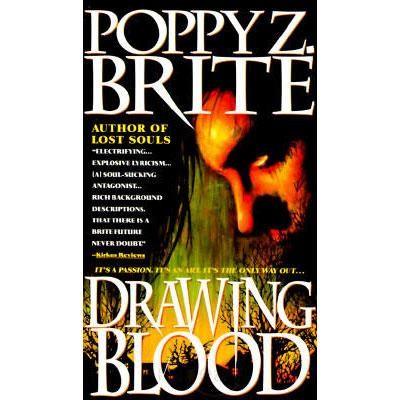
My favorite of his books is 1993’s Drawing Blood, which features two homeless youth—cartoonist Trevor McGee and computer hacker Zachary Bosch—who cross paths and form a romantic bond inside an abandoned house. Together, they are tortured by and confront Trevor’s haunted past (along with a little help from the music of Charlie Parker).

It gets even better: Legend has it that, in 1994, a man firebombing a mail store in Los Angeles set himself on fire. Inside the store, waiting to be shipped, were original copies of Drawing Blood. The books supposedly absorbed the smell of his burning flesh and became collector’s items, with copies of the $7 paperback selling for hundreds of dollars.

But this novel doesn’t need urban legends to succeed. Brite is at full-strength in this novel. He captures the humanity of his outsider characters, the weirdness of his short fiction and the depravity of the world with both existential and supernatural elements.

Speaking of Brite’s short fiction, Wormwood, his first collection, is another of my Halloween staples, especially the tales “Angels” and “His Mouth Will Taste of Wormwood.”

Following this remarkable opening run of books, he published Exquisite Corpse, which eased back on the gothic elements, but retained the horror. In later years, Brite has kept the dark but added comedy to his writing. He has a series of novels set in restaurants, and his nonfiction appears regularly in the Times-Picayune and other publications.

Brite is currently semi-retired from fiction writing, but fans (both old and new) can still relish in his early works each Halloween.

Parts of this post are adapted from an earlier article of mine, “Thirteen horrifying reads for Halloween,” which appeared in the Boulder Camera in 2008.

Unsettling Chapters: Man in the Dark

Unsettling Chapters is a month-long celebration of dark fiction brought to you by Ensuing Chapters book blog and Transgress digital magazine. Every day through Halloween, we’ll feature reviews, discussions and recommendations of some of the most frightening books ever printed. Check back or subscribe to our feed for your daily dose of darkness.

One of my all-time favorite records is Shotgun Messiah’s Violent New Breed, a dystopic industrial-metal assault that is as much manifesto as music. What you hear within its tracks is the sound of your inner demons clawing their way out through your throat.

That’s also how I would describe the writing of Paul Auster, best known for existentialist works such as The Invention of Solitude, Travels in the Scriptorium and The New York Trilogy. These grim tomes remind us that it is not the dark we are afraid of, but rather being left alone inside our own heads, which run riot in the small hours of night.

Which brings us to 2008’s Man in the Dark.

In this short novel, aging writer August Brill struggles with insomnia and attempts to lull himself to sleep by creating a story about a man named Owen Brick. It’s a dystopian tale of senseless war and a fractured America, which provides an alternate history to 9/11. The narrative of Man in the Dark shifts between Brill’s nocturnal counterfactuals and the despair of his waking existence. Recently widowed, he shares a house with his daughter and granddaughter (also recently widowed, in a manner of speaking).

The despair deepens as the source of the familial insomnia is revealed.

Despite being written in the first-person, Man in the Dark has the texture of a third-person narrative. Auster balances the two narratives (the waking and the counterfactual) along with interactions with other family members that expand plot points and keep us engaged in the story without focusing on the singular event driving this piece.

And of course, the fictional narrative within the narrative allows Brill to reveal insights into his life without the bias or sentimentality of confession. He uses Owen Brick as a stand-in for his own life.

When the climax comes, it feels inevitable. Auster achieves this result not with a clever twist (although there is an affecting shock at the end) but through the groundwork he lays throughout the novel. He transforms a simple first-person narrative into something more complex and complete, much as a reader would expect from a multi-character, third-person POV.

Most important for our purposes, Auster has penned a haunting work that reminds us that there is only one thing to fear in the dark—our own mind.

I recommend that you devour this book with Violent New Breed playing in the background.

And let those inner demons do their worst.

Unsettling Chapters: Marabou Stork Nightmares

Unsettling Chapters is a month-long celebration of dark fiction brought to you by Ensuing Chapters book blog and Transgress digital magazine. Every day through Halloween, we’ll feature reviews, discussions and recommendations of some of the most frightening books ever printed. Check back or subscribe to our feed for your daily dose of darkness.

For all the horror film and literature I consume, people sometimes assume that I scare easy. Well, not so much. Horror has its visceral thrills, but for me, it’s more of an aesthetic experience. I enjoy the atmosphere more than the scares, and find humor in the most gruesome onscreen butchering. In general, I’m a tough nut to disturb.

Which brings us to Marabou Stork Nightmares.

Don’t consider this a recommendation. Consider this a challenge.

This novel has the distinction of being the only book that has kept me up at nights as an adult. The reader survives this book as much as they enjoy it. Be warned, this is a tense work of psychological brutality that forces you to confront human nature. It’s a case study of devolutionary psychopathology, of working class nihilism and the addictive lure of violence. And a stellar piece of literature you’ll never forget.

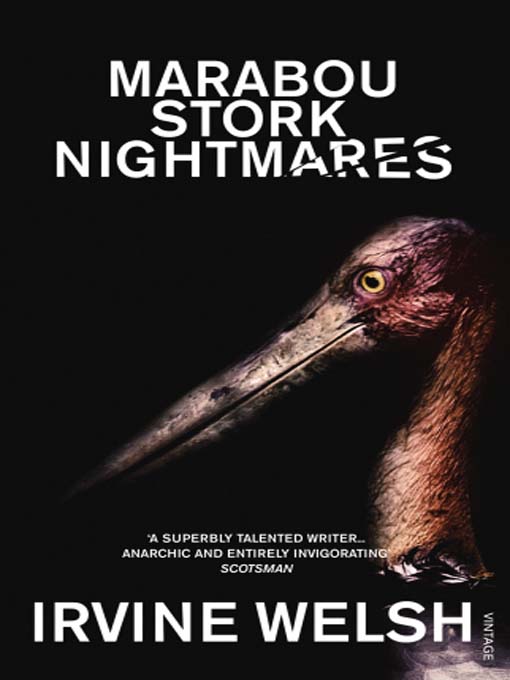
Of course, Irvine Welsh is best known for his debut novel, Trainspotting. Marabou Stork is his second full-length, first published in 1995. The story is narrated by Roy Strang, a comatose soccer hooligan with a troubled past. We experience the story from inside Strang’s head, which creates a narrative as compelling as it is disjointed. He oscillates through multiple levels of consciousness, which are represented visually with different fonts that run forward, back and sometimes up the page. This textual manipulation further immerses the reader in the nightmare.

When closest to death, Strang endures wild hallucinations centered on a safari in which he is hunting the marabou stork, a vicious scavenger that will eat other animals alive. Strang’s life story weaves throughout this psychedelic and troubling narrative, until the fractured shards of his memory come back together.

I once lent Marabou Stork Nightmares to a friend, an addict who was well-acquainted with the back alleys of hell, and he returned it two days later. He’d finished the book in less than 40 hours, in part because it was so good that he couldn’t stop reading—and in part because he was too troubled to sleep.

Any book that elicits this type of visceral response is a must-read for Halloween.

Welsh has also written a number of horrific short stories, most of which appear in his stellar collection The Acid House. Recommended stories include, “The Shooter,” “Eurotrash” and the delightful “Snuff.”

Parts of this post are adapted from an earlier article of mine, “Thirteen horrifying reads for Halloween,” which appeared in the Boulder Camera in 2008.

Ensuing Chapters 9.8.12

Stop a moment. Breathe. Deeper now. Sure, it’s still north of 90 in Colorado, but as the days die quicker, a liminal chill fills the soul. For my money, you can keep summer and winter. But autumn…

The overdone cliché in book reviewing is the summer reading list. I’m not sure who started it, or who all these people are reading at the beach, but I’m certainly as guilty as the rest. But truly, the best time to indulge in the written word is autumn, with its cooler climes, longer nights and olfactory-fueled melancholia.

And aren’t books always better when paired with a hot mug of tea?

Some of my favorite September/October memories are of spending Friday nights among the stacks at the Boulder Book Store. As a youth, my friend and I would drive a half hour from our book-deprived hometown in Pennsylvania to Twice-Loved Books in Youngstown, Ohio. And some of the best autumn reading I’ve acquired at Denver’s Tattered Cover, or the Poudre Library District in Fort Collins.

As an avid reader of horror, I often find my favorite books marginalized on the shelves—except during the fall. For two months, the storefront displays boast the books that make my year-round reading list.

You will find plenty of horror previewed here at Ensuing Chapters, but there’s a wealth of diverse autumn gold coming your way in the following weeks.

Sept. 3

Last year, we lost one of the great journalists of our time, and one of my personal heroes, Christopher Hitchens. This champion of reason was known for his bold reporting on war and religion, and was equally brave in the face of cancer. Published on Sept. 4, Mortality will appeal to Hitch’s loyal readers, but is also of interest to anyone who’s lost someone to cancer (e.g. nearly everyone).

Few writers have captured the depth and beauty of the natural world like transcendentalist writer Henry David Thoreau. His new book—yes, new book—October, or Autumnal Tints, is a lecture he gave near the end of his life. He envisioned it one day being released in print with accompanying illustrations.

That day was Sept. 3.

His tribute to the greatest of all months, penned in the autumn of his own life, reframes the changing colors and dying leaves as symbols of maturity rather than decay. Reading Thoreau is always a treat. Reading his musings on autumn in autumn seems like paradise.

In the song “Little Too Clean,” Soul Asylum’s Dave Pirner croons, “Don’t you know dirt will find you/ and dirt reminds you/ that dirt will always be there.” It’s the song that keeps looping in my head while reading the jacket of Moises Velasquez-Manoff’s new book, An Epidemic of Absence: A New Way of Understanding Allergies and Autoimmune Diseases.

Exploring one of the big issues of our time, science writer Velasquez-Manoff uncovers a shocking rise in food allergies and autoimmune disorders, such as Celiac and type-1 diabetes, and equally shocking treatments that rely on parasites rather than pharmaceuticals. One of the unexpected contributors to our sickness, he finds, is that sanitation and antibiotics have altered our inner ecologies to the point that we lack the organisms that keep us in check.

We have become a little too clean—or maybe even a lot too clean.

Sept. 10

What do we know about Lee Child’s compelling protagonist, Jack Reacher? He likes travel, he’s a sharpshooter with a wicked double-tap, and no matter where he roams, he always ends up in the same place: trouble.

Celebrating the 17th installment of the Jack Reacher series, plus related short stories (personal fave: “James Penney’s New Identity” from Thriller), Child has climbed from the crime writing underground to the top of the best-seller list. He is likely to summit once again with the release of A Wanted Man on Sept. 11.

I am an avid reader of Child’s books. I love the Jack Reacher franchise. But when the peripatetic maverick hits the big screen, I hate that it will be Tom Cruise (boo, hiss) portraying Reacher.

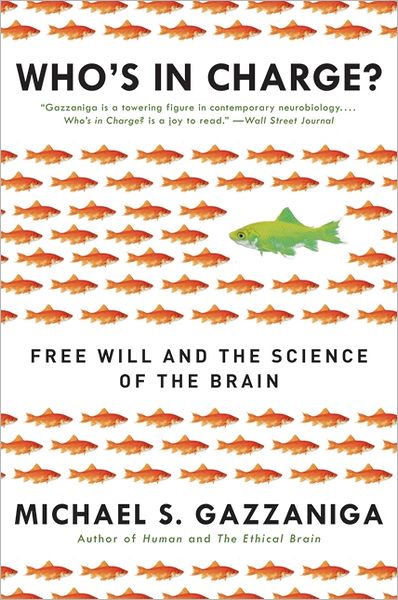
Who’s really writing this book blurb? I thought it was me, but one might want to reconsider after reading Michael S. Gazzaniga’s Who’s in Charge?: Free Will and the Science of the Brain. Gazzaniga surveys the science, psychology and ethics at work in our thoughts and behaviors.

Who’s in Charge? is a work of great importance as breakthroughs in neuroscience have revealed greater complexities than ever imagined at work in the brain. And launched the next great frontier of philosophical inquiry.

Published last year, the paperback reprint hits shelves Sept. 11.

Legendary journalist Bob Woodward goes from Deep Throat to Deep Gridlock in The Price of Politics, his 17th book. In this detailed account, Woodward chronicles Washington’s attempts to rescue the economy these past few years.

Talk about the ideal primer to the madness of election season. For the more devout political readers (and I know a few of you), Woodward’s new book is political porn to get you in the mood as we steamroll toward November.

We’ll preview other September releases in the coming weeks. Please follow Ensuing Chapters to receive our weekly previews, reviews and interviews.

Carrie Vaughn Interview: Kitty Steals the Show

Of Wolf and Woman
Best-selling author Carrie Vaughn discusses the transfiguration of Kitty Norville from diffident lycanthrope to alpha werewolf
by Vince Darcangelo

In 2005, author Carrie Vaughn introduced the world to Kitty Norville, a Denver radio personality who hosts a call-in advice show for supernatural beings. After all, as Vaughn says, “if there really were werewolves and vampires in the modern world, they’d need their own advice show. Dr. Laura just wouldn’t be able to handle their problems.” Kitty, a werewolf herself, picks up the slack, and her adventures have taken her from Colorado to Chinatown, Las Vegas to D.C.

The series, which started with Kitty and the Midnight Hour, has become wildly popular, and has consistently landed on The New York Times’ best-seller list. This summer, Tor released Kitty Steals the Show, the 10th installment of the series, in which Kitty goes transatlantic. Set in London, Kitty is the keynote speaker at the First International Conference on Paranatural Studies. Supernatural creatures from across the globe descend on the great city—and not all of them have good intentions.

Prior to her Aug. 15 reading, I sat down with Carrie Vaughn at the Boulder Book Store to discuss her new book, our cultural fascination with the paranormal and the design and evolution of Kitty Norville through the years.

Ensuing Chapters: You’ve described [Kitty] as Bridget Jones’ Diary meets The Howling. Do you want to reintroduce her character for our listeners and readers?

Carrie Vaughn: Sure. The one-line description I’ve been using lately is the series is about a werewolf named Kitty who hosts a talk-radio advice show for the supernaturally disadvantaged. It’s very useful having a one-sentence tag line, especially when it makes people go, “What? What are you talking about?”

Ensuing Chapters: What inspired you to set the novel in London?

Carrie Vaughn: I love London. I studied abroad in Britain when I was in college, so I’ve been to London before and a couple times since. Building the novel around the international conference, I knew I wanted to set it outside the U.S. so that I could take a look at what the supernatural elements look like in another country. I was familiar with London, so I knew I could do a lot with it there. I knew where I wanted to set scenes. I had some historical figures that I wanted to reference who are native to London.

And it’s such an international city, such a multicultural city. I could set any kind of story I wanted to there. Basically anything I wanted to have happen could happen in London.

Ensuing Chapters: Were there any places in particular that really inspired you?

Carrie Vaughn: One of the places I had to have a scene was Hyde Park, because it’s so incongruous. It’s kind of London’s Central Park, if you think of how incongruous Central Park is, that you have some of the most valuable real estate in the world smack in the middle of Manhattan, and just by force of will it has remained this amazing open space, open wilderness area almost. And Hyde Park is kind of the same way… There’s a lot of history and a lot of incongruous wilderness area, and it seemed that if I was going to write a werewolf story then I had to put something in Hyde Park.

Ensuing Chapters: How important is setting to you when writing a story or writing a book?

Carrie Vaughn: It’s kind of deceptively important, because it’s not something I necessarily think about a lot. But it does end up anchoring the story. Initially, I wasn’t going to set it in a specific city. I wanted to have it in an unnamed city that could be any city, and my editor said, ‘No, you’ve really got to pick a city and have it be concrete.’ I picked Denver because that was the most familiar, but on thinking about it, Denver’s the perfect city for this kind of story because you have the very urban setting where you can tell urban stories. You’re an hour away from the mountains where you can tell wilderness stories. I’ve got my werewolf characters who are both civilized and wild, and I can tell both those kinds of stories in the same setting.

And I like going to other cities because it lets me tell other stories. I personally like traveling, so it’s in my nature to want to go to other places. But it also really opens up the kinds of stories I can tell. Las Vegas, especially. Making Las Vegas supernatural, I didn’t have to do any work. It’s already there. There actually is a production show based around vampires. It’s called Bite. You see the billboards on the trucks driving through town, and it’s topless vampires dancing on stage. If I had made that up, nobody would have believed me, but it’s actually there. Things like that really add to the world. It makes the world of the novel have that much more depth.

The previous book before this I set in San Francisco’s Chinatown, Kitty’s Big Trouble, because I wanted to include some non-western mythology in the world of the novels. That was a really fun way to do it for me, to go to Chinatown and bring in some of the Chinese mythology. And it’s fun. It means I’m never going to tell the same story twice.

Ensuing Chapters: And a clever title for that [Kitty’s Big Trouble].

Carrie Vaughn: Thank you. I got asked a lot about whether I meant to do that. Of course I meant to do that. What do you take me for?

Ensuing Chapters: Let’s talk a little bit about the area where you work, what a lot of people call urban fantasy, or a variety of cross-genres you can put it in with. When we spoke last time, vampires were really big, and now zombies have really taken over. What do you read into our fascination with these iconic creatures? Is it something that’s always cyclical? Or is there something particular to the creatures we become fascinated with?

Carrie Vaughn: These creatures have been around a lot longer than we think, than a lot of people give them credit for. People talk about the current wave of urban fantasy, and I have entire rants about this because even the term urban fantasy has changed a lot over the last 20 years.

Twenty years ago, the term referred to Charles de Lint, and Emma Bull, Neil Gaiman’s work that brings mythology and folklore into a contemporary urban setting. And now it’s come to mean a lot more: These adventure-oriented, sexy stories about, usually, women, the kick-ass women with all the weaponry and the vampire romance on the side. But that’s very restrictive, so I don’t like to just focus on that.

But the thing is that vampire stories are not new. They’ve always been popular. They’ve come in waves in what they’ve focused on, but you can go back. Before Laurel K. Hamilton, there was Anne Rice. In between there was P.N. Elrod and Chelsea Quinn Yarbro and other people who were writing vampire stories. Before Anne Rice there was Dark Shadows. And then there were the Universal horror movies. You can go back and back and back and there have always been vampire stories.

Zombie stories, they aren’t new, but once again it depends how you define zombie. That’s where I kind of get tripped up a little bit because the modern, Dawn of the Dead, monster-type zombie is a really modern creation. The traditional folkloric zombies aren’t anything like it, if you go to the origins of the Haitian folklore. I’ve recently re-watched The Serpent and The Rainbow, which does a pretty darn good job for all its sensationalism. In that folklore, zombie meant something very specific, and they weren’t interested in eating brains.

That’s a very new addition to the mythology. And I’m not sure where it comes from. I have heard lots of theories, and probably parts of all of them are true. Modern fears with things like radiation and food production and epidemics, disease. The mass-produced culture where we don’t know where things come from, and we don’t know how things spread. We can’t trace the trajectories of that, and so the idea of the mindless monster that is a product of our own society coming back to destroy us all, that’s the base metaphor and it’s a very powerful metaphor. So I can understand why it’s popular.

But as a cultural movement, the fact that there are people who are out there forming their zombie apocalypse plans and building their bunkers and stuff. I’m not sure what I think about all that.

Ensuing Chapters: What is the fascination with the werewolf? Maybe a theory on what, culturally, the fascination is, and personally, why you chose a werewolf?

Carrie Vaughn: I can tell you what traditionally the werewolf is, and the werewolf is interesting because for about the last 130 years it’s been pretty much the same thing. It hasn’t changed. The vampire has changed a lot. It’s become this other creature representing sin and decay coming from outside the community, and now it’s a symbol of power and immortality and forbidden pleasures and all of these highly sexualized, highly powerful metaphors. So the vampire has changed a lot.

Werewolf stories just have never gotten their time in the light. There have always been werewolves, but culturally, they’ve kind of been stuck in this ‘beast within’ type story. I’ve been calling it the Jekyll and Hyde story. With a few exceptions, every werewolf story—that has focused on werewolves specifically—has been the Jekyll and Hyde: Somebody who’s been overwhelmed by their base instincts and the beast within bursts out and destroys everything and then it dies. The end.

There’s just not a whole lot you can do with that. If that’s the story you’re focusing on, it always has the same trajectory and the same end. You can tell really good stories with that. I think An American Werewolf in London is brilliant, but it’s the same. You get infected, you struggle with the beast within, which bursts free and does horrible things, and then you die. Ginger Snaps, which is another great, recent werewolf movie, the same kind of thing. Even though it kind of turns it on its head. I feel like culturally, people haven’t gotten past the idea that werewolves represent the struggle with base nature, and it’s always the struggle with the beast within. And the beast within always has to lose.

One of the reasons I decided to make the main character a werewolf was to try to get past that metaphor. We can have good stories about werewolves if we’d just get past the idea that werewolves are always doomed to fall victim to this beast within dichotomy. Let’s pretend that you can actually be a well-balanced, functional werewolf who is in control of the beast within and you can actually function in society. What happens then? That just opens it up. Werewolves can then become characters rather than these metaphors, which is what they end up seeming to be in most of the stories that you see them in.

Ensuing Chapters: And we’ve seen not only the difference with the Kitty character from the old storyline, the old metaphors, but also her evolution through the series. She started off more reserved and behind the microphone to becoming the alpha of her pack. You’ve done a great job of balancing those different sides of her. What do you think of her evolution and how she’s progressed over the years?

Carrie Vaughn: That was pretty intentional. I get asked about that a lot because one of the big complaints with the first book, Kitty and the Midnight Hour, is that she’s so passive and she’s so submissive and she’s not very powerful. People say it like it’s a criticism, and then I come back and say, ‘I actually meant to do it that way.’ I wanted the first book to be a story about someone without very much power learning to take care of herself. That seemed to me to be a really powerful story that would resonate with people.

Back to the urban fantasy thing. That’s so far outside the normal trope in urban fantasy, where you start out with the powerful kick-ass woman who spends the first chapter strapping the stilettos onto her forearms and sharpening her katana, and going out and kicking ass. And Kitty doesn’t do that at all. I think it was just something that people weren’t used to seeing.

But as the series has gone on, it’s been my intention to have her power, her sphere of influence, I guess, increase. It’s expanded just a little bit every book. She learned to take care of herself. Then she has to learn to stand up and declare how she stands on certain issues. Then she has to learn to take care of the people around her. Then she has to learn how to take care of the pack and her family and as her power has grown, her responsibilities have also grown. Those have gone hand in hand. First it was her pack, and now she’s become the spokesperson for supernatural creatures everywhere in her world.

Is she going to rise to the occasion? That’s been a lot of her arc. It’s not, ‘What is she going to beat up this time?’, but, ‘What is her responsibility this time?’ Will she be able to handle it? I’ve wanted to have her grow in strength so that she can handle it each book.

Ensuing Chapters: How would you describe Kitty Steals the Show to folks who haven’t picked up the book yet or heard you talk about it?

Carrie Vaughn: So there’s this international conference, and Kitty has been appointed to give the keynote address because of her notoriety with the talk show. She’s become well enough known that she’s seen by the international community as a spokesperson. This is her chance.

One of the shticks of the book is that she doesn’t really know what she’s going to say at the speech until the very last minute. And that’s one of the themes of the book: What is she going to say? She faces all kinds of conflicts. She gets a front-row seat. She gets to see really what’s at stake here, and then she has to stand up and try to rally people to seeing things her way. It is kind of a political book, as you might expect. It really is trying to move her up to the next level. Now she’s on the stage, and she can’t step back off again.

Ensuing Chapters: There’s a passage in the opening chapter that I really enjoyed. It’s after the hunt, and everyone’s waking up and Kitty says: ‘I stretched, straightening legs and arms, pulling at too-tight muscles, reminding myself of the shape of my human body after a full-moon night of running as a wolf.’ We get this discomfort in her and the others as they’re returning to their human form, which I think captures a lot of those dichotomies or the dissociations that we’ve had with her struggling with assertiveness. Could you talk a bit about the inner conflicts and complexities of Kitty and how you portray these? Does it feel schizophrenic when you’re writing her character and dealing with the transformation from wolf to human?

Carrie Vaughn: Not really because that’s been part of my point, to depict her as fairly well integrated. To me that was one of the problems with the werewolf as a creature. It was always either-or. They’re either a person or a monster, and the struggle was between the two. But in order to be a functional werewolf, you would have to, at some point, integrate the two of those. I’ve always seen it as a scale. No matter what form they’re in, a werewolf is always going to be a little bit of both. The challenge is to write a scene like that with language that isn’t necessarily negative or positive, that’s just a neutral description that doesn’t see one form as negative and one form as positive, but sees them both as part of the same being.

And the other thing is having her be part of the pack and bring in some of the wolf biology, actual research into wolf behavior to think about what a pack would be like. Ultimately, the pack is something that helps them all stay human. They’re acting like wolves, but it’s enough of an anchor that it keeps them from becoming monstrous.
Ensuing Chapters: What are the political themes that you’ve really been passionate about, that you’ve explored, and how do you balance the politics with the entertainment and the narrative story line?

Carrie Vaughn: Once again, I do have an intention. I have an agenda with some of this. The whole thing has kind of grown out of some of my observations with other vampires and werewolves in the real world-type stories. One of them is the real world in a lot of those stories doesn’t actually look like the real world. They didn’t tackle politics. People didn’t have jobs. If I was going to set stories in the real world, I wanted to have them be about the real world, and I wanted to have it be recognizably our world.

Part of that was having the crazy politician who has their pet thing that just sounds absolutely crazy to everybody else, and yet somehow they manage to keep getting elected and keep trying to pass legislation. I have that kind of character who shows up every now and then. There’s not one topic that I’m necessarily passionate about, but I do want to bring in as much of that as I can because it makes the world seem more real.

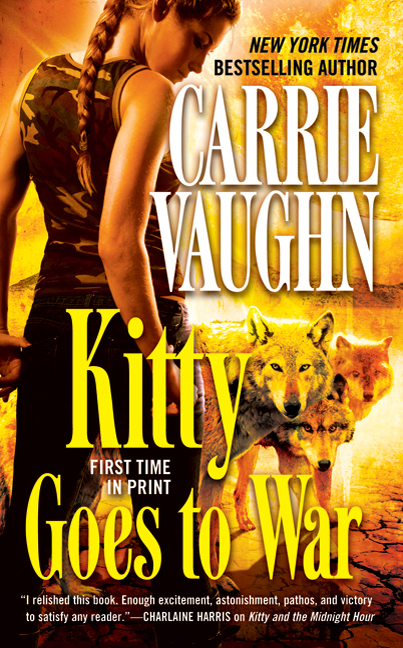
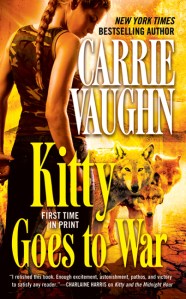
Kitty Goes to War was one that I wanted to do for a long time, and I finally got to do it. That was the issue of war veterans, returning veterans with some post-traumatic stress issues. And just the idea that if there are vampires and werewolves and supernatural creatures, the military is going to find a way to use them. That seemed to be a really obvious thing to deal with. And other writers have dealt with that. The typical way is to deal with them in the field. What would a troop of werewolf soldiers look like and set the story there? Well, Kitty is my main character. I can’t send her off to Afghanistan and have her embedded. Maybe I could have, but I don’t think that would have been as good of a story.

The story I wanted to tell was bringing these soldiers home and their struggles with trying to reintegrate when they’ve got not just the post-traumatic stress but being a werewolf. Having been out of regular, normal society, how do they integrate all these different aspects? That’s the story I ended up telling. It was a more meaningful story to me, really, than actually showing the battles.

Ensuing Chapters: A lot has been made of the presence of [supernatural] characters in fiction, historically, as a representation of people who feel, or are, outside of regular society, be they in some way different or as an example of a war veteran who’s been changed by a certain experience. How do you feel about that as a psychological deconstruction of these characters?

Carrie Vaughn: It’s an obvious metaphor, so I think it’s perfectly good to tackle that metaphor and tackle those issues. As a writer, it’s useful for me to use some of that as a model. In Kitty’s world, the existence of the supernatural is slowly being revealed to people, and politicians are slowly getting involved and awareness is coming about slowly.

One of the models I used for how that would actually work is AIDS awareness in the early ’80s, which was a really kind of fraught thing. It wasn’t something that people even bought into for a long time. It was something that the government didn’t want to acknowledge for a long time. If you were directly involved, you knew everything there was to know about it. But if you weren’t involved in the community, if you didn’t live in one of the major hot points where the disease was really gaining ground, you wouldn’t know anything about that.

From the writing side, that’s where it becomes useful. We actually have real-world examples of what it’s like to be an outsider or what it’s like to be an object of hate. And from the other side of it, it would be really nice if writing about it could give somebody from perhaps a community that’s looked down on, if it could give them something to relate to. That’s a plus. It’s representation. You have to try to represent as much as you can in the world, because you never know who you’re going to be talking to, and who you might relate to, who might see themselves in your books. You want to be as truthful as you can.

Ensuing Chapters: Have you been surprised at all, or touched in any particular way, by some of the responses from fans?

Carrie Vaughn: I think 99 percent of the responses I get are great. One of the things that surprised me is, I don’t know if you’ve heard of something called therianthropy, or therianthropes. It’s a condition where people believe that they are more canine than human. There are people who really do identify more with dogs and wolves than they do with people. They see themselves that way, and, as much as they can and still function in society, they model their lives that way.

I’ve gotten several e-mails from people who identify as therianthropes, and one of them I got said that reading the Kitty books was the first time he’d ever read a book where he related to the main character, which blew me away. I know how powerful it can be to read a novel where you identify with the main character. To never have that in your life until my book came along, that was just astonishing to me. And I felt very humbled. I’ve gotten several, and it’s really interesting because you can sit here and think well, that’s kind of weird, people thinking that they’re canines, but when I get the e-mails, they all start off the same way: You’re going to think this is crazy, but, I identify as therianthrope. They’re very aware that they don’t fit into people’s normal conception of what people should be, and they’re very touchy about that. So it’s just really great to be able to talk to them and say, ‘That’s really cool that you’re reading the books. I’m really glad that they speak to you and that’s great.’

For more of Carrie Vaughn and Kitty Norville, or to subscribe to Vaughn’s blog and learn about her other books, visit http://www.carrievaughn.com/.

Recommended Reads (Aug. 13)

It’s not too late to pack in some great summer reads. Here is Ensuing Chapters‘ recommended reads for the week of Aug. 13, highlighting upcoming and recent releases.

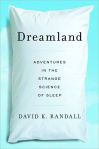
Dreamland: Adventures in the Science of Sleep 

by David K. Randall

Journalist and somnambulist David K. Randall explores the schematics of slumber in this round-up of sleep study anecdotes and analysis, to be released Aug. 13. This promises to be a quirky and informative science read in the vein of Mary Roach and Sam Kean.

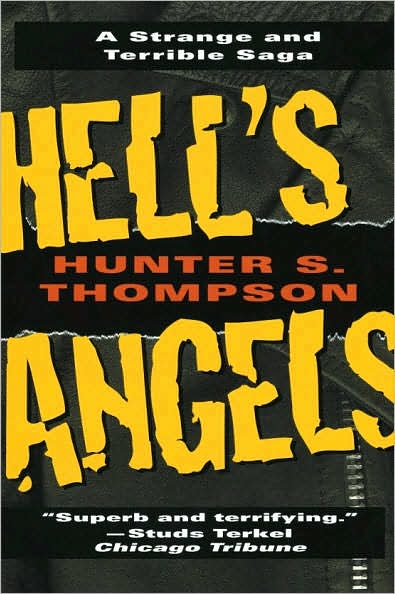
Hell’s Angels
by Hunter S. Thompson

This seminal work of gonzo journalism, released digitally for the Nook earlier this month, is a hawg-stomp of danger, debauchery and wicked escapism. This ultra-violent ode to the outlaw biker, released in 1966, still stands as a cultural document of ’60s counter-culture, a fearless feat of immersion reporting and an epic fantasy for anyone who’s felt like ditching the mainstream, straddling a Harley and living free amid the underworld.

Of course, there is no fairy-tale ending for Thompson, who finds himself on the wrong end of the bikers’ boots. Edgy, controversial, hyperbolic, sensationalistice. Yep, it’s all those things. It’s also damn good. Finally, a reason to get a leather jacket for your Nook.


Darwin’s Ghosts: The Secret History of Evolution

by Rebecca Stott

Darwin wasn’t the first scientist to observe natural selection at work. His discovery was, like his theory, the product of years of evolution and adaptations, both in thought and society. Here, Stott, an English teacher and author of earlier books on Darwin, gives credit to the thinkers and tinkers who laid the groundwork for On the Origin of Species.

Recently, Stott was interviewed by New York Times‘ book reviewer John Williams. You can read their Q&A here.


This Will End in Tears: The Miserablist Guide to Music

by Adam Brent Houghtaling

This manifesto of misery celebrates the purist of guilty pleasures: the sad song. Sure, we’ve all enjoyed a slow-drag at a high school dance, or hit repeat on Soul Asylum’s “Endless Farewell” whilst nursing a heartbreak. But why do we enjoy them even when we’re happy?

Ballads, like heartaches, come in all varieties, but for Houghtaling, they all share a skeletal structure, which he details in This Will End in Tears. Susan Stamberg, of National Public Radio, recently interviewed Houghtaling. He offered insights to the genre, a few musical suggestions and a sneak preview of the book here.