psychological

Unsettling Chapters: House of Leaves

We are all familiar with the parameters of dream logic—the mental space where things are out of place or time but follow an alternative, interior logic. You know, like you’re catering a dinner for all your ex-girlfriends in a gothic castle, and for some reason Dog the Bounty Hunter is pitching you a show about vigilante sea lions. You wake up and wonder: “Why did that make sense?”

It’s a fun diversion that is, unfortunately, difficult to replicate in waking consciousness. But you can come close by reading Mark Z. Danielewski’s House of Leaves, a 2000 horror novel that is more of an entity than a book.

Designed with multiple fonts and colors, footnotes within footnotes and text running backward, forward, upside down, even spiraling, the physical layout of the text manipulates the novel’s pacing and creates a somewhat interactive experience.

It’s probably as close as we’ve come to reading with 3-D glasses.

The narrative is equally layered and complex, and academics have taken multiple stabs at this book. I would guess it’s had the most scholarly treatments of any horror novel since Frankenstein. Therefore, I won’t even attempt to offer an academic account, as I don’t have anything particularly profound to say on that front (and would bore myself to tears in the process).

What I can speak to is the effect Danielewski creates by inviting the reader into a story that they can’t quite trust. We have multiple unreliable narrators; the ever-shifting dimensions of a house; drug-impaired testimony; unverifiable videotapes; and the ravings of a half-mad blind man. (He also borrows the Lovecraftian theme of geometry-induced madness, not to mention a mysterious tome.)

Can we trust what we see and read? Hell no. And that’s why House of Leaves is so unnerving.

I think of it as a literary haunted house. Every October, people line up outside strip malls, warehouses and amusement parks to navigate dark, disorienting hallways. They know they won’t be harmed, but will experience the thrill of uncertainty.

The same with House of Leaves. It elicits a visceral reaction in a way few other books can. We’re aware of what Danielewski is doing. When we need to rotate the book to read the text, we know it’s to recreate the impossible geometry of the staircase. When there is one word of text on a page, it’s to replicate the cavernous quality of the basement and to force us to read slower.

But we’re affected just the same, as when we’re knowingly manipulated inside a haunted house.

House of Leaves is not a quick read. It is an experience. If you started reading it today, I don’t know that you could finish it by Halloween. But I feel confident in saying that you’re not supposed to read it that quick. This is a book to be absorbed. It should age along with you.

Read correctly, you will internalize the disorientation. You will want to measure the length of every hallway in your house to find inconsistencies. To make sure, every day, that the dimensions of your world haven’t changed while you were sleeping.

Because in Danielewski’s world, they do change. Sometimes they’ll shift right under your feet, and they might even swallow you whole.

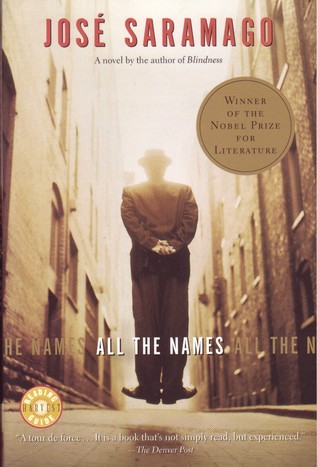
Unsettling Chapters: All the Names

As I’ve expressed in previous posts, loss of one’s identity is one of the more unsettling outcomes a story can provide. With life such a fleeting thing, rarely does one’s name live far beyond their years.

Fair enough. To be lost to the ages is understandable, but for some, the worst fate is to be forgotten in your own time. It’s a unique flavor of despair, born of an imbalance between social needs and social disconnect.

Nowhere is this curious space more poignantly explored than in José Saramago’s All the Names.

This book was published a year before Saramago, best known for the novel Blindness, won the Nobel Prize for Literature. All the Names is worthy of such honors.

The protagonist, one Senhor José, works in a nameless city (a stand-in for Lisbon in Saramago’s native Portugal) as a low-level clerk. Similar to Dostoyevsky and Kafka, Saramago presents us with a character caught in the gears of a drab, oppressive machine of unknown origin and inexplicable intent. He works for the Central Registry, which tracks the births, marriages and deaths of all citizens. Every life is reduced to an index card bearing these dates. The job of the Central Registry is to create, update and file each card.

“We all know that, however long old people may last, their hour will always come. Not a day passes without the clerks’ having to take down files from the shelves of the living in order to carry them to the shelves at the rear…”

José, who actually lives at the Registry building, makes nightly sojourns within its stacks. He hopes to escape his “bureaucratic alienation” by searching for meaning among the necropolis of index cards. Then one day, he finds something else. He becomes fixated on the card of an anonymous woman, and begins a clumsy search for her throughout the city.

Of course, what he’s really doing is working through an existential crisis. Or some other anxiety. The archives in the Central Registry are so large that clerks have become lost in their labyrinth. The metaphor is apt for José’s anxious mind. One bad thought, and then another. Disaster lurks eternal.

It’s unsettling to think that, in the end, we’ll be little more than forgotten statistics. The same goes for everyone we love and care for. We will all be forgotten. Time will make sure of that. What’s worse, though, is to feel societal mechanisms imposing anonymity while we’re still alive. To become a living ghost.

What makes All the Names successful, as with all existentialist writings, is that the answers seem more like questions. So, what is life if but a few dates typed onto an index card? Is there meaning or merely statistical data? Like Albert Camus, Saramago reminds us that the answer isn’t important—or even attainable. The meaning lies in the pursuit of, well, meaning.

Saramago empowers us with his narrative. He reminds us that in the face of mortality, victory is not an outcome. Victory is the fight itself. It is Senhor José taking those first bold steps into the archives, dwarfed by mountains of faceless information, to turn an index card back into a person.

I’m reminded of a favorite line from Camus’ The Plague: “And indeed it could be said that once the faintest stirring of hope became possible, the dominion of plague was ended.”

Indeed.

Unsettling Chapters: The Church of Dead Girls

Frequent readers have probably noticed a pattern among the entries of Unsettling Chapters. That is, the overt theme of a story is more often a sleight of hand. Put another way: The thing is not really about the thing.

Lovecraft’s Old Ones are a manifestation of his insecurities. McEwan’s transgressions are a front for the anxiety of individuality in the face of rigid and arbitrary social mores. Murakami’s gore portrays mental disturbances rather than literal scenes.

And so it goes with Stephen Dobyns’ 1997 mystery, The Church of Dead Girls.

As with Birdman, Mo Hayder’s debut discussed on Oct. 5, the ghoul in this novel uses human corpses as an artistic medium. But while The Church of Dead Girls offers terror and thrills, it also has high-minded literary aspirations.

The thing is not really about the thing.

This is less a whodunit and more a sociological work. What are the fears and biases of small-town folk? What prejudices are lurking in the shadows? A rash of murders and missing teenagers brings them all to the surface. Things get ugly.

The Monsters Are Due on Maple Street” ugly.

Once threatened, the townsfolk begin pointing fingers in every possible direction. This compelling arc makes for a fascinating read. And gruesomely detailed horrors make this a must-read for Halloween.

Speaking of fingers, whatever happened to those missing left hands?

Read the book and you’ll understand.

Parts of this post are adapted from an earlier article of mine, “Thirteen horrifying reads for Halloween,” which appeared in the Boulder Camera in 2008.

Unsettling Chapters: H.P. Lovecraft

Now, to one of my all-time favorites, H.P. Lovecraft.

The Wizard of Weird is one of the most puzzling figures in literature (no small feat) and a most peculiar phenomenon. Hardly read in his lifetime, his stories have since inspired movies, music, video and board games and countless writers.

The reclusive author of the Cthulhu Mythos is often overshadowed by the larger-than-life Lovecraft Mythos distilled from his letters, essays and fan speculation.

From this end of the millennium, he appears as a man out of time, which perhaps accounts for the skilled depictions of isolation and despair in his work. A troubled life, an early death—these are the makings of a horror legend.

For the HPL initiate, the place to start is The Best of H.P. Lovecraft: Bloodcurdling Tales of Horror and the Macabre. This collection of 16 of his best-known stories proves his staying power. My favorite is “The Outsider,” a dark epic of self-discovery. This story speaks to me as few stories can, and I believe this is Lovecraft at his most earnest.

“Pickman’s Model” and “The Picture in the House” explore the intersection of art and madness. For HPL, this crossroad manifests in the form of weird fiction, but I can’t help but wonder at his deeper intentions in these stories.

Likewise, “The Music of Erich Zann,” one of the finest pieces of horror fiction I’ve ever read. In a forgotten section of, presumably, Paris, a young student rents a room beneath a master violist. The man performs strange melodies at all hours of the night, and when the narrator learns of their origin… well, the story takes a classic Lovecraftian turn, but with more subtlety and greater effect. From a craft perspective, this is one of his best works.

From a reader’s perspective as well.

And I’ve got to touch on “The Rats in the Walls,” as great a depiction of psychosis and inherited guilt ever written. Be warned: It’s usually easy enough to overlook some of Lovecraft’s subtle racism, but it sits front and center in this story, which makes it tougher to swallow. If you can stomach that, you’ll enjoy this thoroughly gut-churning tale.

Then, of course, there are the mega-hits: “The Call of Cthulhu,” “The Dunwich Horror,” “The Shadow Over Innsmouth.” There’s not much I can really add to the discussion of these classics, other than to chuckle (and sometimes cringe) at Lovecraft’s story titles. He had a penchant for the noun-prepositional phrase structure favored by the pulps (“The Colour Out of Space,” “The Haunter of the Dark,” “The Thing on the Doorstep”) or a variation thereof (“At the Mountains of Madness,” “Beyond the Wall of Sleep”).

The greatest thing to happen to Lovecraft fans in recent years is the H.P. Lovecraft Literary Podcast, a thoughtful and well-produced audio chronology of his work. They started in 2009, discussing one story at a time (one episode for shorter works, multiple episodes for longer ones), and came to the end of his oeuvre earlier this year. They offer all kinds of goodies for Miskatonic alumni, including professional readings, old episodes and original works.

Best of all, though Lovecraft has been gone 75 years, his mythos live on. There are numerous collections of Lovecraft-inspired fiction, such as Future Lovecraft and Shadows Over Baker Street (an HPL/Sherlock Holmes mash-up). Writers such as Michael Chabon, Stephen King and Neil Gaiman have all contributed to the ongoing mythos.

And there is a new crop of writers adding to the legacy all the time. I highly recommend checking out the Lovecraft eZine, which publishes great artwork, weird fiction and weekly Web updates and video chats.

As a wise man once said, “That is not dead which can eternal lie.”

Unsettling Chapters: Night Shift

Of course, no list of Halloween reads would be complete without an entry from the master of horror, Stephen King. In recent years, he has produced more fantastic literature than true horror. He has also plumbed a deeper emotional depth in recent works, such as Lisey’s Story and Duma Key.

As great as these novels are, for pure chills, there’s no beating King’s early work. To get maximum bang for your October buck, revisit King’s first short-story collection, 1978’s Night Shift.

This is King at his most ruthless, featuring some of his darkest material, such as one of his forgotten treasures, “One for the Road.” Set amid the backdrop of a blizzard, a wife and daughter are stranded in a snow bank. With connections to Jerusalem’s Lot, they learn that the elements are the least of their fears.

“I Am the Doorway” is the creepy account of a retired astronaut who learned he was not alone in deep space — and he brought back a souvenir that just might drive him mad.

Some of King’s best-known works are in this collection as well: “Children of the Corn,” “Trucks” (which became the film “Maximum Overdrive”) and “The Lawnmower Man.”

My favorite fright is “Sometimes They Come Back,” an epic homage to childhood trauma and a reminder that, no matter how many years may pass, our demons are never far behind.

Of course, this is only King’s first entry in Unsettling Chapters. We will certainly see more of the master in future installments.

Parts of this post are adapted from an earlier article of mine, “Thirteen horrifying reads for Halloween,” which appeared in the Boulder Camera in 2008.

Unsettling Chapters: Darkness Peering

Alice Blanchard‘s 1999 crime novel, Darkness Peering, is one of the most promising debuts ever — a mind-bending psychological thriller set in rural Maine (classic Stephen King country).

Detective Rachel Storrow is still haunted by an 18-year-old unsolved murder that happened when she was a child, and a recent disappearance has brought that case back to the forefront. For Storrow, the killer might be closer than she thinks.

Featuring a gripping and poetic opening chapter, Blanchard takes hold of the reader’s throat and never lets go.

It’s also a surprisingly literary work. Underlying the horror is a tale of family drama, small-town suspicion and the secrets we bury with the dead.

Blanchard takes on similar themes in later books, like The Breathtaker and Life Sentences. Her short-story collection, The Stuntman’s Daughter, won the Katherine Anne Porter Prize in 1996.

But of all her works, my favorite remains Darkness Peering. This book is a perfect match for a stormy October night.

Unsettling Chapters: Lolita

When I think of what was controversial in the 1950s, I think of Elvis being filmed from the waist up. So, I went into Lolita thinking it couldn’t possibly be as scandalous as advertised nearly six decades later.

Wrong. Lolita makes To Catch a Predator seem like child’s play (so to speak). As oddly hilarious as it is disturbing, Nabakov’s classic is one of the most insightful accounts of pathology (what many refer to as Humbert’s unreliability) I’ve ever encountered, and still has the power to make the most hardened reader (i.e. me) queasy.

Reading this through the lens of a literary representation of mental illness, it’s easy to see Humbert’s source for pedophilia — his stunted sexuality from an age-appropriate childhood romance left unconsummated and forever associated with death and loss (and run-on sentences).

More subtle, though, is Humbert’s troubled conscience, which vacillates between self-awareness and self-fulfillment. Through carefully dropped hints, we realize that he is aware of Dolores’ vulnerability and her lack of interest in their adult activities. He knows what he’s doing is damaging the poor girl, but more often than not, his needs hijack his decisions.

The consequences fall squarely on the not-so-frail shoulders of 12-year-old Dolores Haze, who endures his abuse into her teen years. (Side note: Through Lolita, Nabokov paints a clear portrait of borderline personality disorder, which makes her story even more tragic.)

Still, through Humbert’s rationalizations, however twisted or self-serving, he does try to protect his stepdaughter in his own clumsy way. While his selfishness trumps all, his moments of lucid affection make him as close to sympathetic as can be (sympathetic enough that we’re rooting for him in his showdown with creepy Quilty).

What a tremendous book, and perhaps the greatest work of transgressive fiction. Nabakov’s play with language is remarkable (especially considering English was his second tongue), and the pain and desperation sweating through the pages of this novel make it timeless.

Troubling, complicated and a work of genius, this is an unsettling read for the ages.

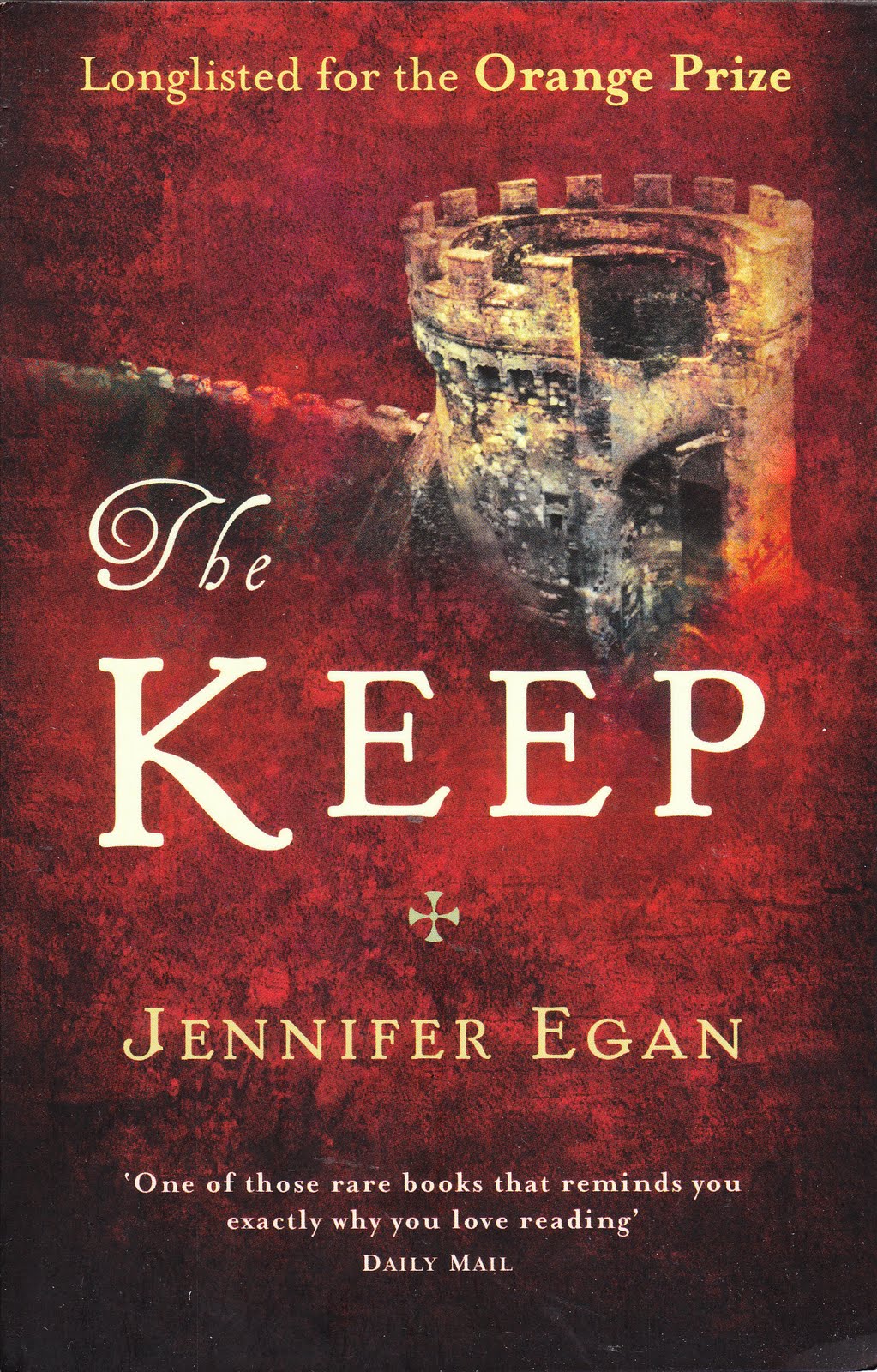
Unsettling Chapters: The Keep

Most books inspire me to write, either because, “Damn, that book was so good, I want to do that, too,” or “Damn, I could do waaay better than that.”

Then there are books like Jennifer Egan’s The Keep, which make we want to give up writing because nothing I could ever produce would come close to the genius of this book. The Keep has more levels than Scientology, and I was awed by the way Egan manages complex storylines and plot points.

The Keep begins as a gothic horror novel with a literary bent ala Joyce Carol Oates or Edgar Allan Poe. But soon, we learn that it’s a story-within-a-story. The primary storyline is actually the product of an inmate in a prison writing group (or is it more real than that?).

I often find metafiction horribly pretentious, but in Egan’s hands this device achieves a deeper complexity of character. The “fictional” tale is almost a confession, or at least catharthis, and the way the two narratives play off each other creates unbearable tension.

Finally, Egan includes a third narrative that completes the cycle of co-dependency that runs through the novel. Ultimately, this is a story of identity, exploration and imprisonment. What is real or not real doesn’t matter much. The question to answer is: What do we do with the demons that haunt us?

Or rather, Where do we keep them?

The best part is that Egan leaves these questions (and these narratives) half answered. There are no neat, tidy endings. No sunsets, no profound philosophical conclusions. There are only troubled, complex people in turn confronting and running from their ghosts.

For a book with so much surrealism, the lack of resolution at the finish gives it a stunning verisimilitude: Did we really believe we could ever completely outrun our ghosts?

At the end, I wanted the story to go on and on, which is the magic of any great novel. It leaves you imagining the characters as real people and you want to know how they turn out.

I was also left wanting for a map to figure out how Egan navigated the dark, twisting corridors of this complex, yet refreshingly enjoyable novel. Mark this down as a “must-read.”

Interestingly, there is a film version in the works. I’m not sure the narrative will hold up because of the limitations of cinema, but it will be worth a look. Just be sure to read the book first.

Unsettling Chapters: Joyce Carol Oates

Nobody does literary horror better than Joyce Carol Oates, and nowhere is the fear more palpable than in her 1994 collection of psychological terror, Haunted: Tales of the Grotesque.

Among the unrelenting terrors:

The title story, in which a woman recalls a haunted farmhouse from her youth, where she and her friend encounter something much more sinister than a ghost.

“Don’t You Trust Me?” an unsettling account of an illegal and controversial medical procedure — and the exploitation it brings.

And the disturbing “Extenuating Circumstances” is a mother’s confessional that reveals its excruciating conclusion like a mummy unwrapping its bandages (think David Foster Wallace’s “Incarnations of a Burned Child”).

This collection is also packed with signature Oates violence and revenge, and the tale of a macabre grocery store as discomforting as flakes of glass beneath the skin.

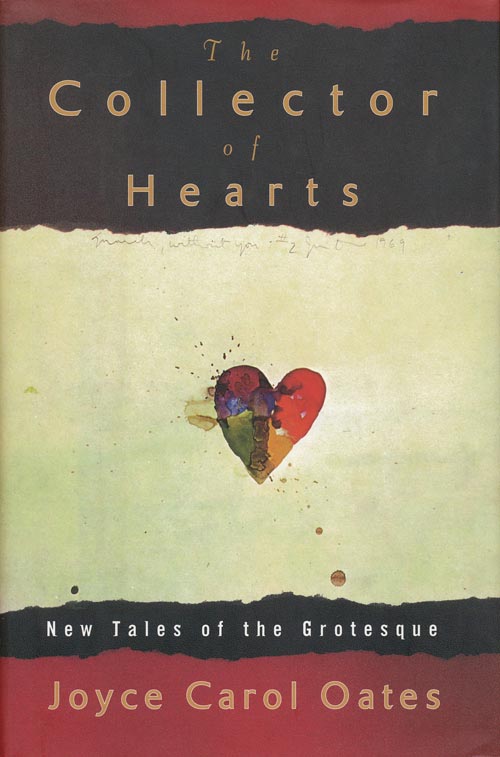
Diehards should also read the sequel, The Collector of Hearts: New Tales of the Grotesque, which has its moments, but doesn’t stand up to the original. The book starts strong, with the Twilight Zone-ish “The Sky Blue Ball,” which I think I devoured in a single breath. Haunting and mysterious, this one’s got a Creep Factor of 10.

She hits this high note again with the title story, a classic bit of Oates’ caught-in-the-spiderweb nightmare. From the start, we can guess the fate of our protagonist. And we ache throughout the piece, hoping it goes the other way.

Some of her other collections include The Female of the Species: Tales of Mystery and Suspense, a collection of short stories about female killers, and The Museum of Dr. Moses.

And fear not, fans of Joyce Carol Oates: We’re not through with the author just yet. We have another Oates entry planned closer to Halloween.

Parts of this post are adapted from an earlier article of mine, “Thirteen horrifying reads for Halloween,” which appeared in the Boulder Camera in 2008.

Unsettling Chapters: Institutionalization

A timeless trope of horror media is the mental institution, be it Halloween’s Smith’s Grove, Alice Cooper’s From the Inside, Dr. Seward’s sanitarium in Dracula or any of a thousand basic cable ghost-hunting shows. And it’s not difficult to understand why.

There isn’t any part of a mental institution that can’t be manipulated to induce terror. Of course, there is the fear of the inmates, but also the fear of the doctors or the administration (see One Flew Over the Cuckoo’s Nest). And a rundown asylum serves as an excellent backdrop in any creative work.

But my diagnosis is that the greatest fear we have of institutions is something more primal. It’s not the fear of the inmates or the caretakers or the troubled spirits that haunt the Rubber Room. It’s much simpler than that. It’s the fear of confinement, the horror of institutionalization.

That’s probably not much of a newsflash. Shocker: most people are afraid of being locked up in a tiny cell and treated like they’re criminally insane! But I think what I’m getting at is the universality of mental illness and its close relationship with horror. I bet that more people are afraid of losing control of their faculties than are afraid of death.

I would also guess that a fair number of horror writers and readers can credit their love of the genre to their own struggles with inner demons. (For a great social history of institutionalization, read Foucault’s Madness and Civilization.)

Prior to becoming a journalist, I worked for seven years at an inpatient detox facility in Boulder, Colorado. My experiences there were ineffable, and from the time I started as an addictions counselor to the present, I have tried to write about events there through both fiction and nonfiction.

Every attempt has been a false start.

Turns out, it’s a tough world to describe without becoming sensationalistic, sappy or overly scientific.

However, there are two writers who capture the horror of institutionalization in a magnificent way: Russian heavyweights Anton Chekhov and Fyodor Dostoyevsky.

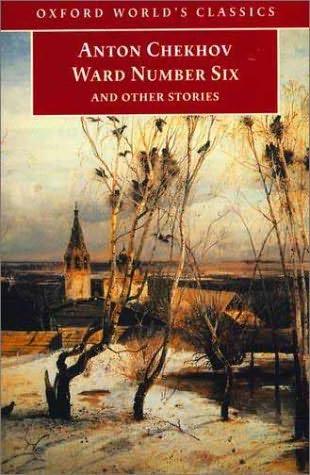
Let’s start with Chekhov’s novella, Ward No. 6, which draws us into this world almost as if the reader were an incoming patient. The first four chapters provide an overview of the institution and introduce its inhabitants. We meet the main character, Dr. Andrey Yefimitch, in chapter five, and here, we gain fresh perspective. We switch from patient to doctor as he becomes our lens through which we view the mentally ill, most strikingly through his interactions with Ivan Dmitritch. Yefimitch evolves through their awkward meetings. We feel his internal struggle with life both inside and outside the ward, and watch him blur the ever-permeable line between the diagnostician and the diagnosed.

It’s not surprising. In the high-stress environment of an institution, it is inevitable that one becomes part of the environment. As Yefimitch says, “‘I am not ill at all, it’s simply that I have got into an enchanted circle which there is no getting out of.’”

This gets at what I believe lies beneath the surface of every creative work featuring an
institution, be it a mental hospital, a prison, a nursing home. We’re not afraid of the inhabitants. We’re afraid of joining them.

On par with Ward No. 6 is Dostoyevsky’s The House of the Dead, which is based on the author’s four years incarcerated in a Siberian work camp. Here, Dostoyevsky gives us one of his darkest and most direct novels.

The first thing that strikes me is that The House of the Dead begins not with the institution, but with the setting around it. We get an idyllic description of Siberia, which is hardly what one would expect with a Russian prison narrative. And like Chekhov, Dostoyevsky provides us with a guide: Alexandr Petrovitch Goryanchikov.

We meet the city on page one, the protagonist on page two, and through the latter we enter the prison itself.

Another daring decision Dostoyevsky makes concerns the narration. Despite being told through the lens of an inmate, the narrator is not telling his own story. Instead, the novel consists of pages retrieved from Alexandr Petrovitch’s notes, as discovered by the narrator and offered along with his comments and perceptions.

There are two advantages to this that I see. The first is that the distance allows for dispassion. By serving as a filter between us and Alexandr Petrovitch, the narrator avoids sentimentality and sensationalism. The second is that by using the found manuscript, we still have the thrill of suspense. If the narrator were telling his own story, we’d at least know that he is alive at the time of the telling. But with a found manuscript, we’re wondering throughout what may or may not happen to its author.

The manuscript also gives us a segmented view of Petrovitch’s life in prison rather than his entire incarceration story. While there is a linear flow to the book (beginning with Petrovitch’s entrance to prison and concluding with his release), the arranging of the book by themes allows Dostoyevsky more freedom when fictionalizing his incredible experiences.

Both books weigh heavy on the reader, but this does not, I believe, imply despair. At once dreary and hopeful, the texts blur the line between inside and out, and cause the reader to reconsider preconceived notions of institutions. In Ward No. 6, we see the institution as a reflected image, as those on the outside find themselves drawn inward. In The House of the Dead, we get a first-hand account of the lives of the incarcerated. Though describing the outcast, Dostoyevsky startles the reader with a milieu that’s surprisingly familiar.

It leaves one rethinking the nature of institutions and builds on our fear of captivity. What role would we assume in a Dostoyevskian drama? Are we the doctor? The visitor? The inmate?

Sure, the traditional horror memes are nice, but true terror oozes from the pages of Ward No. 6 and The House of the Dead. These are heavier reads, and you might not finish them by Halloween. But for my money, there aren’t many settings more frightening than a 19th century Siberian prison.