mystery

Review: Legion

Author Brandon Sanderson is one evil dude. That was my reaction to finLegionishing his novella, Legion, concerning the peculiar (and haunted) Stephen Leeds. To be clear: Sanderson is a master storyteller, and this is one of the greatest works of short fiction I’ve read in years.

What makes Sanderson evil (in that bad-ass writer sort of way) is the fact that the story came to an end.

In December, Audible offered a free copy of Legion, which I greedily downloaded and enjoyed in one sitting. This story is compelling on so many levels that when it ended I needed complete silence to process everything.

Leeds is a peculiar man with a mental condition akin to dissociative identity disorder (a dubious diagnosis; see Debbie Nathan’s Sybil Exposed). However, Leeds doesn’t have multiple personalities. He has what he calls “aspects,” sort of like imaginary friends with benefits — meaning they sleep in their own rooms, require seats on a plane and bail you out of jams.

In truth, the aspects are the manifestations of Leeds’ genius. He is smart to the point of insanity, and, in my opinion, his aspects allow him to maintain his self-view as a “regular guy.” For example, he doesn’t perform critical analysis of arguments. He leaves that to Ivy. He isn’t a skilled marksman, so he leaves the self-defense to his munitions expert, J.C. And when he attempts to learn Hebrew during the course of a transatlantic flight, he manifests a new aspect who is already fluent.

This is a master stroke, in my opinion. A functioning protagonist who had all these skills wouldn’t be credible, unless they were super-human. And a functioning human who had all these skills would be, well, dysfunctional if they had to store all this knowledge and know-how in their brain.

So Leeds, in cerebral self-defense, delegates the multi-tasking to his apparitional A-Team, and they are a source of depth, humor and revelation. This is a great device, but something of a literary high-wire with little room for error.

Sanderson deftly manages the narrative so that it never becomes silly or gimmicky. In fact, the presence of the aspects deepens the protagonist, as his inner conflicts and contradictions play out before us.

This is played to maximum effect when the novella takes a philosophical turn. The premise of the story is that a scientist has invented a camera that can photograph the past — and now he has gone missing. Leeds determines that the scientist has gone to the Middle East in search of photographic evidence to confirm or deny Biblical history.

The nature of this quest, by a scientist in particular, leads to an interesting discussion among his various aspects, each offering a different take on religion. Here, Sanderson captures the internal struggle that comes with asking the big questions: How does one reconcile science and spirituality? Theological desire and empirical evidence?

No matter your conclusion, I’m sure we’ve all had similar conversations in our heads.

In Leeds, the discussion is thoughtful and entertaining, and enriches the story with a pensive undertone. And mention must be made of the terrific narration of Oliver Wyman.

Featuring compelling action, organic dialogue and complex characters and situations, Legion is a must-read (or must-listen).

I’m not surprised. As a longtime fan of the podcast Writing Excuses, which Sanderson co-hosts (along with Dan, Howard and Mary… who are that smart), I’ve joked that I’ve learned more from Sanderson and company than I did during my three-year MFA.

And I’m only sort-of kidding about that.

But I’m serious when I say that we need more Stephen Leeds adventures. And soon. A full-length novel, series of stories, film, TV… all of the above.

Leeds is a character brilliantly devised and fully realized. I didn’t want this story to end, and I hope to read more of Legion in the (near) future.

Unsettling Chapters: The Church of Dead Girls

Frequent readers have probably noticed a pattern among the entries of Unsettling Chapters. That is, the overt theme of a story is more often a sleight of hand. Put another way: The thing is not really about the thing.

Lovecraft’s Old Ones are a manifestation of his insecurities. McEwan’s transgressions are a front for the anxiety of individuality in the face of rigid and arbitrary social mores. Murakami’s gore portrays mental disturbances rather than literal scenes.

And so it goes with Stephen Dobyns’ 1997 mystery, The Church of Dead Girls.

As with Birdman, Mo Hayder’s debut discussed on Oct. 5, the ghoul in this novel uses human corpses as an artistic medium. But while The Church of Dead Girls offers terror and thrills, it also has high-minded literary aspirations.

The thing is not really about the thing.

This is less a whodunit and more a sociological work. What are the fears and biases of small-town folk? What prejudices are lurking in the shadows? A rash of murders and missing teenagers brings them all to the surface. Things get ugly.

The Monsters Are Due on Maple Street” ugly.

Once threatened, the townsfolk begin pointing fingers in every possible direction. This compelling arc makes for a fascinating read. And gruesomely detailed horrors make this a must-read for Halloween.

Speaking of fingers, whatever happened to those missing left hands?

Read the book and you’ll understand.

Parts of this post are adapted from an earlier article of mine, “Thirteen horrifying reads for Halloween,” which appeared in the Boulder Camera in 2008.

Unsettling Chapters: Maynard

There are many ways to unsettle the reader. There is shock, revulsion, introspect, subversion. But don’t forget subtlety. After all, I would imagine the slow constriction of the noose is the more terrifying than the drop.

Toward that end, three key elements of great horror are atmosphere, dissonance and distress. All three are manipulated to great effect in Mary Stewart Atwell’s short story, “Maynard,” which ran in the Alaska Quarterly Review and was honored in The Best American Mystery Stories 2010.

There is elusiveness in this piece that sets the reader on edge. The story is presented in a segmented style, and the core mysteries at the beginning remain mysteries at the end. There is such a tangle of loose threads that the story is unsettling to the reader long after the final words have been read.

Specifically, it is the narrator’s murky backstory that fuels the tension. She is on the run from someone who, as far as we can tell, was holding her against her will. He will find her, though, she is certain, but will we ever learn the full nature of her distress?

This is the foundation on which Atwell builds a dark, disturbing portrait of a troubled woman on the run. One of the building blocks she uses to great effect is atmosphere. Set in the rural south, Atwell colors her world with the imagery of backwoods America, a working-class dystopia of failure where methamphetamine and lawlessness run rampant. Into this world enters the narrator—whose name may or may not be Ashley.

She has three secrets she must keep hidden: her history, her whereabouts, the child to which she is about to give birth. The latter tweaks the reader’s anxiety like a shot of bathtub meth. The narrator is unequipped to care for the child, but what is she to do? She would reveal too much of herself if she put it up for adoption, so she disposes of the baby, which sets in motion the events that lead to her final confrontation.

Finally, there is the dissonance that makes the story so unsettling. The reader is unable to connect all the loose threads, and there are missing links in the chain of events that we are compelled to reconcile.

In the end, that reconciliation must come from the reader’s own mind. I discussed this story with a fellow reader long after reading, and have thought about it often since then. There are hints at great horror in this story, which is more powerful than if we knew every gruesome detail of our narrator’s story.

It lends a haunting quality that resonates through amazing lines like: “‘Ashley,’ he said. ‘Please. Don’t do this.’ But Ashley is not my name.”

Stories like this earned Atwell a deal for a full-length. Her debut novel, Wild Girls, was published on Oct. 16.

Unsettling Chapters: Darkness Peering

Alice Blanchard‘s 1999 crime novel, Darkness Peering, is one of the most promising debuts ever — a mind-bending psychological thriller set in rural Maine (classic Stephen King country).

Detective Rachel Storrow is still haunted by an 18-year-old unsolved murder that happened when she was a child, and a recent disappearance has brought that case back to the forefront. For Storrow, the killer might be closer than she thinks.

Featuring a gripping and poetic opening chapter, Blanchard takes hold of the reader’s throat and never lets go.

It’s also a surprisingly literary work. Underlying the horror is a tale of family drama, small-town suspicion and the secrets we bury with the dead.

Blanchard takes on similar themes in later books, like The Breathtaker and Life Sentences. Her short-story collection, The Stuntman’s Daughter, won the Katherine Anne Porter Prize in 1996.

But of all her works, my favorite remains Darkness Peering. This book is a perfect match for a stormy October night.

Ensuing Chapters 9.8.12

Stop a moment. Breathe. Deeper now. Sure, it’s still north of 90 in Colorado, but as the days die quicker, a liminal chill fills the soul. For my money, you can keep summer and winter. But autumn…

The overdone cliché in book reviewing is the summer reading list. I’m not sure who started it, or who all these people are reading at the beach, but I’m certainly as guilty as the rest. But truly, the best time to indulge in the written word is autumn, with its cooler climes, longer nights and olfactory-fueled melancholia.

And aren’t books always better when paired with a hot mug of tea?

Some of my favorite September/October memories are of spending Friday nights among the stacks at the Boulder Book Store. As a youth, my friend and I would drive a half hour from our book-deprived hometown in Pennsylvania to Twice-Loved Books in Youngstown, Ohio. And some of the best autumn reading I’ve acquired at Denver’s Tattered Cover, or the Poudre Library District in Fort Collins.

As an avid reader of horror, I often find my favorite books marginalized on the shelves—except during the fall. For two months, the storefront displays boast the books that make my year-round reading list.

You will find plenty of horror previewed here at Ensuing Chapters, but there’s a wealth of diverse autumn gold coming your way in the following weeks.

Sept. 3

Last year, we lost one of the great journalists of our time, and one of my personal heroes, Christopher Hitchens. This champion of reason was known for his bold reporting on war and religion, and was equally brave in the face of cancer. Published on Sept. 4, Mortality will appeal to Hitch’s loyal readers, but is also of interest to anyone who’s lost someone to cancer (e.g. nearly everyone).

Few writers have captured the depth and beauty of the natural world like transcendentalist writer Henry David Thoreau. His new book—yes, new book—October, or Autumnal Tints, is a lecture he gave near the end of his life. He envisioned it one day being released in print with accompanying illustrations.

That day was Sept. 3.

His tribute to the greatest of all months, penned in the autumn of his own life, reframes the changing colors and dying leaves as symbols of maturity rather than decay. Reading Thoreau is always a treat. Reading his musings on autumn in autumn seems like paradise.

In the song “Little Too Clean,” Soul Asylum’s Dave Pirner croons, “Don’t you know dirt will find you/ and dirt reminds you/ that dirt will always be there.” It’s the song that keeps looping in my head while reading the jacket of Moises Velasquez-Manoff’s new book, An Epidemic of Absence: A New Way of Understanding Allergies and Autoimmune Diseases.

Exploring one of the big issues of our time, science writer Velasquez-Manoff uncovers a shocking rise in food allergies and autoimmune disorders, such as Celiac and type-1 diabetes, and equally shocking treatments that rely on parasites rather than pharmaceuticals. One of the unexpected contributors to our sickness, he finds, is that sanitation and antibiotics have altered our inner ecologies to the point that we lack the organisms that keep us in check.

We have become a little too clean—or maybe even a lot too clean.

Sept. 10

What do we know about Lee Child’s compelling protagonist, Jack Reacher? He likes travel, he’s a sharpshooter with a wicked double-tap, and no matter where he roams, he always ends up in the same place: trouble.

Celebrating the 17th installment of the Jack Reacher series, plus related short stories (personal fave: “James Penney’s New Identity” from Thriller), Child has climbed from the crime writing underground to the top of the best-seller list. He is likely to summit once again with the release of A Wanted Man on Sept. 11.

I am an avid reader of Child’s books. I love the Jack Reacher franchise. But when the peripatetic maverick hits the big screen, I hate that it will be Tom Cruise (boo, hiss) portraying Reacher.

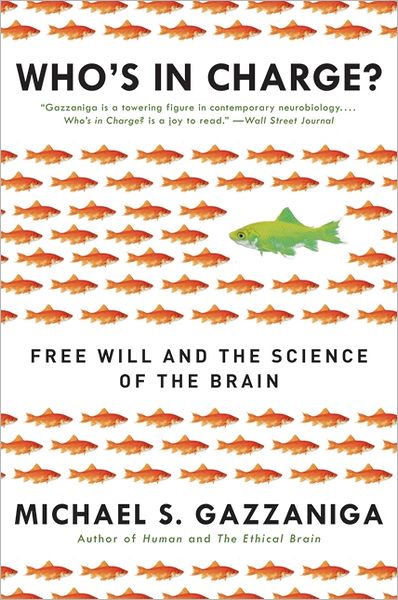
Who’s really writing this book blurb? I thought it was me, but one might want to reconsider after reading Michael S. Gazzaniga’s Who’s in Charge?: Free Will and the Science of the Brain. Gazzaniga surveys the science, psychology and ethics at work in our thoughts and behaviors.

Who’s in Charge? is a work of great importance as breakthroughs in neuroscience have revealed greater complexities than ever imagined at work in the brain. And launched the next great frontier of philosophical inquiry.

Published last year, the paperback reprint hits shelves Sept. 11.

Legendary journalist Bob Woodward goes from Deep Throat to Deep Gridlock in The Price of Politics, his 17th book. In this detailed account, Woodward chronicles Washington’s attempts to rescue the economy these past few years.

Talk about the ideal primer to the madness of election season. For the more devout political readers (and I know a few of you), Woodward’s new book is political porn to get you in the mood as we steamroll toward November.

We’ll preview other September releases in the coming weeks. Please follow Ensuing Chapters to receive our weekly previews, reviews and interviews.

July Book Preview

July is a great month to catch up on all the great books you’ve had sitting on the shelf. And while we certainly encourage you to dig deeply into that backlog, our motto is that a good life is one long in years and longer on books—that way you never run out of books to read.

Or perhaps a more T-shirt friendly slogan would be (to paraphrase Bradbury): May my heart expire before my library card.

For that reason, it’s always good to bring some fresh blood to the bookshelf—and in the case of these new releases, we’re talking about blood in the literal sense.

July 2

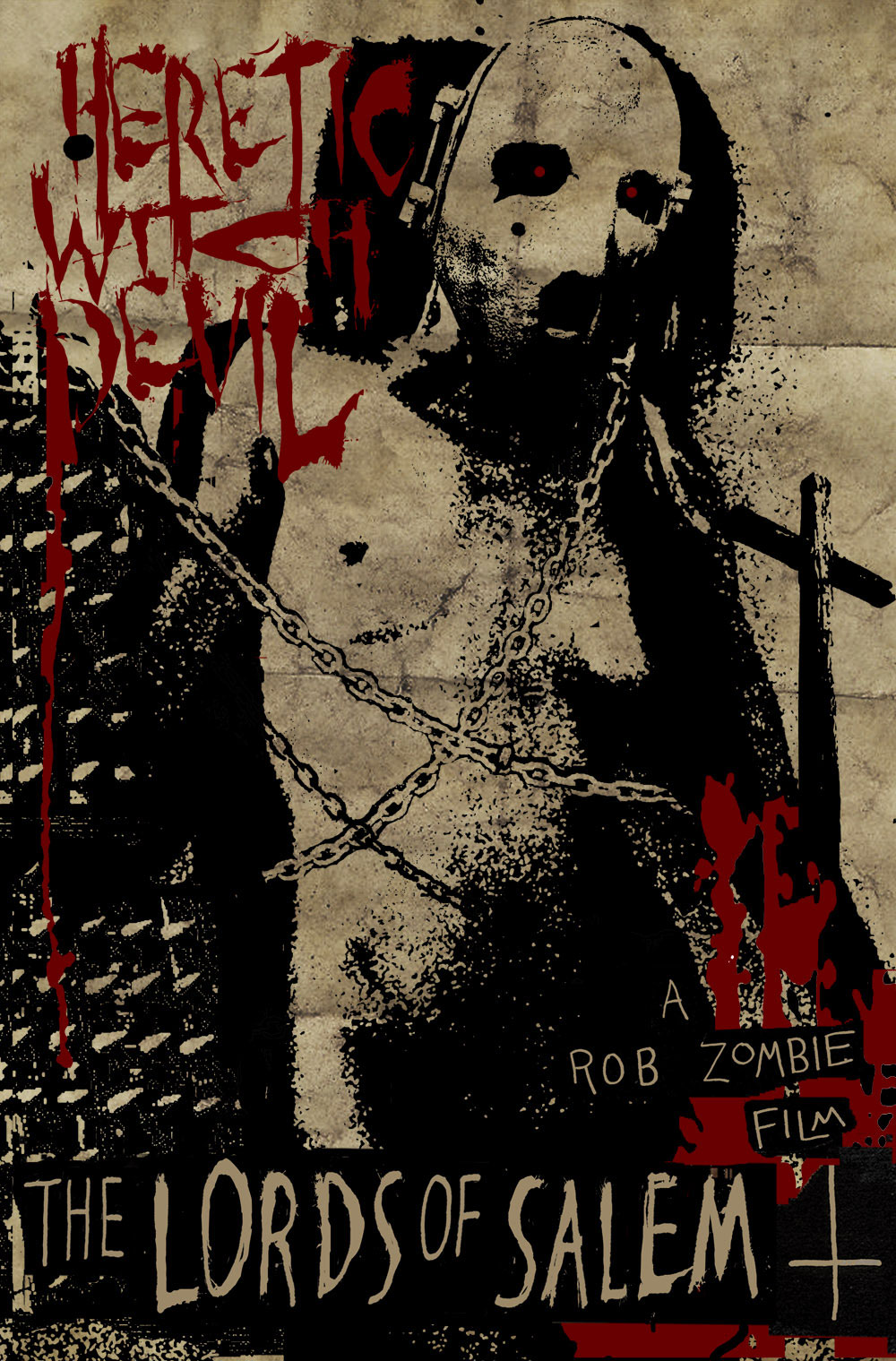
We’re not entirely sure what to make of this, but it seems that Rob Zombie has a book coming out, a preview for his much-anticipated film, Lords of Salem. Zombie fans have been waiting for a new original work for some time, following the disappointment of two money-grab *Halloween remakes. Lords of Salem the film should be sweet, and a pre-release book of the same name would be icing on the cake.

Other notable releases this week include The Nightmare by Swedish thriller writer Lars Kepler. The Nightmare is the sequel to his international bestseller The Hypnotist, and it has already garnered raves in his native land. Keeping with the international theme, prolific Japanese author Kenzo Kitakata returns with his latest hardboiled thriller, City of Refuge.

Anthology fans receive an Independence Day treat with the July 4 release of The Year’s Best Dark Fantasy and Horror 2012, featuring more than 500 pages of frights.

July 9

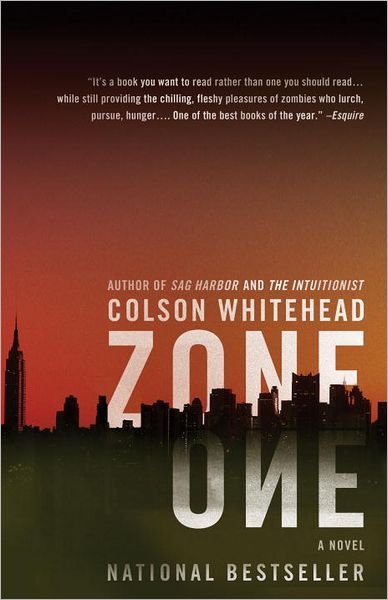
Upon its hardcover release, I was skeptical of Colson Whitehead’s Zone One—a literary take on the zombie apocalypse. Having learned more about the author, however, I’ve added it to my “to-read” list. This isn’t a literary snob taking a cheap shot at genre. Whitehead has had a lifelong love affair with all things geek. His essay, “A Psychotronic Childhood,” should be required reading for all college English majors, and the paperback release of Zone One should be an excellent summer read.

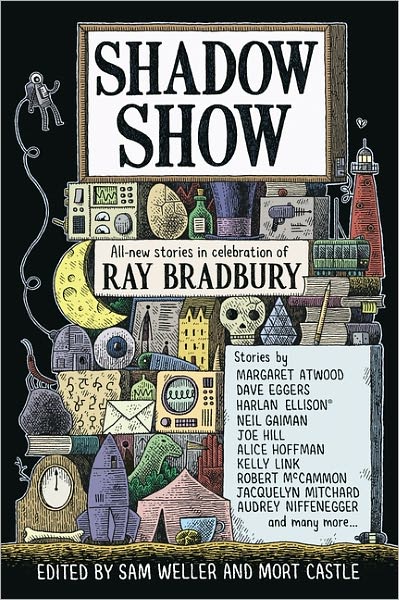
Shadow Show is a collection of stories inspired by and in tribute to Ray Bradbury, featuring work by Dave Eggers, Margaret Atwood, Neil Gaiman, Joe Hill and others. Speaking of Joe Hill, he has produced, along with artist Gabriel Rodriguez, the graphic series Locke & Key. The first volume, Welcome to Lovecraft, is being released as a special edition hardcover on July 10.

I am a huge fan of Russian novelists, and on July 15, renowned anthologist Otto Penzler presents the paperback edition of The Greatest Russian Stories of Crime and Suspense. This compendium features such heavyweights as Dostoyevsky, Tolstoy, Gogol, Gorky, Pushkin and Nabakov. Some of the all-time greatest writers at their all-time grittiest. Sign me up.

7/16

The great James Lee Burke, master of scene description, continues his Dave Robicheaux mystery series with Creole Belle. In this installment, our complicated hero is fighting morphine addiction, personal demons and the ever-present Bayou bad guys. What makes Burke’s novels so engaging is that his protagonists are vulnerable, troubled—more haunted than hunted. For Robicheaux, the past is as great an adversary as any criminal, and this makes him the most well-rounded literary figure in the mystery genre. I can’t wait to see what Burke is cooking up for us this time.

Essayist Jim Holt reframes the big question of how we got here in Why Does the World Exist?: An Existential Detective Story. This philosophical work of nonfiction noir calls a lineup as colorful as The Usual Suspects in this historic whodunit.

7/23

This week sees the paperback release of Stephen King’s magnificent counterfactual tome, 11/22/63. Concerning the JFK assassination, I was at first skeptical about this work of alternate reality. But King delivers one of his best-ever books—this one about a small-town teacher discovers a time portal in the back of a burger joint. This book takes on issues of history and politics, but it is the human narrative that drives it. The result is an epic work as heartbreaking as it is harrowing.

In the academic arena, Spider Monkeys: The Biology, Behavior and Ecology of the Genus Ateles hits the shelves on July 26. This collection of published and previously unpublished research explores the secret lives of these adorable primates. Hey, it’s a book about spider monkeys. How can that miss?

7/30

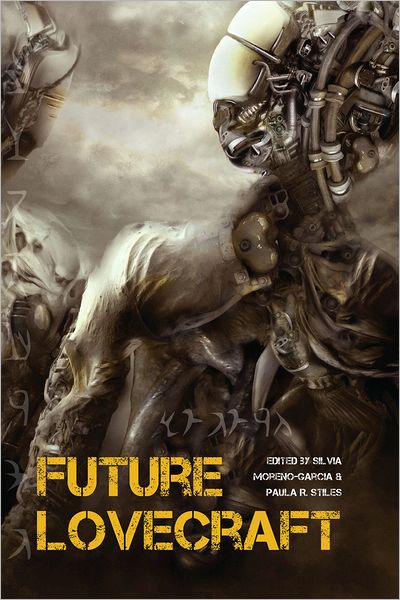
July finishes strong with Future Lovecraft, a sci-fi take on the Cthulhu Mythos. The paperback edition comes out on Aug. 1, but Nookies can download their copy now for a mere $3.99. Featuring a collection of up-and-coming horror and sci-fi authors, this anthology lends a fresh voice to familiar friends, such as Nyarlathotep (whom friends simply refer to as the Crawling Chaos).

Professor of religion Richard T. Hughes challenges popular misconceptions in his book Christian America and the Kingdom of God, which comes out in paperback on July 30.

Finally, Boulder author Carrie Vaughn closes out the month with the latest installment of her Kitty series, Kitty Steals the Show. This time our hero is the keynote speaker at a paranatural conference in London. When a conference of vampires schedules for the same time, however, the ongoing struggle between the undead ramps up.

Ensuing Chapters appears monthly in Transgress digital magazine. Regular updates appear weekly at the Ensuing Chapters blog.