fiction

Review: The Children Act

Ian McEwan

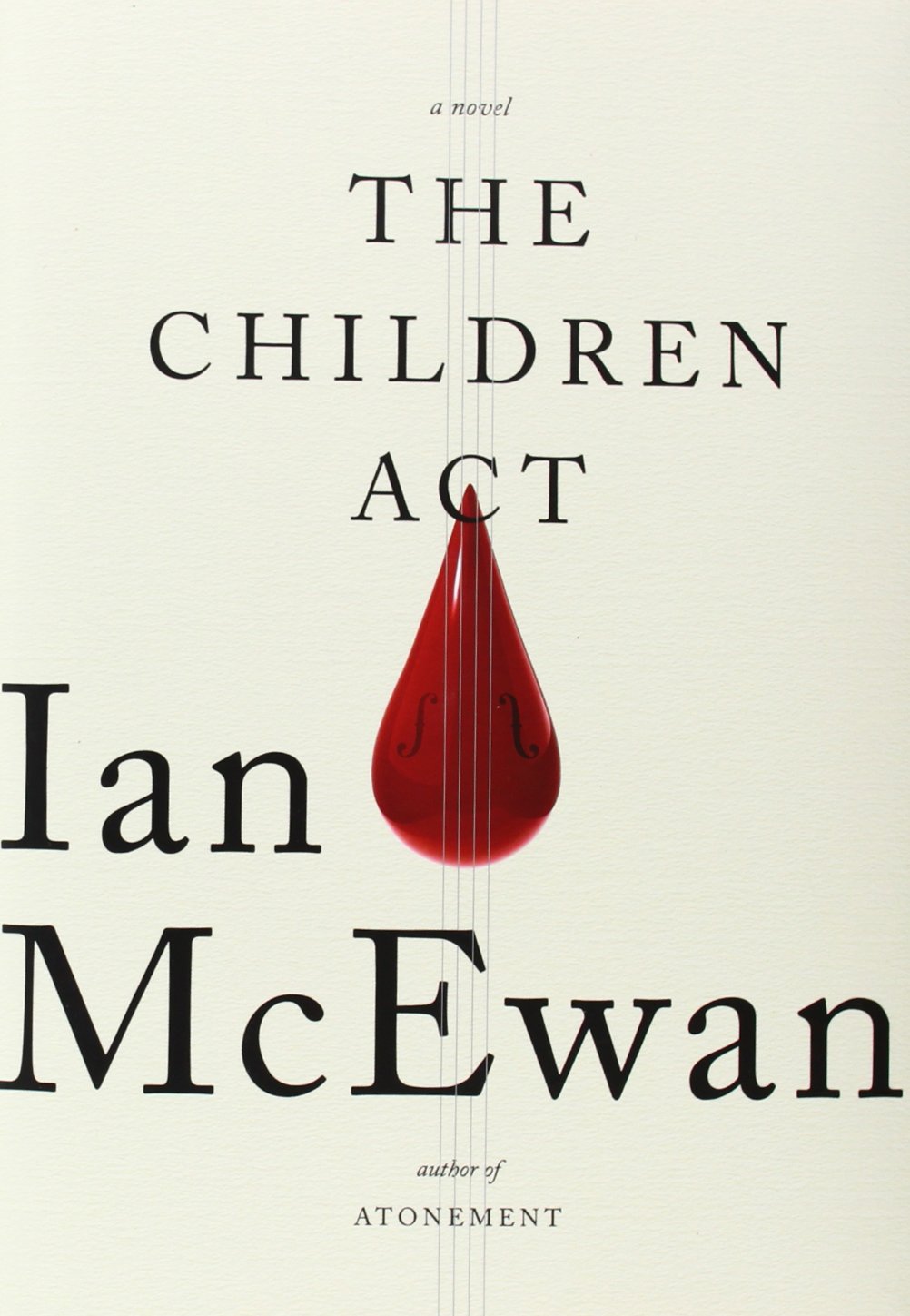
The Children Act

Given one word to describe Ian McEwan, I’d have to go with excruciating. The tone (elevated and eerie) and density of his novels (to a degree that will try passive readers) ooze with The Children Actanxiety. His protagonists suffer quietly, haunted by a single instance of poor judgment or an absent-minded transgression.

It’s all about moments and forbidden thresholds, the composed intellectual who discards dignity and custom to follow an animal impulse. Be it a father’s momentary lapse in The Child in Time, the sudden violence of The Innocent or the chilling cowardice in Amsterdam, there comes a dissociative moment in every McEwan novel in which a main character is forced to confront their darkest depths.

And then live with the consequences.

Such is the case for Fiona Maye, protagonist of The Children Act, McEwan’s latest novel. Fiona is an experienced judge on the cusp of old age who is questioning her lifetime of restraint (as well as her decision not to reproduce).

We enter her story mid-conversation to discover Fiona reeling from her husband’s proposed (and possibly in-progress) infidelity, just as she’s preparing for a high-profile case with a child’s life in the balance.

Cut to the courtroom, where the precocious teenager is refusing a blood transfusion on the grounds of being a Jehovah’s Witness. Invoking the Children Act of 1989, Fiona gives her ruling, the consequences of which ultimately lead to a spontaneous, classically McEwan mistake, one that risks undoing her marriage, her career and a lifetime of calculated decision-making.

The Children Act is a short, but dense novel, as is usually the case with McEwan. The man is a master of reflection and interiority. The opening chapter encompasses but a moment in a 30-year marriage, but lays bare its successes, failings and a lifetime of insecurities and second-guessing.

McEwan applies this level of care and detail throughout the novel, which may lack the sinister urge of books like The Cement Garden, The Comfort of Strangers or First Love, Last Rites, but certainly channels the disquiet of Enduring Love and Saturday, in which the tragedies unfold in slow motion and a lifetime of torment is distilled into a bitter, lingering moment.

Pleasuring the Collective Unconscious: A review of Chuck Palahniuk’s Beautiful You

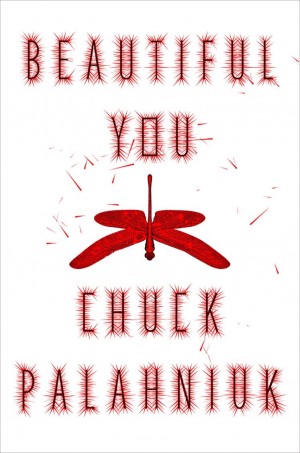
I’ll start with a confession: This review has come along sluggishly. Time I’ve set aside for writing has instead been frittered away on mindless online gaming. It’s an affliction we’ll call Beautiful Youwritus interruptus, and it’s likely to become an epidemic worse than any zombie apocalypse.

(Speaking of, my current addiction is The Last Stand: Dead Zone, and before I completed this sentence I had to stop to check on the construction status of a barricade.)

This isn’t anything new, really. In the 1950s, scientists discovered that if a rat could stimulate its brain’s pleasure center by pressing a bar, it would do so furiously until it passed out from exhaustion and, in many cases, died for lack of food and water. Mind you, the rats had access to food and water, but they couldn’t keep their paws off that pleasure bar.

This should sound familiar to any gamer who has missed a meal in order to level up.

It’s sick and wrong. I know this, but I need someone to hold up a mirror to face this absurdity directly.

This is why I love Chuck Palahniuk, whose new book, Beautiful You, is his best in a few years.

Fittingly, it concerns arousal addiction, and serves an electric shock to our collective conscience (or perhaps unconscious would be the better term).

Palahniuk took on male malaise with Fight Club, and mocked cultural over-consumption with Choke. Snuff (ostensibly a novel about pornography) lampooned self-destructive excess and exploitation in a manner that could very well have served as a hyper-sexualized predictor of the impending financial crisis of 2008.

In Beautiful You, he wanted to write what he calls gonzo erotica, and in the process has penned an anthem for an overstimulated, multi-tasking, computer-coma society.

Penny Harrigan is a nice Nebraskan girl working in New York City when she catches the eye of the world’s richest man, C. Linus Maxwell. Next thing you know, Penny is the talk of the tabloids and the envy of her coworkers.

Behind closed doors, however, is where Penny is truly transformed. Maxwell introduces her to a world of unimagined, if clinical pleasure. Penny has her reasons to question Maxwell’s motives (especially after a bizarre bathroom tryst with his bitter ex-lover), but is too enraptured with her newfound fame and sexuality.

Oozing with plot twists only Palahniuk’s sardonic tone could make palatable, Beautiful You aspires to remarkable levels of absurdity, but is it any more absurd than the daily inundation of product and marketing? Many reviewers have criticized the gratuitous satire in this novel, but is the idea of world domination via dildo really that farfetched in a culture that has financially sustained multiple cable shopping channels for three decades?

Beautiful You put me in mind of Rancid’s “Born Frustrated,” which asked, “Is this human freedom, hedonistic excess? Junky consumerism, mass production, toxic sickness?”

It’s why Romero’s Dawn of the Dead was set inside a shopping mall—can you truly be sure there aren’t a few zombies among you inside the IKEA? Ever been to a restaurant where a group of supposed acquaintances are each focused on their own smartphone or tablet?

We are a culture of instant gratification. We are a culture of distraction.

We are the lab rats hammering away at the pleasure bar for a taste of sweet, sweet oblivion.

And much like Maxwell, Palahniuk is there wearing a lab coat, taking copious notes and holding up a funhouse mirror to our cage, so that we might catch a distorted glimpse of what we’ve become.

Horror Shorts

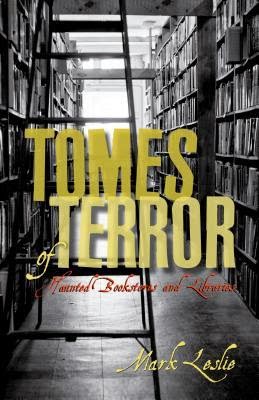
Tomes of Terror

Mark Leslie

There are two things I like to do anytime I come to a new town:Tomes of Terror

  1. Visit the local book shops
  2. Take a ghost tour to learn about its haunted legends

So you can guess my excitement to read Mark Leslie’s Tomes of Terror, a collection of hauntings set in libraries and bookstores.

Leslie’s first two nonfiction books explored the haunted legends of Hamilton and Sudbury in Canada. This time he travels the globe recounting stories of specters who re-shelve library books, peruse the remainder pile or just want to sit in a quiet corner and enjoy a good book.

I can relate. My ideal afterlife would be spent on the top floor of the Boulder Book Store (with occasional sojourns along Pearl Street to Illegal Pete’s, of course).

As for Leslie’s collection, it’s a great read for any fan of ghost literature. It’s also a mixed bag, with some anecdotes chilling, some sweet, some silly.

There is one shortcoming in this book, but it is no fault of Leslie’s. It’s the medium. Sadly, the written word can’t compete with a spook story shared in hushed whispers around a campfire, so truly visceral frights are few.

Case in point: As much as I enjoyed both installments of Roz Brown and Ann Alexander Leggett’s Haunted Boulder series, their stories truly come to life when performed by master tour guide Banjo Billy. (I highly recommend both the books and the ghost tour, if you happen to be in Boulder, Colo.)

Despite the limitations of the printed page, I love any well-written and –researched book of hauntings. What I like most about them, I think, is that the tales turn out to be more historical than horrific. I’ve come to view ghost books (and tours) more as historical documents than anything else, but the kind that infuse a town with a lot of personality.

For me, it’s hard to truly love a place until I’ve explored its ghostly geography.

Fittingly, some of the most fascinating parts of Tomes of Terror are not the ghosts, but the histories of the libraries and stores themselves.

A sad postscript is that a fair number of the bookstores mentioned in this collection are now closed, becoming a different kind of ghost. And that’s truly terrifying.

But the stories never die, and in that sense, the shuttered stores live on in their own haunting way. Like ghosts, their spirits persist in the pages of Leslie’s collection.

Long may they haunt.


Mad Tales

Joseph Mazzenga

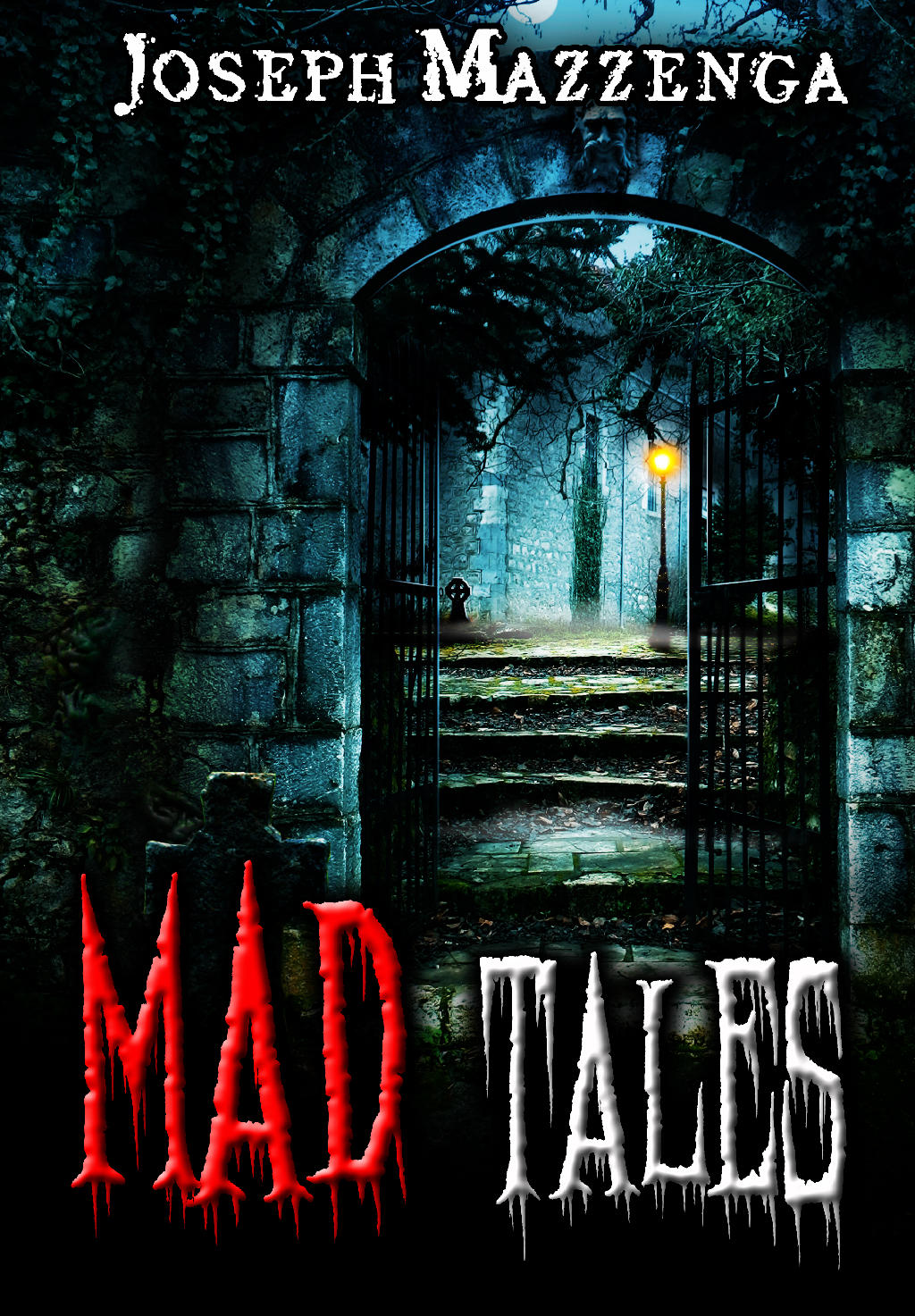
Come October, you can’t go wrong with a collection of horror stories on the nightstand (or anytime, really, if you ask Mad Talesme). While not straight horror (Mazzenga incorporates elements of the weird, sci-fi and urban fantasy), Mad Tales is a collection of the creepy and creative befitting autumn, the best of all seasons.

“Pepperell,” the lead story, truly stands out. It’s a fast-paced thriller fueled with a Twilight Zone aesthetic that disorients as well as it delights. The character development is a bit thin in this tale of outlaw bikers descending upon a quiet mountain town, but the “said the spider to the fly” motif compensates for the broadly sketched personalities.

There is no short-changing on the characters in “Bloody Depths,” a sprawling seascape of uncertainty that delivers its nightmares at an even pace. Here, we have more time to engage with the main character’s plight and share her dread as Mazzenga takes us to some weird—I mean really weird—places.

While they may incorporate elements of fantasy and sci-fi, each of the Mad Tales features a creepy tone that firmly establishes this enjoyable collection in the horror genre.

All Due Respect Issue 4

Check out the new issue of the crime fiction magazine, All Due Respect, which features a nonfiction piece by yours trADR _4 V3uly. My article is a review of Joe R. Lansdale’s Cold in July, which was released earlier this year in conjunction with the film release. If you haven’t read the book or seen the movie, I highly recommend both.

The issue also includes a powerhouse lineup of crime fiction, including award-winning author Hilary Davidson. Last year, I reviewed her excellent novel, Evil in All Its Disguises, and fans of that novel (and new readers) will enjoy her short story, “A Hopeless Case.”

D&D 5.0

Dungeons & Dragons Player’s Handbook

I’ve long professed my love of D&D at Ensuing Chapters, and it’s been a hell of a summer for gamers. Wizards of the Coast, the game’s publisher, is releasing the 5th edition of the table-top role-playing game—and they’re spreading the love around.

The Basic Rules and Starter Set were released in July, and this week, Wizards published the Player’s Handbook. The fan favorite Monster Manual will hit shelves in September, and the essential Dungeon Master’s Guide will follow in November.

In honor of the new edition, here is a collection of our articles about D&D, from Ensuing Chapters and beyond. Enjoy.

Book Review: Of Dice and Men

D&D is a cultural phenomenon that has lasted decades, survived the sophistication of video games and artificial intelligence, rival RPGs and even the Satanic Panic. It’s goneDice and Men from nerd pastime to geek chic to sociological interest, and now its history has been documented in the wonderful Of Dice and Men: The Story of Dungeons & Dragons and the People Who Play It, a nostalgic romp through the author’s (and my) childhood.

Ewalt, a senior editor at Forbes and self-described “writer, gamer, geek,” has done a great service to anyone who, with sweaty palms, has had to make a campaign-defining saving throw (or at least knows what that means). His smooth writing style and flair for narrative pacing makes the story of this greatest of games one of general interest, even if you’ve never tossed the 20-sided die. Read full article

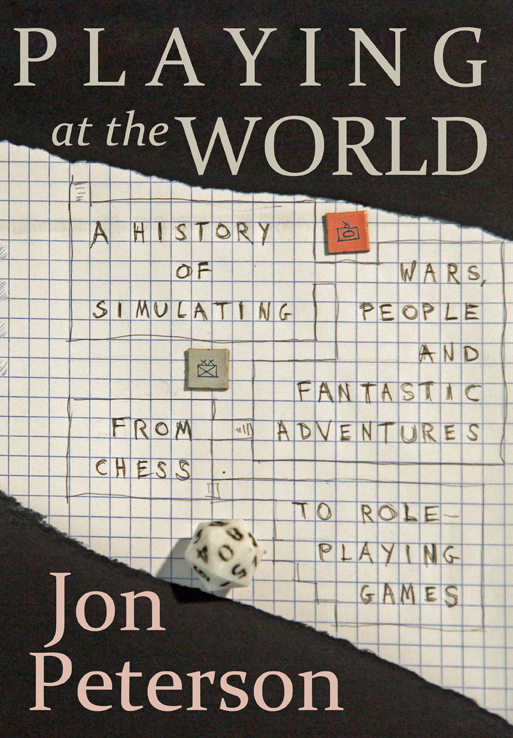
Book Review: Playing at the World

Remember the first time you crawled a dungeon, slayed the dragon and stuffed as playing_worldmuch treasure as you could into your “bag of holding”? Felt good, right? But the true prize wasn’t the booty. Sure, I enjoyed counting the gold and platinum coins, drooling over the prospects of upgraded armor, a magic-enhanced broad sword and whatever mischief I could scare up with a few copper pieces at the local tavern.

But what intrigued me most were the tattered spell scrolls, mysterious tomes and the secrets of the ancients.

It shouldn’t be much of a surprise. A rabid imagination is the primary tool that all fans of role-playing games bring to the table, and a trove of yellowed parchment and faded maps makes us froth at the mouth. Just how powerful is that fireball incantation? What wisdom could be discovered in that old paladin’s codex?

That’s what it feels like digging into Jon Peterson’s Playing at the World: A History of Simulating Wars, People and Fantastic Adventures, from Chess to Role-Playing Games. For any experienced gamer, this is a hoard worthy of any dungeon campaign. Read full article

Boulder Camera:

Game On: Dungeons & Dragons 4th Edition Releases on Worldwide D&D Game Day

Those outside the gaming world may have missed the news that Dungeons & Dragons—the legendary fantasy role-playing game in which players assume the roles of paladins and wizards and battle mythic creatures with a set of polyhedral dice—released the fourth edition of its series on June 6.
 
The new edition consists of three rulebooks—the Player’s Handbook, Dungeon Master’s Guide and Monster Manual—which can be purchased separately (entry-level players simply need the Player’s Handbook to get started) or packaged together as the Core Rulebook Collection. The rule changes in the new edition are designed to add more action to the game play and make it more accessible to entry-level players.
 
In honor of the release, Saturday was declared Worldwide D&D Game Day, and scores of locals celebrated at Boulder’s Karliquin’s Game Knight and Time Warp Comics. Both stores hosted in-store games to commemorate the release. Read full article
 

Boulder Weekly:

Mr. Baker’s Neighorhood: The Mastermind Behind the New World of Dungeons & Dragons gives an insider’s tour of Ebberron

Keith Baker’s Boulder home is a fantasy geek’s paradise. An oversized bookshelf serves as an archive of role-playing game (RPG) modules, player’s handbooks and monster manuals. Posters of fantasy artwork grace the walls. Intricately designed miniatures of majestic dragons, mythical creatures and timeless warriors stand guard over counter space. Two broadswords hang over a mantle, and if you ask nicely Baker will give you a lesson in swordplay. After all, prior to becoming a novelist and game designer, he studied fencing and worked at Renaissance fairs.

If you knew Baker as a child, you probably wouldn’t be surprised.

“Instead of playing Cowboys and Indians, I ran around with friends playing Egyptian and Norse gods,” he says.

After showing an early interest in mythology, fantasy, the horror/sci-fi fiction of H.P. Lovecraft and the eerie artwork of Edward Gorey, it was no surprise that in 4th grade Baker became interested in a game called Dungeons & Dragons. Read full article

A Darker Shade of Summer (Fiction)

A round-up of ghost stories, thrillers and dystopian anthologies to darken you summer. (Come back tomorrow for our nonfiction edition.)

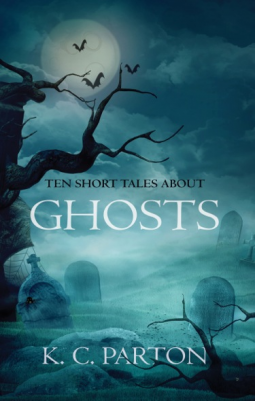
Ten Short Tales About Ghosts

K.C. Parton10 Short Tales About Ghosts

(Released June 28)

Typically, the hallmark of a great ghost story is that it unsettles the reader. When reading K.C. Parton’s collection of English ghost stories, however, one is filled not with dread, but comfort. These 10 tales are reminiscent of the kind my father would tell me over campfires—and those, of course, will always be my favorites.

Parton’s stories have that same appeal. These are not tales of terror, but subtle chillers made all the more spooky for their familiarity. Stories that make you think twice before cutting through the graveyard, not to avoid falling prey to a Saw-like killer, but for that abstract fear that tickles as much as it terrifies.

In “The Last Train,” a modest theater-goer arrives late to the station, but by good fortune, his train is waiting for him. Once aboard, he realizes his destination is somewhere other than home. Likewise, a young factory apprentice stumbles upon a shop-floor oddity in “The Cleaner”—and realizes that what he first thought to be a hoax or a hazing is in fact a haunting.

Perhaps the stand-out tale of this collection is “The Heinkel,” a WWII yarn about a young boy fascinated with a downed German plane.

A big draw for me is that most of the stories have an industrial setting. Growing up in the Rust Belt, I was exposed to the real-life horror of the steel mills (such as my dad’s coworker losing an arm in the blast furnace) and the spooky kind (my grandfather’s otherworldly encounters at the Westinghouse plant).

When it was my turn to work the factories, I found much ghostly inspiration in the rusted machinery, secluded warehouses and the imaginative possibilities of the graveyard shift. Parton’s stories fit that mold, which shouldn’t be surprising, as he came of age in England’s post-war factories. (His first book, Tales from the Toolbox, recounts his industrial experiences.)

My one critique is that there’s not a lot of mystery to these stories. Characters who believe they are having ghostly encounters truly are, and the nature and cause of the hauntings are typically self-evident. But that’s OK. These stories work not through terror or misdirection, but by tapping into that primal need for campfire tales—the kind that give goosebumps, sure, but leave you smiling in the end.

Ominous Realities

Eds. Anthony Rivera and Sharon LawsonOminous Realities

Once again, Grey Matter Press has delivered the anthology goods. Ominous Realities is the finest indie collection I’ve read in a while. These dystopian tales chill and unsettle, balancing skill, imagination and smarts.

Take “On the Threshold,” an eerie, Lovecraftian tale of science and madness from William Meikle. Last year, I read Meikle’s novel The Hole, and thought it was enjoyable but flawed. Here, Meikle is in control from the creepy opener in the lab to the grim finale. HPL would love this tale of science gone wrong.

Keeping up the intensity is “Doyoshota,” by Ken Altabef, a haunting intersection of conspiracy and cacophony that makes tinnitus sound like a Beethoven sonata.

Eric Del Carlo’s “We Are Hale, We Are Whole” is deserving of any “best-of” anthology, a smart, thoughtful piece of writing that should be a must-read for anyone attempting to world-build within the confines of a short story. It also takes a philosophical bent about quality of life, aging, health care and sacrifice.

An excellent collection from a hot new publisher. Also be sure to check out their Dark Visions II anthology.

Coming Soon

Mean Streak

Sandra BrownMean Streak
(Release date: Aug. 19)

Mean Streak has all the makings of a classic Sandra Brown thriller: abduction, deception, moral complexity and a revelatory rabbit-hole twist. In her new novel, Dr. Emory Charbonneau disappears, and her husband is the primary suspect. Part crime novel, Mean Streak is also a survival narrative, as Emory awakes in the hands of a violent captor who may be hiding his true identity. I haven’t read this yet, but it sounds reminiscent of Standoff, which was one of her best works.


The Black RoadThe Black Road
Tania Carver

(Release date: Aug. 15)

While the plot may be a little, well, plausibility challenged, advance press offers Mo Hayder levels of gore and depravity (aka horrific awesomeness). Following a mysterious explosion, criminologist Marina Esposito’s husband is in a coma and her young daughter is missing. The abductor forces  Marina to complete a series of depraved tasks in the course of three days or her daughter dies. So, yeah, it may be plot-challenged, but if you’re looking to spice up your summer with some gore, The Black Road just may be a detour worth taking.