ensuing chapters

Recommended Reads: Historical Summer

What a wild month it’s been. Between politics, crime, World Cup football and my attempt to document the literary stops on my Paris trip, it’s been difficult to keep up with new releases. Here is a sampling of books you may have missed as spring turned to summer.


Inventing a Christian America: The Myth of the Religious Founding

Steven K. Green

Oxford University Press

As America approaches its 25th decade, it’s only natural to look back and re-evaluate who we are and what we’ve done with our time in power. Inventing a Christian AmericaPerhaps it’s the mid-life crisis of empire, or just the build-up toward a presidential election, but coming out this summer is an arsenal of books regarding our nation’s founding.

I’m reading as many of them as I can, because it’s a fascinating study, and Steven K. Green’s Inventing a Christian America is an important contribution.

His attempt is to demystify the colonial and revolutionary periods to get at the truth of the religious origins of the country. He starts by addressing two of the most common narratives of the founding: the first being that of a country chartered by religious exiles in search of freedom to practice as they pleased, the other of Founding Fathers who established the separation of church and state.

Both of which he describes as myths, in the literal sense. “In providing explanations of events not personally remembered, myths legitimize the past while they provide a unifying narrative for a distinct people.”

The truth is that colonial life was more diverse than either narrative suggests. Sure, there were religious exiles, but there were people of many beliefs, not just protestantism. And there were many folks that were there for business, adventure or a new start in life.

But when it came time to unify the disparate colonies, a common tale was in order.

Green writes: “The idea of America’s religious origins is essentially a myth created and retold for the purpose of anointing the founding, and the nation, with a higher, transcendent meaning.”

Through his historical digging, Green reveals a pluralistic society that’s difficult to pigeonhole in retrospect. What they did record in founding documents, however, was both a respect for religious practice and the separation of church and state.

Green’s work is thorough and authoritative, and is certainly a book I enjoyed and would recommend. But whereas some academic books have crossover appeal, this is not a book that will translate well to a general audience.

Which is unfortunate, because most Americans would benefit from learning more about the founding and the role of religion in early America. Especially now.

Inventing a Christian America is a great place to start.


The Physicist and the Philosopher: Einstein, Bergson, and the Debate that Changed Our Understanding of Time

Jimena Canales

Princeton University PressThe Physicist and the Philosopher

This wonderful revisitation of the relativity debate was released on June 17. Or was it? Time is relative, of course, as Einstein taught us a century ago. While relativity is the rule these days, it wasn’t a slam-dunk sell in the early 20th century, and philosopher Henri Bergson appeared to have the upper hand in the debate. The notion that time can move differently for two people not in uniform motion (or that events can occur simultaneously — or not — depending on relative motion) had to sound a little like voodoo to a populace born in the 19th century.

Of course, we know that Einstein won out, and our notion of time has never been the same. Canales takes us back to when it all changed, not in the typically triumphant language that we often get from biographies of Einstein, but from the perspective of a skeptical inteligencia not yet acquainted with nuclear energy and quantum mechanics. An interesting and important read.

Littérature Francaise: Albert Camus

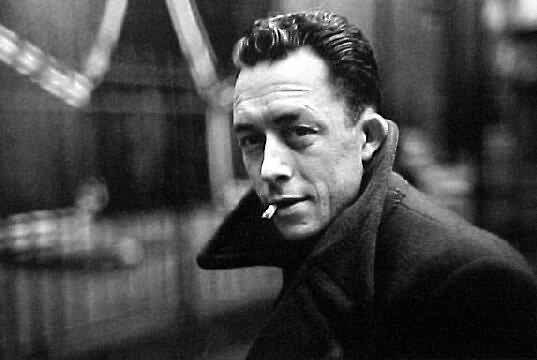
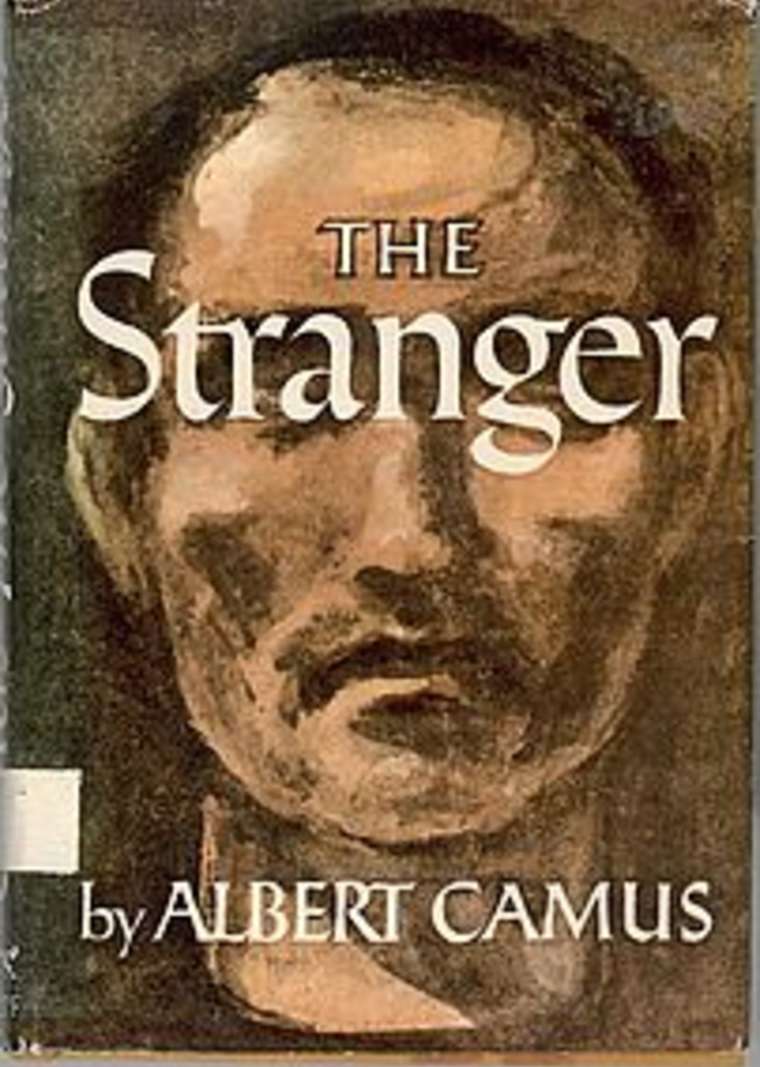
When I was 21, my best friend Todd lent me a copy of The Stranger, and my life’s trajectory hasn’t been the same Albert Camussince. To a self-identifying outsider, the story of Mersault, who exemplifies anomie, was a revelation.

A philosophy professor once told me, in a somewhat dismissive way, that Camus was the author for “angry young men,” and I certainly fit that description at the time. But I’ve re-read The Stranger in my 30s and 40s and have found it to be just as relevant, though speaking to me in different ways.

Ever since my first introduction, I’ve been obsessed with Camus. The Stranger and The Myth of Sisyphus remain two of my of top-five favorite books. The Plague and The Fall continue to haunt me, and The Rebel still confounds me.

It is no surprise, then, that my time in Paris was dominated by thoughts of Camus. In advance of the trip, I researched some of his favorite spots to compile a personal literary tour of the great existentialist (a great resource is Connect Paris’ In the Footsteps of Albert Camus).

Of course, the definitive Camus hotspot is the cluster of cafes in the Saint-Germain-des-Pres (Les Deux Magots, Cafe de Flore and Brasserie Lipp), which has unfortunately become much of a tourist trap. Nevertheless, this area has been home to some of the world’s finest thinkers. Prior to the Existentialists, such as Camus, Sartre and Simone de Beauvoir, the area hosted a collective of Enlightenment thinkers, the Encyclopedistes, led by philosopher Denis Diderot and mathematician Jean le Rond d’Alembert. Together, they compiled Encyclopedie, which featured contributions from the likes of Voltaire and Jean-Jacques Rousseau. Marcel Proust wrote about the neighborhood, Richard Baldwin hung out in it and the world’s greatest skeptic, Descartes, is entombed there.

Bona fides, indeed.

There is no shortage of literary history in Paris, but for me, the Saint Germaine is most haunted by the Algerian author who resisted the Nazis, won the Nobel Prize and commented on the absurdity of the human condition with more acuity than anyone of his generation.

While I wasn’t able to retrace his steps through the city, I am able to view his works with fresh eyes. I even bought a copy of The Plague in the original French, with the intention of learning the language (and besides, I needed a third edition of this book!).

That remains a work in progress, but in the meantime, here are my thoughts on some of his English translations.

The Fall

Truly, all of Camus’ books are unsettling, in the truest sense of that word, because that’s his intent. These are not The Fallpastorals. Camus does not soothe the reader with hugs and rainbows. He couldn’t care less about easing your conscience.
Camus challenges the reader. He inspires the reader. Discomfited? Good. That’s a natural way to feel. The question is: What are you going to do about it?

The Fall is the long-form confessional of Jean-Baptiste Clamence, who haunts the smoky confines of a lowlife bar in Amsterdam’s Red Light District. He tells his story to an unknown, unseen audience, and that juices the narrative with an intimacy and informality we don’t always get from Camus.

It’s also inherently unreliable. What do we make of Clamence and his wild tale of falling from grace? Can we believe it to be true? Is it the ravings of a madman or a drunkard? Clamence even says, when describing a motto for his house, “Don’t rely on it.”

I’ve read The Fall twice, and I’m still not convinced that “we’re” even there. At the end, there is a shift suggesting that Clamence has been having a dissociative episode and talking to himself the whole time: “Are we not all alike, constantly talking and to no one…”

Clamence takes us on a guided tour of Amsterdam, which is designed, he says, in the nature of Dante’s rings of hell. We move through the city via his dramatic monologue.

But though setting has an important part to play, it is the narrator’s interior landscape at center stage. Clamence presents the anxieties of his time, and they look very similar to modern anxieties. He speaks for the fragility of man, and how one’s descent is incremental.

Camus nails the pathway of anxiety and how we are our own worst interrogators. He touches on thought perseveration, self-sabotage and even has an incident of road rage — perhaps its first mention in literature?

In turns hopeful and hopeless, Clamence is a man buried beneath the rubble of his failings. It’s a reminder that we make poor choices, focus our attention on the things that scar us, and ultimately, author our own demise.

Now that’s an unsettling premise.

I don’t imagine a film version will displace It’s a Wonderful Life as a holiday tradition, but for anyone curious about the workings of a mind in distress, you should wind your way into this twisted narrative.

The Stranger

What I remember identifying with in my two initial reads of this novel was the sense of alienation and inaction The Strangersurrounding Meursault. I thought of him as a passive character forced into action. I appreciated his indifference, his dispassionate observance of events.
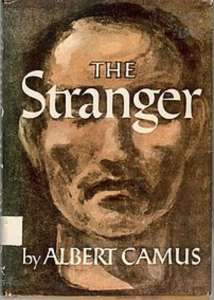
Third time around, I noticed something new: Camus does not reduce Meursault to the one-dimensional figure I had considered him to be. He is not necessarily alienated or passive. He interacts with many people in the novel other than Raymond and Marie. He is not as passive as I recalled. This is significant because I think that’s why Meursault resonates so strongly more than half a century since the novel’s publication. It was my mental shortcomings (or perhaps the imposition of my own personality onto the narrator) that reduced Meursault to an idea rather than a vibrant literary figure.

Paying closer attention to Meursault’s interiority, I realized that his time in prison is hardly passive. Though physically confined, his mind is alert and active.

The point, I gather, is not action vs. inaction (which I initially thought), but rather the arbitrariness of action. Indifference is more than a passive stance. Meursault comes to represent what he refers to as “the gentle indifference of the world.” Existence is absurd and meaningless is the credo of existentialism, and so it goes with The Stranger. What is the rhyme or reason for Meursault’s murder of the Arab, a chance encounter for which he bore no bad blood? In terms of a causal relationship, we can trace the episode back to the narrator’s friendship with Raymond, his defense of him in court, the earlier melee with the Arabs, his random possession of the gun and Meursault’s naïve thought that the men wouldn’t return to fight again.

But in the larger scope of existence — “the gentle indifference of the world” — what difference does it make? The two men found themselves in that particular moment. They acted in that particular way (the Arab pulling his knife, Meursault the gun). For the narrator, the bright sunlight is as much to blame as he. He can’t even explain why he continued to shoot after the Arab was dead. He just did.

Camus is so successful in stating his case for the absurdity of existence that his masterwork has remained in print long after his death. The mark of great literature is its timelessness — the ability to revisit a beloved book again and again and to learn something new each time. So it is for me with The Stranger. Read first as an outsider, second as a philosophy student and lastly with an eye for form and technique, I realize that Meursault is a more rounded character than I first believed. Camus’ use of the interior infuses the book with an energy I felt but didn’t quite recognize on my first two reads.

I am certain I will read it again before I die, and I look forward to whatever fresh insights this, and his other books, have to offer.

Littérature Francaise: The Second Sex

The Second Sex

Simone de Beauvoir

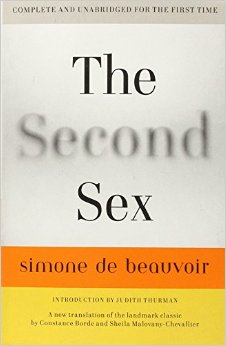
In anticipation of visiting Paris, I wanted to bone up on my French philosophy. I’d devoured Camus and Sartre, but The Second Sexwas light on the third member of the Le Deux Magots triumvirate, Simone de Beauvoir. So en route to Saint-Germaine-des-Prés, I read volume I of her seminal 1949 book, The Second Sex.

It was intended to be a pleasure read, not a book to review, but then Vanity Fair published a cover photo of Caitlyn Jenner. This opened an interesting and unexpected dialogue about gender identification. If you stick to legitimate outlets, the discussion has been civil, informative and worthwhile. The New York Times, in particular, has provided engaging commentary.

I bring this up because, well, de Beauvoir was writing about gender identity nearly seventy years ago and her words remain relevant. Remarkable, really, when you consider that she wrote the first volume prior to the civil rights movement.

Disclaimer: This column is mostly a review of the book, not a commentary on Jenner, the cisgendered and transgendered communities, or the definition of a “woman.” Of course I have my opinions. I’ve had many transgendered friends, co-workers and clients, and personally, I’ll refer to you by whatever pronoun you’d like and recognize you as whatever gender you identify with.

But I believe the role of cisgendered, heterosexual men in this discussion is to listen and learn from it. The only edict I’ll deliver is that we all could benefit from reading de Beauvoir. Especially now.

In the first part of The Second Sex, de Beauvoir argues that mere physiology is not enough to define gender. One of the lines that most stuck out for me was, “It is not nature that defines woman; it is she who defines herself by dealing with nature on her own account in her emotional life.”

Remember, this was more than half a century before cisgendered entered the layman’s lexicon.Cafe de Flore

De Beauvoir emphasizes that environment plays a profound role in gender development. Environment includes everything from external forces (de Beauvoir considers the role of psychology, religion and myth in identifying women as an “Other”) to internal feelings and expression.

“…it is not the body-object described by biologists that actually exists, but the body as lived by the subject. Woman is a female to the extent that she feels herself as such. There are biologically essential features that are not a part of her real, experienced situation…”

The breadth of The Second Sex is astounding. De Beauvoir surveys the fields of biology, psychology, literature and religion with a thoroughness that is impressive as much as it is purposeful. She’s not lecturing as she is constantly working through her thesis in excruciating detail. De Beauvoir isn’t discussing single-cell reproduction for the hell of it. She is constructing a logical stronghold that still stands.

Yes, it can be tedious at times, but her argument was meant to transcend its time, as it has. It’s worth the struggle.

Of course, existentialist thought permeates the book, but it plays different than that of Camus and Sartre. Whereas Le Deux Magotsthose guys, awesome though they were, often deal with abstracts and ideals, de Beauvoir is working at more of a gut level. She is fighting for privileges her two comrades take for granted.

While the continued relevance of The Second Sex speaks to the brilliance and vision of de Beauvoir, it’s also an unfortunate reality. It would be preferable if this book felt more dated, but as most commentaries on Jenner reference The Second Sex, I think we have not come as far as we should have.

But the fact that we’re having this conversation is progress, and we owe a great debt to de Beauvoir’s contributions. It’s best, I think, to let her have the final word on this topic and leave it at that:

“…it must be repeated once more that in human society nothing is natural and that woman, like much else, is a product elaborated by civilisation.”

Review: The Fold

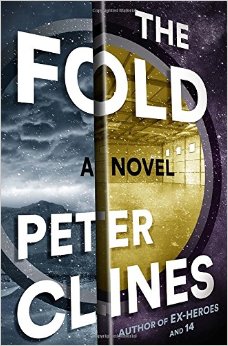
The Fold

Peter Clines

Peter Clines is my new favorite author in the horror universe. His previous novel, 14, was a page-burner that flipped The Foldthe haunted house tale inside-out (quite literally). For his new book, he makes origami of the space-time continuum.

The Fold begins on the last day before summer vacation. Mike Erikson is a high-school English teacher with a special talent: he never forgets anything. This is both a blessing and a curse. He’s intellectually gifted, but suffers the burden of remembering everything that has ever happened to him. At the prodding of an old friend, he audits a secretive research project in San Diego known as the Albuquerque Door.

At first, the Door — which facilitates trans-dimensional travel via a shortcut through the multiverse — is considered a breakthrough. By a simple bend in space-time (and with the help of some Victorian-era equations), the research team is able to transport objects, animals and people from one place to another.

Erikson soon detects something off with the project, though. Despite the personal rewards and social benefit that would accompany the announcement of their world-changing discovery, the scientists (who are suspicious of his investigation) keep the Door in development for years.

Oh, and there is also that seldom-discussed matter of the researcher who went through the Door, suffered a mental breakdown upon return and has been institutionalized since.

As Erikson digs deeper, he uncovers the shady history of the project and its shortcut through the multiverse. It all comes apart when a transport goes badly. The Door opens a pathway through a nightmare dimension that could destroy all others if they can’t get it shut.

That’s when this dice-roll with the universe becomes a Frankensteinian fable.

Clines is a master at developing quirky heroes in slanted realities. He doesn’t rely on gore, violence or trauma to create a sense of unease. He terrorizes with subtlety, pointing out the off-kilter among the mundane and letting it gnaw at the reader’s mind.

There is horror that sucks you down the rabbit hole through a trap door. Not Clines. He takes you there via quicksand. The dude is merciless.

The Fold incorporates many genres, from detective fiction and literary horror, to science fiction and Lovecraftian terror. Clines’ prose sweeps you through the chapters, breathing in and out of the tension without ever losing the narrative pace. I could have easily read this in one sitting, and just may have if my plane hadn’t landed in Reykjavik before I reached the end.

Though easily one of my favorite books of the year so far, The Fold does have some flaws. Erikson, on the whole, is an engaging and likeable protagonist, and for the first 200 pages or so is entirely believable. However, as we approach the climax he becomes too powerful and loses his vulnerability. It’s easy to root for the humble, nerdy English instructor. Not as much when he’s able to score women outside his area code and fend off other-worldly monsters more skillfully than the Marines.

Despite these stretches of the imagination, The Fold, is a smart thriller that uses quantum physics as a launchpad for terror. Like Lovecraft, Clines knows that the greatest threat is not the one that seeks you, but the one you stumble upon, that stares back at you when you gaze too long into the abyss.

In any dimension, the greatest threat to mankind is, well, mankind. The greatest horrors are those of our own making.

Understanding this is what makes Clines one of the best horror writers of the moment — and makes The Fold a must-read summer thriller.

Review: The Euthanist

The Euthanist

Alex Dolan

In one of the most promising debuts since Gillian Flynn’s Sharp Objects and Alice Blanchard’s Darkness Peering, The EuthanistThe Euthanist strikes like a suckerpunch and never lets up. Seriously, this book is freakin’ relentless.

On most days, Pamela Wonnacott is a kind-hearted firefighter and EMT with a troubled past, but as Kali, she provides a different kind of public service as an end-of-life caregiver. She is attending to Leland, a terminal patient who has requested assisted euthanasia, but in the first of many twists, Leland turns out to be an undercover agent.

The opening chapter of The Euthanist left me breathless, only to be one-upped by chapter two. The pacing is spry and the narration is delightfully disorienting in the manner unique to first-person POV. There is nobody Kali can trust, and even her allies turn on her when she unwittingly brings the FBI to their door.

Dolan manages all of this well, avoiding the usual traps of first-person narration (he keeps Kali disoriented, but not clueless) and managing his twists and reveals organically. Most impressively, he doesn’t manufacture a ridiculous romantic angle or give us a cavity with overwrought sentimentality.

On the whole, this is masterful storytelling that lets the characters, and not convention, dictate their actions. There is only one scene that feels over the top, in which Kali’s costume serves a theatrical purpose rather than a practical one. Beyond that, the characters and their motivations are authentic, and the tension in this novel is intoxicating.

As Kali says, “Fear isn’t pain, but it is the expectation of it.” Except with Kali, Chekhov’s gun is replaced with a syringe.

The Euthanist is particularly relevant as right-to-die issues have gone from hushed whispers to appropriate dinner conversation. Dolan doesn’t beat us over the head with social commentary, but allows the conversation to play out between Kali and Leland.

This is an exciting debut, and I look forward to more of Alex Dolan’s writing.

Review: The Jefferson Rule

The Jefferson Rule: Why We Think the Founding Fathers Have all the Answers

David Sehat

Cue the broken record. From now until November of next year, we’re going to hear a lot about the Founding Fathers, The Jefferson Rulethe Constitution and its authors’ intentions. You can be sure that Thomas Jefferson will be cited a time or two million. But be they coming from the right or the left, the middle or the fringe, all appeals to Revolutionary politics will have two things in common: they will be accurate and they will contradict each other.

The notion of the Founding Fathers as a single intellectual entity is post hoc myth-making, according to historian David Sehat. Though we have attached a unified set of principles onto the architects of our government, Sehat writes, “The founding era was, in reality, one of the most partisan periods of American history.”

In fact, it would be quite recognizable to the cable news generation. The Constitution was not a consensus of guiding principles, but rather a compromise, much like today’s Congress in which legislation that does manage to get passed is mutilated beyond recognition.

Likewise, there was dispute over the intention of the Constitution before the ink had dried on Rufus King’s signature.

“The Founders had agreed on the wording but did not necessarily agree on what it meant or even its purpose,” Sehat writes.

This was evidenced by the feud between Jefferson and Alexander Hamilton, the former believing its intent was to limit federal power, the latter believing it emboldened a national government.

Jefferson won that battle, and with his presidential victory, “he rhetorically turned the founding era into one of political purity that he himself had channeled.” (Ironically, Jefferson eventually incorporated many of Hamilton’s ideas, and his Louisiana Purchase, which doubled the size of the country, was viewed by many at the time as unconstitutional.)

Though the myth was complete, the debate was not. The struggle between states’ rights and federal power festered until it went septic in the antebellum era.

The slavery issue was the litmus test for the Constitution. The Dred Scott ruling confirmed that the protections of the Constitution did not extend to slaves, who were considered property. A constructionist reading of the document would render the federal government powerless to intervene on slavery, and in addition to advocating for states’ rights, Jefferson himself had owned slaves, creating a challenge for Lincoln in his debates with Stephen Douglas.

With the outbreak of the Civil War, Sehat writes, the litmus test was failed. “Constitutions are supposed to keep citizens from killing one another,” he writes. “But Americans killed Americans on a spectacular scale in the Civil War. And the Founders had left little guidance on what to do about it.”

The framers lost relevance for a time after the war, but like a pop group that invents a revolutionary sound, then falls out of favor, the Founding Fathers made a comeback in the 20th century. They have since become sacred cows — they are referenced on the campaign trail and their words wielded as weapons, but they are never questioned.

That’s an issue worth raising, Sehat writes. “Because the Founders do not offer a stable reference to make sense of the present, their presence in American political debate has long been problematic.”

The Jefferson Rule is a stellar work of historical research and narrative storytelling. Sehat’s prose flows with an uncommon ease, at times reminiscent of Nathaniel Philbrick. But he also digs into the philosophical ramifications of his subject. It’s not simply a revisitation of historical events, but a work that drops us into the Revolutionary era to see that the Founding Fathers were not a like-minded council of sages with all the answers.

The words of the Constitution were not etched on stone tablets from on high, but rather drafted by a group of headstrong men who clashed with one another, varied greatly in their viewpoints and were capable of the same grandstanding, short-sightedness and pettiness as today’s politicians.

This book brought to mind the timeless essay by Stephen Jay Gould, “The Creation Myths of Cooperstown,” which studies the psychological need for origin stories. It’s an issue worth exploring, both in Gould’s classic essay and in Sehat’s book.

If you’re at all interested in political debate or American history, The Jefferson Rule is required reading.

Review: American Hysteria

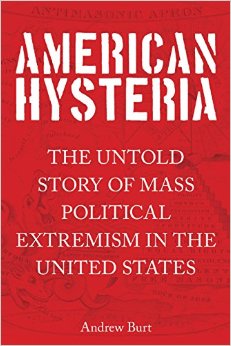
American Hysteria: The Untold Story of Mass Political Extremism in the United States

Andrew Burt

For most, Jade Helm 15 may sound like the newest MMORPG, but for Chuck Norris, recipient of many kicks to theAmerican Hysteria head, the upcoming military training exercise is something straight out of Gray State (in other words, B-grade survivalist porn).

“It is neither over-reactionary nor conspiratorial to call into question or ask for transparency about Jade Helm 15 or any other government activity,” Norris wrote in an op-ed for WND.

Sadly, it’s not just over-the-hill actors. Some politicians have been swept up in the paranoia as well. It’s disappointing, but not surprising. As Andrew Burt writes in his new book, American Hysteria: The Untold Story of Mass Political Extremism in the United States:

“Every few decades, a striking political phenomenon emerges, based upon the fear that a secret network has infiltrated American society and threatens destruction from the inside. Even more fascinating is the fact that this type of movement is not relegated to the fringes of the political arena — it routinely takes center stage.”

While there are plenty of examples to choose from, Burt focuses on five less-than-dignified instances of American witch hunts: the anti-illuminati and anti-mason movements from the country’s earliest days to 20th century’s Red Scare and its bastard sequel, McCarthyism, and finishing with the anti-Islam sentiment of the modern day (specifically, the anti-Sharia movement).

In this excellent study, Burt seeks the common ground between these manias. What he finds, not surprisingly, is that “hysteria arises at times of profound change in America’s national identity,” predictably when a fading social group is losing its leverage. They perceive an outside threat that has penetrated the establishment.

Jade Helm 15 is a perfect example. Since the Civil Rights movement, a culture war has been festering, particularly among aging white men threatened by new demographics and the embrace of multiculturalism.

This war went nuclear when Americans elected a black president who was acquainted with Islam. The enemy wasn’t at the gates — it was inside the White House!

So, despite the fact that routine military exercises have been occurring in Texas for years, under the direction of a black commander-in-chief, ostensibly sane politicians are buying into Norris’ nonsense.

This, Burt writes, is what separates hysteria from extremism. Extremism is always present, but generally marginalized. Political and cultural battles can be contentious, but they typically occur within an agreed-upon scope of reality.

The time to get nervous is when legitimate mainstream figures get caught up in the crazy (e.g. a viable presidential candidate believing that Obama and the CIA are plotting a takeover of Texas and Utah).

In other words: It’s time to get nervous.

But back to Burt. There is no knocking his narrative and reporting skills. American Hysteria is well-researched and -written, and I hope to see more from him in the future. He has written for such outlets as U.S. News & World Report, the Atlantic, Slate and Politico, but this is his first book-length work. My only knock on this book is the overlap between some of the episodes (e.g. the Illuminati and the Masons, the Red Scare and McCarthyism). I would love to see Burt take on other manias, such as the Satanic Panic, perhaps in later books.

After giving us the history of hysteria, Burt goes one further and offers us tips in handling the manias that haven’t happened yet. “The first rule of hand in approaching movements of hysteria is thus to accept them for what they are, rather than dismissing them outright, as is so often the temptation.”

As much as I am amused by Norris’ rants, it would be wrong to dismiss his views out of hand — not because there is any substance to his op-ed, but because there is something important to be learned from the subtext.

“Hysteria, after all, is about exclusion — it is the story of groups of men and women, like McCarthy and his supporters, confronting profound changes within American society and then excluding other groups as a result.”

To prevent the next Red Scare, we’ve got to recognize it in its infancy, understand the true interests of its followers and confront the unreasonable with reason.

It may work, it may not. The upshot of those times when it doesn’t work is that it makes for colorful history — a history skillfully explored by Burt in this must-read book. I can’t think of anything more patriotic than reading this book in time for July 4, to learn from our missteps to avoid repeating them again and again.

Review: “No One Helped”

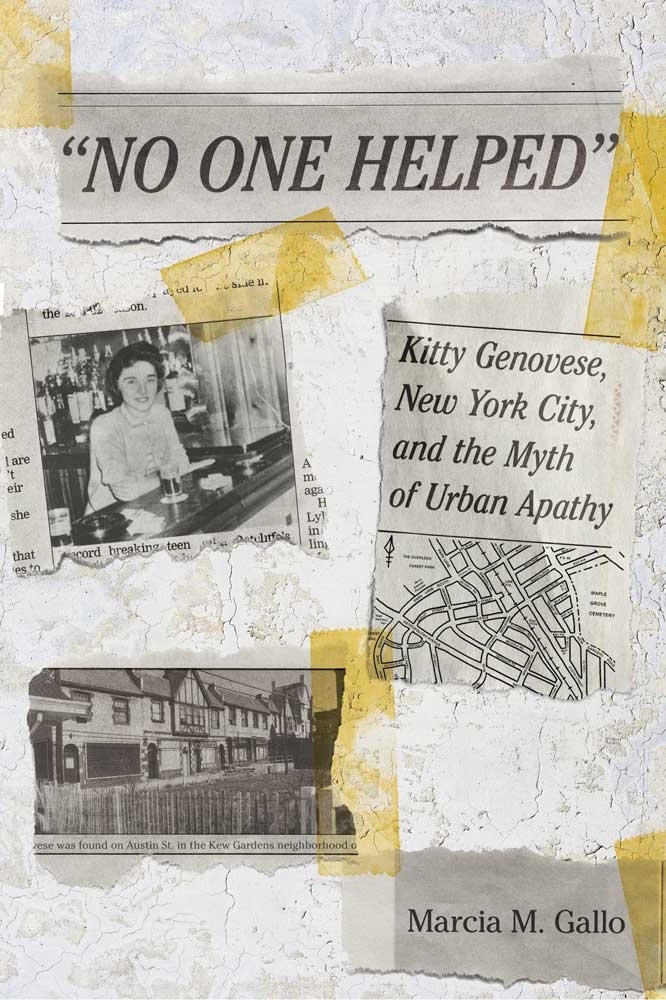
“No One Helped”: Kitty Genovese, New York City, and the Myth of Urban Apathy

Marcia M. Gallo

From an early age, I longed for the big city life. Growing up in a sleepy township that didn’t even have sidewalks will do thatNo One Helped to a kid. To dissuade me from fleeing the Rust Belt for bright lights and tall buildings, my parents served up the tale of Kitty Genovese, the New York woman who, in 1964, was famously murdered on a Long Island street while everyone just stood back and watched her die.

It terrified me. In my mind, I envisioned a crowded street, broad daylight, pedestrians having to sidestep this dying stranger as she pleaded with them for help.

It wasn’t difficult to imagine. Though not the best time for New York City, the 1970s and early ’80s was a fruitful period for dystopian cinema set in the metropolis. My impression of the city was shaped entirely by Escape from New York and Fort Apache, the Bronx.

Though the story of a woman left to die on the sidewalk stayed with me, I never actually learned her name until college, when we studied the case in psychology class. Many psychology classes, actually. At the time, the prevailing narrative was still treated as gospel: 38 neighbors watched and did nothing as Winston Moseley assaulted Genovese, left, assaulted her a second time, left, and came back a third time to finish the job.

It’s hard to fathom how this could happen, and of course, it didn’t. At least, not the way it was reported in 1964, and certainly not the way it had been mythologized by the time it reached my ears as a cautionary tale. A more accurate telling was done by Kevin Cook in 2014’s Kitty Genovese: The Murder, the Bystanders, the Crime that Changed America.

The focus of Marcia M. Gallo’s “No One Helped”: Kitty Genovese, New York City, and the Myth of Urban Apathy is not so much on the murder as the social incubator in which the narrative of urban apathy was spawned and evolved — and how, by focusing on the witnesses rather than the victim or perpetrator, Genovese “had been flattened out, whitewashed, re-created as an ideal victim in service to the construction of a powerful parable of apathy.”

The biggest omission from Genovese’s story, writes Gallo, a history professor at the University of Nevada, Las Vegas, is that she was a lesbian. Being young, pretty and white made her the perfect media martyr, so details of her romantic preference would have been inconvenient to the “ideal victim” narrative in 1964. As the story of her murder took on a life of its own, she became a nameless victim of urban decay — more of a plot device than a character in her own horror show.

“No One Helped” is on the shorter side, but Gallo deftly packs in a lot of information — and unpacks five decades of history. The chapters are like linked short stories, exploring in turn the history of Kew Gardens and the racial tensions of the time, the changing media landscape and the marketability of an erroneous New York Times article that fumbled the facts but resonated with “white flight” suburbanites.

As for Genovese, Gallo writes, the article “rhetorically reduced her to the chalk outline left on the sidewalk at a crime scene after a body has been removed.”

About those 38 witnesses? Only four were actually called to testify at the trial, and even fewer were aware that Genovese had been stabbed. The Times failed to mention the fact that Moseley’s initial assault was interrupted by a neighbor’s intervention, and his second assault took place in a darkened back hallway beyond the vantage point of any neighbors.

Gallo writes, “In all of the accounts that have followed in the story’s wake, what has rarely been noted is that there is only one actual eyewitness to Genovese’s death. That person is her killer, Winston Moseley.”

In reclaiming Genovese’s identity, Gallo reveals her personal connection to the case. She does so in a tasteful, informative manner, steering clear of navel gazing and drawing attention instead to the resonating significance of the story.

For all the horror of the Genovese murder, and its aftermath, it also gave birth to the 911 emergency response system and community policing efforts. It furthered the movement to reexamine our societal acceptance of intimate partner violence (some witnesses had dismissed the assault as a “lover’s quarrel”).

And it exposed racial bias in crime reporting. Just two weeks earlier, Moseley had assaulted another woman, murdered her and set her on fire. “Significantly, no photographs of Moseley’s earlier victim, Anna Mae Johnson, a young black woman, ever appeared. Within weeks she would fade from most popular versions of the story, as would her killer,” the author writes.

Most of all, for Gallo, the legacy of the Genovese murder still matters “because it raises the central question of how we engage with those around us, individually and collectively, when they need our help.”

Digging beyond the murder and the myth, Gallo has penned a remarkable portrait of Genovese and her enduring legacy a half-century later. Her murder inspired an entire branch of psychology, but perhaps her lasting impact on social science will be the study of media myth-making. No matter the fables and fallacies that have emerged, the impact of Genovese has endured.

I’ve been on the Long Island Railroad, and at the Kew Gardens stop, it’s impossible not to look down at the nondescript parking lot and the neighboring houses, all crammed together, and wonder how this could have happened.

After 50 years, we know it happened differently than we’ve believed, but the true story of the assault is still as brutal and horrifying, if different, than we imagined. Gallo succeeds in redirecting our attention from the “witnesses” to the victim, who became a footnote to the fable. “No One Helped” restores the individual who existed before the chalk outline.

Recommended Reads: Rich People’s Movements

Isaac William Martin

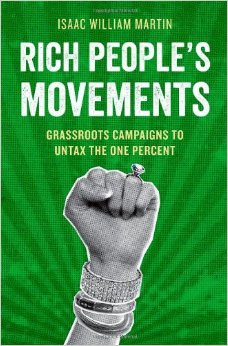
Rich People’s Movements: Grassroots Campaigns to Untax the One Percent

Though originally published in 2013, tax season is the perfect time to reissue this compelling look at the anti-tax movement in America, as documented by rich peoples movementsa sociologist specializing in public policy and social protest. Rich People’s Movements begins with the Tea Party protests of 2010 and traces the history of anti-tax sentiment back to the Sixteenth Amendment. More than mere history, this book examines the ways the affluent borrowed the tactics of the poor and powerless, who, without the ability to confront power with money and influence, took to the streets to make their voices heard.

Why would those with power and influence rely on a protest movement? Martin answers this question and many more, such as why the working poor will sometimes rally to the defense of the 1 percent and their economic policies.

Also available is Martin’s new book, Foreclosed America, co-authored with Christopher Niedt. This is a collection of portraits of Americans who have lost their homes to foreclosure since 2007 — and a look at the housing crisis that still affects our economy and way of life.