books

Noir Noel

From hard luck to hard science, this trilogy of thrillers will dim the holiday lights of the noir fanatic in your life. Much like the three wise men, we offer gifts of the gritty, the procedural and the other-worldly.

The Forgotten Addiction

Michael Lion
Forgotten AddictionIf you’ve got someone on your shopping list who likes it fast and dirty, gift them this hard-boiled holiday treat. In the follow-up to Lion’s acclaimed debut, The Butcher’s Granddaughter, Bird is back and looking for redemption. Fans of the genre will love Lion’s furious pacing and tightly wound prose.

The setting is interesting as well: 1993 Los Angeles (a wild time in the City of Angels). No cell phones. No Google. Just Bird the snitch playing both sides of the street and trying to find the missing daughter of a man murdered right before his eyes.

The search is both exciting and existential.

The strength of The Forgotten Addiction is Lion’s ability to create tight, gritty prose, but for all the textual skill, his characters are too familiar. Bird gives everyone a bad attitude, whether or not he’s provoked. Readers will recognize the upwardly mobile prostitute who is using her income to fund her education; the tough but noble bouncer who moonlights for Bird; the befuddled psychiatrist who is outwitted by the snitch.

Some of the plot turns are too convenient, but the action (and salty interaction between characters) is worth the ride. I couldn’t stop reading from one chapter to the next, and the narrative never grows stale.

It’s also fun to go back to that time and place when the west was on fire. This is one of the season’s best releases.


Case Closed

Case ClosedJan Burke

For two decades, Burke has thrilled a wide audience (including Bill Clinton) with her series of novels set around journalist Irene Kelly. Over the years, fans have enjoyed her blossoming romance with detective Frank Harriman, but in Case Closed—the last of six ebook collections pairing Burke’s new short fiction with stories from her anthology, Eighteen—we meet Harriman as a bumbling rookie. In this tale, he responds to a missing persons call, all the time wondering why the other cops are treating it with such cynicism. And it only gets stranger from there. Burke’s skill for dialogue and wit shine through. The interaction between Harriman and the old lady is delightful. There is a glaring plot hole in the big reveal (I won’t spill it, but it’s safe to say even the laziest, most cynical cop would have thought to check there), but it doesn’t spoil the enjoyment of the story, nor the others in the collection. It’s a wonderful introduction to Burke’s underworld.


Dangerous Games

edited by Jonathan Oliver

Incorporating mystery, horror and sci-fi, this eclectic anthology has something for everyone. Leading off with Dangerous Gamesheavyweight Chuck Wendig and his dark tale “Big Man,” Dangerous Games plays on the theme of, well, games of course, but also chance, circumstance and, by extension, chaos theory (sort of). Wendig sets the tone with a dark yarn about road rage—a game we’ve played at some time, and it has no winners. Other standouts include offerings from Silvia Moreno-Garcia, Libby McGugan and Gary McMahon. Stories take us to the twisted future and the tortured past, but regardless of setting, each tale gnaws at the insatiable itch we have to roll the dice—and suffer the consequences.
Review: An Infuriating American

An Infuriating American: The Incendiary Arts of H.L. Mencken

Hal Crowther

The tone of this extended essay is established up front by a quote from the subject himself, H.L. Mencken:An Infuriating American

“To the extent that I am genuinely educated, I am suspicious of all the things that the average citizen believes and the average pedagogue teaches.”

Mencken, one of America’s finest journalists, was also a world-class iconoclast, and the tone and spirit of his work is captured wonderfully in this short study by Hal Crowther, himself an esteemed author (and 1992 recipient of the H.L. Mencken Award). Mencken should be required reading for everyone (particularly prospective journalists), and An Infuriating American is as good an introduction to the writer as you’ll find.

Crowther’s prose is fearless in tone and content. He is willing to editorialize and present Mencken in all his contradictions—and he doesn’t shy away from the difficult subjects, like racial discrimination. For all his bluster about defying popular opinion and pedagogy, Mencken was a sheep when it came to racism. His comments about Jews and African-Americans, as well as his complicated love affair with Germany post-WWI, are indefensible, and Crowther makes no effort to do so.

But that shouldn’t come as a surprise. Mencken drew the ire of many and never held his tongue to avoid criticism. He was an elitist and, one could argue, a misanthrope. “Human progress was one of the myths to which Mencken did not subscribe,” writes Crowther.

I would say the evidence supports this decision.

The breadth of his thought is such that members of all political factions can claim Mencken as one of their own. Crowther establishes his proper place: “Certainly Mencken was a conservative by many measures, and died conspicuously to the right of the intellectual mainstream. But it’s a grievous insult and injustice to imagine him watching Fox News, or celebrating the wisdom of Rush Limbaugh and Ayn Rand.”

This is a wonderful book about a complicated man, and an important object lesson for anyone pursuing a career in journalism, writing or general rabble-rousing.

And during this political season of partisan blowhards and neutered media, is there anything more fitting (or even patriotic) than revisiting an era of bold journalism, back when it was a blue-collar profession of integrity, and not something best illustrated by the film Nightcrawlers.

Review: The Perfect Kill

The Perfect Kill

Robert Baer

It was not hard to get me to pick up The Perfect Kill: 21 Laws for Assassins, by former CIA case officer and best-selling The Perfect Killauthor Robert Baer. Advice on how to pull off a flawless assassination? From a CIA insider? Sign me up.

But before you start stockpiling your arsenal, don’t think of The Perfect Kill as a modern-day Anarchist Cookbook. This is an engaging work of military history—an insider’s view of the Middle East through the eyes of an assassin.

The assassin, though, is not Baer, but rather Hajj Radwan (aka Imad Mughniyeh), a notorious Lebanese terrorist affiliated with Hezbollah and the Islamic Jihad Organization. He is the man responsible for the 1983 suicide bombings of the U.S. embassy and marine barracks, and Baer links him to a number of kidnappings, hijackings and assassinations in the 1980s and ’90s.

Despite being an international fugitive (he was on the “most wanted” list of dozens of countries) and the focus of numerous arrest and assassination attempts by the U.S. and Israel, Radwan was able to execute successful terrorist attacks for a quarter-century before being killed by a car bomb in 2008.

His ability to elude justice for so long is frustrating to fans of instant karma, but for an experienced CIA operative (Baer himself was in pursuit of Radwan), he authored a playbook for political murder.

While the subject matter alone is interesting, Baer’s writing makes this a thrilling read from start to finish. He has a narrative voice that is concise, informative and though he occasionally drifts toward the conspiratorial (which isn’t a bad thing), he tempers it by clearly defining what is fact and what is conjecture.

And Baer’s got the bona fides to back it up. He writes for Time and other news outlets; he has produced documentaries for the BBC; and he has authored nonfiction best-sellers like See No Evil and Sleeping with the Devil.

Oh, and George Clooney played Baer in Syriana. Not a bad resume.

Each chapter begins with a “rule” for assassins, such as “The Bastard Has to Deserve It” (Law #1), “Every Act a Bullet or a Shield” (Law #4) and “Nothing Wounded Moves Uphill” (Law #20). Also included are “notes” to help one stick to each law and historical lessons (successful and otherwise) enforcing its importance.

But always, the primary narrative is the chess match between Bear and Radwan, and it is one that spans decades and continents. It’s a fascinating tale, and not surprisingly, the TV rights to the book were sold months before its publication.

I’m excited to see its adaptation, but there’s no substitute for the source. This is a stellar book that is a must-read for fans of history, the Middle East, the military and U.S. foreign policy.

Review: The Cutting Room

The Cutting Room

Ellen Datlow, editor

“With no dreams left to search for, I have only nightmares to anticipate.”The Cutting Room

This is one of the most haunting lines from the tremendous opening story, “The Cutter,” by Edward Bryant. It sets the tone for all the delicious horror in Ellen Datlow’s latest anthology, The Cutting Room: Dark Reflections of the Silver Screen.

Those familiar with Datlow’s work know that she is the go-to authority in the horror/fantasy world. The appeal of any anthology is the prospect of finding some good stories and maybe discovering new authors, but buyer beware: Anthologies themselves can be hit and miss, especially when the stories are crudely arranged with no thought to pacing or theme.

When Datlow’s name is on the cover, however, you know the collection will contain the highest quality writing and arranging, kind of like listening to a Rob Gordon mix tape (or Rob Fleming, for those who prefer the novel version of High Fidelity).

The genius of starting this anthology with Bryant’s “The Cutter” is that:

  1. It is set in a movie theater
  2. It features a film projector, Mr. Carrigan, who cuts and splices the incoming films so that attendees at his theater have a different version of the film than the director intended
  3. It thrusts the reader into a world of altered reality, where nothing is beyond edit and where nothing can be believed or counted on besides death

Of course, I’m a little biased. Not long after I moved to Colorado, Westword profiled Bryant and his fiction, and I’ve been a fan ever since.

Datlow refuses to let off the gas with the next tale, “The Hanged Man of Oz” by Steve Nagy, which plays upon the belief that an on-screen suicide is visible in The Wizard of Oz. I happen to share this belief, though it is denied by some. Nagy’s version gets even crazier, with the protagonist haunted by the scene, the film, the characters and his new girlfriend, who’d shown it to him.

There are also stellar contributions from horror legends, such as Dennis Etchison’s “Deadspace” (in which a small-time producer encounters big-time creepiness), and relatively new talents like A.C. Wise’s “Final Girl Theory.” (To enjoy a wonderfully haunting audio version of “Final Girl Theory,” visit Pseudopod.)

I’ve long loved the Gemma Files and Stephen J. Barringer tale “each thing i show you is a piece of my death,” which I first read in Datlow’s The Best Horror of the Year, Volume Two. While I love the meta-everything tone of the piece, I have mixed emotions about the title. It’s a line from my favorite Marilyn Manson song, “The Reflecting God,” and I appreciate the reference, but it’s such an obscure line (from neither chorus nor verse, but rather spoken beneath a wall of power chords segueing into an instrumental break) I’m not sure enough people will get the reference. Still, it’s a great story (and a great song).

Of a similar tone is Gary McMahon’s “Cinder Images,” which reminds the reader why many of us love horror in the first place: “You try to close your eyes but you cannot. You have to see—you need to see this. There are things that must be endured, sights that cannot be ignored.”

In fact, the idea of disturbing images and the blurring of reality is a common theme in this collection. Stephen Graham Jones’ chilling “Tenderizer,” for example, David Morrell’s “Dead Image” and the wonderfully titled “Filming the Making of the Film of the Making of Fitzcarraldo” by Garry Kilworth.

The final story, “Illimitable Dominion,” is a wonderful story I’d read before (in a Datlow collection dedicated to Poe), but was worth a second read. It re-imagines the complicated relationship between Poe and filmmaker Roger Corman (a creative relationship, that is, not an actual one). By one view, Corman did the world a service by keeping Poe’s stories in the cultural conversation via horrid retelling of his tales. By another view, he also bastardized much of the master’s works, in ways inconceivable to Poe fans.

Newman’s story offers an alternate view, one that loosely weaves fiction with history.

Like any anthology, it’s unlikely that every story will resonate with all readers, but as far as quality is concerned, The Cutting Room is a major success. Even if you only read “The Cutter,” this monster matinee is worth the ticket price.

Anticipate many nightmares within these pages.

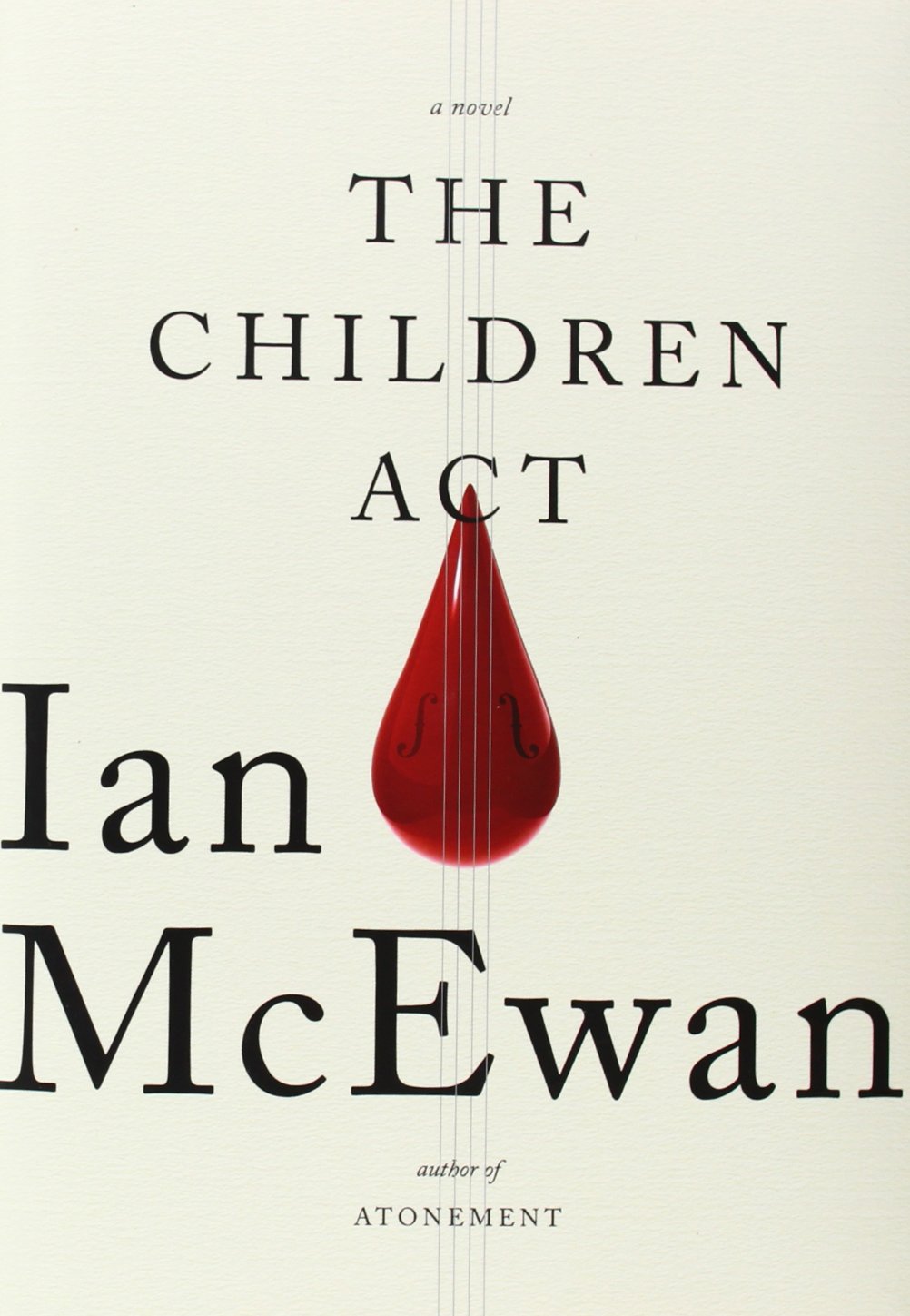
Review: The Children Act

Ian McEwan

The Children Act

Given one word to describe Ian McEwan, I’d have to go with excruciating. The tone (elevated and eerie) and density of his novels (to a degree that will try passive readers) ooze with The Children Actanxiety. His protagonists suffer quietly, haunted by a single instance of poor judgment or an absent-minded transgression.

It’s all about moments and forbidden thresholds, the composed intellectual who discards dignity and custom to follow an animal impulse. Be it a father’s momentary lapse in The Child in Time, the sudden violence of The Innocent or the chilling cowardice in Amsterdam, there comes a dissociative moment in every McEwan novel in which a main character is forced to confront their darkest depths.

And then live with the consequences.

Such is the case for Fiona Maye, protagonist of The Children Act, McEwan’s latest novel. Fiona is an experienced judge on the cusp of old age who is questioning her lifetime of restraint (as well as her decision not to reproduce).

We enter her story mid-conversation to discover Fiona reeling from her husband’s proposed (and possibly in-progress) infidelity, just as she’s preparing for a high-profile case with a child’s life in the balance.

Cut to the courtroom, where the precocious teenager is refusing a blood transfusion on the grounds of being a Jehovah’s Witness. Invoking the Children Act of 1989, Fiona gives her ruling, the consequences of which ultimately lead to a spontaneous, classically McEwan mistake, one that risks undoing her marriage, her career and a lifetime of calculated decision-making.

The Children Act is a short, but dense novel, as is usually the case with McEwan. The man is a master of reflection and interiority. The opening chapter encompasses but a moment in a 30-year marriage, but lays bare its successes, failings and a lifetime of insecurities and second-guessing.

McEwan applies this level of care and detail throughout the novel, which may lack the sinister urge of books like The Cement Garden, The Comfort of Strangers or First Love, Last Rites, but certainly channels the disquiet of Enduring Love and Saturday, in which the tragedies unfold in slow motion and a lifetime of torment is distilled into a bitter, lingering moment.

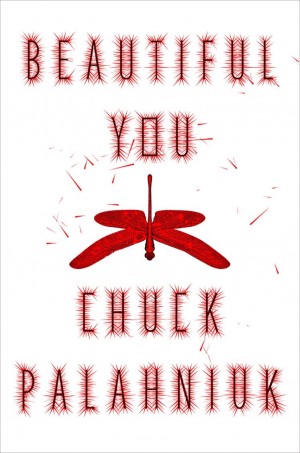
Pleasuring the Collective Unconscious: A review of Chuck Palahniuk’s Beautiful You

I’ll start with a confession: This review has come along sluggishly. Time I’ve set aside for writing has instead been frittered away on mindless online gaming. It’s an affliction we’ll call Beautiful Youwritus interruptus, and it’s likely to become an epidemic worse than any zombie apocalypse.

(Speaking of, my current addiction is The Last Stand: Dead Zone, and before I completed this sentence I had to stop to check on the construction status of a barricade.)

This isn’t anything new, really. In the 1950s, scientists discovered that if a rat could stimulate its brain’s pleasure center by pressing a bar, it would do so furiously until it passed out from exhaustion and, in many cases, died for lack of food and water. Mind you, the rats had access to food and water, but they couldn’t keep their paws off that pleasure bar.

This should sound familiar to any gamer who has missed a meal in order to level up.

It’s sick and wrong. I know this, but I need someone to hold up a mirror to face this absurdity directly.

This is why I love Chuck Palahniuk, whose new book, Beautiful You, is his best in a few years.

Fittingly, it concerns arousal addiction, and serves an electric shock to our collective conscience (or perhaps unconscious would be the better term).

Palahniuk took on male malaise with Fight Club, and mocked cultural over-consumption with Choke. Snuff (ostensibly a novel about pornography) lampooned self-destructive excess and exploitation in a manner that could very well have served as a hyper-sexualized predictor of the impending financial crisis of 2008.

In Beautiful You, he wanted to write what he calls gonzo erotica, and in the process has penned an anthem for an overstimulated, multi-tasking, computer-coma society.

Penny Harrigan is a nice Nebraskan girl working in New York City when she catches the eye of the world’s richest man, C. Linus Maxwell. Next thing you know, Penny is the talk of the tabloids and the envy of her coworkers.

Behind closed doors, however, is where Penny is truly transformed. Maxwell introduces her to a world of unimagined, if clinical pleasure. Penny has her reasons to question Maxwell’s motives (especially after a bizarre bathroom tryst with his bitter ex-lover), but is too enraptured with her newfound fame and sexuality.

Oozing with plot twists only Palahniuk’s sardonic tone could make palatable, Beautiful You aspires to remarkable levels of absurdity, but is it any more absurd than the daily inundation of product and marketing? Many reviewers have criticized the gratuitous satire in this novel, but is the idea of world domination via dildo really that farfetched in a culture that has financially sustained multiple cable shopping channels for three decades?

Beautiful You put me in mind of Rancid’s “Born Frustrated,” which asked, “Is this human freedom, hedonistic excess? Junky consumerism, mass production, toxic sickness?”

It’s why Romero’s Dawn of the Dead was set inside a shopping mall—can you truly be sure there aren’t a few zombies among you inside the IKEA? Ever been to a restaurant where a group of supposed acquaintances are each focused on their own smartphone or tablet?

We are a culture of instant gratification. We are a culture of distraction.

We are the lab rats hammering away at the pleasure bar for a taste of sweet, sweet oblivion.

And much like Maxwell, Palahniuk is there wearing a lab coat, taking copious notes and holding up a funhouse mirror to our cage, so that we might catch a distorted glimpse of what we’ve become.

Review: The Upside of Your Dark Side

The Upside of Your Dark Side

Todd Kashdan and Robert Biswas-Diener

So, I’m not exactly the target audience for this book, as I long ago embraced my Upside of Your Dark Sidedark side, but I’m glad that Kashdan and Biswas-Diener, a pair of psychologists and professors at George Mason and Portland State Universities respectively, are promoting widespread awareness.

And no, this isn’t a Darth Vader-style enticement to evil, but rather a commitment to intellectual and emotional honesty. Embracing the dark side is being an anti-Pollyanna, acknowledging negative states of consciousness rather than suppressing them. Realizing that feeling bad is inevitable and natural.

Or, to let the scientists speak for themselves, “…we, the authors, reject the notion that positivity is the only place to search for answers. We reject the belief that being healthy is marked by a life with as little pain as possible.”

Perhaps it’s my love of Eastern philosophy, but I’ve always subscribed to an elastic emotional outlook: the greater the highs, the greater the lows. Inoculating oneself from pain only serves to numb one’s experience of joy.

It’s a conundrum that dates at least as far back as the dueling philosophies of the Cynics and the Stoics, but has become especially germane in the decades of post-WWII prosperity. At some point in the past 50 years, the fantasy that you could enjoy the thrills without enduring the chills became an accepted philosophy.

To seek comfort and happiness is natural, but now, the authors argue, it has become an addiction.

The self-help and pharmaceutical industries, along with positive psychology (to a lesser extent), have cultivated a bubble-wrapped culture where discomfort is treated as an abnormal condition. Not only is this unrealistic, it’s not healthy. There’s nothing wrong with feeling down sometimes, feeling angry sometimes.

“People who are whole, those of us who are willing and able to shift to the upside or the downside to get the best possible outcomes in a given situation, are the healthiest, most successful, best learners, and enjoy the deepest well-being.”

I’m reminded of my own experiences in therapy. I was the difficult patient who used my session time to challenge my therapist with my grim view of humanity. I would rattle off atrocities and injustice and point out that our culture rewards the worst kind of people and punishes the good. No, not just our culture—our species. Then I would grin triumphantly as the counselor struggled to argue against that.

I knew I’d finally found the right therapist when, during our first session, I gave her my misanthropy spiel. Her response: “Yeah, you’re right. So what?” Sometimes things are shitty.

This was the jolt I needed to crack my defiant shell and get to work on getting better.

Kashdan and Biswas-Diener hope to provide the same jolt to readers acclimated to a self-help mantra of “I’m OK, You’re OK,” and hopefully they are successful in this task.

They should be, as this is a very interesting read. What I like about The Upside of Your Dark Side is how the authors incorporate scientific research, positive psychology theory and personal anecdote to construct a cogent warts-and-all perspective of the human experience. Even though it features plenty of scientific research, the narrative is very accessible to lay-readers.

The shortcoming of the book, for me, is that the authors can be overly expository—they do a good job of illustrating a point, but then summarize said point as though they don’t trust the reader to draw the correct conclusion. But I wouldn’t mark down a letter grade for that. That’s the inherent risk with science writing. The authors have to take arcane material and present it to an audience that, for the most part, doesn’t share the authors’ background or familiarity with the topic.

Kashdan and Biswas-Diener by and large hit the sweet spot between academic and accessible. This is a book to be enjoyed by all—and to some a revelation.

Horror Shorts

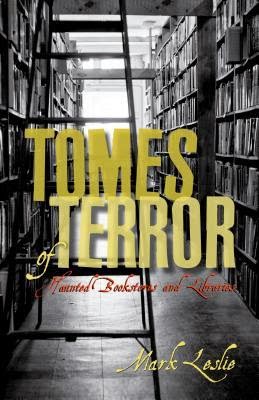
Tomes of Terror

Mark Leslie

There are two things I like to do anytime I come to a new town:Tomes of Terror

  1. Visit the local book shops
  2. Take a ghost tour to learn about its haunted legends

So you can guess my excitement to read Mark Leslie’s Tomes of Terror, a collection of hauntings set in libraries and bookstores.

Leslie’s first two nonfiction books explored the haunted legends of Hamilton and Sudbury in Canada. This time he travels the globe recounting stories of specters who re-shelve library books, peruse the remainder pile or just want to sit in a quiet corner and enjoy a good book.

I can relate. My ideal afterlife would be spent on the top floor of the Boulder Book Store (with occasional sojourns along Pearl Street to Illegal Pete’s, of course).

As for Leslie’s collection, it’s a great read for any fan of ghost literature. It’s also a mixed bag, with some anecdotes chilling, some sweet, some silly.

There is one shortcoming in this book, but it is no fault of Leslie’s. It’s the medium. Sadly, the written word can’t compete with a spook story shared in hushed whispers around a campfire, so truly visceral frights are few.

Case in point: As much as I enjoyed both installments of Roz Brown and Ann Alexander Leggett’s Haunted Boulder series, their stories truly come to life when performed by master tour guide Banjo Billy. (I highly recommend both the books and the ghost tour, if you happen to be in Boulder, Colo.)

Despite the limitations of the printed page, I love any well-written and –researched book of hauntings. What I like most about them, I think, is that the tales turn out to be more historical than horrific. I’ve come to view ghost books (and tours) more as historical documents than anything else, but the kind that infuse a town with a lot of personality.

For me, it’s hard to truly love a place until I’ve explored its ghostly geography.

Fittingly, some of the most fascinating parts of Tomes of Terror are not the ghosts, but the histories of the libraries and stores themselves.

A sad postscript is that a fair number of the bookstores mentioned in this collection are now closed, becoming a different kind of ghost. And that’s truly terrifying.

But the stories never die, and in that sense, the shuttered stores live on in their own haunting way. Like ghosts, their spirits persist in the pages of Leslie’s collection.

Long may they haunt.


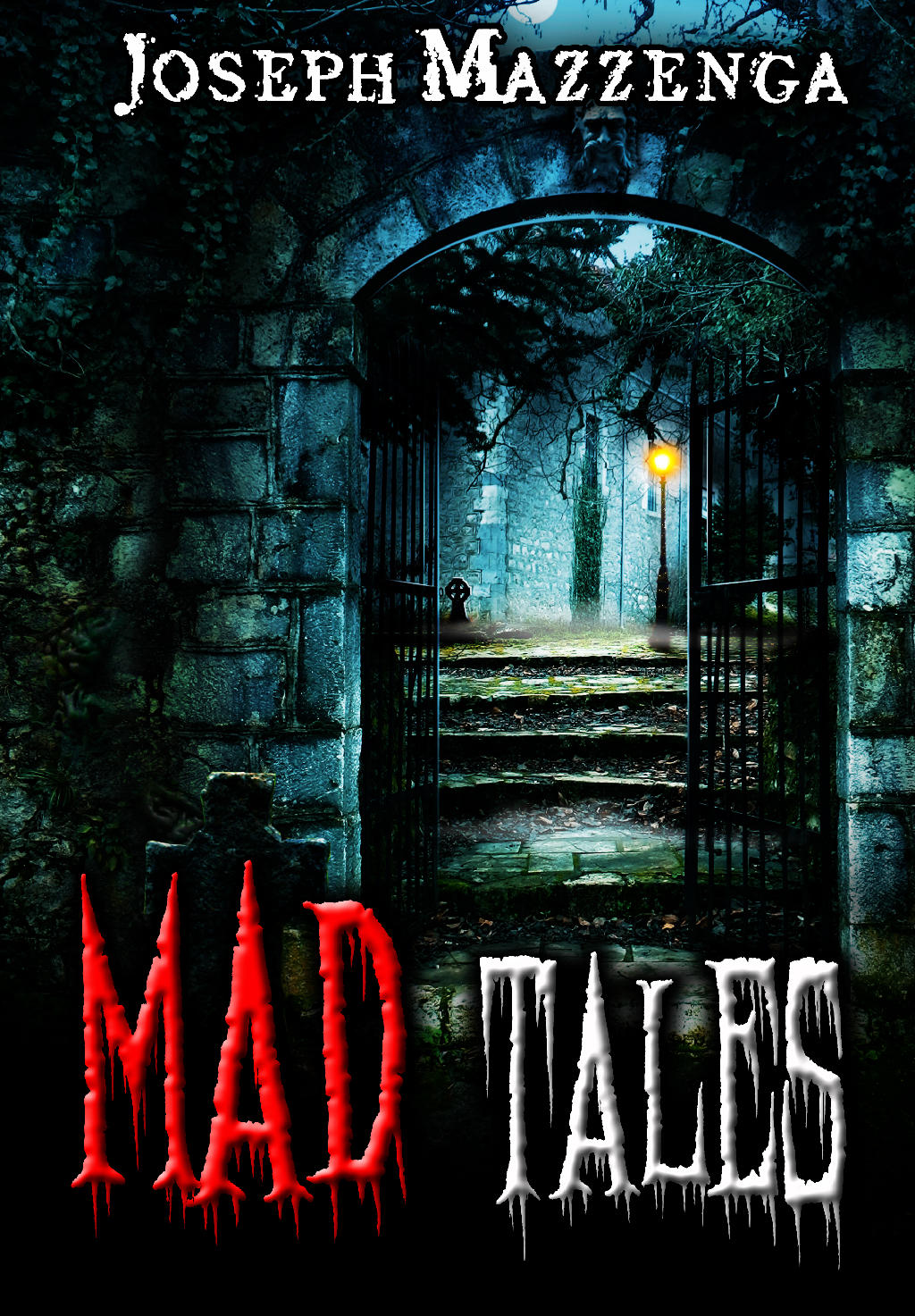
Mad Tales

Joseph Mazzenga

Come October, you can’t go wrong with a collection of horror stories on the nightstand (or anytime, really, if you ask Mad Talesme). While not straight horror (Mazzenga incorporates elements of the weird, sci-fi and urban fantasy), Mad Tales is a collection of the creepy and creative befitting autumn, the best of all seasons.

“Pepperell,” the lead story, truly stands out. It’s a fast-paced thriller fueled with a Twilight Zone aesthetic that disorients as well as it delights. The character development is a bit thin in this tale of outlaw bikers descending upon a quiet mountain town, but the “said the spider to the fly” motif compensates for the broadly sketched personalities.

There is no short-changing on the characters in “Bloody Depths,” a sprawling seascape of uncertainty that delivers its nightmares at an even pace. Here, we have more time to engage with the main character’s plight and share her dread as Mazzenga takes us to some weird—I mean really weird—places.

While they may incorporate elements of fantasy and sci-fi, each of the Mad Tales features a creepy tone that firmly establishes this enjoyable collection in the horror genre.

Review: Waking Up

Waking Up: A Guide to Spirituality without Religion

Sam Harris

My anticipation for the new Sam Harris book turned to anxiety when I learned it would be about spirituality. Was the firebrandtype philosopher and scientist—co-founder of Project Reason and author of The End of Faith and Letter to a Christian Nation—changing teams?

Nah.

Perhaps a better title for this book, though, would be The Atheist’s Guide to Meditation.

At its core, Waking Up is about mindfulness, and as a fellow atheist who has attended a fair share of Buddhist retreats (including a recent one on Mindfulness-Based Stress Reduction), I can relate to some of the conflicts Harris encounters. No matter how secular the retreat, I get nervous when I find myself in a room full of people following the direction of a group leader offering spiritual betterment.

Harris takes out the touchy-feely and goes straight for the scientific foundation of a mindfulness-based approach to life. The result is a book heavy on Buddhist philosophy and refreshingly light on bullshit.

What makes Waking Up different is that it’s also what Harris calls a “seeker’s memoir.” We follow his journey from a skeptical teen to an adult struggling with the feelings of “unsatisfactoriness”—which is his interpretation of the concept of dukkha, rather than the traditional definition of suffering.

He had my attention early in the book, when describing the disquiet of his solitary thoughts and the relief he felt when experimenting with MDMA, LSD and DMT: “It would not be too strong to say that I felt sane for the first time in my life.”

Through his seeking, Harris reveals that, for him, spirituality is not the existence of a higher being in the ethereal realm, but rather the cognizance one has of an immaterial self. “Subjectively speaking, the only thing that actually exists is consciousness and its contents. And the only thing relevant to the question of personal identity is psychological continuity from one moment to the next.”

Speaking of continuity, Harris gets a little far afield the deeper we delve into the book. Beyond memoir, he explores the scientific underpinnings of consciousness and meditation, drops some knowledge about psychedelic drugs and, justifiably, rants on the silliness (and scientific dishonesty) of Proof of Heaven and other accounts of near-death experiences.

While I really enjoyed many of these sections, they didn’t have the cohesion of a linear narrative. It read more like a collection of essays on a single topic—which is fine, just not what I was expecting.

Harris’ informed and enlightened discussion of psychedelics resonates the most with me. Not only do I agree with his observations (and share some of his experiences), but Harris also challenges some of my long-held assumptions.

For instance, Aldous Huxley’s Doors of Perception is a seminal bit of psychedelic literature, and for years I bought in fully to Huxley’s description of the brain as a “reducing valve.” Harris debunks this by drawing on modern neuroscience, causing me to think about mind-manifesting drugs in a new way.

All told, Waking Up is an interesting and enjoyable read. There’s a bit of science writing, philosophy, memoir and a unique take on spirituality and meditation.

Review: Rock ‘n’ Roll Soccer

Rock ‘n’ Roll Soccer

The Short Life and Fast Times of the North American Soccer League

Ian Plenderleith

I recall, from my childhood, soccer on television, cheering for Pelé and watching him slow-motion bicycle kick his way through Nazis alongside Sylvester Stallone. And then it was gone.Rock n Roll Soccer

I don’t remember when it went away, but in the early 1980s, my attention turned to music and girls. So long, Pelé. Farewell slow-motion bicycle kick. We hardly new ye. It didn’t even occur to me, until Major League Soccer started play, that there was no longer an elite professional American league.

Fast forward to 2014, and soccer in America is once again on the rise. It’s now expected that the U.S. men’s team will not only qualify, but advance to the knockout rounds of the World Cup. The bar is even higher for the medal-winning women’s club. MLS is approaching its 20th season, and the future is looking bright.

Couple that with the self-immolation of the NFL and in a few decades Monday Night Football might be a whole different ballgame. Literally.

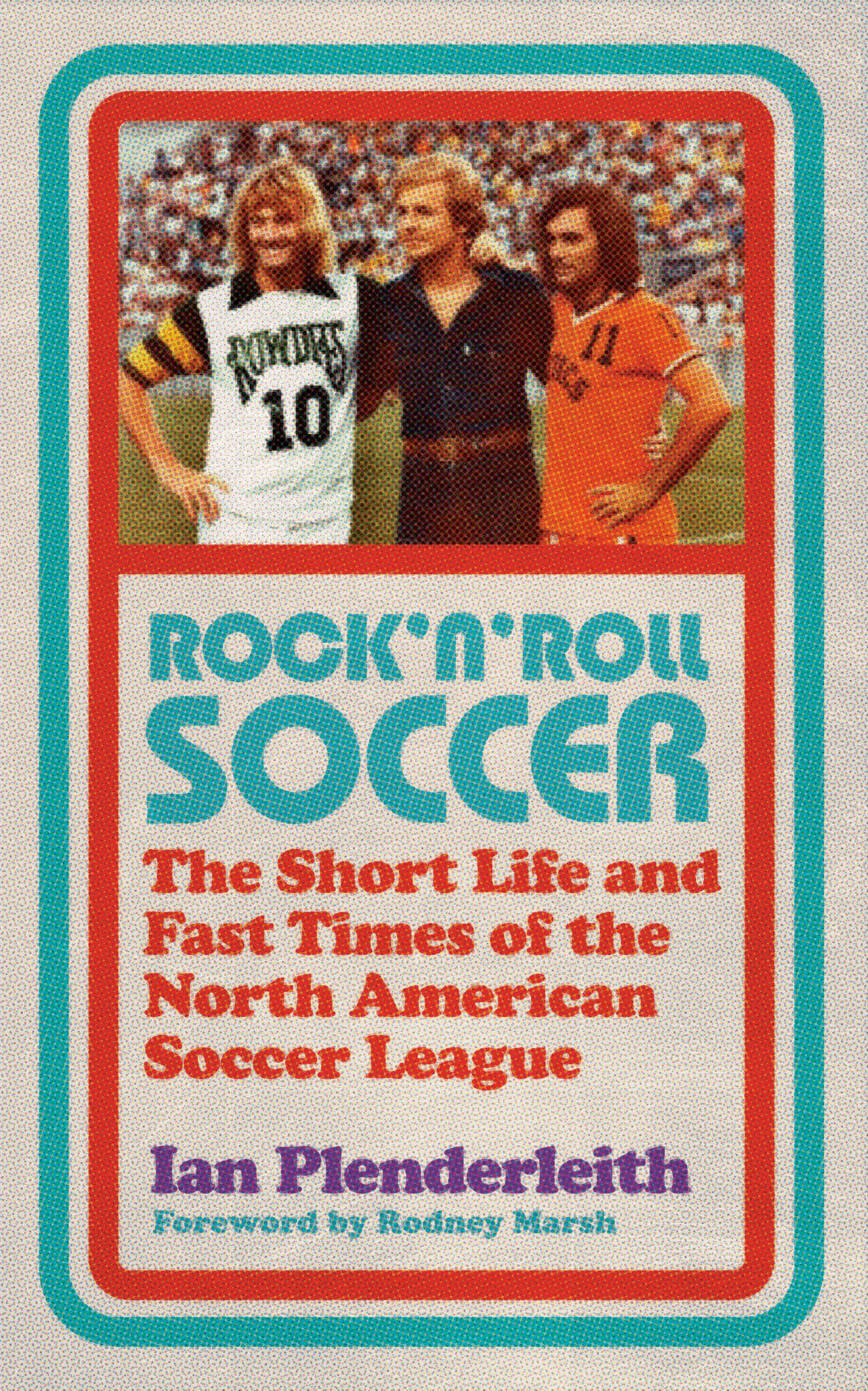
The groundwork for today’s soccer popularity was laid by the North American Soccer League, the subject of Plenderleith’s Rock ‘n’ Roll Soccer. This is required reading in a World Cup year, and a treat to read anytime.

Plenderleith documents the folly, effrontery and ultimate failure of the NASL—an impressively thorough tome that benefits from solid research and a witty outsider’s perspective (though now living in America, Plenderleith is British and brings a European’s passion and insight to football writing).

One of Plenderleith’s great accomplishments in this book is his ability to zoom in and out of the action while keeping the reader engaged. This is not an easy task. At times, he’ll be recounting the exaggerated drug- and drink-fueled antics of over-the-hill international stars and young Americans performing in a flamboyant, fly-by-night federation that defied, in equal measure, rules, tradition and, ahem, sound business practice.

Then Plenderleith will step back and establish the international and cultural context within which the NASL was operating. At first, the international audience mocked the upstart Americans, and FIFA pushed back against the young league that was tinkering with tradition.

But as the NASL achieved early success, the world took notice. While it didn’t reinvent the sport, the outlaw league reinvigorated it by making it a fan-friendly experience and drove rule changes that increased substitutions and decreased back passes.

The model, though exciting, was as unsustainable as that alcohol-fueled borderline relationship you had in college. The peaks were unforgettable, but the valleys unbearable. Sure enough, the NASL folded following the 1984 season.

It was an experiment and experience that was thoroughly American, and though the league didn’t last, it left a lasting impression on the game and paved the way for MLS success.

Rock ‘n’ Roll Soccer is an excellent work of sports journalism and, regardless of whether you follow football or futbol (or both), it is worthy of any fans’ bookshelf.