books

Best American Essays 2012

The Best American Essays 2012The Best American Essays 2012 by Robert Atwan

My rating: 4 of 5 stars

David Brooks, as expected, compiled a thoughtful and engaging selection of essays.

Faves:

Miah Arnold: “You Owe Me”

Dudley Clendinen: “The Good Short Life”
(“But we don’t talk about how to die. We act as if facing death weren’t one of life’s greatest, most absorbing thrills and challenges. Believe me, it is. This is not dull.”)

Mark Edmundson: “Who Are You and What Are You Doing Here?”
(“In reading, I continue to look for one thing — to be influenced, to learn something new, to be thrown off my course and onto another, better way.”)

Joseph Epstein: “Duh, Bor-ing”
(“One can also tell a great deal about a person by what bores him.”)

Jonathan Franzen: “Farther Away”
(“The allure of suicide, the last big score, may go underground, but it never entirely disappears.”)

Malcolm Gladwell: “Creation Myth”

Alan Lightman: “The Accidental Universe”

Ken Murray: “How Doctors Die”

View all my reviews

Recommended Reads: Jan. 22

Nevada Barr: The Rope. In Anna Pigeon, Barr has created one of the most oThe Toperiginal  and enjoyable protagonists in the mystery genre. With each book set in a different state park, fans have followed Pigeon’s adventures through more than a dozen novels. This time, Barr takes us back to 1995, where it all began for Pigeon. First published in 2012, the audiobook edition, released today, promises a thrilling wilderness adventure.


Jeremiah Ostriker and Simon Mitton: Heart of Darkness: Unraveling the Mysteries of the Invisible Universe. In a time of dizzying scientific discovery, it’s hard to keep up with the latest information. And sure, dark matter and dark energy sound cool, but what the hell is it? Well, for starters, it’s what makes up most of our universe. Never mind the dark side of the moon. Ostriker, a Princeton astrophysicist, and Mitton, a science historian, chronicle the ongoing trek into the ultimate dark.December's Thorn


Phillip DePoy: December’s Thorn. On a cold, snowy night, a strange woman shows up at Fever Devilin’s door claiming to be his wife. He offers her a seat by the fire, brews some tea… and the seventh installment of the series, centered around a Georgia folklorist, begins.

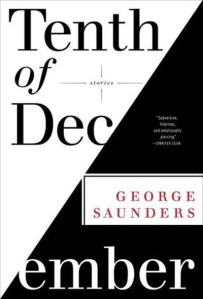
Review: Tenth of December

Proud to be a Dystopian

by Vince Darcangelo

It was a warm autumn evening at the Gramercy Theater, Oct. 5, opening night of the 2012 New Yorker Festival. The room was thick with literati, and on stage were threeSaunders heavyweights: Jennifer Egan (A Visit From the Goon Squad), Margaret Atwood (The Handmaid’s Tale) and George Saunders, whose new collection of short fiction, Tenth of December, was released on Tuesday, Jan. 8.
The theme of the panel was “Utopia/Dystopia,” and Atwood led off with a brief history and deconstruction of the genre. Utopias and dystopias go hand in hand, she said, because with any utopian idea “there’s always a catch, and the catch is this: Everything’s going to be fine, but first we’ve got to get rid of these people.”

And then we came to Saunders, whose works, such as the exquisite CivilWarLand in Bad Decline, often contain dystopian themes or settings, along with healthy doses of humor and satirical absurdism.

“I never really thought I’d write a dystopian (story),” he said, adding that he first tried to emulate iconic writers like Hemingway and Raymond Carver. It wasn’t working, so he tried something different.

“If I set something in a theme park or the near future,” he said, “the language comes alive.”

And thus, a great writer, and celebrated literary subversive, emerged.

#

Tenth of December is a short and bittersweet 10-tale offering of gripping short fiction, incorporating science fiction and otherworldly elements (similar in tone, in my opinion, to Kurt Vonnegut). The book’s opening tale, “Victory Lap,” which originally appeared in The New Yorker in 2009, concerns an attempted abduction of a teenage girl and the hijinks that ensue.

That’s right, hijinks.

As silly as it is serious, it is the humor that sharpens the dark edge of “Victory Lap.” This is a bold piece of work. Saunders takes chances by shifting points of view and writing from the interior voice of teenagers, but he pulls it off as only he can. There’s a jazzy rhythm and flow to the piece, and it deserves to be read aloud. The story really came to life for me when I heard Saunders read it at the University of Northern Colorado in 2010.

Probably my favorite story from Tenth of December is “Escape from Spiderhead.” It has the classic elements of his fiction: people in the near-future in a seemingly powerless position; the intertwining of corporate and institutional control; wacky goings-on; funny, yet fitting, product names; and an unlikely hero who somehow manages to carve out his acre of humanity within this madhouse.

Specifically, our hero, Jeff, is a convict in a research prison, where his punishment is to be a lab rat for chemical experimentation. As part of a sex study, he is given drugs that create feelings of intimacy and attraction to another person; another that induces loquacity; a performance enhancer (Vivistiff™) that makes Viagra seem like a sugar pill; and another chemical that lowers one’s “shame level.”

The experiments take a dark turn when he is enlisted in a Darkenfloxx™ study. As Jeff describes the drug: “Imagine the worst you have ever felt, times ten. That does not even come close to how bad you feel on Darkenfloxx™.”

The scene is reminiscent of the notorious Milgram experiments, and it concludes brilliantly—somehow both uplifting and tragic. It’s a reminder that great literature doesn’t resolve with the hero winning or losing, but rather redefines what it means for that character to win or lose.

“CivilWarLand in Bad Decline,” for example, is set inside a rundown theme park overrun with violent gangs (to the point that the Civil War re-enactors pack live ammunition in their muskets). The protagonist is a working-class dreamer and father of two who endures disappointment and the threat of violence for the sake of his family. But his idea of winning and losing changes in this theme park.

“Sea Oak,” from his 2000 collection, Pastoralia, is a genre-bending story incorporating new-wave male strippers, a post-industrial ghetto and a dead aunt who refuses to go away. Likewise, it concerns a poor family burdened with violence, and takes a fantastical turn that recalculates the stakes for all involved.

“Sea Oak” won an O. Henry Award Prize and was also nominated for a Bram Stoker Award. How many Bram Stoker nominees have received gushing praise from the New York Times?

#

At the heart of Saunders’ fiction are class issues (he comes from a working-class background and earned an engineering degree from the Colorado School of Mines); the impact of an ever-invasive corporate culture (see “I CAN SPEAK!™” from 2006’s In Persuasion Nation); and the absurdity of the modern workplace.

An example of the latter in Tenth of December is the story “Exhortation,” which is told in the form of a memo from a boss to his underperforming crew. The memo is in reference to “March Performances Stats” and attitudes toward the work being done. He begins by comparing their duties to cleaning a shelf, but of course, it becomes apparent that their labor is far more sinister:

“Even you guys, you who do what must be done in Room 6, don’t walk out feeling so super-great, I know that, I’ve certainly done some things in Room 6 that didn’t leave me feeling so wonderful, believe me…”

Whatever goes on in Room 6, it clearly has nothing to do with shelves. This story calls to mind Saunders’ classic short story, “The 400-Pound CEO,” concerning a worker drone whose job is to kill raccoons for the company Humane Raccoon Alternatives.

In both of these stories, Saunders guides us through a sausage mill as unpleasant as any Upton Sinclair encountered. We see characters doing menial and often unpleasant work, and manipulative and often cruel bosses attempting to put a positive spin on their duties, if for no other reason than to create a healthy façade for the buying public. Greed and rampant corporatization has left the working class in the absurd position of having to abase themselves and others to get by.

I can’t think of a better description of dystopian fiction. Often, the term calls to mind an enslaved, automated world gone grey: a dramatic vision complete with conflicts worthy of the Thunderdome. But with Saunders, the dystopia is more workaday, which makes it all the more chilling.

For Saunders, it’s a way “to say here’s the way we look at habituated reality,” he said at the New Yorker Festival. His fiction breaks the surface of this habituated reality, and it offers us a fresh and not-always-pleasant look at our daily lives.

But it’s not all bad. It’s a world filled with humor, even if it’s of the gallows variety. It’s populated with colorful and unexpected heroes, bizarre-yet-feasible scenarios, and it’s always a fuzzy line between winning and losing.

“For me, the ideal position is to say, yes, it’s horrible,” Saunders said, “but yes, it’s wonderful and let these two things play out.”

Review: Legion

Author Brandon Sanderson is one evil dude. That was my reaction to finLegionishing his novella, Legion, concerning the peculiar (and haunted) Stephen Leeds. To be clear: Sanderson is a master storyteller, and this is one of the greatest works of short fiction I’ve read in years.

What makes Sanderson evil (in that bad-ass writer sort of way) is the fact that the story came to an end.

In December, Audible offered a free copy of Legion, which I greedily downloaded and enjoyed in one sitting. This story is compelling on so many levels that when it ended I needed complete silence to process everything.

Leeds is a peculiar man with a mental condition akin to dissociative identity disorder (a dubious diagnosis; see Debbie Nathan’s Sybil Exposed). However, Leeds doesn’t have multiple personalities. He has what he calls “aspects,” sort of like imaginary friends with benefits — meaning they sleep in their own rooms, require seats on a plane and bail you out of jams.

In truth, the aspects are the manifestations of Leeds’ genius. He is smart to the point of insanity, and, in my opinion, his aspects allow him to maintain his self-view as a “regular guy.” For example, he doesn’t perform critical analysis of arguments. He leaves that to Ivy. He isn’t a skilled marksman, so he leaves the self-defense to his munitions expert, J.C. And when he attempts to learn Hebrew during the course of a transatlantic flight, he manifests a new aspect who is already fluent.

This is a master stroke, in my opinion. A functioning protagonist who had all these skills wouldn’t be credible, unless they were super-human. And a functioning human who had all these skills would be, well, dysfunctional if they had to store all this knowledge and know-how in their brain.

So Leeds, in cerebral self-defense, delegates the multi-tasking to his apparitional A-Team, and they are a source of depth, humor and revelation. This is a great device, but something of a literary high-wire with little room for error.

Sanderson deftly manages the narrative so that it never becomes silly or gimmicky. In fact, the presence of the aspects deepens the protagonist, as his inner conflicts and contradictions play out before us.

This is played to maximum effect when the novella takes a philosophical turn. The premise of the story is that a scientist has invented a camera that can photograph the past — and now he has gone missing. Leeds determines that the scientist has gone to the Middle East in search of photographic evidence to confirm or deny Biblical history.

The nature of this quest, by a scientist in particular, leads to an interesting discussion among his various aspects, each offering a different take on religion. Here, Sanderson captures the internal struggle that comes with asking the big questions: How does one reconcile science and spirituality? Theological desire and empirical evidence?

No matter your conclusion, I’m sure we’ve all had similar conversations in our heads.

In Leeds, the discussion is thoughtful and entertaining, and enriches the story with a pensive undertone. And mention must be made of the terrific narration of Oliver Wyman.

Featuring compelling action, organic dialogue and complex characters and situations, Legion is a must-read (or must-listen).

I’m not surprised. As a longtime fan of the podcast Writing Excuses, which Sanderson co-hosts (along with Dan, Howard and Mary… who are that smart), I’ve joked that I’ve learned more from Sanderson and company than I did during my three-year MFA.

And I’m only sort-of kidding about that.

But I’m serious when I say that we need more Stephen Leeds adventures. And soon. A full-length novel, series of stories, film, TV… all of the above.

Leeds is a character brilliantly devised and fully realized. I didn’t want this story to end, and I hope to read more of Legion in the (near) future.

Recommended Reads 1.01.13

Welcome to a new year and a new installment of Recommended Reads. Here are some new releases to get you started on that 2013 reading list:

Unusual Uses For Olive Oil is the latest novel from the inimitable Alexander McCall Olive OilSmith, author of The No. 1 Ladies’ Detective Agency series. Detailing the further adventures of Professor Dr von Igelfeld, the novel evokes the joy of earlier installments in the series, such as The Finer Points of Sausage Dogs.

And as with that book, daschunds are featured prominently (as you can probably tell by the cover).

In 2012, Lawrence M. Krauss, director of the Origins Project at Arizona State University, published A Universe from Nothing: Why There is Something Rather Than Nothing, which details theories surrounding the origin of the universe.

PUniverseresenting scientific data in an accessible way, the paperback edition comes out today, featuring a new preface regarding the Higgs particle discovery and an afterword by the great Richard Dawkins.

Of course, this book will appeal to intellectual types, but is of value to all, as it engages the reader with the latest scientific theories.

Review: The Mourning House

Ronald Malfi, The Mourning House (Delirium Books)

Dr. Sam Hatch is a soul adrift. Since losing his wife and child a year before, mourning_househe’s tried to outrace his pain, literally, with a series of taped-together cars and sometimes his thumb. Now a transient, he squats for a night in a “vacant shell of a house” in Maryland.

Here is where the past catches up with Hatch.

Ronald Malfi’s The Mourning House (published Dec. 18 by Delirium Books as an e-book and limited edition hardcover) is a short tale of grief, obsession and the fragility of physical and mental structure. It is also a haunted house story, if there is such a thing (I’ll explain in a moment).

Malfi, whose previous novels include the IPPY-award winners Floating Staircase and Shamrock Alley, adds to this great literary tradition, and The Mourning House is a thoroughly enjoyable tale that is more of a character study than a plot-driven thriller. It hooked me with the opening chapter and kept me burning through the pages to the end.

It also got me thinking about the lure of the haunted house. Why is it such an enduring trope? There are the familiar literary explanations: the house as manifestation of the self (“The Fall of the House of Usher”); the lingering energy (aka back story) of past inhabitants (The House of the Seven Gables); the narrative tale that leaves you wondering whether the characters are occupying the house or the other way around (The Shining).

But The Mourning House is part of a lesser-discussed subgenre: the malleable or ever-shifting house. This also happens to be my favorite kind of haunted house story.

I don’t subscribe to the supernatural. I’m not afraid of ghosts, and I’ve yet to fall victim to a family curse. But “The 5 1/2 Minute Hallway” in Mark Z. Danielewski’s House of Leaves is one of the most terrifying passages I’ve ever read. Here, new residents of an old house discover that the interior and exterior dimensions of a hallway are incongruent. There is a geometric dissonance that disturbs the occupants (and the reader).

Malfi taps into that feeling of dissonance. Hatch isn’t visited by apparitions in The Mourning House, and there’s nothing a poltergeist could do that would torment him as severely as his own memories. What is troubling is that items around the house have moved while he was out; his closet seems to be of variable dimensions; and a curious subfloor is revealed beneath his feet.

Each morning, Hatch awakes in, essentially, a new house, and that, my friends, is the crux of great horror fiction. It tickles that spot in our lizard brains that burns for shelter. It’s why the haunted house is a timeless premise—and why I argue that there is, ironically, no such thing.

At the core of every haunted house story is a protagonist troubled long before they ever set foot in the house. The house becomes a metaphor, a hallucination, a projection of mental disturbance. The nature of the haunting reflects the nature of one’s troubles. For Hatch, the ever-shifting house is symbolic of helplessness and fragility. He was a successful doctor with a happy marriage, but in an instant it was taken from him.

Our homes are extensions of ourselves. That’s why home invasions are more traumatic than street muggings. For Hatch, it’s only natural that his haunting plays on his vulnerability. At any moment, the place where he should feel safest could shift forever. And he is helpless to do anything about it.

Malfi handles this masterfully in The Mourning House. The beginning and ending are magnificent, as is the bulk of what comes between. For the most part, the novel is well-paced, the prose solid and the action compelling. Here and there, scenes feel rushed or we get an overload of description without the emotional interiority that anchors us to the story (see chapter two).

But there’s no sense nitpicking over these few moments. Malfi is an excellent storyteller and a demon of description. This is a great piece of writing, and I recommend it for any fan of quality horror fiction or anyone who may fit that description on your holiday shopping list.

For more information, visit the Delirium Books Web site.

Audio Interview

Sorry for the delay in writing, but we’ve been busy prepping for the holidays. From now until Dec. 24, we’ll be posting a daily review of a literature-themed Christmas gift. You can make it a last-minute gift for the literary subversive in your life, or just enjoy the reviews for review’s sake.

We begin with an audio interview with best-selling author Carrie Vaughn, whose new novel, Kitty Steals the Show, would make the perfect stocking stuffer for the lycanthrope lover on your list.

Recommended Reads 11.13

With the holiday shopping season imminent, publishers are bringing out the big guns in coming weeks. Recommended Reads offers a sampling of some of today’s new releases, great for personal pleasure or holiday gifts.

Ian McEwan can turn any setting into a simmering pot of dread, but his best works tend to be set in war-torn 20th century Europe (The Innocent, Atonement). His new novel, Sweet Tooth, concerns Cold War intrigue and romance. Featuring a female protagonist, McEwan puts his young student to work undercover for MI-5. She finds herself engaged in cultural and emotional warfare.

The Inexplicables, the fifth installment of Cherie Priest‘s Clockwork Century series, finds Rector “Wreck ’em” Sherman about to be discharged from the orphanage. Feeling guilt over his friend’s death, Sherman plunges into a dystopia of drugs and the undead.

Stieg Larsson‘s Millennium Trilogy gets the graphic novel treatment, with each book in the series set to be re-imagined in two-part, hardcover illustration. Makes sense: Lisbeth Salander is a comic book wet dream, and the majestic vistas of Sweden should look amazing in ink. Today, Book One of The Girl with the Dragon Tattoo hits shelves. Illustrator Denise Mina has previously inked Hellblazer, A Sickness in the Family and other works of noir fiction.

Cue the Singularity: the enigmatic inventor and futurist Ray Kurzweil returns with How to Create a Mind: The Secret of Human Thought Revealed. Here, the author explores reverse-engineering the human brain, which could be applied to creating more intelligent machines for the bio-mech future.

The End of Righteousness

OK, the title of this book review is admittedly ambitious, but now that the election has finished, perhaps we can all sheath our knives for a week or so–and stop screaming long enough to breathe.

Or better yet, to read a good book.

To nurse that campaign hangover, I recommend moral psychologist Jonathan Haidt‘s new book, The Righteous Mind: Why Good People Are Divided by Politics and Religion. I read this over the summer, and I think it should be required reading for anyone running for office. And it’s the perfect antidote for any residual post-electoral rage.

Haidt begins with a simple, yet quite genius premise. He looked around at his countrymen, divided by a vicious culture war, and discovered more commonalities than differences. For all our diversity, American culture is quite homogenous. (No surprise: “Melting pots” are designed to synthesize many ingredients into a unified whole, not keep them separated.)

We have common experiences, languages, and yes, values. No matter what the campaign ads say, is there anyone on either side that doesn’t want the economy to improve, for their family to be safe from attack, to have excellent health care and receive a good education?

There are philosophical differences on how to achieve these goals, true, but when it comes down to it, all any sane person wants is to be happy, to provide for their loved ones and live a good life.

So why all the vitriol? How can a society with such common goals claw at each others’ eyes with such entitlement? How can we so easily demonize and dismiss someone who disagrees with us?

Well, it’s complicated, to be sure. But Haidt sifts through scientific research, anthropological findings and the evolution of intellectual thought to divine some underlying truths. One of the biggest is the notion that intuition guides our beliefs more than reason. This is why logical arguments are often ineffectual against deep-rooted beliefs–why discussions become debates, and debates devolve into bumper-sticker slogan shouting.

“…don’t take people’s moral arguments at face value. They’re mostly post hoc constructions made up on the fly, crafted to advance one or more strategic objectives.”

In other words, it is not evidence that shapes our worldview. We are naturally and subconsciously drawn to evidence that confirms are worldview. We intuit our morality first and support it with arguments later. That’s why it’s so easy to become entrenched in our beliefs and intolerant of opposing viewpoints.

The Righteous Mind does skew toward the academic, and can be challenging at times. But hey, nobody said bipartisanship was easy! Once you’ve grasped the science and moral theory, you’ll have a better grasp of Haidt’s conclusion.

And this is where the author truly shines.

“Part III: Morality Binds and Blinds” synthesizes all that came before and presents an insightful view of human beliefs and behaviors. How would conservatives fare without liberals? Liberals without conservatives? Haidt makes a compelling case that each would fail without the other. This book is worth it for this section alone.

Here, Haidt summons the great utilitarian thinker John Stuart Mill and his take on both sides of the aisle. “A party of order or stability, and a party of progress or reform, are both necessary elements of a healthy state of political life.”

Perhaps after reading this book, we’ll treat one another with a little more respect and a little less righteousness.

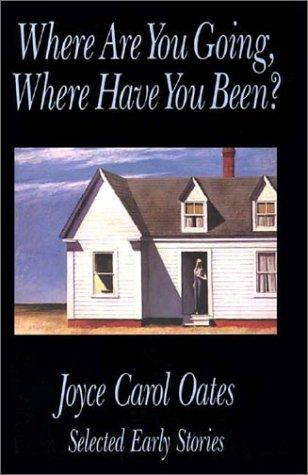
Unsettling Chapters: Where Are You Going, Where Have You Been?

As promised, we’ve come back to one of our favorite authors, Joyce Carol Oates–the queen of disquieting literature. For this Halloween installment of Unsettling Chapters, we’re discussing the Holy Grail of dark fiction, “Where Are You Going, Where Have You Been?

Nearly a half-century since its publishing in 1966, this remains the most disturbing story I’ve ever read. I was introduced to “Where Are You Going…” in college, where it was read aloud by our English teacher, and my former employer, Julie Papadimas.

What I remember most is gripping the side of my desk, trying to keep from screaming at Connie.

This is as visceral a reaction I’ve ever had to a work of fiction. I wasn’t just affected by this story. I was pissed. I felt sick. I wanted to dive into the pages and lock the front door.

Though a lot of readers, I’m sure, are familiar with the ending, I don’t want to spoil it for anyone who hasn’t read it. I will only say that halfway through the story, it dawned on me just how it had to end. You feel the bile rising in your throat, yet there’s no looking away. There’s no putting it down. There is only the suffocating gaze of Arnold Friend and his sociopathic schmooze.

This is not a trick-or-treat brand of spooky, but the essence of true fear. The rare story that forces the reader to accept their vulnerabilities and realize that we can’t always protect the ones we love. Can we even save ourselves?

“Where Are You Going, Where Have You Been?” unnerves me in a way similar to Flannery O’Connor. It’s fiction that replicates that moment on a roller coaster when the train is briefly suspended at the top, about to descend, but seemingly frozen in place. When you feel the bottom drop underneath, but you have yet to tumble after. The breathless space where time knots into an excruciating paralysis.

This is the way Oates entwines and consumes us. With the patient grace of a constrictor. And her grip has yet to slack.

I pray that it never does.

And finally, for a Halloween treat, you can read (or re-read) “Where Are You Going, Where Have You Been?” at the University of San Francisco’s Web site.

Enjoy, my Samhain sweets.

…And sadly, that brings us to the end of our 31 Days of Dread series. Tomorrow, like a post-rampage Hulk, we will return to our proper form as Ensuing Chapters, where we’ll produce a monthly column for Transgress Magazine and write semi-weekly blog posts.

Thanks for reading. If you have any suggestions for disturbing books or stories we may have missed, please send them along. We’re always looking for a new unsettling read… and we’ve got 11 months to kill until next October.