Psychological

Unsettling Chapters: Maynard

There are many ways to unsettle the reader. There is shock, revulsion, introspect, subversion. But don’t forget subtlety. After all, I would imagine the slow constriction of the noose is the more terrifying than the drop.

Toward that end, three key elements of great horror are atmosphere, dissonance and distress. All three are manipulated to great effect in Mary Stewart Atwell’s short story, “Maynard,” which ran in the Alaska Quarterly Review and was honored in The Best American Mystery Stories 2010.

There is elusiveness in this piece that sets the reader on edge. The story is presented in a segmented style, and the core mysteries at the beginning remain mysteries at the end. There is such a tangle of loose threads that the story is unsettling to the reader long after the final words have been read.

Specifically, it is the narrator’s murky backstory that fuels the tension. She is on the run from someone who, as far as we can tell, was holding her against her will. He will find her, though, she is certain, but will we ever learn the full nature of her distress?

This is the foundation on which Atwell builds a dark, disturbing portrait of a troubled woman on the run. One of the building blocks she uses to great effect is atmosphere. Set in the rural south, Atwell colors her world with the imagery of backwoods America, a working-class dystopia of failure where methamphetamine and lawlessness run rampant. Into this world enters the narrator—whose name may or may not be Ashley.

She has three secrets she must keep hidden: her history, her whereabouts, the child to which she is about to give birth. The latter tweaks the reader’s anxiety like a shot of bathtub meth. The narrator is unequipped to care for the child, but what is she to do? She would reveal too much of herself if she put it up for adoption, so she disposes of the baby, which sets in motion the events that lead to her final confrontation.

Finally, there is the dissonance that makes the story so unsettling. The reader is unable to connect all the loose threads, and there are missing links in the chain of events that we are compelled to reconcile.

In the end, that reconciliation must come from the reader’s own mind. I discussed this story with a fellow reader long after reading, and have thought about it often since then. There are hints at great horror in this story, which is more powerful than if we knew every gruesome detail of our narrator’s story.

It lends a haunting quality that resonates through amazing lines like: “‘Ashley,’ he said. ‘Please. Don’t do this.’ But Ashley is not my name.”

Stories like this earned Atwell a deal for a full-length. Her debut novel, Wild Girls, was published on Oct. 16.

Unsettling Chapters: The Wasp Factory

Welcome to The Wasp Factory, where by the age of 16 Frank Cauldhame has already killed three children, including his younger brother. These days the teenager passes his time killing animals on the tiny British island he shares with his father.

Other favorite activities? Long walks on the beach, going to punk-rock shows with his drunken dwarf buddy, Jamie, and gathering wasps in his elaborately engineered torture chamber.

This 1984 debut from Scottish writer Iain Banks stirred up a mess of controversy when it was initially released, and remains a dark and twisted read nearly a quarter century later.

Another great example of effective first-person POV, the narrator’s tale disorients and disturbs. No doubt, this is one of the greatest works of transgressive fiction I’ve ever read.

Like most works of suspense, the terror comes from what may happen rather than what actually happens. In this case, the novel’s tension — and greatest literary device — is Frank’s sadistic older brother, Eric.

Throughout the book, Eric, who has just escaped from a mental hospital, calls his younger brother from pay phones, each time closer to home, each time more psychotic, threatening to kill Frank upon his return. It’s a classic example of the shadow figure. We have a serial killer narrator, and he’s not even the craziest member of the cast!

Or is he…? The tension builds to a violent climax with a shocking twist that reframes the entire story. It’s the kind of ending that makes you want to go back to the beginning and read it all over again.

Parts of this post are adapted from an earlier article of mine, “Thirteen horrifying reads for Halloween,” which appeared in the Boulder Camera in 2008.

Unsettling Chapters: Night Shift

Of course, no list of Halloween reads would be complete without an entry from the master of horror, Stephen King. In recent years, he has produced more fantastic literature than true horror. He has also plumbed a deeper emotional depth in recent works, such as Lisey’s Story and Duma Key.

As great as these novels are, for pure chills, there’s no beating King’s early work. To get maximum bang for your October buck, revisit King’s first short-story collection, 1978’s Night Shift.

This is King at his most ruthless, featuring some of his darkest material, such as one of his forgotten treasures, “One for the Road.” Set amid the backdrop of a blizzard, a wife and daughter are stranded in a snow bank. With connections to Jerusalem’s Lot, they learn that the elements are the least of their fears.

“I Am the Doorway” is the creepy account of a retired astronaut who learned he was not alone in deep space — and he brought back a souvenir that just might drive him mad.

Some of King’s best-known works are in this collection as well: “Children of the Corn,” “Trucks” (which became the film “Maximum Overdrive”) and “The Lawnmower Man.”

My favorite fright is “Sometimes They Come Back,” an epic homage to childhood trauma and a reminder that, no matter how many years may pass, our demons are never far behind.

Of course, this is only King’s first entry in Unsettling Chapters. We will certainly see more of the master in future installments.

Parts of this post are adapted from an earlier article of mine, “Thirteen horrifying reads for Halloween,” which appeared in the Boulder Camera in 2008.

Unsettling Chapters: Darkness Peering

Alice Blanchard‘s 1999 crime novel, Darkness Peering, is one of the most promising debuts ever — a mind-bending psychological thriller set in rural Maine (classic Stephen King country).

Detective Rachel Storrow is still haunted by an 18-year-old unsolved murder that happened when she was a child, and a recent disappearance has brought that case back to the forefront. For Storrow, the killer might be closer than she thinks.

Featuring a gripping and poetic opening chapter, Blanchard takes hold of the reader’s throat and never lets go.

It’s also a surprisingly literary work. Underlying the horror is a tale of family drama, small-town suspicion and the secrets we bury with the dead.

Blanchard takes on similar themes in later books, like The Breathtaker and Life Sentences. Her short-story collection, The Stuntman’s Daughter, won the Katherine Anne Porter Prize in 1996.

But of all her works, my favorite remains Darkness Peering. This book is a perfect match for a stormy October night.

Unsettling Chapters: Lolita

When I think of what was controversial in the 1950s, I think of Elvis being filmed from the waist up. So, I went into Lolita thinking it couldn’t possibly be as scandalous as advertised nearly six decades later.

Wrong. Lolita makes To Catch a Predator seem like child’s play (so to speak). As oddly hilarious as it is disturbing, Nabakov’s classic is one of the most insightful accounts of pathology (what many refer to as Humbert’s unreliability) I’ve ever encountered, and still has the power to make the most hardened reader (i.e. me) queasy.

Reading this through the lens of a literary representation of mental illness, it’s easy to see Humbert’s source for pedophilia — his stunted sexuality from an age-appropriate childhood romance left unconsummated and forever associated with death and loss (and run-on sentences).

More subtle, though, is Humbert’s troubled conscience, which vacillates between self-awareness and self-fulfillment. Through carefully dropped hints, we realize that he is aware of Dolores’ vulnerability and her lack of interest in their adult activities. He knows what he’s doing is damaging the poor girl, but more often than not, his needs hijack his decisions.

The consequences fall squarely on the not-so-frail shoulders of 12-year-old Dolores Haze, who endures his abuse into her teen years. (Side note: Through Lolita, Nabokov paints a clear portrait of borderline personality disorder, which makes her story even more tragic.)

Still, through Humbert’s rationalizations, however twisted or self-serving, he does try to protect his stepdaughter in his own clumsy way. While his selfishness trumps all, his moments of lucid affection make him as close to sympathetic as can be (sympathetic enough that we’re rooting for him in his showdown with creepy Quilty).

What a tremendous book, and perhaps the greatest work of transgressive fiction. Nabakov’s play with language is remarkable (especially considering English was his second tongue), and the pain and desperation sweating through the pages of this novel make it timeless.

Troubling, complicated and a work of genius, this is an unsettling read for the ages.

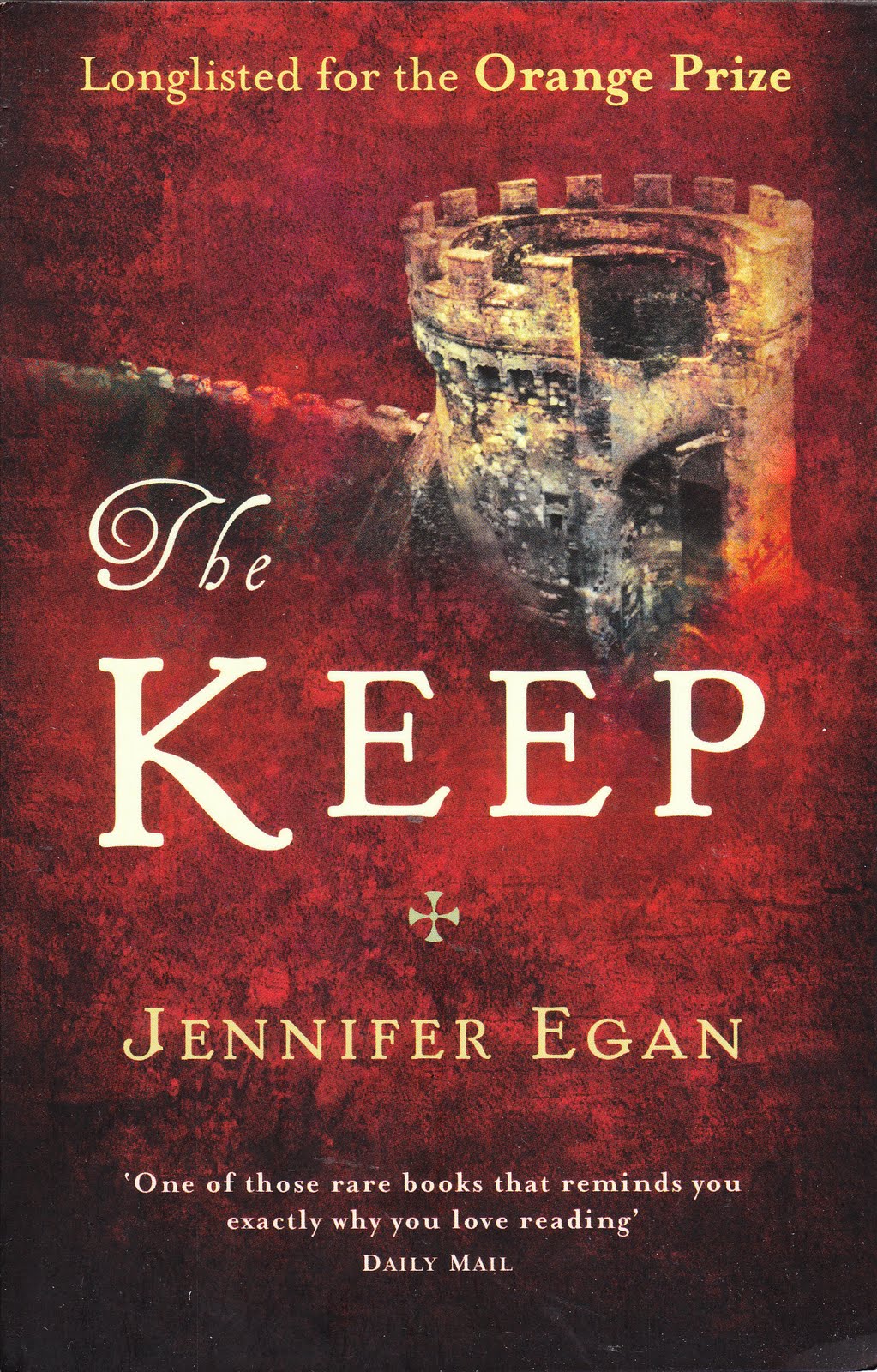
Unsettling Chapters: The Keep

Most books inspire me to write, either because, “Damn, that book was so good, I want to do that, too,” or “Damn, I could do waaay better than that.”

Then there are books like Jennifer Egan’s The Keep, which make we want to give up writing because nothing I could ever produce would come close to the genius of this book. The Keep has more levels than Scientology, and I was awed by the way Egan manages complex storylines and plot points.

The Keep begins as a gothic horror novel with a literary bent ala Joyce Carol Oates or Edgar Allan Poe. But soon, we learn that it’s a story-within-a-story. The primary storyline is actually the product of an inmate in a prison writing group (or is it more real than that?).

I often find metafiction horribly pretentious, but in Egan’s hands this device achieves a deeper complexity of character. The “fictional” tale is almost a confession, or at least catharthis, and the way the two narratives play off each other creates unbearable tension.

Finally, Egan includes a third narrative that completes the cycle of co-dependency that runs through the novel. Ultimately, this is a story of identity, exploration and imprisonment. What is real or not real doesn’t matter much. The question to answer is: What do we do with the demons that haunt us?

Or rather, Where do we keep them?

The best part is that Egan leaves these questions (and these narratives) half answered. There are no neat, tidy endings. No sunsets, no profound philosophical conclusions. There are only troubled, complex people in turn confronting and running from their ghosts.

For a book with so much surrealism, the lack of resolution at the finish gives it a stunning verisimilitude: Did we really believe we could ever completely outrun our ghosts?

At the end, I wanted the story to go on and on, which is the magic of any great novel. It leaves you imagining the characters as real people and you want to know how they turn out.

I was also left wanting for a map to figure out how Egan navigated the dark, twisting corridors of this complex, yet refreshingly enjoyable novel. Mark this down as a “must-read.”

Interestingly, there is a film version in the works. I’m not sure the narrative will hold up because of the limitations of cinema, but it will be worth a look. Just be sure to read the book first.

Unsettling Chapters: Joyce Carol Oates

Nobody does literary horror better than Joyce Carol Oates, and nowhere is the fear more palpable than in her 1994 collection of psychological terror, Haunted: Tales of the Grotesque.

Among the unrelenting terrors:

The title story, in which a woman recalls a haunted farmhouse from her youth, where she and her friend encounter something much more sinister than a ghost.

“Don’t You Trust Me?” an unsettling account of an illegal and controversial medical procedure — and the exploitation it brings.

And the disturbing “Extenuating Circumstances” is a mother’s confessional that reveals its excruciating conclusion like a mummy unwrapping its bandages (think David Foster Wallace’s “Incarnations of a Burned Child”).

This collection is also packed with signature Oates violence and revenge, and the tale of a macabre grocery store as discomforting as flakes of glass beneath the skin.

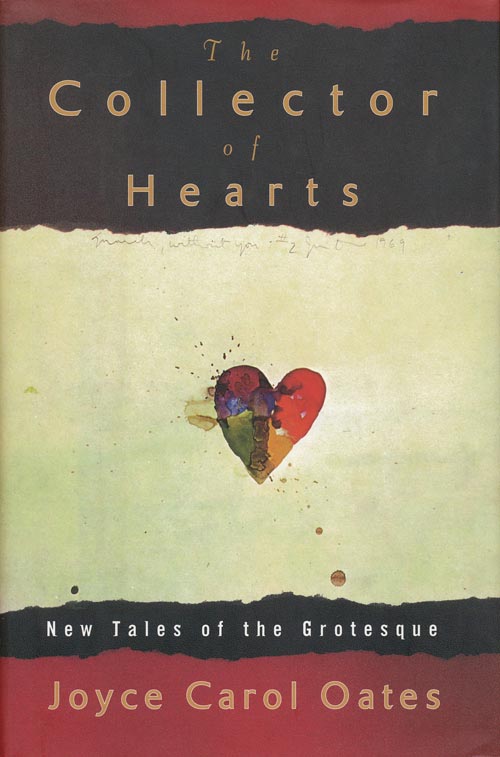
Diehards should also read the sequel, The Collector of Hearts: New Tales of the Grotesque, which has its moments, but doesn’t stand up to the original. The book starts strong, with the Twilight Zone-ish “The Sky Blue Ball,” which I think I devoured in a single breath. Haunting and mysterious, this one’s got a Creep Factor of 10.

She hits this high note again with the title story, a classic bit of Oates’ caught-in-the-spiderweb nightmare. From the start, we can guess the fate of our protagonist. And we ache throughout the piece, hoping it goes the other way.

Some of her other collections include The Female of the Species: Tales of Mystery and Suspense, a collection of short stories about female killers, and The Museum of Dr. Moses.

And fear not, fans of Joyce Carol Oates: We’re not through with the author just yet. We have another Oates entry planned closer to Halloween.

Parts of this post are adapted from an earlier article of mine, “Thirteen horrifying reads for Halloween,” which appeared in the Boulder Camera in 2008.

Unsettling Chapters: Invisible Monsters

A close cousin of horror is transgressive fiction. These are novels, often dark or dystopian, that break cultural taboos for the sake of social commentary and satire. Considered to be a working-class style of literature, classical examples of transgressive literature include the Marquis de Sade, George Bataille, some work by Dostoyevsky and the Beat writers. Contemporary examples include Bret Easton Ellis and Irvine Welsh. Currently, the definitive author of transgressive fiction is Chuck Palahniuk.

I have long admired Palahniuk’s writing, both for its satire and transgressive nature, and Invisible Monsters, one of his earliest works, is considered to be among his most disturbing and poignant. It’s an endless buffet of sexual disorientation, body modification, gender dysphoria, self-mutilation, fame-mongering, familial dysfunction, violence and manufactured reality.

But at its core, Invisible Monsters is about identity. Who determines one’s identity? Who defines who or what one is or is not? This can be sexual, biological, superficial. Identity is a personal, subjective thing. It’s also one that manifests physically. For these characters, mutilation is the method of self-expression, either by accident (Brandy), by gender reconstruction surgery (Evie) and by their own hand (the narrator, Shannon).

Palahniuk exaggerates these tropes to the degree that they become fabulistic, and because of that, he had difficulty getting the book published. At the time, Palahniuk was a bit of a mystery. Here’s a book that begins with a spinning shotgun and a room on fire, and it ends with… Well, time is a relative component of Invisible Monsters, so who the hell knows where it ends!

What we’ve learned of Palahniuk in the ensuing years is that his over-the-top approach is a monstrous distortion of our culture. In this way, he teaches us the value of the grotesque in satire. Shannon is a fashion model who intentionally disfigures herself, Brandy a homosexual who uses an accident as pretense for gender reassignment surgery. These are people who tear themselves apart, and the pieces don’t quite fit when put back together again.

In life, the deepest wounds are the ones that are self-inflicted, and it is the characters’ own hand that pours in the salt.

As if the novel wasn’t surreal enough already, this summer Palahniuk released an updated version of Invisible Monsters featuring new and rearranged chapters.

And if that’s not enough to help you reach your disturbance quota, check out his collection of loosely connected stories, Haunted, one of my favorites. Full of splatterpunk thrills, it’s a bloodbath worthy of the Grand Guignol.

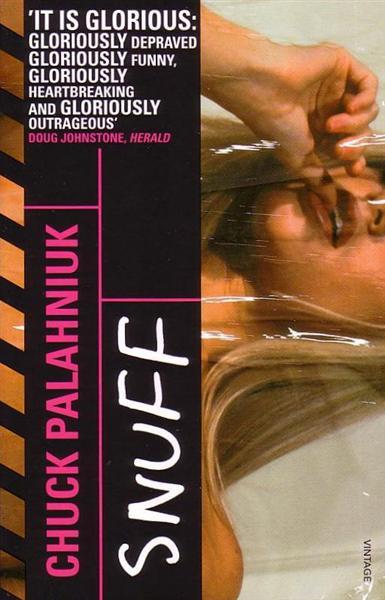
His 2008 novel, Snuff, is another ick-inducing read, this time taking on the world of pornography. You can read my review of it here.

Unsettling Chapters: Piercing

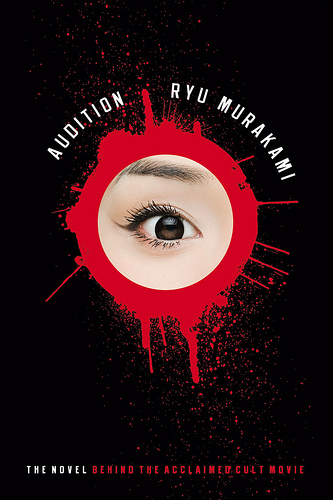
Ryu Murakami is on the cutting edge of Japanese literary fiction and horror fiction (and the Japanese have a knack for producing quality horror). Murakami (not to be confused with Haruki Murakami, a dark author in his own right) might be best known to American audiences for the disturbing film adaptation of his novel Audition.

What I like about his fiction is both its incredibly dark, disturbing qualities, but also his exploration of psychological distress. The finest example of this is the short novel, Piercing.

Piercing begins with Kawashima Masayuki, a new father, suffering from insomnia and staring down into the crib of his sleeping daughter. He is sweating and holding an ice pick. Yes, an ice pick. Every night he repeats this ritual, fighting the urge to stab his child with the weapon.

He doesn’t say it by name, but Murakami is writing about a very common, yet misunderstood condition: obsessive-compulsive disorder.

People unfamiliar with OCD often recognize it or ridicule it by its popular caricatures (comically repetitive actions), while in truth, these outward manifestations (or compulsions) are symptoms rather than the disease.

The true horror of OCD lies in the obsessions, which are more difficult to portray in books and cinema. Here, the sufferer visualizes upsetting fantasies: committing acts of violence against loved ones; performing self-mutilation; throwing oneself off a high structure.

Or holding an ice pick to the throat of a sleeping child.

It’s easy to see why the truth about OCD is seldom discussed and not really understood. The obsessions are irrational and disparaging (who would want to hurt themselves or their loved ones?) and therefore difficult (and shameful) to explain or discuss. And even once you get over those hang-ups, are you any closer to understanding why the brain would act as its own worst enemy?

As someone interested in narratives of psychological distress (and someone with OCD) I find this to be a rich subject matter. What I love about Murakami is that he explores this disorder without naming it in his novel. Rather than explaining away Kawashima’s actions, the reader is left struggling to figure out why he has such twisted fantasies.

Of course, a great novelist will only use this as a launch pad for a deeper story. Murakami sends his protagonist on a journey. The result is a surreal and disturbing trip into one man’s psychosis. In fact, we seldom return to the catalytic event that spurred this journey. Instead, we follow Kawashima’s descent into a nightmare world with numerous twists, trysts and the surreal imagery associated with Japanese horror.

And as the title suggests, Murakami explores various uses of the word “piercing,” from ice picks to body art—but especially the penetrating nature of our darkest insights.

Unsettling Chapters: Institutionalization

A timeless trope of horror media is the mental institution, be it Halloween’s Smith’s Grove, Alice Cooper’s From the Inside, Dr. Seward’s sanitarium in Dracula or any of a thousand basic cable ghost-hunting shows. And it’s not difficult to understand why.

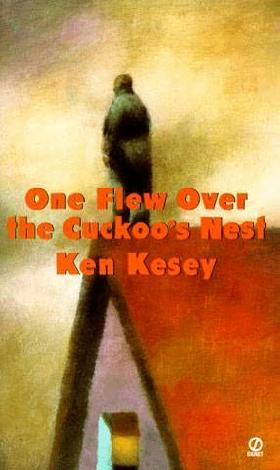
There isn’t any part of a mental institution that can’t be manipulated to induce terror. Of course, there is the fear of the inmates, but also the fear of the doctors or the administration (see One Flew Over the Cuckoo’s Nest). And a rundown asylum serves as an excellent backdrop in any creative work.

But my diagnosis is that the greatest fear we have of institutions is something more primal. It’s not the fear of the inmates or the caretakers or the troubled spirits that haunt the Rubber Room. It’s much simpler than that. It’s the fear of confinement, the horror of institutionalization.

That’s probably not much of a newsflash. Shocker: most people are afraid of being locked up in a tiny cell and treated like they’re criminally insane! But I think what I’m getting at is the universality of mental illness and its close relationship with horror. I bet that more people are afraid of losing control of their faculties than are afraid of death.

I would also guess that a fair number of horror writers and readers can credit their love of the genre to their own struggles with inner demons. (For a great social history of institutionalization, read Foucault’s Madness and Civilization.)

Prior to becoming a journalist, I worked for seven years at an inpatient detox facility in Boulder, Colorado. My experiences there were ineffable, and from the time I started as an addictions counselor to the present, I have tried to write about events there through both fiction and nonfiction.

Every attempt has been a false start.

Turns out, it’s a tough world to describe without becoming sensationalistic, sappy or overly scientific.

However, there are two writers who capture the horror of institutionalization in a magnificent way: Russian heavyweights Anton Chekhov and Fyodor Dostoyevsky.

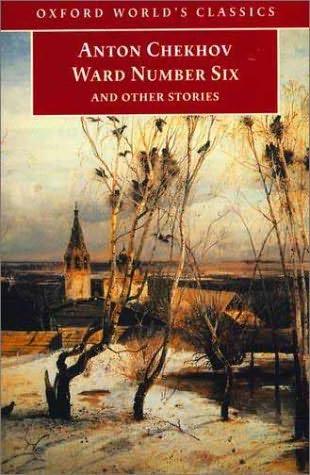
Let’s start with Chekhov’s novella, Ward No. 6, which draws us into this world almost as if the reader were an incoming patient. The first four chapters provide an overview of the institution and introduce its inhabitants. We meet the main character, Dr. Andrey Yefimitch, in chapter five, and here, we gain fresh perspective. We switch from patient to doctor as he becomes our lens through which we view the mentally ill, most strikingly through his interactions with Ivan Dmitritch. Yefimitch evolves through their awkward meetings. We feel his internal struggle with life both inside and outside the ward, and watch him blur the ever-permeable line between the diagnostician and the diagnosed.
It’s not surprising. In the high-stress environment of an institution, it is inevitable that one becomes part of the environment. As Yefimitch says, “‘I am not ill at all, it’s simply that I have got into an enchanted circle which there is no getting out of.’”

This gets at what I believe lies beneath the surface of every creative work featuring an
institution, be it a mental hospital, a prison, a nursing home. We’re not afraid of the inhabitants. We’re afraid of joining them.

On par with Ward No. 6 is Dostoyevsky’s The House of the Dead, which is based on the author’s four years incarcerated in a Siberian work camp. Here, Dostoyevsky gives us one of his darkest and most direct novels.

The first thing that strikes me is that The House of the Dead begins not with the institution, but with the setting around it. We get an idyllic description of Siberia, which is hardly what one would expect with a Russian prison narrative. And like Chekhov, Dostoyevsky provides us with a guide: Alexandr Petrovitch Goryanchikov.

We meet the city on page one, the protagonist on page two, and through the latter we enter the prison itself.

Another daring decision Dostoyevsky makes concerns the narration. Despite being told through the lens of an inmate, the narrator is not telling his own story. Instead, the novel consists of pages retrieved from Alexandr Petrovitch’s notes, as discovered by the narrator and offered along with his comments and perceptions.

There are two advantages to this that I see. The first is that the distance allows for dispassion. By serving as a filter between us and Alexandr Petrovitch, the narrator avoids sentimentality and sensationalism. The second is that by using the found manuscript, we still have the thrill of suspense. If the narrator were telling his own story, we’d at least know that he is alive at the time of the telling. But with a found manuscript, we’re wondering throughout what may or may not happen to its author.

The manuscript also gives us a segmented view of Petrovitch’s life in prison rather than his entire incarceration story. While there is a linear flow to the book (beginning with Petrovitch’s entrance to prison and concluding with his release), the arranging of the book by themes allows Dostoyevsky more freedom when fictionalizing his incredible experiences.

Both books weigh heavy on the reader, but this does not, I believe, imply despair. At once dreary and hopeful, the texts blur the line between inside and out, and cause the reader to reconsider preconceived notions of institutions. In Ward No. 6, we see the institution as a reflected image, as those on the outside find themselves drawn inward. In The House of the Dead, we get a first-hand account of the lives of the incarcerated. Though describing the outcast, Dostoyevsky startles the reader with a milieu that’s surprisingly familiar.

It leaves one rethinking the nature of institutions and builds on our fear of captivity. What role would we assume in a Dostoyevskian drama? Are we the doctor? The visitor? The inmate?

Sure, the traditional horror memes are nice, but true terror oozes from the pages of Ward No. 6 and The House of the Dead. These are heavier reads, and you might not finish them by Halloween. But for my money, there aren’t many settings more frightening than a 19th century Siberian prison.