Fiction

Noir Noel

From hard luck to hard science, this trilogy of thrillers will dim the holiday lights of the noir fanatic in your life. Much like the three wise men, we offer gifts of the gritty, the procedural and the other-worldly.

The Forgotten Addiction

Michael Lion
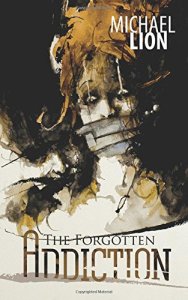
Forgotten AddictionIf you’ve got someone on your shopping list who likes it fast and dirty, gift them this hard-boiled holiday treat. In the follow-up to Lion’s acclaimed debut, The Butcher’s Granddaughter, Bird is back and looking for redemption. Fans of the genre will love Lion’s furious pacing and tightly wound prose.

The setting is interesting as well: 1993 Los Angeles (a wild time in the City of Angels). No cell phones. No Google. Just Bird the snitch playing both sides of the street and trying to find the missing daughter of a man murdered right before his eyes.

The search is both exciting and existential.

The strength of The Forgotten Addiction is Lion’s ability to create tight, gritty prose, but for all the textual skill, his characters are too familiar. Bird gives everyone a bad attitude, whether or not he’s provoked. Readers will recognize the upwardly mobile prostitute who is using her income to fund her education; the tough but noble bouncer who moonlights for Bird; the befuddled psychiatrist who is outwitted by the snitch.

Some of the plot turns are too convenient, but the action (and salty interaction between characters) is worth the ride. I couldn’t stop reading from one chapter to the next, and the narrative never grows stale.

It’s also fun to go back to that time and place when the west was on fire. This is one of the season’s best releases.


Case Closed

Case ClosedJan Burke

For two decades, Burke has thrilled a wide audience (including Bill Clinton) with her series of novels set around journalist Irene Kelly. Over the years, fans have enjoyed her blossoming romance with detective Frank Harriman, but in Case Closed—the last of six ebook collections pairing Burke’s new short fiction with stories from her anthology, Eighteen—we meet Harriman as a bumbling rookie. In this tale, he responds to a missing persons call, all the time wondering why the other cops are treating it with such cynicism. And it only gets stranger from there. Burke’s skill for dialogue and wit shine through. The interaction between Harriman and the old lady is delightful. There is a glaring plot hole in the big reveal (I won’t spill it, but it’s safe to say even the laziest, most cynical cop would have thought to check there), but it doesn’t spoil the enjoyment of the story, nor the others in the collection. It’s a wonderful introduction to Burke’s underworld.


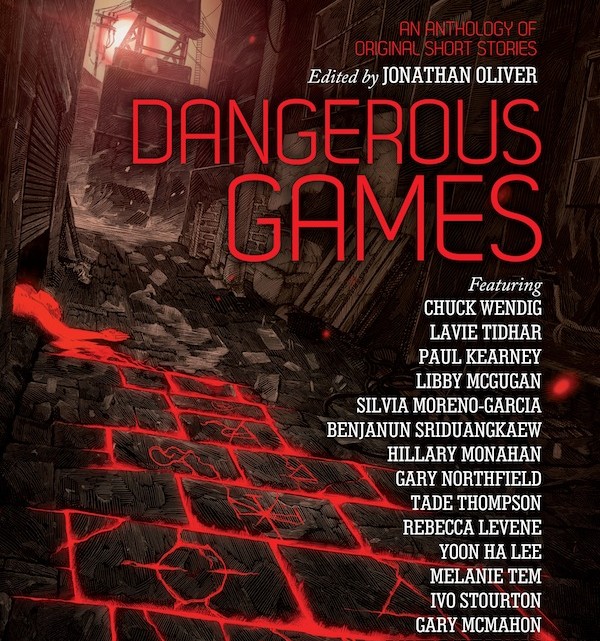
Dangerous Games

edited by Jonathan Oliver

Incorporating mystery, horror and sci-fi, this eclectic anthology has something for everyone. Leading off with Dangerous Gamesheavyweight Chuck Wendig and his dark tale “Big Man,” Dangerous Games plays on the theme of, well, games of course, but also chance, circumstance and, by extension, chaos theory (sort of). Wendig sets the tone with a dark yarn about road rage—a game we’ve played at some time, and it has no winners. Other standouts include offerings from Silvia Moreno-Garcia, Libby McGugan and Gary McMahon. Stories take us to the twisted future and the tortured past, but regardless of setting, each tale gnaws at the insatiable itch we have to roll the dice—and suffer the consequences.
Review: The Cutting Room

The Cutting Room

Ellen Datlow, editor

“With no dreams left to search for, I have only nightmares to anticipate.”The Cutting Room

This is one of the most haunting lines from the tremendous opening story, “The Cutter,” by Edward Bryant. It sets the tone for all the delicious horror in Ellen Datlow’s latest anthology, The Cutting Room: Dark Reflections of the Silver Screen.

Those familiar with Datlow’s work know that she is the go-to authority in the horror/fantasy world. The appeal of any anthology is the prospect of finding some good stories and maybe discovering new authors, but buyer beware: Anthologies themselves can be hit and miss, especially when the stories are crudely arranged with no thought to pacing or theme.

When Datlow’s name is on the cover, however, you know the collection will contain the highest quality writing and arranging, kind of like listening to a Rob Gordon mix tape (or Rob Fleming, for those who prefer the novel version of High Fidelity).

The genius of starting this anthology with Bryant’s “The Cutter” is that:

  1. It is set in a movie theater
  2. It features a film projector, Mr. Carrigan, who cuts and splices the incoming films so that attendees at his theater have a different version of the film than the director intended
  3. It thrusts the reader into a world of altered reality, where nothing is beyond edit and where nothing can be believed or counted on besides death

Of course, I’m a little biased. Not long after I moved to Colorado, Westword profiled Bryant and his fiction, and I’ve been a fan ever since.

Datlow refuses to let off the gas with the next tale, “The Hanged Man of Oz” by Steve Nagy, which plays upon the belief that an on-screen suicide is visible in The Wizard of Oz. I happen to share this belief, though it is denied by some. Nagy’s version gets even crazier, with the protagonist haunted by the scene, the film, the characters and his new girlfriend, who’d shown it to him.

There are also stellar contributions from horror legends, such as Dennis Etchison’s “Deadspace” (in which a small-time producer encounters big-time creepiness), and relatively new talents like A.C. Wise’s “Final Girl Theory.” (To enjoy a wonderfully haunting audio version of “Final Girl Theory,” visit Pseudopod.)

I’ve long loved the Gemma Files and Stephen J. Barringer tale “each thing i show you is a piece of my death,” which I first read in Datlow’s The Best Horror of the Year, Volume Two. While I love the meta-everything tone of the piece, I have mixed emotions about the title. It’s a line from my favorite Marilyn Manson song, “The Reflecting God,” and I appreciate the reference, but it’s such an obscure line (from neither chorus nor verse, but rather spoken beneath a wall of power chords segueing into an instrumental break) I’m not sure enough people will get the reference. Still, it’s a great story (and a great song).

Of a similar tone is Gary McMahon’s “Cinder Images,” which reminds the reader why many of us love horror in the first place: “You try to close your eyes but you cannot. You have to see—you need to see this. There are things that must be endured, sights that cannot be ignored.”

In fact, the idea of disturbing images and the blurring of reality is a common theme in this collection. Stephen Graham Jones’ chilling “Tenderizer,” for example, David Morrell’s “Dead Image” and the wonderfully titled “Filming the Making of the Film of the Making of Fitzcarraldo” by Garry Kilworth.

The final story, “Illimitable Dominion,” is a wonderful story I’d read before (in a Datlow collection dedicated to Poe), but was worth a second read. It re-imagines the complicated relationship between Poe and filmmaker Roger Corman (a creative relationship, that is, not an actual one). By one view, Corman did the world a service by keeping Poe’s stories in the cultural conversation via horrid retelling of his tales. By another view, he also bastardized much of the master’s works, in ways inconceivable to Poe fans.

Newman’s story offers an alternate view, one that loosely weaves fiction with history.

Like any anthology, it’s unlikely that every story will resonate with all readers, but as far as quality is concerned, The Cutting Room is a major success. Even if you only read “The Cutter,” this monster matinee is worth the ticket price.

Anticipate many nightmares within these pages.

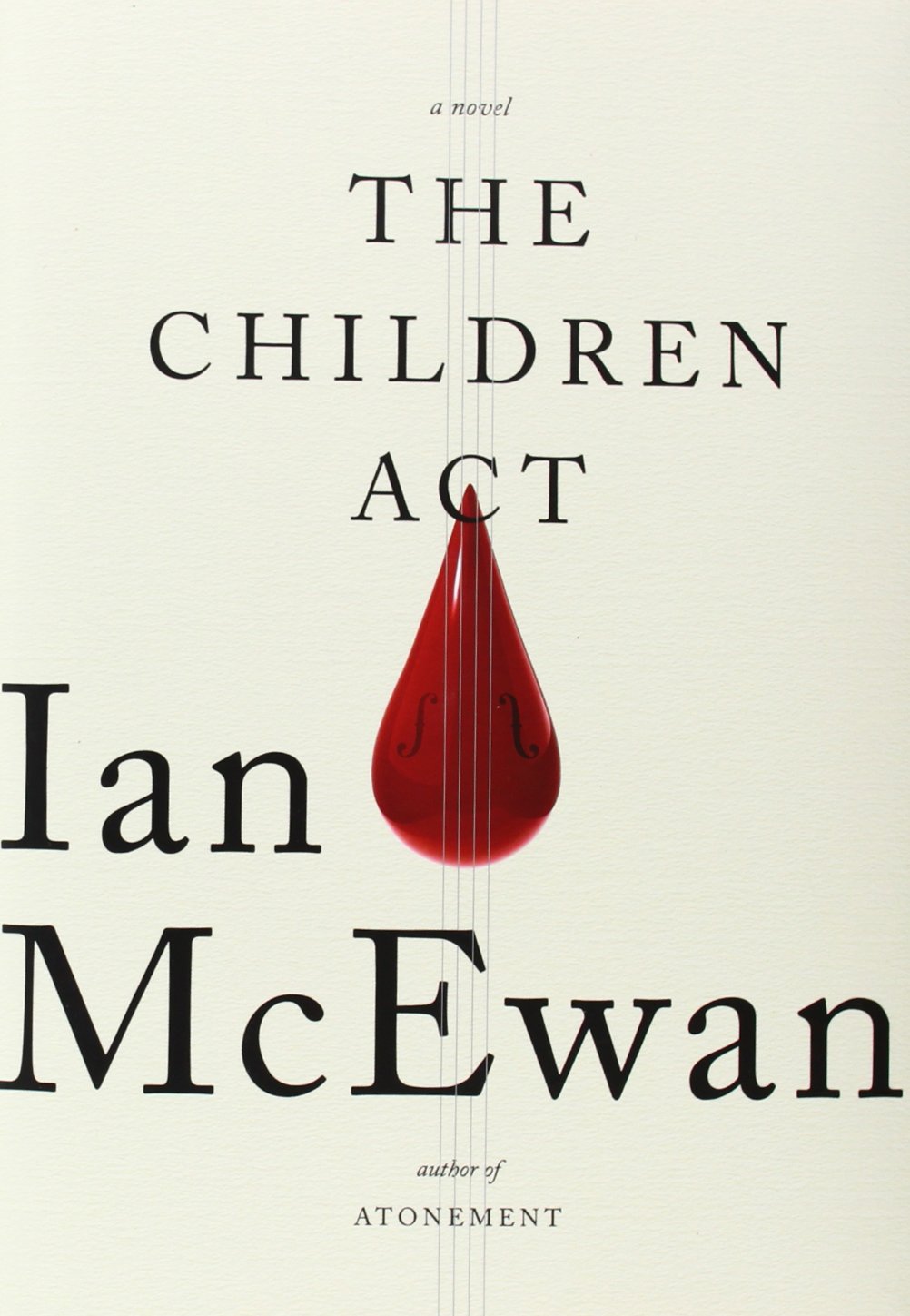
Review: The Children Act

Ian McEwan

The Children Act

Given one word to describe Ian McEwan, I’d have to go with excruciating. The tone (elevated and eerie) and density of his novels (to a degree that will try passive readers) ooze with The Children Actanxiety. His protagonists suffer quietly, haunted by a single instance of poor judgment or an absent-minded transgression.

It’s all about moments and forbidden thresholds, the composed intellectual who discards dignity and custom to follow an animal impulse. Be it a father’s momentary lapse in The Child in Time, the sudden violence of The Innocent or the chilling cowardice in Amsterdam, there comes a dissociative moment in every McEwan novel in which a main character is forced to confront their darkest depths.

And then live with the consequences.

Such is the case for Fiona Maye, protagonist of The Children Act, McEwan’s latest novel. Fiona is an experienced judge on the cusp of old age who is questioning her lifetime of restraint (as well as her decision not to reproduce).

We enter her story mid-conversation to discover Fiona reeling from her husband’s proposed (and possibly in-progress) infidelity, just as she’s preparing for a high-profile case with a child’s life in the balance.

Cut to the courtroom, where the precocious teenager is refusing a blood transfusion on the grounds of being a Jehovah’s Witness. Invoking the Children Act of 1989, Fiona gives her ruling, the consequences of which ultimately lead to a spontaneous, classically McEwan mistake, one that risks undoing her marriage, her career and a lifetime of calculated decision-making.

The Children Act is a short, but dense novel, as is usually the case with McEwan. The man is a master of reflection and interiority. The opening chapter encompasses but a moment in a 30-year marriage, but lays bare its successes, failings and a lifetime of insecurities and second-guessing.

McEwan applies this level of care and detail throughout the novel, which may lack the sinister urge of books like The Cement Garden, The Comfort of Strangers or First Love, Last Rites, but certainly channels the disquiet of Enduring Love and Saturday, in which the tragedies unfold in slow motion and a lifetime of torment is distilled into a bitter, lingering moment.

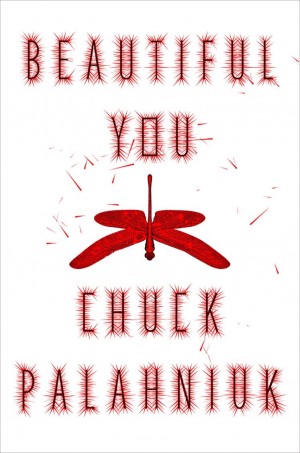
Pleasuring the Collective Unconscious: A review of Chuck Palahniuk’s Beautiful You

I’ll start with a confession: This review has come along sluggishly. Time I’ve set aside for writing has instead been frittered away on mindless online gaming. It’s an affliction we’ll call Beautiful Youwritus interruptus, and it’s likely to become an epidemic worse than any zombie apocalypse.

(Speaking of, my current addiction is The Last Stand: Dead Zone, and before I completed this sentence I had to stop to check on the construction status of a barricade.)

This isn’t anything new, really. In the 1950s, scientists discovered that if a rat could stimulate its brain’s pleasure center by pressing a bar, it would do so furiously until it passed out from exhaustion and, in many cases, died for lack of food and water. Mind you, the rats had access to food and water, but they couldn’t keep their paws off that pleasure bar.

This should sound familiar to any gamer who has missed a meal in order to level up.

It’s sick and wrong. I know this, but I need someone to hold up a mirror to face this absurdity directly.

This is why I love Chuck Palahniuk, whose new book, Beautiful You, is his best in a few years.

Fittingly, it concerns arousal addiction, and serves an electric shock to our collective conscience (or perhaps unconscious would be the better term).

Palahniuk took on male malaise with Fight Club, and mocked cultural over-consumption with Choke. Snuff (ostensibly a novel about pornography) lampooned self-destructive excess and exploitation in a manner that could very well have served as a hyper-sexualized predictor of the impending financial crisis of 2008.

In Beautiful You, he wanted to write what he calls gonzo erotica, and in the process has penned an anthem for an overstimulated, multi-tasking, computer-coma society.

Penny Harrigan is a nice Nebraskan girl working in New York City when she catches the eye of the world’s richest man, C. Linus Maxwell. Next thing you know, Penny is the talk of the tabloids and the envy of her coworkers.

Behind closed doors, however, is where Penny is truly transformed. Maxwell introduces her to a world of unimagined, if clinical pleasure. Penny has her reasons to question Maxwell’s motives (especially after a bizarre bathroom tryst with his bitter ex-lover), but is too enraptured with her newfound fame and sexuality.

Oozing with plot twists only Palahniuk’s sardonic tone could make palatable, Beautiful You aspires to remarkable levels of absurdity, but is it any more absurd than the daily inundation of product and marketing? Many reviewers have criticized the gratuitous satire in this novel, but is the idea of world domination via dildo really that farfetched in a culture that has financially sustained multiple cable shopping channels for three decades?

Beautiful You put me in mind of Rancid’s “Born Frustrated,” which asked, “Is this human freedom, hedonistic excess? Junky consumerism, mass production, toxic sickness?”

It’s why Romero’s Dawn of the Dead was set inside a shopping mall—can you truly be sure there aren’t a few zombies among you inside the IKEA? Ever been to a restaurant where a group of supposed acquaintances are each focused on their own smartphone or tablet?

We are a culture of instant gratification. We are a culture of distraction.

We are the lab rats hammering away at the pleasure bar for a taste of sweet, sweet oblivion.

And much like Maxwell, Palahniuk is there wearing a lab coat, taking copious notes and holding up a funhouse mirror to our cage, so that we might catch a distorted glimpse of what we’ve become.

Horror Shorts

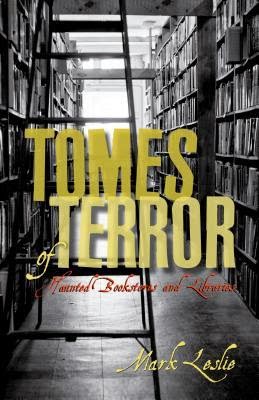
Tomes of Terror

Mark Leslie

There are two things I like to do anytime I come to a new town:Tomes of Terror

  1. Visit the local book shops
  2. Take a ghost tour to learn about its haunted legends

So you can guess my excitement to read Mark Leslie’s Tomes of Terror, a collection of hauntings set in libraries and bookstores.

Leslie’s first two nonfiction books explored the haunted legends of Hamilton and Sudbury in Canada. This time he travels the globe recounting stories of specters who re-shelve library books, peruse the remainder pile or just want to sit in a quiet corner and enjoy a good book.

I can relate. My ideal afterlife would be spent on the top floor of the Boulder Book Store (with occasional sojourns along Pearl Street to Illegal Pete’s, of course).

As for Leslie’s collection, it’s a great read for any fan of ghost literature. It’s also a mixed bag, with some anecdotes chilling, some sweet, some silly.

There is one shortcoming in this book, but it is no fault of Leslie’s. It’s the medium. Sadly, the written word can’t compete with a spook story shared in hushed whispers around a campfire, so truly visceral frights are few.

Case in point: As much as I enjoyed both installments of Roz Brown and Ann Alexander Leggett’s Haunted Boulder series, their stories truly come to life when performed by master tour guide Banjo Billy. (I highly recommend both the books and the ghost tour, if you happen to be in Boulder, Colo.)

Despite the limitations of the printed page, I love any well-written and –researched book of hauntings. What I like most about them, I think, is that the tales turn out to be more historical than horrific. I’ve come to view ghost books (and tours) more as historical documents than anything else, but the kind that infuse a town with a lot of personality.

For me, it’s hard to truly love a place until I’ve explored its ghostly geography.

Fittingly, some of the most fascinating parts of Tomes of Terror are not the ghosts, but the histories of the libraries and stores themselves.

A sad postscript is that a fair number of the bookstores mentioned in this collection are now closed, becoming a different kind of ghost. And that’s truly terrifying.

But the stories never die, and in that sense, the shuttered stores live on in their own haunting way. Like ghosts, their spirits persist in the pages of Leslie’s collection.

Long may they haunt.


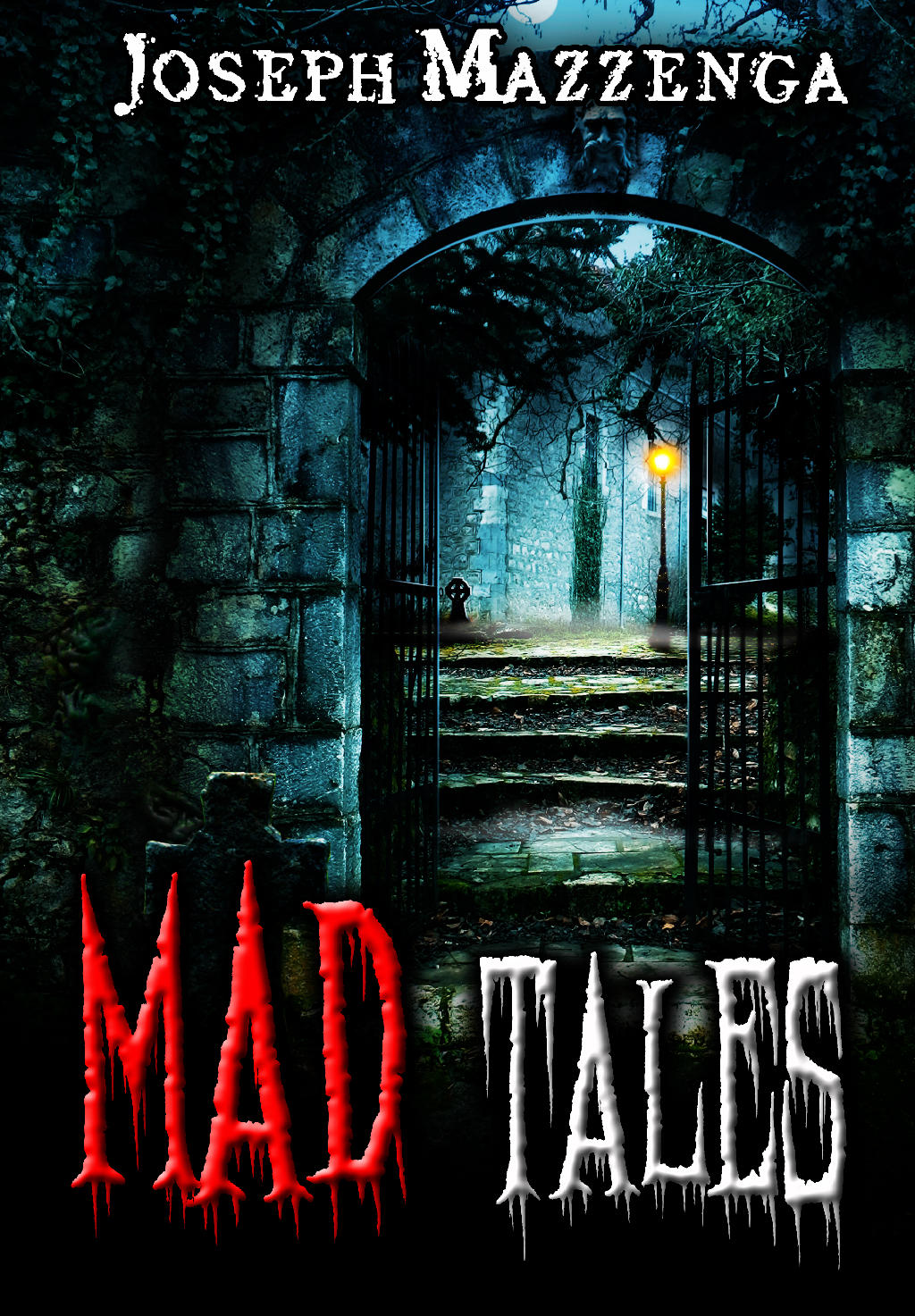
Mad Tales

Joseph Mazzenga

Come October, you can’t go wrong with a collection of horror stories on the nightstand (or anytime, really, if you ask Mad Talesme). While not straight horror (Mazzenga incorporates elements of the weird, sci-fi and urban fantasy), Mad Tales is a collection of the creepy and creative befitting autumn, the best of all seasons.

“Pepperell,” the lead story, truly stands out. It’s a fast-paced thriller fueled with a Twilight Zone aesthetic that disorients as well as it delights. The character development is a bit thin in this tale of outlaw bikers descending upon a quiet mountain town, but the “said the spider to the fly” motif compensates for the broadly sketched personalities.

There is no short-changing on the characters in “Bloody Depths,” a sprawling seascape of uncertainty that delivers its nightmares at an even pace. Here, we have more time to engage with the main character’s plight and share her dread as Mazzenga takes us to some weird—I mean really weird—places.

While they may incorporate elements of fantasy and sci-fi, each of the Mad Tales features a creepy tone that firmly establishes this enjoyable collection in the horror genre.

All Due Respect Issue 4

Check out the new issue of the crime fiction magazine, All Due Respect, which features a nonfiction piece by yours trADR _4 V3uly. My article is a review of Joe R. Lansdale’s Cold in July, which was released earlier this year in conjunction with the film release. If you haven’t read the book or seen the movie, I highly recommend both.

The issue also includes a powerhouse lineup of crime fiction, including award-winning author Hilary Davidson. Last year, I reviewed her excellent novel, Evil in All Its Disguises, and fans of that novel (and new readers) will enjoy her short story, “A Hopeless Case.”

A Darker Shade of Summer (Fiction)

A round-up of ghost stories, thrillers and dystopian anthologies to darken you summer. (Come back tomorrow for our nonfiction edition.)

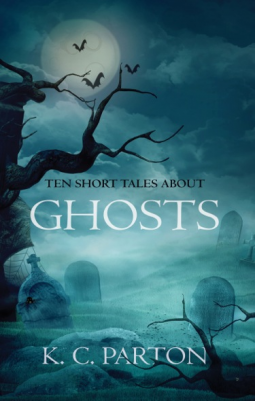
Ten Short Tales About Ghosts

K.C. Parton10 Short Tales About Ghosts

(Released June 28)

Typically, the hallmark of a great ghost story is that it unsettles the reader. When reading K.C. Parton’s collection of English ghost stories, however, one is filled not with dread, but comfort. These 10 tales are reminiscent of the kind my father would tell me over campfires—and those, of course, will always be my favorites.

Parton’s stories have that same appeal. These are not tales of terror, but subtle chillers made all the more spooky for their familiarity. Stories that make you think twice before cutting through the graveyard, not to avoid falling prey to a Saw-like killer, but for that abstract fear that tickles as much as it terrifies.

In “The Last Train,” a modest theater-goer arrives late to the station, but by good fortune, his train is waiting for him. Once aboard, he realizes his destination is somewhere other than home. Likewise, a young factory apprentice stumbles upon a shop-floor oddity in “The Cleaner”—and realizes that what he first thought to be a hoax or a hazing is in fact a haunting.

Perhaps the stand-out tale of this collection is “The Heinkel,” a WWII yarn about a young boy fascinated with a downed German plane.

A big draw for me is that most of the stories have an industrial setting. Growing up in the Rust Belt, I was exposed to the real-life horror of the steel mills (such as my dad’s coworker losing an arm in the blast furnace) and the spooky kind (my grandfather’s otherworldly encounters at the Westinghouse plant).

When it was my turn to work the factories, I found much ghostly inspiration in the rusted machinery, secluded warehouses and the imaginative possibilities of the graveyard shift. Parton’s stories fit that mold, which shouldn’t be surprising, as he came of age in England’s post-war factories. (His first book, Tales from the Toolbox, recounts his industrial experiences.)

My one critique is that there’s not a lot of mystery to these stories. Characters who believe they are having ghostly encounters truly are, and the nature and cause of the hauntings are typically self-evident. But that’s OK. These stories work not through terror or misdirection, but by tapping into that primal need for campfire tales—the kind that give goosebumps, sure, but leave you smiling in the end.

Ominous Realities

Eds. Anthony Rivera and Sharon LawsonOminous Realities

Once again, Grey Matter Press has delivered the anthology goods. Ominous Realities is the finest indie collection I’ve read in a while. These dystopian tales chill and unsettle, balancing skill, imagination and smarts.

Take “On the Threshold,” an eerie, Lovecraftian tale of science and madness from William Meikle. Last year, I read Meikle’s novel The Hole, and thought it was enjoyable but flawed. Here, Meikle is in control from the creepy opener in the lab to the grim finale. HPL would love this tale of science gone wrong.

Keeping up the intensity is “Doyoshota,” by Ken Altabef, a haunting intersection of conspiracy and cacophony that makes tinnitus sound like a Beethoven sonata.

Eric Del Carlo’s “We Are Hale, We Are Whole” is deserving of any “best-of” anthology, a smart, thoughtful piece of writing that should be a must-read for anyone attempting to world-build within the confines of a short story. It also takes a philosophical bent about quality of life, aging, health care and sacrifice.

An excellent collection from a hot new publisher. Also be sure to check out their Dark Visions II anthology.

Coming Soon

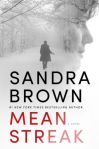
Mean Streak

Sandra BrownMean Streak

(Release date: Aug. 19)

Mean Streak has all the makings of a classic Sandra Brown thriller: abduction, deception, moral complexity and a revelatory rabbit-hole twist. In her new novel, Dr. Emory Charbonneau disappears, and her husband is the primary suspect. Part crime novel, Mean Streak is also a survival narrative, as Emory awakes in the hands of a violent captor who may be hiding his true identity. I haven’t read this yet, but it sounds reminiscent of Standoff, which was one of her best works.


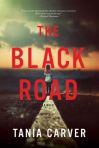
The Black RoadThe Black Road

Tania Carver

(Release date: Aug. 15)

While the plot may be a little, well, plausibility challenged, advance press offers Mo Hayder levels of gore and depravity (aka horrific awesomeness). Following a mysterious explosion, criminologist Marina Esposito’s husband is in a coma and her young daughter is missing. The abductor forces  Marina to complete a series of depraved tasks in the course of three days or her daughter dies. So, yeah, it may be plot-challenged, but if you’re looking to spice up your summer with some gore, The Black Road just may be a detour worth taking.

Review: Justice, Inc.

In the introduction to his short story collection, Justice, Inc., Dale Bridges prepares us for the satirical rapture he is about to unleash: God, discouraged by his failed attempts to killjustice-inc-cover off the human race, comes to the realization that “…when left to their own devices, they appeared to do a fair job of exterminating themselves.”

And thus the chain catches on the death-coaster, drags it to the summit and lets that fucker drop.

Hang on.

These are masterful tales of human obsolescence, cruel absurdities and species self-deliverance. Albert Camus wrote: “Man is mortal. That may be; but let us die resisting; and if our lot is complete annihilation, let us not behave in such a way that it seems justice!”

He would love this book.

In Bridges’ world, justice is self-imposed, whether or not his characters realize it. You want the convenience and savings of a Wal-Mart? Fine, but you have no one else to blame when you wake up in a world controlled by Wal-Marts. Punishment fits the crime.

This is the type of justice that runs through this collection. The settings are typically dystopian and of our own making. It is human nature to barricade the doors or erect walls to repel that which threatens us, only to realize that we have constructed our own prison cell.

Just ask Poe’s Prospero, whose harlequin fortress was child’s play for the Red Death.

Justice, Inc., published by the formidable Monkey Puzzle Press, manages to be both observational and engaging, philosophical yet lyrical at the same time. You’ll find yourself caring as much for the characters and their plights as for the underlying philosophy within each tale.

The opening story, “Welcome to Omni-Mart,” is reminiscent of Kurt Vonnegut’s “Deer in the Works” updated for the big-box generation. Leonard was adopted by Omni-Mart as a child and now, at forty-two, lives, works and philosophizes within its walls, deathly afraid of The Outside.

It’s a synthetic, corporate dystopia that is, sadly, all too familiar.

“Life After Men” is a sardonic take on dysfunctional relationships and how we, inevitably, are drawn to, and driven by, the things that destroy us. Oh, and did I mention this plays out against the backdrop of some wild, gender-specific apocalypse?

This segues into the darkly comic (and karmic) “The Girlfriend™” in which the protagonist, Derrick, blurs the line between physical and factitious love. For Bridges, the femme fatale has been replaced by the sentient sex robot. (Of all the dystopias in all the dystopian universe, she had to walk into mine.)

Bridges writes not with a pen but a skewer, piercing the absurdity of our cosmic sitcom with clarity and humor. Justice, Inc. is philosophical satire in the vein of Vonnegut and George Saunders—fellow madmen who have stared into the abyss and come away laughing.

Obligatory disclaimer: Bridges is a friend and former coworker. We worked (and suffered) together at the Boulder Weekly newspaper, where he succeeded me as arts and entertainment editor. We also worked together on Transgress magazine, where three of these stories originally appeared.

I can attest to the quality of the man, his writing and his conviction.

I can also warn you, from first-hand knowledge, that Bridges may very well be the madman Nietzsche wrote about—and the bringer of the end times.

Be warned that there is a fifth steed of the apocalypse, and its name is Justice—and Bridges is lashing the whip, breathing fire and coming for us all.

Review: Kinder Than Solitude

Kinder Than Solitude

Yiyun Li

This is a book that will break your heart. From the uncomfortable opening scene at the Li_Kinder-Than-Solitudecrematorium, across continents and decades, this is a longitudinal gut-punch of a novel dealing with loss, guilt, terror and fragility.

The person being burned to ashes in the beginning is Shaoai, a childhood friend of the three main characters who was poisoned (perhaps deliberately, perhaps not) in her youth. She has finally passed after two decades in a coma, and her death brings together our lead trio—Moran, Ruyu and Boyang.

From here, the journey turns inward.

Li pens exquisite prose, with beautifully crafted sentences as philosophical as they are proficient. If I have one critique it is that the language, however beautiful, can sometimes stand in the way of the storytelling. Li is able to meditate on moments, which can subsume the reader into the novel, but at times can also push them out.

This is literary mystery, so of course there’s more to it than solving the crime. This is as much about Shaoai’s poisoner as Sherman Alexie’s Indian Killer is about catching a serial killer. What matters isn’t revealing what happened, but exploring the intersection of the lives touched by Shaoai’s coma and death—inhabiting the grief and guilt harbored by the three survivors.

We all have childhood regrets, and we’ve all known someone who never made it to adulthood (though not necessarily linked the way they are here). There are things we would like to change. There are times we wonder why we’re still here and someone else isn’t.

How do we go on with this knowledge? Li doesn’t necessarily answer that question, but she gives us a disarming portrait of three childhood friends coming to terms with a past they can’t quite shake and a mystery that will both intertwine them and isolate them forever.

Review: The Winter People

The Winter People

Jennifer McMahon

What is it about New England that inspires isolated, small-town horror tales in which the Winter Peopleblood runs as cold as the weather? I’m not sure what it is exactly, but having spent many a wintry a night in Maine, I am familiar with that feeling.

And I can’t get enough of it.

Jennifer McMahon captures that frostbite feeling perfectly in The Winter People, a heartbreaker of haunted legends and legacies, curses and karma, and, more than anything, unendurable loss.

The Winter People has a dual narrative—a modern-day mystery in which a teenager, Ruthie, is forced to take charge of her little sis when their mother goes missing. While searching for her mother, she stumbles upon the diary of Sara Harrison Shea, who lived in the house in 1908.

The diary does not have a happy ending. Both Sara and her daughter died in 1908, but the journal entries suggest that death is not exactly the end of the story.

The Winter People is well-written and bursting with heart. There are mysteries at every turn, and reminders that grief can be deadly. Or worse. In one of the book’s most haunting devices, Ruthie discovers that her mother has nailed shut her closet from the outside. For what purpose? Let your imagination go wild with that one.

The soul of the book, though, is the “sleepers.” Ruthie learns of a spell that will raise the dead for seven days’ duration, after which they are gone forever. It’s a universal temptation. Wouldn’t it be great to say a proper goodbye to a loved one who died suddenly? To hold a lover’s hand just a little longer? To actually say the things we think to say only after it’s too late?

Or would it be a daily torment, watching the minutes and hours crumble to dust?

But there is always a price. Like a modern retelling of “The Monkey’s Paw,” there are consequences for disrupting the dead, and The Winter People reminds that despair can drive even the most sensible among us to dangerous depths.

That’s what makes this novel so endearing. And so heartbreaking.