nonfiction

Recommended Reads 1.01.13

Welcome to a new year and a new installment of Recommended Reads. Here are some new releases to get you started on that 2013 reading list:

Unusual Uses For Olive Oil is the latest novel from the inimitable Alexander McCall Olive OilSmith, author of The No. 1 Ladies’ Detective Agency series. Detailing the further adventures of Professor Dr von Igelfeld, the novel evokes the joy of earlier installments in the series, such as The Finer Points of Sausage Dogs.

And as with that book, daschunds are featured prominently (as you can probably tell by the cover).

In 2012, Lawrence M. Krauss, director of the Origins Project at Arizona State University, published A Universe from Nothing: Why There is Something Rather Than Nothing, which details theories surrounding the origin of the universe.

PUniverseresenting scientific data in an accessible way, the paperback edition comes out today, featuring a new preface regarding the Higgs particle discovery and an afterword by the great Richard Dawkins.

Of course, this book will appeal to intellectual types, but is of value to all, as it engages the reader with the latest scientific theories.

The End of Righteousness

OK, the title of this book review is admittedly ambitious, but now that the election has finished, perhaps we can all sheath our knives for a week or so–and stop screaming long enough to breathe.

Or better yet, to read a good book.

To nurse that campaign hangover, I recommend moral psychologist Jonathan Haidt‘s new book, The Righteous Mind: Why Good People Are Divided by Politics and Religion. I read this over the summer, and I think it should be required reading for anyone running for office. And it’s the perfect antidote for any residual post-electoral rage.

Haidt begins with a simple, yet quite genius premise. He looked around at his countrymen, divided by a vicious culture war, and discovered more commonalities than differences. For all our diversity, American culture is quite homogenous. (No surprise: “Melting pots” are designed to synthesize many ingredients into a unified whole, not keep them separated.)

We have common experiences, languages, and yes, values. No matter what the campaign ads say, is there anyone on either side that doesn’t want the economy to improve, for their family to be safe from attack, to have excellent health care and receive a good education?

There are philosophical differences on how to achieve these goals, true, but when it comes down to it, all any sane person wants is to be happy, to provide for their loved ones and live a good life.

So why all the vitriol? How can a society with such common goals claw at each others’ eyes with such entitlement? How can we so easily demonize and dismiss someone who disagrees with us?

Well, it’s complicated, to be sure. But Haidt sifts through scientific research, anthropological findings and the evolution of intellectual thought to divine some underlying truths. One of the biggest is the notion that intuition guides our beliefs more than reason. This is why logical arguments are often ineffectual against deep-rooted beliefs–why discussions become debates, and debates devolve into bumper-sticker slogan shouting.

“…don’t take people’s moral arguments at face value. They’re mostly post hoc constructions made up on the fly, crafted to advance one or more strategic objectives.”

In other words, it is not evidence that shapes our worldview. We are naturally and subconsciously drawn to evidence that confirms are worldview. We intuit our morality first and support it with arguments later. That’s why it’s so easy to become entrenched in our beliefs and intolerant of opposing viewpoints.

The Righteous Mind does skew toward the academic, and can be challenging at times. But hey, nobody said bipartisanship was easy! Once you’ve grasped the science and moral theory, you’ll have a better grasp of Haidt’s conclusion.

And this is where the author truly shines.

“Part III: Morality Binds and Blinds” synthesizes all that came before and presents an insightful view of human beliefs and behaviors. How would conservatives fare without liberals? Liberals without conservatives? Haidt makes a compelling case that each would fail without the other. This book is worth it for this section alone.

Here, Haidt summons the great utilitarian thinker John Stuart Mill and his take on both sides of the aisle. “A party of order or stability, and a party of progress or reform, are both necessary elements of a healthy state of political life.”

Perhaps after reading this book, we’ll treat one another with a little more respect and a little less righteousness.

Life After Death, Damien Echols

At the height of the ’80s Satanic Panic, I was a prototypical blasphemer. I played Dungeons & Dragons, blasted Shout at the Devil at maximum volume, plastered Metallica posters on my wall, read the Necronomicon, gorged myself on horror cinema and wore a daily uniform of ripped denim and black T-shirts.

According to Al Gore’s wife, I was a bloodthirsty soldier for Satan. Oh yes, me and my virginal D&D pals—who could perform about 15 push-ups combined—were dangerous, alright.

But the tragic nadir of the Satanic Panic was the case of the West Memphis Three, a trio of teenagers wrongfully convicted of child-murder in rural Arkansas.

The case first attracted media attention for its lurid qualities—abduction, mutilation and supposed Satanic Ritual Abuse. It later attracted attention for the hillbilly witch hunt that resulted in the trial of the West Memphis Three. Two of the boys received life sentences while Damien Echols, the alleged leader of the trio, was sentenced to death.

After two decades of public outcry, numerous books and feature films, the three men were finally released in 2011.

On Sept. 18, Echols recounts his experiences in Life After Death, available in hardcover and e-book. Echols has previously published his poetry, nonfiction and the 2005 memoir Almost Home. I’m excited to read what he has to say about the years since then.

Much has been written on the horrors of the Satanic Panic, but the definitive account should rightfully come from Echols, one of its biggest victims—a man who was nearly put to death on account of mass hysteria.

The saving grace for our justice system is that it’s not a posthumous release.

Check back for info on more upcoming releases throughout the week.

Ensuing Chapters 9.8.12

Stop a moment. Breathe. Deeper now. Sure, it’s still north of 90 in Colorado, but as the days die quicker, a liminal chill fills the soul. For my money, you can keep summer and winter. But autumn…

The overdone cliché in book reviewing is the summer reading list. I’m not sure who started it, or who all these people are reading at the beach, but I’m certainly as guilty as the rest. But truly, the best time to indulge in the written word is autumn, with its cooler climes, longer nights and olfactory-fueled melancholia.

And aren’t books always better when paired with a hot mug of tea?

Some of my favorite September/October memories are of spending Friday nights among the stacks at the Boulder Book Store. As a youth, my friend and I would drive a half hour from our book-deprived hometown in Pennsylvania to Twice-Loved Books in Youngstown, Ohio. And some of the best autumn reading I’ve acquired at Denver’s Tattered Cover, or the Poudre Library District in Fort Collins.

As an avid reader of horror, I often find my favorite books marginalized on the shelves—except during the fall. For two months, the storefront displays boast the books that make my year-round reading list.

You will find plenty of horror previewed here at Ensuing Chapters, but there’s a wealth of diverse autumn gold coming your way in the following weeks.

Sept. 3

Last year, we lost one of the great journalists of our time, and one of my personal heroes, Christopher Hitchens. This champion of reason was known for his bold reporting on war and religion, and was equally brave in the face of cancer. Published on Sept. 4, Mortality will appeal to Hitch’s loyal readers, but is also of interest to anyone who’s lost someone to cancer (e.g. nearly everyone).

Few writers have captured the depth and beauty of the natural world like transcendentalist writer Henry David Thoreau. His new book—yes, new book—October, or Autumnal Tints, is a lecture he gave near the end of his life. He envisioned it one day being released in print with accompanying illustrations.

That day was Sept. 3.

His tribute to the greatest of all months, penned in the autumn of his own life, reframes the changing colors and dying leaves as symbols of maturity rather than decay. Reading Thoreau is always a treat. Reading his musings on autumn in autumn seems like paradise.

In the song “Little Too Clean,” Soul Asylum’s Dave Pirner croons, “Don’t you know dirt will find you/ and dirt reminds you/ that dirt will always be there.” It’s the song that keeps looping in my head while reading the jacket of Moises Velasquez-Manoff’s new book, An Epidemic of Absence: A New Way of Understanding Allergies and Autoimmune Diseases.

Exploring one of the big issues of our time, science writer Velasquez-Manoff uncovers a shocking rise in food allergies and autoimmune disorders, such as Celiac and type-1 diabetes, and equally shocking treatments that rely on parasites rather than pharmaceuticals. One of the unexpected contributors to our sickness, he finds, is that sanitation and antibiotics have altered our inner ecologies to the point that we lack the organisms that keep us in check.

We have become a little too clean—or maybe even a lot too clean.

Sept. 10

What do we know about Lee Child’s compelling protagonist, Jack Reacher? He likes travel, he’s a sharpshooter with a wicked double-tap, and no matter where he roams, he always ends up in the same place: trouble.
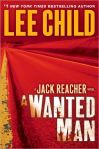
Celebrating the 17th installment of the Jack Reacher series, plus related short stories (personal fave: “James Penney’s New Identity” from Thriller), Child has climbed from the crime writing underground to the top of the best-seller list. He is likely to summit once again with the release of A Wanted Man on Sept. 11.

I am an avid reader of Child’s books. I love the Jack Reacher franchise. But when the peripatetic maverick hits the big screen, I hate that it will be Tom Cruise (boo, hiss) portraying Reacher.

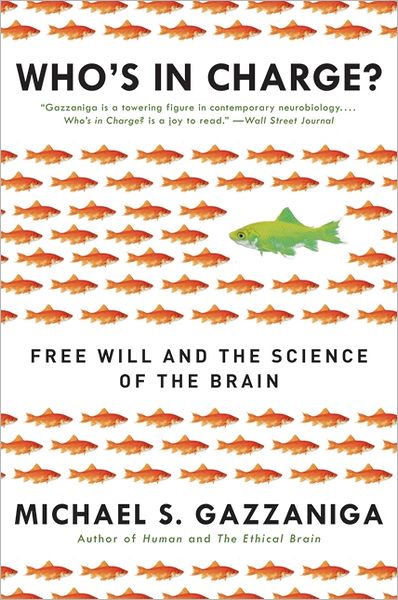
Who’s really writing this book blurb? I thought it was me, but one might want to reconsider after reading Michael S. Gazzaniga’s Who’s in Charge?: Free Will and the Science of the Brain. Gazzaniga surveys the science, psychology and ethics at work in our thoughts and behaviors.

Who’s in Charge? is a work of great importance as breakthroughs in neuroscience have revealed greater complexities than ever imagined at work in the brain. And launched the next great frontier of philosophical inquiry.

Published last year, the paperback reprint hits shelves Sept. 11.

Legendary journalist Bob Woodward goes from Deep Throat to Deep Gridlock in The Price of Politics, his 17th book. In this detailed account, Woodward chronicles Washington’s attempts to rescue the economy these past few years.

Talk about the ideal primer to the madness of election season. For the more devout political readers (and I know a few of you), Woodward’s new book is political porn to get you in the mood as we steamroll toward November.

We’ll preview other September releases in the coming weeks. Please follow Ensuing Chapters to receive our weekly previews, reviews and interviews.

Recommended Reads (Aug. 13)

It’s not too late to pack in some great summer reads. Here is Ensuing Chapters‘ recommended reads for the week of Aug. 13, highlighting upcoming and recent releases.

Dreamland: Adventures in the Science of Sleep 

by David K. Randall

Journalist and somnambulist David K. Randall explores the schematics of slumber in this round-up of sleep study anecdotes and analysis, to be released Aug. 13. This promises to be a quirky and informative science read in the vein of Mary Roach and Sam Kean.

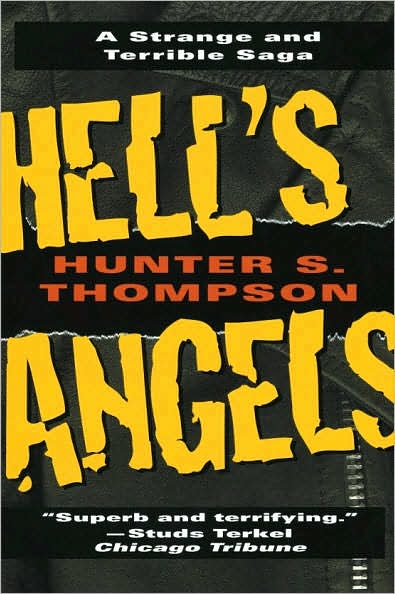
Hell’s Angels
by Hunter S. Thompson

This seminal work of gonzo journalism, released digitally for the Nook earlier this month, is a hawg-stomp of danger, debauchery and wicked escapism. This ultra-violent ode to the outlaw biker, released in 1966, still stands as a cultural document of ’60s counter-culture, a fearless feat of immersion reporting and an epic fantasy for anyone who’s felt like ditching the mainstream, straddling a Harley and living free amid the underworld.

Of course, there is no fairy-tale ending for Thompson, who finds himself on the wrong end of the bikers’ boots. Edgy, controversial, hyperbolic, sensationalistice. Yep, it’s all those things. It’s also damn good. Finally, a reason to get a leather jacket for your Nook.


Darwin’s Ghosts: The Secret History of Evolution

by Rebecca Stott

Darwin wasn’t the first scientist to observe natural selection at work. His discovery was, like his theory, the product of years of evolution and adaptations, both in thought and society. Here, Stott, an English teacher and author of earlier books on Darwin, gives credit to the thinkers and tinkers who laid the groundwork for On the Origin of Species.

Recently, Stott was interviewed by New York Times‘ book reviewer John Williams. You can read their Q&A here.


This Will End in Tears: The Miserablist Guide to Music

by Adam Brent Houghtaling

This manifesto of misery celebrates the purist of guilty pleasures: the sad song. Sure, we’ve all enjoyed a slow-drag at a high school dance, or hit repeat on Soul Asylum’s “Endless Farewell” whilst nursing a heartbreak. But why do we enjoy them even when we’re happy?

Ballads, like heartaches, come in all varieties, but for Houghtaling, they all share a skeletal structure, which he details in This Will End in Tears. Susan Stamberg, of National Public Radio, recently interviewed Houghtaling. He offered insights to the genre, a few musical suggestions and a sneak preview of the book here.

Second-String Sociopaths

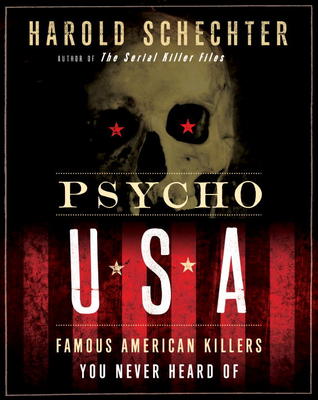
On Tuesday, Harold Schechter‘s new book, Psycho USA, hit the shelves. Last month, I interviewed Dr. Schechter on topics such as the new book, true crime as cultural history and recent rampage violence. He offered insights both witty and wise. Read the full profile here or at Transgress digital magazine.