ensuing chapters

Review: The Mad Sculptor

I first encountered Harold Schechter in the mid-’90s at the (sadly) now-defunct Twice-Loved Books in Youngstown, Ohio. My friend Todd and I would travel there often, lost The Mad Sculptorfor hours among their three floors of books and playing with the occasional store cat.
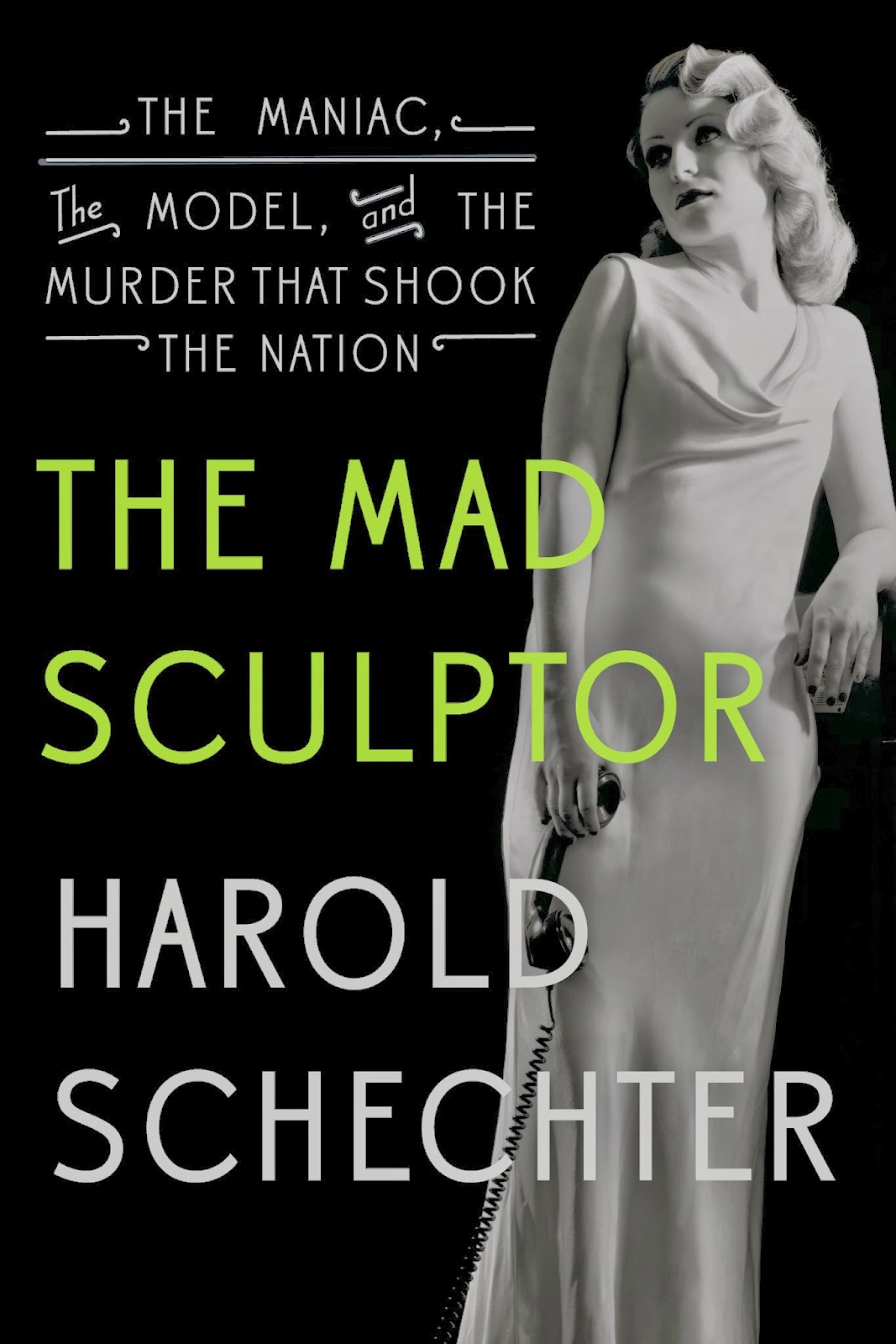
You would most often find me in the basement, where the true crime section was wedged into a nook behind the stairs. And you would most often find a Schechter book tucked beneath my arm.

I am not only a fan of crime writing, but an advocate. There is a stigma with the genre that I have always felt was undeserved. Even in progressive-minded bookstores like Twice-Loved (where I was able to order first-edition Aleister Crowley tomes in the pre-Internet age), crime reporting was given only subterranean shelf space.

That’s a shame. Crime writers like Schechter are historians, sociologists, documentarians and cultural commentators, and to be relegated to back-shelf status by the literary mainstream is a disservice to the many great writers (and well-informed readers) working in the genre.

I asked Schechter about the breadth of his work in a 2012 interview:

“You can certainly learn as much about a society by which crimes people are obsessed with at a particular time,” he said. “I think, in a general way, the crimes that become national obsessions, that strike a deep communal chord, symbolize the particular cultural anxieties of the moment.”

In the 1920s it was poisoners; in the ’70s Charles Manson personified the worst fears of the counterculture; the ’80s had phantom Satanists and the ’90s belonged to the serial killer; and today we have the rampage shooter.

But in the 1930s, it was the sexual deviant that haunted and titillated the public.

Enter Robert George Irwin, the subject of Schechter’s new book, The Mad Sculptor: The Maniac, The Model, and the Murder that Shook the Nation.

Irwin was a troubled and talented artist whose stunted psychosexual development (and religious obsession) fueled romantic fixations, violent outbursts, numerous hospitalizations and an attempted self-castration. It climaxed with a vicious triple murder in 1937, made all the more newsworthy because one of the victims, Veronica Gedeon, was a pulp magazine cover girl.

That in and of itself would make for a good read, but Schechter is a skilled storyteller and, more importantly, a devoted historian. His research into the man who would become The Mad Sculptor not only unearthed a traumatic upbringing, but also documented the changing post-Depression personality of the Beekman Hill neighborhood where the murders occurred.

Turns out this neighborhood was home to a series of sensational murders a year prior to Irwin’s massacre.

Weaving a wealth of historical documents into a cohesive narrative, Schechter gives us not only the crime and the cultural mindset, but also the role the media played in the tale, from the earliest indictment of an innocent man through fictional jailhouse confessions and a business arrangement with the Chicago Herald-Examiner so shady that it would make Rupert Murdoch cry foul.

In fact, all of the media coverage (including the persistent “blame-the-victim” approach that made a fuss over Gedeon’s modeling career and her father’s fondness for “French art” postcards) makes today’s television news seem downright ethical (well, almost) by comparison.

If I have one critique of The Mad Sculptor, it’s that we don’t learn much about Irwin’s time in prison. We get factual data, such as how long he lived after his conviction, when he died, and such, but not the in-depth reporting showcased in previous chapters.

But in a time when most movies and many books run far too long (only quantum physics can explain why it takes longer to watch The Great Gatsby than it does to read the book), it’s not really a bad thing to say that Schechter could’ve gone on for another hundred pages or so and I would have been with him all the way.

Schechter had a run in the 1990s that would make any writer jealous, penning best-sellers about Albert Fish, Ed Gein and Depraved, Schechter’s account of H.H. Holmes.

The latter is an example of the literary caste system writ large. Depraved, published in 1994, predated Erik Larson’s The Devil in the White City by nearly a decade. While both tell the story of the same man—and the same crimes—one is relegated to the dusty shelves of true crime while the other is a modern classic and prominently displayed at the front of the store.

This is not a knock on Larson’s book (he did nothing wrong by writing an excellent book and reaping success), but rather an example of the double-standards that sometimes emerge in publishing. I point this out not to get on a soapbox but rather to appeal to readers who may never otherwise stray to the nether regions of the bookstore or think that crime writing isn’t for them:

Yes, you will find The Mad Sculptor in the true crime section, but it is greater than the sum of its kill count.

Yes, Harold Schechter is America’s finest crime writer, but he is so much more.

Let this book be your introduction to another historical viewpoint, and don’t be afraid to drift to those shadowy corners of the bookstore where you’ve feared to tread before. To quote Nietzsche: “I am a forest, and a night of dark trees; but he who is not afraid of my darkness will find banks full of roses under my cypresses.”

Take it from the weird kid who spent hours in those shadowy basement corridors, collecting the flowers of history in the dark.

Review: The Humor Code

The Humor Genome Project

A journalist and a scientist walk into a bar… travel the world, return to the lab and come out with what is likely the best book you’ll read all year

by Vince Darcangelo


In my graduate form and technique class, our instructor, Steven Schwartz, devoted a three-hour class period to humor. I was shocked to learn that there was a dearth of The Humor Codecomic literature to study.

Why had so few serious writers ventured down that rabbit hole?

“Comedy is not kind,” Schwartz explained to us. “There is blood in comedy, which is why most people shy away from being comic writers.”

Joel Warner and Peter McGraw would agree.

“We’re here to explore the dark side of humor, how comedy can divide and degrade,” they write in their new book, The Humor Code: A Global Search for What Makes Things Funny.

“Here,” in this case, is Denmark, but also Japan, Palestine, Peru and beyond. For more than two years, this odd couple of comedy—Warner a journalist (Westword, Wired, Slate) and McGraw a humor researcher/marketing instructor (at the University of Colorado at Boulder)—traveled the world to learn what incites nasal milk projectiles in other cultures.

Specifically, the intrepid twosome tested whether McGraw’s Benign-Violation Theory (BVT) of humor applied to an international audience.

The theory itself is quite intuitive and elegant in its simplicity: Humor arises from the violation of a norm (be it political, social, personal), but in a way that is recognized as harmless or good-natured (“jk”) by all involved.

The prime illustration is tickling. Taken outside of its traditional context, tickling is a clear violation of personal space, yet it sometimes elicits laughter.

More importantly for the BVT, sometimes it does not.

If a stranger on the bus jabs his fingers in your armpits and begins to wiggle them, the appropriate response is a slap or the tossing of a hot beverage in his face. This is a close encounter of the non-benign kind.

Now, pause for a moment and try to tickle yourself. Go ahead, no judgment. Couldn’t do it, could you? Your fingers go through the motions, but it’s just not the same. That’s because though your intention was benign, it was not a violation of personal space.

Therefore, not funny.

But let your personal tickle monster have at the back of your ear lobes, and you just might cry with laughter. It’s a violation of personal space, but by someone on the guest list—ostensibly with good intentions.

*

So that’s the theory of BVT, how about the application?

For that, Warner and McGraw visit a humor science library in Japan; deliver clown therapy to a Peruvian barrio alongside Patch Adams; interview notorious Danish cartoonists; participate in laughter yoga (yes, that’s a thing); attend comedy festivals; and McGraw even gives stand-up comedy a try in Denver’s toughest room.

That’s a lot to fit into a single book, but you’ll want to read every word. The Humor Code is an engaging blend of science writing, travel writing and narrative nonfiction. This is one of the best books you will read this year, and it is deserving of major awards.

*

Here I’ll pause for a short disclaimer. Let it be noted that Joel Warner is a friend of mine. I have cat-sat for him on occasion, not to mention the numerous times we’ve helped each other stumble home from the Boulder bars at 2 a.m.

For three years, Warner and I were co-workers at an alternative newsweekly in Colorado, and on a daily basis I was witness to his talent, integrity and work ethic. From our earliest days in the newsroom, the editorial team knew he would be writing best-selling books someday.

That day is today.

*

If I had to make comparisons, I would liken The Humor Code to Sam Kean’s The Disappearing Spoon and Eric Weiner’s The Geography of Bliss. Like those two books, the reader comes away knowing more about the topic, and about the world at large, than they would’ve thought when they first cracked the spine—and in a way that makes you laugh as much as you learn.

Mixing the experimental with the anecdotal, here are a few of their discoveries:

  • “Japan is a high-context society. The country is so homogenous, so unified in its history and culture, that most zingers don’t need set-ups at all.” (“The United States, on the other hand, is as low context as you can get.”)
  • “…A sense of humor is seen as a sign of intelligence, social desirability and overall genetic fitness. In other words, good jokes are a guy’s version of colorful peacock plumes…”
  • “We found humor designed to ease people’s pain, a laughter shared by Palestinian street kids and Israeli Holocaust survivors alike.”

The latter observation is the exclamation point to a friendly interaction between a Palestinian shopkeeper and an Israeli policeman. It was a beautiful moment that even had this cynical bastard singing “We Are the World.”

*

But there’s more to humor (and The Humor Code) than just the har-hars and the touchy-feelies. Alongside the camaraderie is the reality of political and cultural blowback. For the tender moments observed in Palestine, there is the reminder that the sketch comedy television show was shut down when it became too controversial. We learn that real life goes on for Patch Adams after his Hollywood ending. There is personal tragedy and, lest we forget, reminders of the embassies and churches that were set on fire, the people who were murdered and those who remain captives in their own homes for fear of their lives because of a newspaper comic.

Yes, because of a newspaper comic.

In a commentary that would do Professor Schwartz proud, Warner and McGraw write:

“We laugh loudest at the most arousing humor attempts, the stuff that’s laced with a bit of danger. So in order to come up with the best comedy, we have to skirt ever closer to the realm of tragedy, hurt and pain. For some people, the result will hit that perfect, hilarious sweet spot. For others, it goes over the line.”

Warner and McGraw aren’t afraid to get their hands dirty, whether they’re mining gallows humor in war zones, dissecting the world’s funniest joke or bombing onstage before a crowd of angry drunks, these guys bravely submerse themselves in the blood sport that is comedy.

They write: “It’s almost as if making people laugh during dark and troubling times is so vital, so crucial, that it outweighs common sense, and maybe even self-preservation.”

Their observations are sharp, insightful and they’re not afraid to explore the breadth of emotions comedy elicits. They’re even bold enough to be funny on five continents.

Their conclusions? Well, you’ll have to read the book for those, but of course, as with all great literature, you’ll soon learn that the joy is in pursuing the question, not necessarily finding a definitive answer.

The journey might take you to some dark places, so be sure to pack a clown nose with your Band-Aids.

And may all your violations be benign.

Review: Kinder Than Solitude

Kinder Than Solitude

Yiyun Li

This is a book that will break your heart. From the uncomfortable opening scene at the Li_Kinder-Than-Solitudecrematorium, across continents and decades, this is a longitudinal gut-punch of a novel dealing with loss, guilt, terror and fragility.

The person being burned to ashes in the beginning is Shaoai, a childhood friend of the three main characters who was poisoned (perhaps deliberately, perhaps not) in her youth. She has finally passed after two decades in a coma, and her death brings together our lead trio—Moran, Ruyu and Boyang.

From here, the journey turns inward.

Li pens exquisite prose, with beautifully crafted sentences as philosophical as they are proficient. If I have one critique it is that the language, however beautiful, can sometimes stand in the way of the storytelling. Li is able to meditate on moments, which can subsume the reader into the novel, but at times can also push them out.

This is literary mystery, so of course there’s more to it than solving the crime. This is as much about Shaoai’s poisoner as Sherman Alexie’s Indian Killer is about catching a serial killer. What matters isn’t revealing what happened, but exploring the intersection of the lives touched by Shaoai’s coma and death—inhabiting the grief and guilt harbored by the three survivors.

We all have childhood regrets, and we’ve all known someone who never made it to adulthood (though not necessarily linked the way they are here). There are things we would like to change. There are times we wonder why we’re still here and someone else isn’t.

How do we go on with this knowledge? Li doesn’t necessarily answer that question, but she gives us a disarming portrait of three childhood friends coming to terms with a past they can’t quite shake and a mystery that will both intertwine them and isolate them forever.

Review: Playing at the World

Playing at the World

Jon Peterson

Remember the first time you crawled a dungeon, slayed the dragon and stuffed as playing_worldmuch treasure as you could into your “bag of holding”? Felt good, right? But the true prize wasn’t the booty. Sure, I enjoyed counting the gold and platinum coins, drooling over the prospects of upgraded armor, a magic-enhanced broad sword and whatever mischief I could scare up with a few copper pieces at the local tavern.

But what intrigued me most were the tattered spell scrolls, mysterious tomes and the secrets of the ancients.

It shouldn’t be much of a surprise. A rabid imagination is the primary tool that all fans of role-playing games bring to the table, and a trove of yellowed parchment and faded maps makes us froth at the mouth. Just how powerful is that fireball incantation? What wisdom could be discovered in that old paladin’s codex?

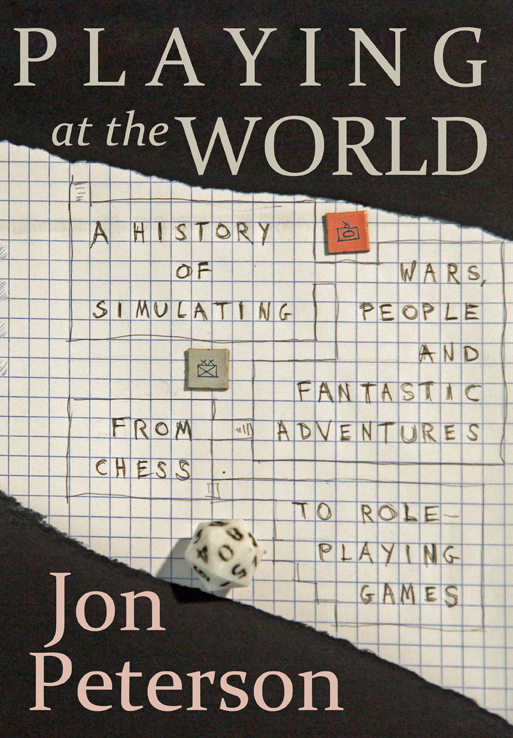
That’s what it feels like digging into Jon Peterson’s Playing at the World: A History of Simulating Wars, People and Fantastic Adventures, from Chess to Role-Playing Games. For any experienced gamer, this is a hoard worthy of any dungeon campaign.

It’s no longer groundbreaking to think of gaming as a topic for academic or cultural studies, but while many books have been written about gaming and gamers, they tend to be focused on a particular aspect of the genre, rather than presenting a comprehensive history. Peterson spent more than five years of archival research and writing creating Playing at the World, the definitive history of gaming and, by far, the most ambitious.

Though originally published in 2012, Peterson’s book has been reissued in honor of D&D’s 40th birthday. Four decades can offer a lot of history, but Peterson goes even further, tracing its lineage back to chess and existing war games.

By Peterson’s own admission, this book isn’t necessarily intended for a mainstream audience. It is a dense, detailed work of history and, if I dare say, sociology. It belongs on the book shelf (or e-reader) of any serious gamer, and though it may not be a front-to-back page-turner, it is an important resource for anyone who geeks out on geeking out.

The book’s most important contribution, though, has yet to be realized. In the decades to come, as gaming and gaming studies grow even bigger, Playing at the World will serve as both source material and historical lockbox upon which the future of gaming is framed and its past is preserved.

Review: The Winter People

The Winter People

Jennifer McMahon

What is it about New England that inspires isolated, small-town horror tales in which the Winter Peopleblood runs as cold as the weather? I’m not sure what it is exactly, but having spent many a wintry a night in Maine, I am familiar with that feeling.

And I can’t get enough of it.

Jennifer McMahon captures that frostbite feeling perfectly in The Winter People, a heartbreaker of haunted legends and legacies, curses and karma, and, more than anything, unendurable loss.

The Winter People has a dual narrative—a modern-day mystery in which a teenager, Ruthie, is forced to take charge of her little sis when their mother goes missing. While searching for her mother, she stumbles upon the diary of Sara Harrison Shea, who lived in the house in 1908.

The diary does not have a happy ending. Both Sara and her daughter died in 1908, but the journal entries suggest that death is not exactly the end of the story.

The Winter People is well-written and bursting with heart. There are mysteries at every turn, and reminders that grief can be deadly. Or worse. In one of the book’s most haunting devices, Ruthie discovers that her mother has nailed shut her closet from the outside. For what purpose? Let your imagination go wild with that one.

The soul of the book, though, is the “sleepers.” Ruthie learns of a spell that will raise the dead for seven days’ duration, after which they are gone forever. It’s a universal temptation. Wouldn’t it be great to say a proper goodbye to a loved one who died suddenly? To hold a lover’s hand just a little longer? To actually say the things we think to say only after it’s too late?

Or would it be a daily torment, watching the minutes and hours crumble to dust?

But there is always a price. Like a modern retelling of “The Monkey’s Paw,” there are consequences for disrupting the dead, and The Winter People reminds that despair can drive even the most sensible among us to dangerous depths.

That’s what makes this novel so endearing. And so heartbreaking.

Review: The Ghost of the Mary Celeste

The Ghost of the Mary Celeste

Valerie Martin’s new novel, The Ghost of the Mary Celeste, is a bit like a star-studded variety show. It’s got a little bit of everything: maritime mystery, historical figures, 06book "The Ghost of the Mary Celeste" by Valerie Martin.supernatural subterfuge and… Sherlock Holmes?

The oddest part about the above description is that this book is more fact than fantasy.

Martin is a prize-winning master of historical fiction (Mary Reilly, Property), and this time around, she takes on the legendary ghost ship Mary Celeste, which was discovered abandoned, though still seaworthy, in 1872, her crew never to be seen again. This true-life mystery caught the attention of Martin, as well as another author (a young Arthur Conan Doyle published a fictionalized account of the ghost ship).

The terror is subtle in this novel. Martin makes use of found documents—journals, diaries, articles—to blend the factual with the fantastic. She meanders through time, takes on the social norms and issues of the day, and makes use of historical record real and imagined. She thrills us, certainly, but unfortunately leaves us with a tangled knot of loose ends.

There is no doubting the quality of the writing. Martin is a master storyteller, and her opening chapter is as harrowing as anything I’ve read this year. She places us in the heart of the Mary Celeste as it sails toward its destiny. Her words, like the storm, encroach, terrorize and ultimately consume, and after finishing the first chapter, I had to set the book aside for a while.

With equal skill, Martin details the lives of those left behind following the tragedy. There is heartbreak, romance and more tragedy on land. Every scene, every line of dialogue, every description is near perfect.

This is, however, a challenging book, not in content but in structure. I’m usually a fan of difficult reads—I take it as a sign of respect when an author, such as Martin, asks more of her readership than passive engagement. The narrative shifts through time, location and point of view. Indeed, there is a clever chronology, as the shipwreck segues to the survivor story segues to Doyle’s voyage segues to spiritualism. However, though they’re all linked by the Mary Celeste, the narratives feel more like vignettes. I found myself invested in each storyline, only to have it pulled out from under me with every new section. Nothing felt complete. As much as the writing drew me in, the shifting narrative pushed me away in equal measure.

This is just one reader’s opinion. Martin’s body of work speaks for itself. She is a gifted writer and storyteller, an astute chronicler of history with a great imagination. To any reader looking for a challenge, I say go for it. Get yourself a copy and enjoy the ride. For me, though, the novel is a bit like the Mary Celeste—seaworthy, but somehow I got lost along the way.

Final Thoughts, 2013

It’s a new year, and as much as we’re looking forward to the 2014 reading list, we have some 2013 shelf clearing left to do. Here is a round-up of books we enjoyed, but were so busy reading we didn’t have time to review.

The Undeserving Poor: America’s Enduring Confrontation with Poverty: Fully Updated and Revised

Michael B. Katz

It’s been a quarter-century since the first edition of this book was published. Some Undeserving Poorthings have changed drastically: The first edition came out at the height of the Reagan-Bush era, whereas the new edition comes on the heels of major Democratic victories in 2012.

But some things haven’t changed: The cultural obsession of equating financial poverty with moral bankruptcy.

Katz does a wonderful job of exploring the evolution of blame-the-poor politics and the invention (and ongoing reinvention) of the underclass. It’s a slippery and interesting social history, and it brings to mind Foucault’s histories of mental illness and prisons.

One of the interesting takeaways for me is the human need to compartmentalize. There is a line drawn between the deserving and the undeserving poor. Women and children tend to occupy the first category, while men almost universally fall into the latter. Politically and culturally speaking, the line drawn between the two groups is solid and severe, with those on one side garnerng support and sympathy and the others disdain and even punishment.

The trouble is that the line, in reality rather than construct, is blurry.

America’s schizophrenic attitude toward poverty shouldn’t be surprising. It’s a country that went from agriculture to industry to technology, where the Roaring ’20s gave way to the Great Depression, which segued into an unprecedented era of prosperity. Where LBJ waged a failed War on Poverty, and his successors waged a failed War on Drugs, which has ultimately amounted to a war on the impoverished.

This is an excellent read for anyone with an interest in economics, politics or social history. It may not resolve any legislative debates, but it will lend the reader more thoughtful consideration of the topic.

Dark Visions: A Collection of Modern Horror

Edited by Anthony Rivera and Sharon Lawson

I have a longstanding love affair with the small horror press. They’re like neighborhood Dark Visionsbookstores: Some last, the majority fail (ultimately), but most of them are amazing while they last. And like that corner bookstore, they each have their own personality, though ostensibly they are all dealing in similar content.

Enter the first installment of Dark Visions from Grey Matter Press.

They certainly know how to plunge into the darkness: the anthology series begins with an original story from Jonathan Maberry—yes, that Jonathan Maberry. Best of all, his contribution, “Mister Pockets,” takes us back to a place I know and love so well: Pine Deep.

For those unfamiliar, Pine Deep is the small town in rural Pennsylvania that was the setting for Maberry’s first three novels, including Bad Moon Rising, the bad-ass conclusion to the trilogy that any horror fan should begin reading immediately. This is a place that knows how to celebrate Halloween—and there is plenty to be afraid of here. I loved this world that Maberry created, and I was ecstatic to return.

Like all anthologies, there is a little something for everybody, and not every story will be your cup of tea. The important thing is that the quality level is high and consistent throughout, and Dark Visions is certainly a cut above your average anthology.

There is one story in particular that I would like to single out, “The Weight of Paradise” by Jeff Hemenway. This is easily the best new horror story I read this year, and perhaps of even the past few years. It is thoroughly original, dark and morally complicated, the hallmark of great horror fiction. Unless the voting is rigged, this story should win many awards and be anthologized for years to come.

There are plenty of other dark delights as well, and I’m excited for the second installment, scheduled for a summer release.

The Best Specimen of a Tyrant: The Amitious Dr. Abraham von Norstrand and the Wisconsin Insane Hospital

Thomas Doherty

Aside from having similar names, nobody will mistake this Civil War doctor for beloved Best Specimen of a Tyranttelevision dermatologist Martin van Nostrand (though his Seinfeld portrayer, Michael Richards, like the original Dr. von Norstrand, later achieved a certain level of infamy loosely related to the war between the states).

This doctor, deftly brought to life by Thomas Doherty, left behind a trail of failed business and medical practices before his appointment to superintendent of the Wisconsin Insane Hospital. What distinguishes this book from the many institutional narratives (both fictional and real) is that we get a rounded view of hospital administration. Typically, the overseers of institutions are lampooned as either sadistic villains, naïve do-gooders or bungling bureaucrats.

The reality of institutions, and their employees and residents, is much more complicated than that.

For starters, you’re working with a unique population with difficult problems—otherwise your clients wouldn’t have been institutionalized in the first place. Also consider the varying talents between workers, as well as experience, burnout, and the daily stressors of the workplace.

Want to describe a day in the life of a health care worker? Spend an overnight shift in an ER or a detox and write down your observations. Then do that almost every night for five years and go back and review your initial impressions and see how they compare with your current view.

That’s why The Best Specimen of a Tyrant shines. Von Norstrand casts a thorny shadow, and he has the complexity of Greek tragedy. This is a book for anyone with an interest in the checkered and infinitely fascinating history of mental health care.

Hell Gate

Elizabeth Massie 

In my MFA program, I was often teased for setting a majority of my stories within an Hell Gate - Elizabeth Massieamusement park or carnival of some kind. What can I say? I’m a fan of works that intersect the routine reality of the everyday with the manufactured reality of the spectacle (see Something Wicked This Way Comes, Rides of the Midway, CivilWarLand in Bad Decline, etc.).

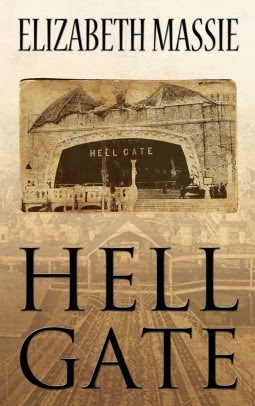
Therefore, Hell Gate combines some of my favorite themes. The story’s centerpiece is the friendship between a psychic and an orphan against the backdrop a series of grisly Coney Island murders. This will appeal to fans of historical thrillers and anyone who’s ever snuck backstage at the circus.

Review: About Three Bricks Shy of a Load

About Three Bricks Shy of a Load

Roy Blount Jr.

Many have described football as an encapsulation of America itself (see Sal OPEN ROAD INTEGRATED MEDIA BOOK COVERPaolantonio’s How Football Explains America), and I’m inclined to agree. Of course there’s a time lag, since Europeans arrived on this continent four centuries before the birth of American football.

For historical synchronicity, let’s say the 19th-century invention of the sport parallels the arrival at Plymouth Rock; the 1920 formation of the National Football League (then known as the American Professional Football Association) was the Continental Congress; and the years leading up to and including the early Super Bowls was the Wild West. Since then, football has enjoyed the popularity and profit of post-WWII America.

The bridge between the NFL’s lawless pre-history and current glory days is the 1970s, when the organized mayhem of the sport electrified color televisions across the nation. It was the decade dominated by the Pittsburgh Steelers.

In 1973, author Roy Blount Jr., whom many will know as a regular panelist on National Public Radio’s Wait Wait… Don’t Tell Me!, spent the season with the Steelers at a crucial moment—months after the Immaculate Reception and a year before their first Super Bowl victory.

The result was the gonzo-style About Three Bricks Shy of a Load, which has been re-released in honor of the book’s fortieth anniversary.

I have a personal interest in this book: I was born in western Pennsylvania in 1972, and you bet your ass I bleed black and gold. Possessing that strain of superstition unique to sports, I don’t think it’s a coincidence that the Steelers won a grand total of 0 postseason games prior to my birth and since then have been the winningest team in football.

As a youth, I idolized the ’70s Steelers, but didn’t yet have the sophistication (or skepticism) to consider the lives of the men behind the facemasks. It was with great interest, then, that I read About Three Bricks Shy of a Load to learn more about the incubation of a dynasty. What sets this apart from similar books (such as Their Life’s Work and Steel Dynasty) is that it captures the highs and lows of the 1973 season without the sentimentality of age or the foreknowledge of future championships.

However, this isn’t a yearbook. This is an in-the-trenches account of the players and personalities that epitomized professional football of that era—a time before the NFL became PG rated. Blount’s embedded reporting is remarkable, from the openness of alcohol, drugs and sex to the lingering racial and culture divides of the 1960s. I’ve learned more about the team I idolized in this one book than I did growing up an hour from Three Rivers Stadium.

However, this is still a book of general interest. Although its emphasis is on one team, it is a pivotal bit of prehistory to the NFL’s dominance. A raw, unfiltered look at a free-wheeling sports league before it became a tight-lipped, humorless corporation.

Of course, there are shadows that loom over this narrative. Just as nobody in 1973 could have foreseen the success of the Steelers and the NFL, also unknown was the physical toll of steroids and repeated blows to the head. The significance of this book will likely increase with age, especially as the NFL finds itself at a crossroads—its popularity has never been greater, but lawsuits, science and dropping youth enrollment portent a shaky future.

History is always a work in progress, and the definitive narrative of the NFL has yet to be written. But when it is, About Three Bricks Shy of a Load will be a document of a special time in a special place, the story of a team on the cusp of greatness falling just shy of its goal.

Review: Newton’s Football

Newton’s Football: The Science Behind America’s Game

Allen St. John and Ainissa G. Ramirez

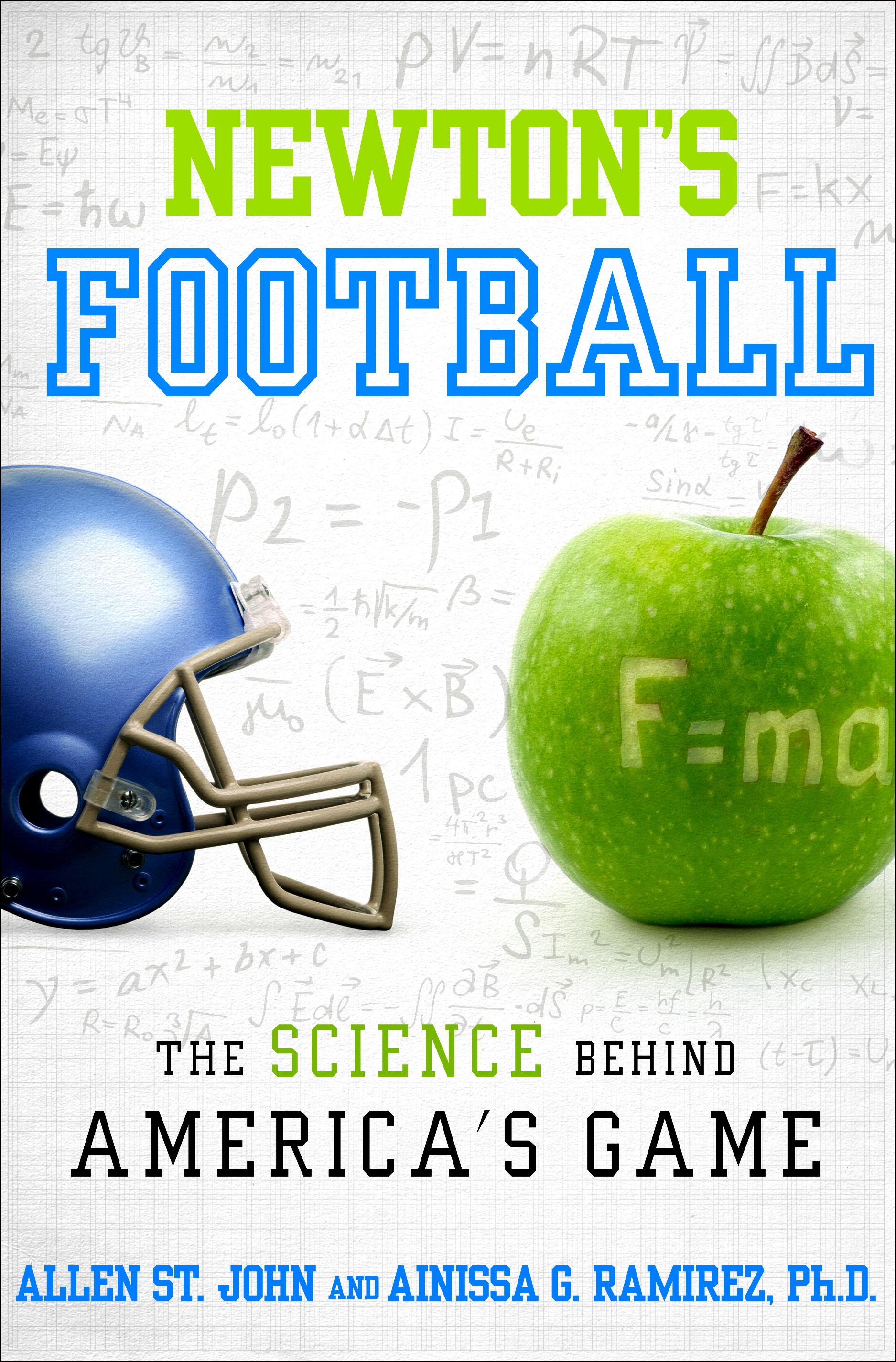
Here’s a book combining two of my favorite things: science writing and football. Turns Newtons Footballout they go together as naturally (and tastily) as Dorito’s and M&Ms, and like that classic combo, I binged on it until it was all gone. The authors write with passion and knowledge, and in every chapter there was something I didn’t know, either about science or the sport I love.

It begins, fittingly, with an interview with Stephen Wolfram (the theoretical physicist and author of A New Kind of Science), who explains the role chaos theory plays in your team’s game plan. I had always considered the 12th man to be the home crowd, but it turns out to be initial conditions. “Change the initial conditions and the outcomes diverge exponentially,” Wolfram says, leading the authors to extrapolate that “The no-huddle offense was chaos theory at work.”

My new dream is to hear Chris Berman reference initial conditions during a highlight reel.

The ball itself has an interesting history—and a physics all its own. There is no such thing as a tight spiral, for example, since the pigskin (which isn’t really pigskin) requires gyroscopic torque to remain in flight. Knowing that, you might just feel empathy rather than outrage the next time your quarterback lofts a lame duck over the middle.

This book transforms the gridiron into a laboratory. And much like those “Eureka” moments in the lab, serendipity and circumstance had a hand in the game’s innovation, such as the introduction of the West Coast offense and the soccer-style kick. St. John and Ainissa also prove that not all penalties are created equal: The more important stat is not penalty yardage but the breakdown between offensive and defensive infractions.

There is a serious side to Newton’s Football as well. While advances in neuroscience have revealed the extent of football’s brutality, many are wondering if football will exist in another 25 years—and if so, will it be recognizable to today’s fans. The authors explore the current concussion research and uncover some possible solutions.

Along the way, the authors revisit some of the game’s most famous plays and players, and combine physics and football with narrative journalism in one of the easiest and most interesting reads I’ve encountered all year (and that’s no small amount of books). Definitely in my top 10.

Newton’s Football is a must-have for fans of football and/or science. Not everyone is a fan of both, which is all the better because this book offers a chance to expand one’s horizons.

By the final page it will have armchair quarterbacks running statistical analysis and lab rats rubbing elbows at the sports bar. Does it get more interesting than that?

Review: Buddhist Biology

Buddhist Biology

David P. Barash

Forgive me a nostalgia trip to 1994, when alt-jazz rockers Soul Coughing released their Buddhist Biologydebut album Ruby Vroom. The lead track was “Is Chicago, Is Not Chicago,” a hypnotic, oddly existential number allegedly inspired by a bad acid trip in which singer Mike Doughty must distinguish between himself and his surroundings.

It made for a great song, but any biologist will tell you it doesn’t hold up to modern science. Or, for that matter, not-so-modern philosophy.

But Doughty was working toward something significant in that trippy little tune: Where does the “I” end and the “everything else” begin?

It may very well be at the intersection of science and spirituality, according to scientist and self-described Buddhist atheist David P. Barash, author of the brilliant Buddhist Biology.

He admits at the beginning that his goal is an ambitious one: to locate common ground where science and spirituality may coexist. Whereas the Abrahamic religions have long been at odds with science, he argues that Buddhist thought is compatible with high school textbooks.

“Why? Because among the key aspects of Buddhism, we find insistence that knowledge must be gained through personal experience rather than reliance on the authority of sacred texts or the teachings of avowed masters, because its orientation is empirical rather than theoretical, and because it rejects any conception of absolutes.” (18)

That is to say, it allows for the scientific method.

Barash eloquently connects the principles of anatman (not-self), anitya (impermanence) and pratityasamputpada (interdependence) to current biological knowledge. Science has shattered the duality of the actor and the environment, and in doing so has validated thousands of years of Buddhist philosophy.

I am particularly interested in anitya, which leads us into discussions regarding the illusion of time and motion. In considering life as a sequence of moments, Barash distinguishes between the experiencing self and the remembering self (which is similar to Sartre’s Pre-Reflective Cogito, but don’t get me started on my boy Jean-Paul).

The main idea is that each moment is unique and temporary. Nothing lasts, except for in memory, through which we develop a narrative and impose continuity.

Now, I’ll leave the scientific explanations to Barash, as I’m not very qualified to give a proper breakdown, and only slightly more so to discuss eastern philosophy. What I am qualified to provide, though , is a recommendation of Buddhist Biology. Barash takes difficult concepts and presents them in a thoroughly readable and enjoyable narrative. You’ll learn new things, brush up on your philosophy and find it difficult to close this book.

You’ll come away with the realization that there is no distinction between Chicago and Not Chicago, Is and Is Not. There is only this moment.

Or more simply put, There Is.