books

Review: The Penguin Book of Witches

The Penguin Book of Witches

Katherine Howe, editor

It’s fitting that Penguin is releasing its annotated Book of Witches in time for Halloween—and not just because of the seasonal correlation of Wicca and the feast of Samhain. The history of the witch is long and complicated. The difficulty of distilling thousands of years of witchery into a single volume is perhaps best illustrated by considering the variety of Halloween Penguin Book of Witchescostumes celebrating the witch.

A cursory search of costume shops gives you such options as sexy witch, crone witch, neon witch or glitter/sparkle/glamor witch. Would you like a traditional black dress with a broom, or something made of lace? You could be a witch from Oz or Salem, Sabrina or American Horror Story.

And would you like a cat with that? Or perhaps a toad or flying monkey?

Oh, you can even dress up your dog as a witch, if you feel like it. Whatever. You go do you.

Point is, the witch is not a singular entity: it’s a character that has assumed many forms in film, folklore and the imagination, be it funny or frightening, sexy or silly, from the East Coast (good) or the West (wicked). In her introduction, author and academic Katherine Howe gives as good a definition as I’ve ever read:

“Witchcraft is less a set of defined practices than a representation of the oppositional, as the intentional thwarting of the machinery of power, whether that power lies with the church, with the king, or with the dominant cultural group” [xii].

Indeed, the bookshelf of my youth was loaded with books on the topic: fiction anthologies devoted to the witch; sensational Satanic Panic potboilers; historical and sociological treatises; feminist takes; and cumbersome source material such as the Malleus Malificarum and The History of Witchcraft and Demonology.

I wish this book would have been around back then. Howe does a great job of sampling the primary sources to create a palatable, yet thorough history. She begins with references to witchcraft in the Bible and guides us, inevitably, to Massachusetts Bay.

The meat of The Penguin Book of Witches are the trial transcripts and testimonies from that dark period of 1692-93. While the prose doesn’t exactly leap off the page here, the importance of these documents, and the clarity of Howe’s introductions, is worth enduring a bit of the old English.

That the Salem Witch Trials remain a relevant cultural reference more than 300 years later speaks to their importance. It remains one of our country’s greatest shames, and its memory serves as a reminder of how far we’ve come and a warning about how low we may sink.

Sadly, no matter how much humanity progresses, the same dark drive that fueled the colonial witch craze still smolders within us. The 20th century alone gave America two Red Scares, internment camps, the West Memphis Three, the Satanic Panic, the War on Drugs and all manner of smaller scale oppression, discrimination and fear-mongering.

The post-9/11 world has given us Guantanamo Bay, George Zimmerman and a Red State/Blue State schism.

Fittingly, Howe offers a word of caution as she segues into the closing section, “After Salem”: “While no witch trial in North America—or Europe, for that matter—would ever again approach the magnitude and fatality of the Salem episode, witch belief did not disappear. It merely changed form” [193].

This line, for me, is the ultimate takeaway from this book. Witches, as portrayed by Halloween costumes, are creatures of the imagination, folklore and literature. But by any name, the women who were burned, stoned and hanged were victims—not of demonic possession or supernatural forces, but of the all-too-human folly of superstition, prejudice and mob mentality.

The same goes for all victims of a witch craze. The importance of studying the witchhunts of the past is that they are difficult to recognize while they are happening. They occur under the insidious guise of patriotism, decency and traditional values. The label “witchhunt” is only applied in the aftermath.

By reading the transcripts of the trials and examinations, and the post-Salem mea culpas, we can hopefully prevent or at least minimize oppression in our time and in the ages to come.

Howe’s collection is a great place to start.
September Shorts: Nonfiction

September. The sunset comes earlier than the day before. That much-agonized-over summer reading list is about to expire, and how far did you get? How many books did you unofficially add?

Book lovers are an ambitious lot. If I never bought another book, I could probably read for a decade with the books I already have but haven’t read yet. Yet, you’ll still find me at the local bookstores, thrift shops and library fairs stocking up for the nuclear fallout that is the ultimate bibliophile fantasy (a la The Twilight Zone, sans the cruel ending, of course).

We’ll never get to all the books we want to read in a lifetime, let alone a summer, so here are some wonderful summer reads that you may have missed.

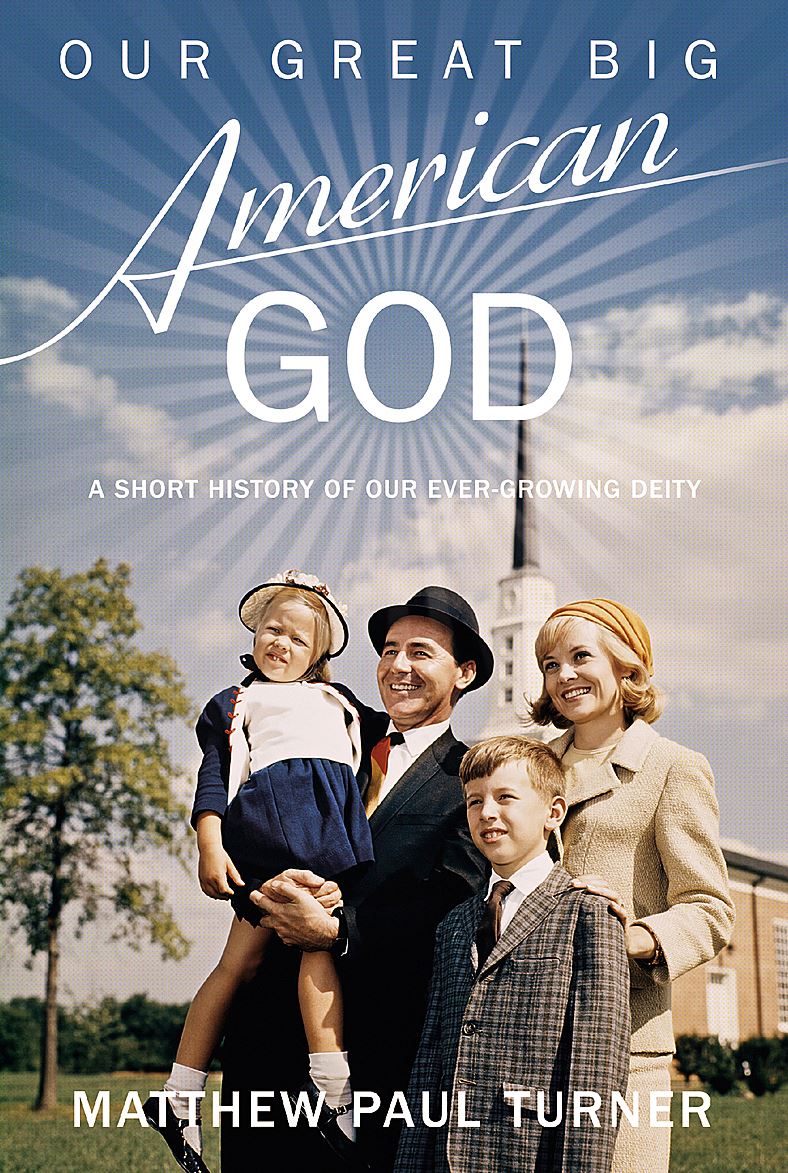
Our Great Big American God: A Short History of Our Ever-Growing Deity

Matthew Paul Turner

America has a complicated history with God. The Puritans, though devout religious misfits in England, laid the American Godfoundation for the most successful secular democracy in the world. The paradox continues to play out through international politics. To Europe, we are considered zealots. To the Middle East, we are either godless heathens or Zionists.

Even within America, it’s complicated. Are we one nation or one nation “under God”? Depends on whom you ask and, perhaps more telling, in which state you pose the question.

Turner’s book begins with a similarly difficult question: “Where would God be without America?”

Well, he probably wouldn’t be as much fun, for starters. Beginning in the early 1800s, Turner writes, the modest ways of the Puritans gave way to rowdy revivals, complete with hops, flips, shakes and mysterious catatonic states followed by fits of frenetic celebration:

“Could the God who was causing people to get down on all fours or lie slain in the spirit really be the same God who led the Puritans across the Atlantic from England to Boston?”

Turner traces the legacy of America’s god, from the earliest settlers through Ronald Reagan and Sarah Palin, exploring the ways in which biblical interpretation got tangled up with political and economic unrest and swelling nationalism.

It’s a fascinating look at the past and future of the deity that America supersized and spread across the globe.

Factory Man: How One Furniture Maker Battled Offshoring, Stayed Local—and Helped Save an American Town

Beth Macy

A Taiwanese businessman once told John D. Basset III that when his country was on top “don’t expect us to be dumb Factory Manenough to do for you what you’ve been dumb enough to do for us.” Americans, he said, would do anything for a bargain.

This fact fueled the offshoring of furniture making to Asia. The result was cheap foreign labor and cheaper products. In exchange, American factory towns were devastated as companies took their plants and their jobs overseas.

Basset, however, showed the eastern businessmen another side of Americans—they would do anything for what’s right, even at the cost of a bargain.

Basset waged a war against offshore vultures and even his own family. He was not necessarily a likable man, but his defense of his factory town is heroic and brilliantly recounted by journalist Beth Macy. One of the best reads of the summer.

All Due Respect Issue 4

Check out the new issue of the crime fiction magazine, All Due Respect, which features a nonfiction piece by yours trADR _4 V3uly. My article is a review of Joe R. Lansdale’s Cold in July, which was released earlier this year in conjunction with the film release. If you haven’t read the book or seen the movie, I highly recommend both.

The issue also includes a powerhouse lineup of crime fiction, including award-winning author Hilary Davidson. Last year, I reviewed her excellent novel, Evil in All Its Disguises, and fans of that novel (and new readers) will enjoy her short story, “A Hopeless Case.”

D&D 5.0

Dungeons & Dragons Player’s Handbook

I’ve long professed my love of D&D at Ensuing Chapters, and it’s been a hell of a summer for gamers. Wizards of the Coast, the game’s publisher, is releasing the 5th edition of the table-top role-playing game—and they’re spreading the love around.

The Basic Rules and Starter Set were released in July, and this week, Wizards published the Player’s Handbook. The fan favorite Monster Manual will hit shelves in September, and the essential Dungeon Master’s Guide will follow in November.

In honor of the new edition, here is a collection of our articles about D&D, from Ensuing Chapters and beyond. Enjoy.

Book Review: Of Dice and Men

D&D is a cultural phenomenon that has lasted decades, survived the sophistication of video games and artificial intelligence, rival RPGs and even the Satanic Panic. It’s goneDice and Men from nerd pastime to geek chic to sociological interest, and now its history has been documented in the wonderful Of Dice and Men: The Story of Dungeons & Dragons and the People Who Play It, a nostalgic romp through the author’s (and my) childhood.

Ewalt, a senior editor at Forbes and self-described “writer, gamer, geek,” has done a great service to anyone who, with sweaty palms, has had to make a campaign-defining saving throw (or at least knows what that means). His smooth writing style and flair for narrative pacing makes the story of this greatest of games one of general interest, even if you’ve never tossed the 20-sided die. Read full article

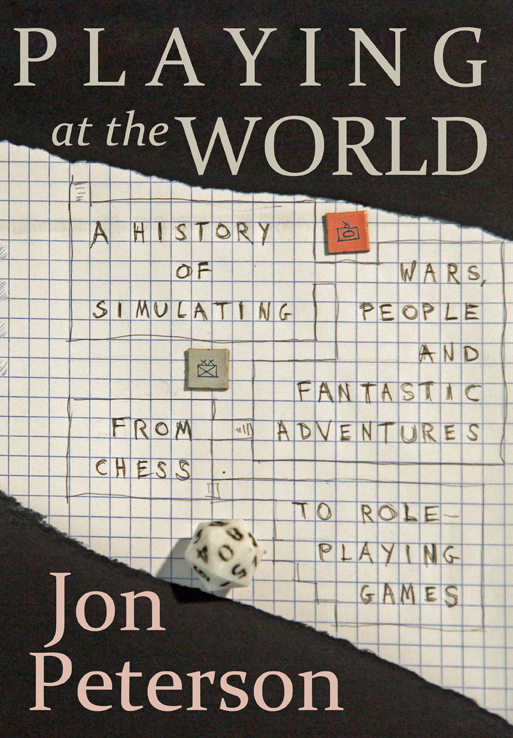
Book Review: Playing at the World

Remember the first time you crawled a dungeon, slayed the dragon and stuffed as playing_worldmuch treasure as you could into your “bag of holding”? Felt good, right? But the true prize wasn’t the booty. Sure, I enjoyed counting the gold and platinum coins, drooling over the prospects of upgraded armor, a magic-enhanced broad sword and whatever mischief I could scare up with a few copper pieces at the local tavern.

But what intrigued me most were the tattered spell scrolls, mysterious tomes and the secrets of the ancients.

It shouldn’t be much of a surprise. A rabid imagination is the primary tool that all fans of role-playing games bring to the table, and a trove of yellowed parchment and faded maps makes us froth at the mouth. Just how powerful is that fireball incantation? What wisdom could be discovered in that old paladin’s codex?

That’s what it feels like digging into Jon Peterson’s Playing at the World: A History of Simulating Wars, People and Fantastic Adventures, from Chess to Role-Playing Games. For any experienced gamer, this is a hoard worthy of any dungeon campaign. Read full article

Boulder Camera:

Game On: Dungeons & Dragons 4th Edition Releases on Worldwide D&D Game Day

Those outside the gaming world may have missed the news that Dungeons & Dragons—the legendary fantasy role-playing game in which players assume the roles of paladins and wizards and battle mythic creatures with a set of polyhedral dice—released the fourth edition of its series on June 6.
 
The new edition consists of three rulebooks—the Player’s Handbook, Dungeon Master’s Guide and Monster Manual—which can be purchased separately (entry-level players simply need the Player’s Handbook to get started) or packaged together as the Core Rulebook Collection. The rule changes in the new edition are designed to add more action to the game play and make it more accessible to entry-level players.
 
In honor of the release, Saturday was declared Worldwide D&D Game Day, and scores of locals celebrated at Boulder’s Karliquin’s Game Knight and Time Warp Comics. Both stores hosted in-store games to commemorate the release. Read full article
 

Boulder Weekly:

Mr. Baker’s Neighorhood: The Mastermind Behind the New World of Dungeons & Dragons gives an insider’s tour of Ebberron

Keith Baker’s Boulder home is a fantasy geek’s paradise. An oversized bookshelf serves as an archive of role-playing game (RPG) modules, player’s handbooks and monster manuals. Posters of fantasy artwork grace the walls. Intricately designed miniatures of majestic dragons, mythical creatures and timeless warriors stand guard over counter space. Two broadswords hang over a mantle, and if you ask nicely Baker will give you a lesson in swordplay. After all, prior to becoming a novelist and game designer, he studied fencing and worked at Renaissance fairs.

If you knew Baker as a child, you probably wouldn’t be surprised.

“Instead of playing Cowboys and Indians, I ran around with friends playing Egyptian and Norse gods,” he says.

After showing an early interest in mythology, fantasy, the horror/sci-fi fiction of H.P. Lovecraft and the eerie artwork of Edward Gorey, it was no surprise that in 4th grade Baker became interested in a game called Dungeons & Dragons. Read full article

A Darker Shade of Summer (Nonfiction)

A round-up of true-life horrors to darken you summer.


The Story of Pain: From Prayer to Painkillers

Joanna BourkeThe Story of Pain

(June 26)

In what is  surely one of the most interesting books of the summer, Joanna Bourke, a history professor at Birkbeck, University of London and a Fellow of the British Academy, explores the history of pain—how we describe it, how we think about it, and how we deal with it.

Bourke writes that we’ve spent far more time documenting pain alleviation rather than exploring pain itself, and her detailed survey, focusing on the past three centuries, will surprise and inform all readers.

One would think that pain hasn’t changed much over time—pain is pain, after all—but while migraine accounts have remained similar, our relationship to suffering, and sufferers, has changed in dramatic ways. Once thought of as a supernatural punishment or an opportunity for personal growth, pain is now considered an external evil, an inconvenience, something to be eradicated rather than embraced.

Most striking, for me, is the chapter on estrangement. Pain isolates the afflicted, but remarkably, it’s the person in pain who does the distancing. Be it the stigma of sickness, the desire to insulate loved one’s from their suffering, or simply not to be thought of as a whiner, the sufferer tends to keep their agony to themselves.

And as anyone in the throes of a migraine can attest, communication isn’t a vacation. Bourke writes: “As well as isolating people-in-pain from their families and friends, physical discomfort works against human exchange by blunting the higher senses and intellect” (46).

Paradoxically, pain narratives also create and strengthen communities, such as support groups that arise around particular afflictions.

Bourke is no stranger to uncomfortable topics. Her other works include Fear: A Cultural History; Rape: Sex, Violence, History and Dismembering the Male: Men’s Bodies, Britain and the Great War.

Utilizing a variety of sources—old medical books, doctor’s notes, poetry, anecdotes, letters and others—Bourke compiles a well-rounded account of suffering, accessible to academics and casual readers alike.

Reading The Story of Pain is a bit like enjoying a sad song on a sunny day. This intellectual read might not alleviate that next migraine any better than “Every Rose Has Its Thorn” can dampen the sting of heartbreak, but it’s interesting to contemplate from an academic distance.

Chinese Comfort Women

Peipei Qiu

with Su Zhiliang and Chen LifeiComfort Women

(June 2)

Being obsessed with all things Japanese, it’s difficult to imagine the atrocities committed by Imperial Japan. But the horrors of Dai Nippon Teikoku (which officially ended in 1947, two years after Japan surrendered to the Allies at the end of World War II) still resonate for the victims.

Among them are the “comfort women”—young girls from occupied countries, such as China and Korea, who were forced and coerced into prostitution, enslaved at military brothels.

In Chinese Comfort Women, Peipei Qiu, along with two China-based scholars, provides the oral history of a dozen survivors. It’s a dark, important narrative, an old wound that still stings, a reminder of the darkest hour of the 20th century.

In another generation, there will be no more survivors of WWII, and Qiu, Zhiliang and Lifei have done a great service by recording the personal narratives of these women while they’re still with us.


Coming Soon

Modern Conspiracies: The Importance of Being ParanoidModern Conspiracy

Emma A. Jane and Chris Fleming

(Release date: Aug. 28)

Here is a book certain to lend credence to the quip: Just because I’m paranoid, that doesn’t mean they’re not out to get me. This academic book, authored by two Australian professors, reconsiders conspiracies—and their theorists—not as part of the lunatic fringe, but as a window to our relationship with the truth.

A Darker Shade of Summer (Fiction)

A round-up of ghost stories, thrillers and dystopian anthologies to darken you summer. (Come back tomorrow for our nonfiction edition.)

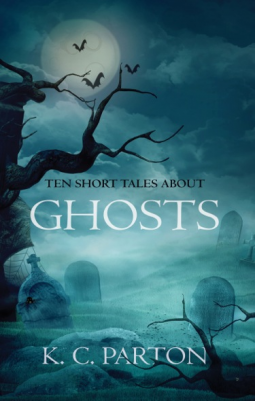
Ten Short Tales About Ghosts

K.C. Parton10 Short Tales About Ghosts

(Released June 28)

Typically, the hallmark of a great ghost story is that it unsettles the reader. When reading K.C. Parton’s collection of English ghost stories, however, one is filled not with dread, but comfort. These 10 tales are reminiscent of the kind my father would tell me over campfires—and those, of course, will always be my favorites.

Parton’s stories have that same appeal. These are not tales of terror, but subtle chillers made all the more spooky for their familiarity. Stories that make you think twice before cutting through the graveyard, not to avoid falling prey to a Saw-like killer, but for that abstract fear that tickles as much as it terrifies.

In “The Last Train,” a modest theater-goer arrives late to the station, but by good fortune, his train is waiting for him. Once aboard, he realizes his destination is somewhere other than home. Likewise, a young factory apprentice stumbles upon a shop-floor oddity in “The Cleaner”—and realizes that what he first thought to be a hoax or a hazing is in fact a haunting.

Perhaps the stand-out tale of this collection is “The Heinkel,” a WWII yarn about a young boy fascinated with a downed German plane.

A big draw for me is that most of the stories have an industrial setting. Growing up in the Rust Belt, I was exposed to the real-life horror of the steel mills (such as my dad’s coworker losing an arm in the blast furnace) and the spooky kind (my grandfather’s otherworldly encounters at the Westinghouse plant).

When it was my turn to work the factories, I found much ghostly inspiration in the rusted machinery, secluded warehouses and the imaginative possibilities of the graveyard shift. Parton’s stories fit that mold, which shouldn’t be surprising, as he came of age in England’s post-war factories. (His first book, Tales from the Toolbox, recounts his industrial experiences.)

My one critique is that there’s not a lot of mystery to these stories. Characters who believe they are having ghostly encounters truly are, and the nature and cause of the hauntings are typically self-evident. But that’s OK. These stories work not through terror or misdirection, but by tapping into that primal need for campfire tales—the kind that give goosebumps, sure, but leave you smiling in the end.

Ominous Realities

Eds. Anthony Rivera and Sharon LawsonOminous Realities

Once again, Grey Matter Press has delivered the anthology goods. Ominous Realities is the finest indie collection I’ve read in a while. These dystopian tales chill and unsettle, balancing skill, imagination and smarts.

Take “On the Threshold,” an eerie, Lovecraftian tale of science and madness from William Meikle. Last year, I read Meikle’s novel The Hole, and thought it was enjoyable but flawed. Here, Meikle is in control from the creepy opener in the lab to the grim finale. HPL would love this tale of science gone wrong.

Keeping up the intensity is “Doyoshota,” by Ken Altabef, a haunting intersection of conspiracy and cacophony that makes tinnitus sound like a Beethoven sonata.

Eric Del Carlo’s “We Are Hale, We Are Whole” is deserving of any “best-of” anthology, a smart, thoughtful piece of writing that should be a must-read for anyone attempting to world-build within the confines of a short story. It also takes a philosophical bent about quality of life, aging, health care and sacrifice.

An excellent collection from a hot new publisher. Also be sure to check out their Dark Visions II anthology.

Coming Soon

Mean Streak

Sandra BrownMean Streak

(Release date: Aug. 19)

Mean Streak has all the makings of a classic Sandra Brown thriller: abduction, deception, moral complexity and a revelatory rabbit-hole twist. In her new novel, Dr. Emory Charbonneau disappears, and her husband is the primary suspect. Part crime novel, Mean Streak is also a survival narrative, as Emory awakes in the hands of a violent captor who may be hiding his true identity. I haven’t read this yet, but it sounds reminiscent of Standoff, which was one of her best works.


The Black RoadThe Black Road

Tania Carver

(Release date: Aug. 15)

While the plot may be a little, well, plausibility challenged, advance press offers Mo Hayder levels of gore and depravity (aka horrific awesomeness). Following a mysterious explosion, criminologist Marina Esposito’s husband is in a coma and her young daughter is missing. The abductor forces  Marina to complete a series of depraved tasks in the course of three days or her daughter dies. So, yeah, it may be plot-challenged, but if you’re looking to spice up your summer with some gore, The Black Road just may be a detour worth taking.

Review: Happy Clouds, Happy Trees: The Bob Ross Phenomenon

One of my favorite songs has a line that goes, “Tell the kids to keep on coloring outside the lines/ Until they lose their limitations and their minds are free/… And tell Bob Ross thanks for all the happy little trees.”Happy Cloud, Happy Trees

The song is “To Bob Ross, with Love,” by Gym Class Heroes, and they crush it on more levels than I have blog space to discuss. So I’ll give you the bullet points.

  • It’s a great song, regardless of the theme
  • It’s a song that encourages creativity, imagination and pursuing your dreams
  • I’m a sucker for songs like that
  • I love Bob Ross and always watched his show growing up (and still do whenever I can)
  • I hope to one day have a pocket squirrel, like Pea Pod, who helps me paint
  • I totally dig those ASMR channels on YouTube (which I trace back to Bob Ross)
  • I’m one of those kids who was encouraged to color outside the lines

I didn’t have coloring books growing up. I had blank sketch pads. My parents didn’t want to impose on me the pressure of conformity and a color-by-numbers world. When I wanted to create, I was given a blank sheet. It’s served me well.

To use another quote from “To Bob Ross, with Love”: “My mama made me this way/ I thank her every day.”

Preach it.

So I admit there was trepidation when I started reading Happy Clouds, Happy Trees: The Bob Ross Phenomenon. It’s an academic book, from the University Press of Mississippi, penned by Kristin G. Congdon and Doug Blandy, and illustrated by Danny Coeyman. I feared that an academic treatment would reduce those joyful half-hours of public television bliss to a post-structuralist treatise. Thankfully, that is not the case.

The focus of Happy Clouds, Happy Trees is the phenomenon of the painter and the cult-like nature of his fans, which is incredibly fascinating.

Ross is all the more mysterious for the minimal amount of unauthorized or paratextual materials surrounding him. Mostly, what we know of Bob Ross comes from his program. We don’t have a cache of letters, no scandalous videotapes and, most significantly, no family interests looking to exploit the painter, who died in 1995, for a fast buck.

That’s good and bad. The good is that those of us who grew up watching Ross still know him only by his on-screen persona, not his off-camera flaws. By comparison, the premieres of The Joy of Painting and Michael Jackson’s Thriller came a mere 42 days apart.

It’s still possible to watch The Joy of Painting without feeling dirty.

The mystique of the painter’s life has fueled his cultish (in the best sense of that word) following, and the authors do a wonderful job of exploring the Bob Ross phenomenon and its devotees.

One of the most fascinating narratives in the book is the trinity of Ross, Andy Warhol and Thomas Kinkade. While Ross and Kinkade are sometimes paired in the collective consciousness (due to their being the only two contemporary painters many Americans know by name), they could not be more different. While Ross did his show for free (his income came from art instruction and supplies), Kinkade never met a check he didn’t cash. Ross idealized the wild outdoors, while Kinkade idealized property and domestication. Ross never sold his artwork, while Kinkade established a corporation, chain stores and a subdivision modeled after his paintings.

Perhaps the most significant difference is that Kinkade automated the process, mass producing prints with a few dabs of paint (done by other artists and, occasionally, Kinkade himself). Ross was all about the process. It wasn’t The Profits of Painting, it was The Joy of Painting. We don’t collect Ross, we connect with Ross. The focus is the act of creation, not its end product.

The authors argue, rather convincingly, that we should instead be comparing Ross with Warhol. The two make an odd couple at first, but by book’s end, the connection is apparent. Both defied the norms of fine art and gallery culture (though they were received very differently by that world), and both had a working-class ethic to their craft.

I doubt that MoMA will be racing to organize a Ross retrospective anytime soon, despite the well-composed arguments of Happy Clouds, Happy Trees.

Ultimately, as the authors write, it doesn’t matter. The Bob Ross Phenomenon has nothing to do with fickle gallery predilections or snooty art criticism.

It’s all about the man, our connection to him and that ineffable thrill of creation. Bob had a word for it.

He called it joy.

Review: Justice, Inc.

In the introduction to his short story collection, Justice, Inc., Dale Bridges prepares us for the satirical rapture he is about to unleash: God, discouraged by his failed attempts to killjustice-inc-cover off the human race, comes to the realization that “…when left to their own devices, they appeared to do a fair job of exterminating themselves.”

And thus the chain catches on the death-coaster, drags it to the summit and lets that fucker drop.

Hang on.

These are masterful tales of human obsolescence, cruel absurdities and species self-deliverance. Albert Camus wrote: “Man is mortal. That may be; but let us die resisting; and if our lot is complete annihilation, let us not behave in such a way that it seems justice!”

He would love this book.

In Bridges’ world, justice is self-imposed, whether or not his characters realize it. You want the convenience and savings of a Wal-Mart? Fine, but you have no one else to blame when you wake up in a world controlled by Wal-Marts. Punishment fits the crime.

This is the type of justice that runs through this collection. The settings are typically dystopian and of our own making. It is human nature to barricade the doors or erect walls to repel that which threatens us, only to realize that we have constructed our own prison cell.

Just ask Poe’s Prospero, whose harlequin fortress was child’s play for the Red Death.

Justice, Inc., published by the formidable Monkey Puzzle Press, manages to be both observational and engaging, philosophical yet lyrical at the same time. You’ll find yourself caring as much for the characters and their plights as for the underlying philosophy within each tale.

The opening story, “Welcome to Omni-Mart,” is reminiscent of Kurt Vonnegut’s “Deer in the Works” updated for the big-box generation. Leonard was adopted by Omni-Mart as a child and now, at forty-two, lives, works and philosophizes within its walls, deathly afraid of The Outside.

It’s a synthetic, corporate dystopia that is, sadly, all too familiar.

“Life After Men” is a sardonic take on dysfunctional relationships and how we, inevitably, are drawn to, and driven by, the things that destroy us. Oh, and did I mention this plays out against the backdrop of some wild, gender-specific apocalypse?

This segues into the darkly comic (and karmic) “The Girlfriend™” in which the protagonist, Derrick, blurs the line between physical and factitious love. For Bridges, the femme fatale has been replaced by the sentient sex robot. (Of all the dystopias in all the dystopian universe, she had to walk into mine.)

Bridges writes not with a pen but a skewer, piercing the absurdity of our cosmic sitcom with clarity and humor. Justice, Inc. is philosophical satire in the vein of Vonnegut and George Saunders—fellow madmen who have stared into the abyss and come away laughing.

Obligatory disclaimer: Bridges is a friend and former coworker. We worked (and suffered) together at the Boulder Weekly newspaper, where he succeeded me as arts and entertainment editor. We also worked together on Transgress magazine, where three of these stories originally appeared.

I can attest to the quality of the man, his writing and his conviction.

I can also warn you, from first-hand knowledge, that Bridges may very well be the madman Nietzsche wrote about—and the bringer of the end times.

Be warned that there is a fifth steed of the apocalypse, and its name is Justice—and Bridges is lashing the whip, breathing fire and coming for us all.

A Trinity of Science and Spirituality

Faith and Wisdom in Science

Tom McLeish

As much as I love a good intellectual debate, when it comes down to it, I’m a sucker for a good reconciliation faith and wisdom in sciencethesis—a text that searches for common ground, or at least common interests. It’s why I loved Jonathan Haidt’s The Righteous Mind, and why, despite my passions, I do my best to avoid polemics, with varying degrees of success (I think Christopher Hitchens should be required reading, while I didn’t care for Richard Dawkins’ The God Delusion, though I agree with his premise).

Reading only what supports your beliefs leads to entrenchment and intellectual idleness. Equally lazy is cherry-picking only the extreme views on the opposite side, as it offers a skewed perspective that is easily caricaturized and dismissed (e.g. thinking the Westboro Baptist Church is representative of all Christians or that Ann Coulter is speaking on behalf of human beings).

So it was with great interest that I cracked open (does that expression apply to e-books?) Faith and Wisdom in Science by Tom McLeish, a physics professor at Durham University.

I liken it in tone and intention to Buddhist Biology, by David Barash, a brilliant book in which the author explicates his self-proclaimed Buddhist atheism. However, while Barash delivers a very personal narrative, McLeish takes a more historical focus.

McLeish is a talented writer, which makes Faith an easy and enjoyable read. He explores the history of both scientific discovery and biblical narrative, finding commonalities in the ways humans in each arena are awestruck and inspired by the natural world. Here, he points out parallels, but I don’t think he presents a strong argument. Yes, people from biblical days share our fascination with reality, and myth-making was our earliest stab at explaining the world.

That doesn’t mean that biblical passages are relevant to modern science.

I do appreciate his discussion of the individual’s experience with the natural world. There is room, he argues, for the sublime in science. “By actually working through some real science ourselves, so that we are reminded what it ‘feels like’, we have found it to run rather deeper and to touch more nerves…”

Which segues to McLeish’s strongest topic: The unfortunate divide between the sciences and the humanities. The earliest scientific studies were not the cold, heavily controlled research we have today, he writes, but passionate probes of the natural world. There has since developed a rift between the science and humanities. Science got custody of the brain in the divorce, and humanities, the heart.

Somewhat tangential, though I think relevant, is an article in the Summer 2014 issue of Philosophy Now, “Are There ‘Other’ Ways of Knowing?” The author, philosophical science correspondent Massimo Pigliucci, revisits a conversation on science and philosophy he had with heavyweights Dan Dennett and Lawrence Krauss.

The takeaway is that science, he writes, is too quick to dismiss non-scientific, or non-empirical, knowledge, such as mathematical knowledge, phenomenological experience and intuition (as in subconscious processing, not precognition).

I found it a helpful companion to McLeish’s book, as it shows how easy it is to become dogmatic in the sciences.

But to finish with McLeish, I will draw one final comparison: Cosmos. Both the original and the reboot are classics because they impart knowledge without diminishing the wonder of the natural world. In fact, I would argue that the more we learn of the natural world, the more wondrous it appears.

And like Neil deGrasse Tyson, McLeish is affable, informative and, in my opinion, has written a book not so much about science and religion, but rather on that greatest of virtues that we should never lose, but often do: childlike wonder.

If you still feel the sublimity of mountain peaks, marvel at existence at the subatomic level or can be moved to tears by a sunrise, you’ll enjoy Faith and Wisdom in Science.


Why Be Catholic?

Patrick Madrid

I would love to grab a beer with Patrick Madrid. Beginning by analogizing the Catholic Church with Noah’s Ark—andwhy be catholic not always in a flattering manner—he comes across as funny and self-effacing, and very likeable.

It’s easy to see why Madrid is a popular blogger, lecturer and apologist. It’s this accessibility that will draw readers to Why Be Catholic?: Ten Answers to a Very Important Question, a short work with a lot of personality—but little to offer in terms of intellectual debate.

Going into this book, I had hoped it was intended for a general audience. Unfortunately, it is directed toward the choir. As I’m not part of the choir, I had hoped there would be a substantive argument drawing on scholarship and exegesis, but Madrid’s answers appear to have been composed to reinforce the faithful and educate believers of other denominations on the customs of the Catholic Church.

It is not an argument for Catholicism for nonbelievers, but rather for non-Catholics.

Madrid makes reference to atheists, agnostics and others, but never directly addresses these groups. Case in point: He mistakenly writes of the “miracle” of Lanciano that “Scientists have not been able to explain it, nor have atheists been able to debunk it.” Well, the burden of proof is on the believers, not the scientists. The church is in possession of a bit of human tissue and blood, allegedly consecrated from bread and wine ~700 C.E. No dispute there. They have human tissue and blood. So does Dexter. What proof exists that they started as tapas?

But to be fair, that’s not the point of Why Be Catholic?. This book is for readers for whom issues of existence or nonexistence have already been decided. If you count yourself among them, then I recommend this book as a light, enjoyable read.

For theological debate, try elsewhere.

My preference would be to discuss it with Madrid over a beer. Or maybe tapas.


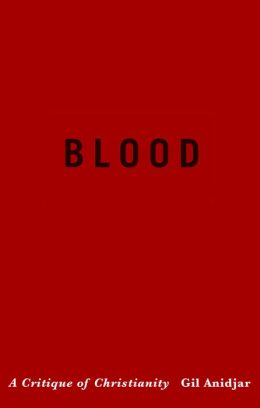
Blood: A Critique of Christianity

Gil Anidjar

I’m not sure where to begin with Blood, except to say that it may well be defining its own genre. It’s challenging, bloodcontroversial, lyrical, overly referential, meandering, meta-everything and modest.

OK, I lied about the last one. This book is quite full of itself.

But don’t take that as a bad thing. It’s a book that demands its own terms, and I respect any author willing to challenge their reader. Anidjar does present a challenge. The fault, though, is that he doesn’t appear to address it to the reader.

Reading this felt like missing the first day of class and coming to the second with no review. There is a conversation happening that I don’t seem to be a part of. Perhaps that’s because I’m a lay reader. Academics and the many readers smarter than me may have better luck, but I struggled with this one.

While that’s partly on me, there is also a lack of clarity in Anidjar’s writing. He has a penchant for winding sentences, extended parentheticals and pivots of thought that left me in the weeds. He strikes me as a brilliant thinker, but struggles with communicating those ideas.

Again, this is partly on me and partly on him.

This is a worthy challenge for any reader.

Review: Insatiable

Insatiable

Asa Akira

I had high hopes for Asa Akira’s memoir. I imagine being a porn star makes for an Insatiableinteresting life, and I was hoping to learn about the person, not the persona (which is already widely available on the Internet).

Unfortunately, Akira wrote the book in character.

Consider the sex scenes. Of course sex is going to come up in a porn memoir, but I wasn’t expecting it in the form of Penthouse Letters-style prose. My take is that it’s a distraction. By focusing our gaze on the sex, Akira deflects the attention away from herself.

What I wanted from Insatiable was the side of Akira we haven’t seen yet, and she noticeably shies away from the interior reflection required of memoir. Perhaps this is a survival skill inherent among those in the sex industry: It’s easier to open up physically than emotionally.

Fair enough, I suppose.

What I can’t excuse, however, is the tone. In the adult industry, female characters are typically portrayed as hyper-sexualized, submissive and eager to please. (Think Marilyn Monroe singing “Happy Birthday” to JFK or the nature of small talk made around stripper poles.) It’s understood that these are on-screen characters, but when the actor extends this behavior beyond the camera lens, it is inauthentic at best and caricature at worst.

Akira does show her depth at times, such as while discussing the growing intersection of porn and prostitution. This is the kind of dialogue I was looking for, but even here, I don’t believe she truly mines her interior. What could have been an important conversation is ultimately reduced to an anecdote, though an interesting one to be sure.

I’m reminded of the album cover of KISS Unmasked. It is paneled in the form of a comic book in which the musicians remove their “masks” at the end. They reveal that underneath their face paint they look exactly the same. It’s a clever gag, but it’s meant to obfuscate, not uncover.

I feel the same way about Insatiable.

It’s clever and shows a lot of promise. Akira’s narrative is fast-paced, the content readable and at times laugh-out-loud funny. If you’re a fan of Asa Akira, this is an enjoyable, though not essential, read.