academic

Final Thoughts, 2013

It’s a new year, and as much as we’re looking forward to the 2014 reading list, we have some 2013 shelf clearing left to do. Here is a round-up of books we enjoyed, but were so busy reading we didn’t have time to review.

The Undeserving Poor: America’s Enduring Confrontation with Poverty: Fully Updated and Revised

Michael B. Katz

It’s been a quarter-century since the first edition of this book was published. Some Undeserving Poorthings have changed drastically: The first edition came out at the height of the Reagan-Bush era, whereas the new edition comes on the heels of major Democratic victories in 2012.

But some things haven’t changed: The cultural obsession of equating financial poverty with moral bankruptcy.

Katz does a wonderful job of exploring the evolution of blame-the-poor politics and the invention (and ongoing reinvention) of the underclass. It’s a slippery and interesting social history, and it brings to mind Foucault’s histories of mental illness and prisons.

One of the interesting takeaways for me is the human need to compartmentalize. There is a line drawn between the deserving and the undeserving poor. Women and children tend to occupy the first category, while men almost universally fall into the latter. Politically and culturally speaking, the line drawn between the two groups is solid and severe, with those on one side garnerng support and sympathy and the others disdain and even punishment.

The trouble is that the line, in reality rather than construct, is blurry.

America’s schizophrenic attitude toward poverty shouldn’t be surprising. It’s a country that went from agriculture to industry to technology, where the Roaring ’20s gave way to the Great Depression, which segued into an unprecedented era of prosperity. Where LBJ waged a failed War on Poverty, and his successors waged a failed War on Drugs, which has ultimately amounted to a war on the impoverished.

This is an excellent read for anyone with an interest in economics, politics or social history. It may not resolve any legislative debates, but it will lend the reader more thoughtful consideration of the topic.

Dark Visions: A Collection of Modern Horror

Edited by Anthony Rivera and Sharon Lawson

I have a longstanding love affair with the small horror press. They’re like neighborhood Dark Visionsbookstores: Some last, the majority fail (ultimately), but most of them are amazing while they last. And like that corner bookstore, they each have their own personality, though ostensibly they are all dealing in similar content.
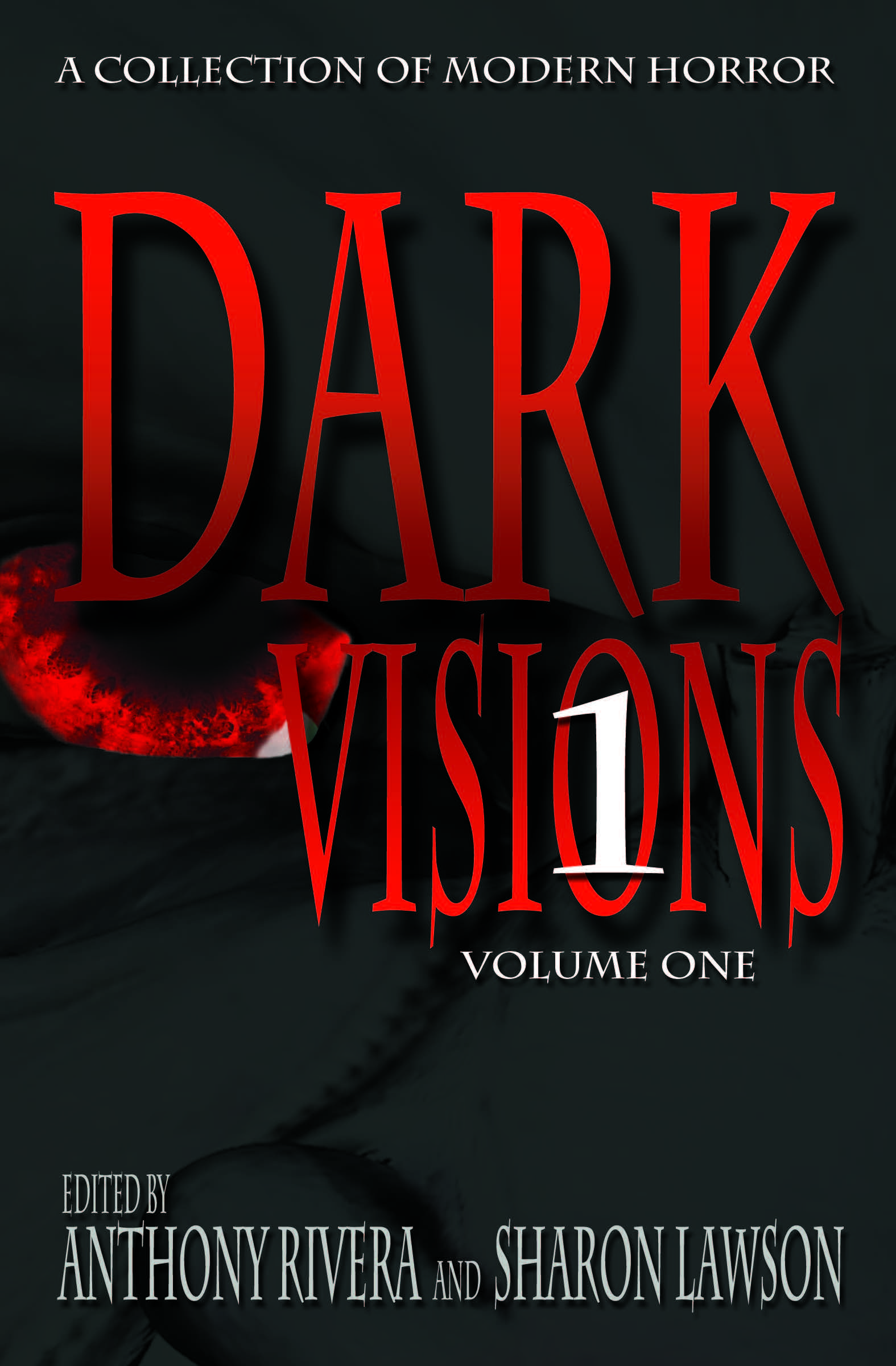
Enter the first installment of Dark Visions from Grey Matter Press.

They certainly know how to plunge into the darkness: the anthology series begins with an original story from Jonathan Maberry—yes, that Jonathan Maberry. Best of all, his contribution, “Mister Pockets,” takes us back to a place I know and love so well: Pine Deep.

For those unfamiliar, Pine Deep is the small town in rural Pennsylvania that was the setting for Maberry’s first three novels, including Bad Moon Rising, the bad-ass conclusion to the trilogy that any horror fan should begin reading immediately. This is a place that knows how to celebrate Halloween—and there is plenty to be afraid of here. I loved this world that Maberry created, and I was ecstatic to return.

Like all anthologies, there is a little something for everybody, and not every story will be your cup of tea. The important thing is that the quality level is high and consistent throughout, and Dark Visions is certainly a cut above your average anthology.

There is one story in particular that I would like to single out, “The Weight of Paradise” by Jeff Hemenway. This is easily the best new horror story I read this year, and perhaps of even the past few years. It is thoroughly original, dark and morally complicated, the hallmark of great horror fiction. Unless the voting is rigged, this story should win many awards and be anthologized for years to come.

There are plenty of other dark delights as well, and I’m excited for the second installment, scheduled for a summer release.

The Best Specimen of a Tyrant: The Amitious Dr. Abraham von Norstrand and the Wisconsin Insane Hospital

Thomas Doherty

Aside from having similar names, nobody will mistake this Civil War doctor for beloved Best Specimen of a Tyranttelevision dermatologist Martin van Nostrand (though his Seinfeld portrayer, Michael Richards, like the original Dr. von Norstrand, later achieved a certain level of infamy loosely related to the war between the states).

This doctor, deftly brought to life by Thomas Doherty, left behind a trail of failed business and medical practices before his appointment to superintendent of the Wisconsin Insane Hospital. What distinguishes this book from the many institutional narratives (both fictional and real) is that we get a rounded view of hospital administration. Typically, the overseers of institutions are lampooned as either sadistic villains, naïve do-gooders or bungling bureaucrats.

The reality of institutions, and their employees and residents, is much more complicated than that.

For starters, you’re working with a unique population with difficult problems—otherwise your clients wouldn’t have been institutionalized in the first place. Also consider the varying talents between workers, as well as experience, burnout, and the daily stressors of the workplace.

Want to describe a day in the life of a health care worker? Spend an overnight shift in an ER or a detox and write down your observations. Then do that almost every night for five years and go back and review your initial impressions and see how they compare with your current view.

That’s why The Best Specimen of a Tyrant shines. Von Norstrand casts a thorny shadow, and he has the complexity of Greek tragedy. This is a book for anyone with an interest in the checkered and infinitely fascinating history of mental health care.

Hell Gate

Elizabeth Massie 

In my MFA program, I was often teased for setting a majority of my stories within an Hell Gate - Elizabeth Massieamusement park or carnival of some kind. What can I say? I’m a fan of works that intersect the routine reality of the everyday with the manufactured reality of the spectacle (see Something Wicked This Way Comes, Rides of the Midway, CivilWarLand in Bad Decline, etc.).
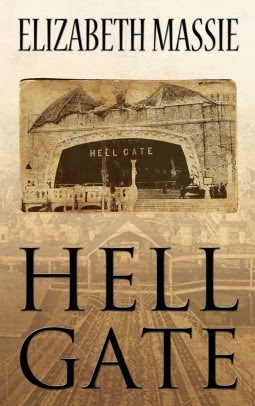
Therefore, Hell Gate combines some of my favorite themes. The story’s centerpiece is the friendship between a psychic and an orphan against the backdrop a series of grisly Coney Island murders. This will appeal to fans of historical thrillers and anyone who’s ever snuck backstage at the circus.
Review: Newton’s Football

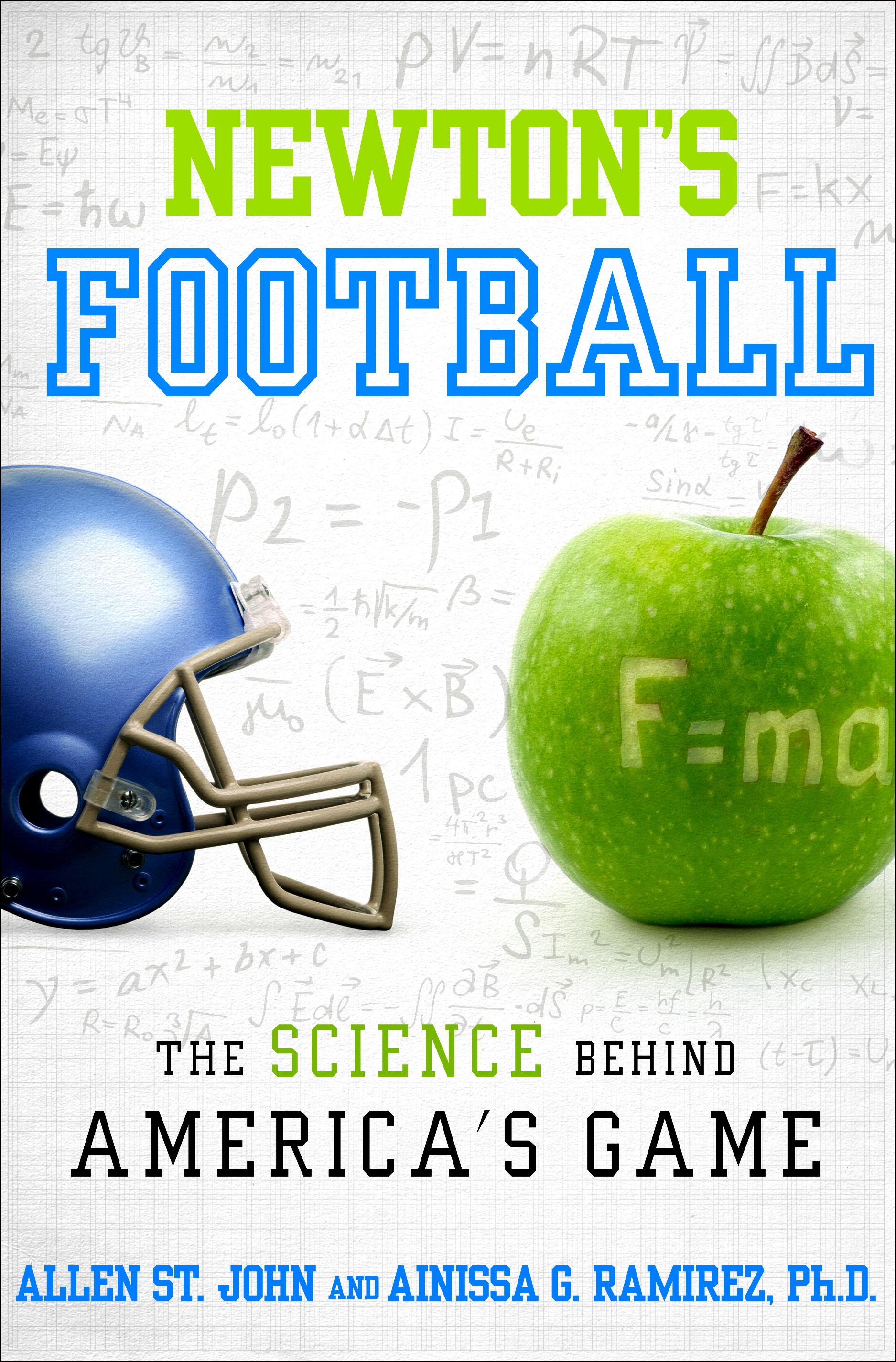
Newton’s Football: The Science Behind America’s Game

Allen St. John and Ainissa G. Ramirez

Here’s a book combining two of my favorite things: science writing and football. Turns Newtons Footballout they go together as naturally (and tastily) as Dorito’s and M&Ms, and like that classic combo, I binged on it until it was all gone. The authors write with passion and knowledge, and in every chapter there was something I didn’t know, either about science or the sport I love.

It begins, fittingly, with an interview with Stephen Wolfram (the theoretical physicist and author of A New Kind of Science), who explains the role chaos theory plays in your team’s game plan. I had always considered the 12th man to be the home crowd, but it turns out to be initial conditions. “Change the initial conditions and the outcomes diverge exponentially,” Wolfram says, leading the authors to extrapolate that “The no-huddle offense was chaos theory at work.”

My new dream is to hear Chris Berman reference initial conditions during a highlight reel.

The ball itself has an interesting history—and a physics all its own. There is no such thing as a tight spiral, for example, since the pigskin (which isn’t really pigskin) requires gyroscopic torque to remain in flight. Knowing that, you might just feel empathy rather than outrage the next time your quarterback lofts a lame duck over the middle.

This book transforms the gridiron into a laboratory. And much like those “Eureka” moments in the lab, serendipity and circumstance had a hand in the game’s innovation, such as the introduction of the West Coast offense and the soccer-style kick. St. John and Ainissa also prove that not all penalties are created equal: The more important stat is not penalty yardage but the breakdown between offensive and defensive infractions.

There is a serious side to Newton’s Football as well. While advances in neuroscience have revealed the extent of football’s brutality, many are wondering if football will exist in another 25 years—and if so, will it be recognizable to today’s fans. The authors explore the current concussion research and uncover some possible solutions.

Along the way, the authors revisit some of the game’s most famous plays and players, and combine physics and football with narrative journalism in one of the easiest and most interesting reads I’ve encountered all year (and that’s no small amount of books). Definitely in my top 10.

Newton’s Football is a must-have for fans of football and/or science. Not everyone is a fan of both, which is all the better because this book offers a chance to expand one’s horizons.

By the final page it will have armchair quarterbacks running statistical analysis and lab rats rubbing elbows at the sports bar. Does it get more interesting than that?

Review: Buddhist Biology

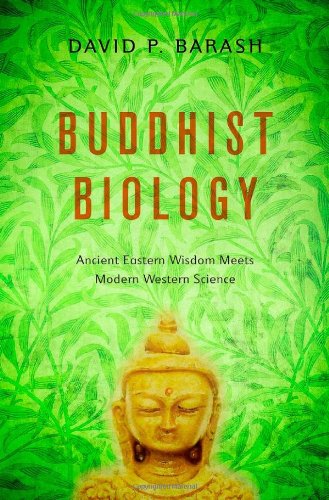
Buddhist Biology

David P. Barash

Forgive me a nostalgia trip to 1994, when alt-jazz rockers Soul Coughing released their Buddhist Biologydebut album Ruby Vroom. The lead track was “Is Chicago, Is Not Chicago,” a hypnotic, oddly existential number allegedly inspired by a bad acid trip in which singer Mike Doughty must distinguish between himself and his surroundings.

It made for a great song, but any biologist will tell you it doesn’t hold up to modern science. Or, for that matter, not-so-modern philosophy.

But Doughty was working toward something significant in that trippy little tune: Where does the “I” end and the “everything else” begin?

It may very well be at the intersection of science and spirituality, according to scientist and self-described Buddhist atheist David P. Barash, author of the brilliant Buddhist Biology.

He admits at the beginning that his goal is an ambitious one: to locate common ground where science and spirituality may coexist. Whereas the Abrahamic religions have long been at odds with science, he argues that Buddhist thought is compatible with high school textbooks.

“Why? Because among the key aspects of Buddhism, we find insistence that knowledge must be gained through personal experience rather than reliance on the authority of sacred texts or the teachings of avowed masters, because its orientation is empirical rather than theoretical, and because it rejects any conception of absolutes.” (18)

That is to say, it allows for the scientific method.

Barash eloquently connects the principles of anatman (not-self), anitya (impermanence) and pratityasamputpada (interdependence) to current biological knowledge. Science has shattered the duality of the actor and the environment, and in doing so has validated thousands of years of Buddhist philosophy.

I am particularly interested in anitya, which leads us into discussions regarding the illusion of time and motion. In considering life as a sequence of moments, Barash distinguishes between the experiencing self and the remembering self (which is similar to Sartre’s Pre-Reflective Cogito, but don’t get me started on my boy Jean-Paul).

The main idea is that each moment is unique and temporary. Nothing lasts, except for in memory, through which we develop a narrative and impose continuity.

Now, I’ll leave the scientific explanations to Barash, as I’m not very qualified to give a proper breakdown, and only slightly more so to discuss eastern philosophy. What I am qualified to provide, though , is a recommendation of Buddhist Biology. Barash takes difficult concepts and presents them in a thoroughly readable and enjoyable narrative. You’ll learn new things, brush up on your philosophy and find it difficult to close this book.

You’ll come away with the realization that there is no distinction between Chicago and Not Chicago, Is and Is Not. There is only this moment.

Or more simply put, There Is.

Review: Fangasm

Fangasm: Supernatural Fan Girls

Katherine Larsen and Lynn S. Zubernis 

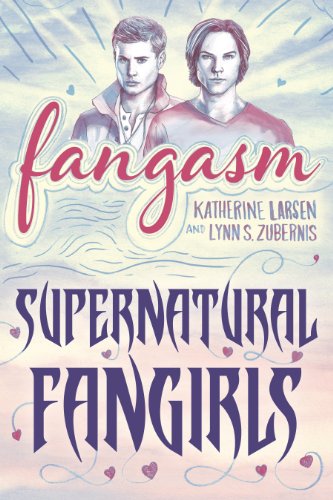
While I enjoyed Fangasm from page one, I have to admit I was confused at first. What I Fangirlsthought would be an academic account of fan culture, particularly surrounding the TV show Supernatural, turned out to be something altogether different.

Two professors—Katherine Larsen and Lynn S. Zubernis—geek out over the hunky stars of their favorite television show, attending conventions, joining an online community and penning racy fan-fic, all the while discussing the book they were going to write.

Unfortunately, this wasn’t that book.

The original output of their research was the 2012 academic study, Fandom at the Crossroads: Celebration, Shame and Fan/Producer Relationships. Fangasm, on the other hand, is the reporter’s notebook of their exploration.

Once I realized this, I settled in and thoroughly enjoyed the ride. Along the way, the authors feed each other’s “squee”; stalk hunky TV stars; and struggle with strained family relationships, their careers and even their friends. It’s a riotous, road-trip affair, and it’s refreshing to see the lighter side of the uptight academic.

But there’s a serious side to the book as well. In exploring fan-fiction, the duo encounters a diverse body politic. A bulk of the viewer-produced literature is sexual in nature—and due to the make-believe subject matter, and the lack of publisher gatekeeping, fan-fic writers often delve into places even pornographers fear to tread. (Hint: the show’s leading men, though not actually related, play brothers on Supernatural—take that ball and run with it.)

Also on the serious tip are the self-esteem issues that arise. Unfortunately, the shaming of fangirls is not limited to the mainstream community. While the conventions can be a refuge for those who otherwise feel displaced from society, there is an internal enforcement of etiquette that can be just as stratified and exclusionary as the mainstream. It’s a dark and curious sociological paradox.

Ultimately, I would have preferred to geek out with the academic text, but hey, there is no wrong way to get your nerd on. While I don’t approach the level of fanboy status held by Larsen and Zubernis, I know my way around a convention, and I’ve spent thousands of dollars on rare books, albums and KISS memorabilia. I can relate to this duo, and I find it refreshing to learn about a pair of obsessed academics letting their geek flag fly.

Review: Language, Cognition, and Human Nature

Language, Cognition, and Human Nature: Selected Articles

Steven Pinker

I love science and science writing, and when people ask me why, I have a simple answer: Because I really don’t get most of it. I have a scientific curiosity and Pinker2mathematical brain, but if it weren’t for the grading curve, I’d still be taking Freshman biology.

I’ll never fully grasp the writings of Richard Dawkins or Stephen Hawking, but I love reading them. They pique my interest, and I always come away learning something. Maybe it’s my fear of becoming cognitively rigid in middle age, but the prospect of a static or shrinking intellect keeps me up at night. I’m well past the point of exploring texts that merely reinforce my current knowledge base.

Which brings us to Steven Pinker and his new collection of articles, Language, Cognition, and Human Nature: Selected Articles.

While pursuing my master’s degree, I wasn’t feeling challenged in my English coursework, so I signed on for a semester of Philosophy of Language. I loved it, but I can still barely understand half of it. I did learn one thing, though: I kick ass at propositional logic, but predicate logic turns my brain to creamed corn.

So I was excited to read this collection, which Pinker prefaces with a curious introduction concerning general interest science writing. He talks of the popularity of scientists who are able to write for a popular audience (and science writers who can serve as a go-between), but argues that we’re underestimating readers with this approach. Rather than spoon-feeding the masses distilled information, Pinker provides us with the source material: his actual academic articles.

This is not light reading, and be warned it is challenging.

But it is enjoyable and enlightening. If you haven’t tried to wrap your mind around language theory, you need to read this book. Even if you don’t understand half of it, what information you glean will radically affect your relationship with language and the mind.

If nothing else, it’s a head trip—no lab coat required.

Review: A Brighter Word Than Bright

A Brighter Word Than Bright

by Dan Beachy-Quick

Although A Brighter Word Than Bright is about Romantic poet John Keats, I couldn’t get Keatsmy favorite Oscar Wilde quote out of my head while reading it: “Man is least himself when he talks in his own person. Give him a mask, and he will tell you the truth.”

It’s a cruel irony that nonfiction is thought to be the most accurate medium for Truth—reducing reality to the recitation of facts. If that were so, then the minutes of a company meeting should have more cultural sway than Shakespeare, right? Yet when I was in London, there were scores of young and old gathered at the gates of the Globe Theatre.

I didn’t take a poll, but I’m confident that when people think of London in 1599 (when the original Globe was built), they think of Shakespeare rather than that year’s landmark court ruling, Edward Darcy Esquire v. Thomas Allein of London Haberdasher, which established the foundation for modern antitrust law.

I didn’t see anyone perusing court transcripts outside the Globe.

That’s why Dan Beachy-Quick’s biography of Keats is so refreshing. Rather than retelling his life story or critiquing his work through some previously unexploited element of his personality, Beachy-Quick gives us the biography of the poet’s imagination.

Which, of course, requires a lot of imagination.

No shortage there. Beachy-Quick, author of nearly a dozen collections of poetry, essays and criticism, weaves a fever-dream narrative that treats its subject as more putty than marble, so that Keats, the man, vanishes at times.

Or perhaps Beachy-Quick brings us so close we no longer recognize him.

Either way, A Brighter Word Than Bright engages the reader’s imagination, and the author states from the beginning that:

“I have little interest in offering a portrait of Keats more accurate than those already available… I am more concerned with returning Keats, as best I can manage, back into that half-light that obscures accurate rendering so as to make more brilliant those sudden flashes in his poems and letters that, lightning-like, reveal the storm-tossed grasses in the ceaseless field even as darkness closes the vision again—sudden clarities, and the afterimage that lingers long past the lightning’s strike.”

Our subject is deliberately blurred, grated into the environment with an opacity that is oddly revealing. From an early age, Keats is displaced, yet absorbed by the world. Or perhaps consumed is more like it. Beachy-Quick sketches a grief-burdened man-child weeping beneath a desk for his dead mother. Yet, the boy is not separate from the desk, nor the desk from the room. All is connected in this tragic tableau: “Some music sobs up into song. Some song digs down and confronts what it also must comfort.”

Keats is tormented by his talents, a gift on par with Greek tragedy. Much like Darrin McMahon’s Divine Fury: A History of Genius, Beachy-Quick views genius as something that possesses, rather than something one may possess:

“To listen to genius is to let oneself be guided by that voice in the self that is not the self’s own. It implies an otherness exactly where we expect to find identity; it speaks within us a rumor to us, that we are least ourselves where we are most ourselves.”

This duality zigzags throughout the book, at times we are uncomfortably close and at others removed, disoriented, flipping between past and present tense to remind that art, and the artist’s struggle, belong to all ages. That like Keats’ poems, all is absorbed into a timeless moment—infinity in a single instant and vice versa. (Beachy-Quick cleverly enforces the point with reference to the work of the paradox-obsessed Greek philosopher Zeno.)

As we progress chronologically, Beachy-Quick peppers in some academic critique, for example going through the Odes and incorporating Keats’ letters for context. I was particularly struck by one passage from Keats to his wife, Fanny Brawne:

“I have two luxuries to brood over in my walks, your Loveliness and the hour of my death. O that I could have possession of them both in the same minute. I hate the world; it batters too much the wings of my self-will, and would I could take a sweet poison from your lips to send me out of it.”

Would it be fair to say Keats was the first emo kid?

Actually, that may be as fair as any other portrait. No biography has been able to capture the man in full, which certainly adds to his appeal. Beachy-Quick, with this unconventional and highly original biography, gives us something better than the Truth. He gives us the febrile terror that inhabits the artist’s soul.

Review: Skull in the Ashes

Skull in the Ashes: Murder, a Gold Rush Manhunt, and the Birth of Circumstantial Evidence in America

by Peter Kaufman

University presses aren’t usually known for producing pot-boiling thrillers, but that’s Skull in the Asheswhat the University of Iowa Press has done with Skull in the Ashes. In 1897, the quiet eastern Iowa town of Walford was awoken by a fire at the general store. When the flame had died, they discovered a charred corpse with some belongings of the store’s owner, Frank Novak, who often slept there.

The timing was curious as Novak, heavily in debt, had recently purchased multiple life insurance policies.

Oh yeah, and the skull they found in the ashes had been bashed in, which is atypical behavior for your run-of-the-mill house fire.

Here, the lives of three men intertwine: Novak; M.J. Tobin, the new county attorney; and Red Perrin, a near-superhero whom we’ll discuss later.

There may have been a time when folks wouldn’t have asked too many questions about the fire, odd though it was, but Tobin utilized emerging forensic tools—such as dental records—to identify the corpse as someone other than Novak. Tobin’s quest crossed multiple state lines and even involved the famed Pinkerton National Detective Agency. But the trail went cold in the Pacific Northwest.

Enter Red Perrin.

Perrin was a detective in Arizona who had a reputation for tenacity and toughness. He was the only one trusted to venture into the Yukon and return Novak alive.

The amount of research that went into this book is evident. Kaufman worked his butt off on this book, and he does a good job of balancing information with narrative. Where he is strongest, though, is following Perrin—which, ironically, was probably the toughest to recreate. The trek through the mining territory is difficult. Perrin hires a team, hikes for days through the mountains and brings along with him a boat builder.

That’s right, a boat builder.

On the other side of the mountain pass was a treacherous waterway, which Perrin would need to traverse to get up to the mining camp where he suspected Novak was living under an assumed name. But they couldn’t carry a boat through the mountains, so once completing that leg of the journey, Perrin and his partner chopped down trees and built a craft sturdy enough for the rapids.

That’s pretty bad ass.

Skull in the Ashes is divided into three parts, and this is by far my favorite. Part one is the story of Novak and Tobin; the town of Walford; and the crime and initial investigation. It’s a bit like a murder-mystery, although we already know whodunit. The narrative here is about history and evidence, and I really enjoyed this section.

Part two is an adventure tale. Kaufman creates lavish scenery, strong characters, high tension and the thrill of a pulp wilderness expedition. I think of it as Thoreau’s The Maine Woods meets The Fugitive. The plotting is well-paced, and Kaufman rightly pulls back on the history and lets the action take center stage.

Which brings us to part three: the aftermath. Unfortunately, this is where Kaufman runs out of bullets. It’s not his doing, but simply the climax of the story. The final part covers Novak’s trial and incarceration and ties up the storylines of all involved. As with the other sections, it is well-researched and –written, but we spend too much time on the trial.

I did enjoy the sociological aspects of the book’s conclusion. Kaufman describes prison life at the time and reforms that were making it more humane. There is also the importance of the Novak trial for its use of forensics and circumstantial evidence. Kaufman clearly describes a time of transition in American history: the advance of science, the sophistication of law enforcement, and the expansion and opening of the world, such that a local crime committed in small-town Iowa would involve the federal government, multiple states, two countries and a wilderness chase.

And so Iowa, and America, looked ahead to the 20th century.

To sum up, Skull in the Ashes is a thrill ride for history buffs and fans of narrative nonfiction and an unexpected, and delightful, blend of pulp and scholarship.

Review: Divine Fury

Divine Fury

Darrin M. McMahon

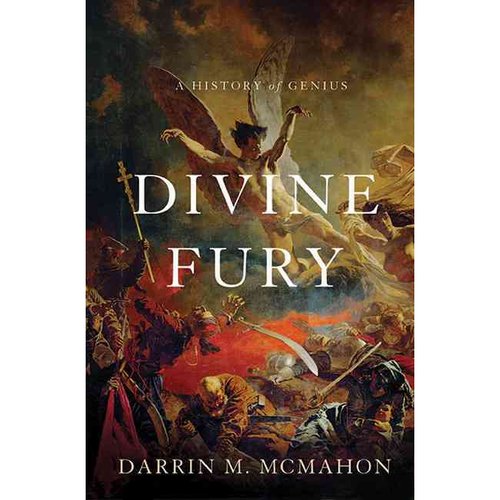
Since 1981, the MacArthur Foundation has bestowed its “genius grant” on 873 Divine Fury(ostensibly) geniuses—“talented individuals who have shown extraordinary originality and dedication in their creative pursuits and a marked capacity for self-direction,” reads the MacArthur Web site.

But is this the truest definition of “genius”? Considering that the title is so commonly conferred upon basketball coaches, celebrities and rock stars (a recent Rolling Stone article referred to Kanye West as a “mad genius”—seriously), is being a “genius” even that impressive anymore?

In Divine Fury, historian Darrin M. McMahon isn’t questioning MENSA credentials so much as tracing the history of this loaded term and how it’s changed over the centuries.

Our etymological quest begins with the ancient Greeks, for whom being a genius was a form of madness. McMahon culls pithy quotes from Plato revealing a lesser-known side of Socrates: He was quite haunted. (This from the Phaedrus dialogues—no wonder the brilliant 20th century philosopher/madman Robert Pirsig chose Phaedrus as his alter ego in Zen and the Art of Motorcycle Maintenance.)

Whereas contemporary culture views genius as something you possess, ancient philosophers believed the inverse: Genius possesses you. More specifically, a demon possesses you, for good and ill, and this was the belief for centuries. McMahon documents many cases of “genius,” from the ancients to modern times, and how the concept evolved and then devolved into our current celebrity-obsessed culture.

It’s a curious evolution, and one I wouldn’t have thought about much before reading Divine Fury. McMahon deftly illuminates this secret and complicated history through literary accounts, keen observation and a strong narrative. His writing can be a bit tangential and academic at times—but hey, the man’s an academic! What do you expect?

I certainly wasn’t expecting to think about genius as a populist concept, but there it is. In some ways, the history of genius is the flow of agency from the elite to the proletariat. While I would rate that as a good thing, an unfortunate consequence is that genius has become just another noun that anyone can claim.

The change is due in part to advanced medical knowledge. In ancient Greece, Socrates believed a demon was whispering in his ear. Today, we’d slip him some Paxil.

Or give him his own TED talk.

Ultimately, it remains a fuzzy line between madness and genius. Is it the possessed or the possessor? Are 98th percentile test-scorers (the threshold for MENSA membership) the elite or merely outliers? Or is each of us capable of becoming an Einstein?

No matter, from now on I’ll be slower to label someone a genius.

Unless that “mad genius” Kanye West splits the atom in his next video.

Review, On Dissent: Its Meaning in America

On DissentNot many books from Cambridge University Press make it to the summer reading list, but On Dissent: Its Meaning in America is one of the better ways to revolt against the light-hearted beach-readers out there. Hell, it’s patriotic. America was born in dissent, and we celebrate it still. With fireworks—even illegal ones (though from now on I argue that M-80s are not outlaws, but rather the tools of dissent).

But why is dissent so much of our DNA? What does it even mean to dissent? These were the questions nagging at Ronald K.L. Collins and David M. Skover, two esteemed political scholars who were surprised to find that there was no true analysis of the concept of dissent.

That’s what they set out to create with this short, thought-provoking work.

For the most part, Collins and Skover accomplish their goal. The tone is philosophical in nature, and the authors begin by attempting to define dissent and identify its practitioners. Sure, anyone can point to the examples of Thoreau, King and Paine, but the authors take on trickier issues, such as how clear the line is (or isn’t) between civil disobedience and criminality. What role does violence play in dissent, or does an action cease to be dissent once it becomes violent?

Collins and Skover do a great job, and scholarly service, by identifying the fundamental traits of dissent, such as its being goal-oriented and indicative of a power dynamic. They buttress their definition by exploring hypotheticals and philosophical dilemmas (is a hired protester a dissenter?), and they do it all with an accessible writing style that will appeal to non-academic readers who might not otherwise seek out this book.

Of course, it’s not perfect, and the biggest issue I have is with the authors’ overreliance on expert commentary, such as that of Howard Zinn and Ralph Nader. The quotations are often redundant and unnecessary. The collective intellect of Collins and Skover is authoritative enough, and I recommend skimming through the offset commentary.

But there’s nothing else I would skim over in this book—particularly the epilogue. Here, the authors move away from definitions and thought experiments and present their own take on dissent—that contrary to rebellion, dissent is a vital and cohesive component of a democracy:

“Consent and dissent are two sides of the same coin. Without dissent, consent is meaningless; without consent, dissent loses much of its animating purpose” (152).

On Dissent is a quick and wonderful read. It will get you thinking. It will get you talking. It will remind you that though we may disagree, the freedom to disagree and express opposing viewpoints is what makes us strong.