Publishers

M.K. Wren, A Gift Upon the Shore

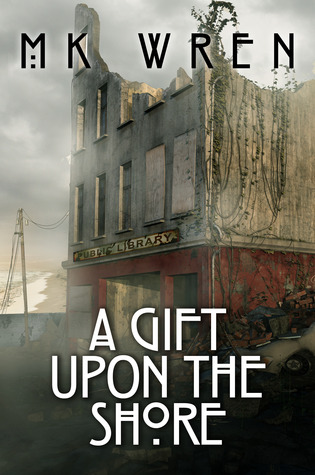
It’s interesting reading M.K. Wren’s classic novel nearly a quarter century since its release in 1990. For one thing, a nuclearGift apocalypse sounds downright quaint and makes me eerily nostalgic for my childhood fears of nuclear annihilation.

Aside from that, A Gift Upon the Shore is timeless—and even prescient. Following a wave of destruction, two women begin building a library in coastal Oregon, dedicated to preserving the great works of literature, history, and, by extension, civilization. Unfortunately, their only neighbors are a group of fundamentalist survivors who promote the destruction of all books other than the Bible.

In 2013, libraries and bookstores are struggling, Texas school boards are editing history and I downloaded the novel, in a matter of seconds, from a Web site onto my e-reader (unthinkable in 1990).

OK, Wren isn’t exactly Nostradamus. Folks were probably declaring the death of books within hours of Guttenberg’s invention, and fundamentalists have far less sway than they did during the Satanic Panic of the 1980s. Even Salman Rushdie has been able to come out of hiding.

But like Wren’s protagonists, digital publishing has guaranteed that our literary history will live on, from the freedom of publishing in the medium to noble endeavors like Project Guttenberg.

A Gift Upon the Shore remains a wondrously beautiful novel, whatever the era, and one worthy of a revisit or a first look.

Review, On Dissent: Its Meaning in America

On DissentNot many books from Cambridge University Press make it to the summer reading list, but On Dissent: Its Meaning in America is one of the better ways to revolt against the light-hearted beach-readers out there. Hell, it’s patriotic. America was born in dissent, and we celebrate it still. With fireworks—even illegal ones (though from now on I argue that M-80s are not outlaws, but rather the tools of dissent).

But why is dissent so much of our DNA? What does it even mean to dissent? These were the questions nagging at Ronald K.L. Collins and David M. Skover, two esteemed political scholars who were surprised to find that there was no true analysis of the concept of dissent.

That’s what they set out to create with this short, thought-provoking work.

For the most part, Collins and Skover accomplish their goal. The tone is philosophical in nature, and the authors begin by attempting to define dissent and identify its practitioners. Sure, anyone can point to the examples of Thoreau, King and Paine, but the authors take on trickier issues, such as how clear the line is (or isn’t) between civil disobedience and criminality. What role does violence play in dissent, or does an action cease to be dissent once it becomes violent?

Collins and Skover do a great job, and scholarly service, by identifying the fundamental traits of dissent, such as its being goal-oriented and indicative of a power dynamic. They buttress their definition by exploring hypotheticals and philosophical dilemmas (is a hired protester a dissenter?), and they do it all with an accessible writing style that will appeal to non-academic readers who might not otherwise seek out this book.

Of course, it’s not perfect, and the biggest issue I have is with the authors’ overreliance on expert commentary, such as that of Howard Zinn and Ralph Nader. The quotations are often redundant and unnecessary. The collective intellect of Collins and Skover is authoritative enough, and I recommend skimming through the offset commentary.

But there’s nothing else I would skim over in this book—particularly the epilogue. Here, the authors move away from definitions and thought experiments and present their own take on dissent—that contrary to rebellion, dissent is a vital and cohesive component of a democracy:

“Consent and dissent are two sides of the same coin. Without dissent, consent is meaningless; without consent, dissent loses much of its animating purpose” (152).

On Dissent is a quick and wonderful read. It will get you thinking. It will get you talking. It will remind you that though we may disagree, the freedom to disagree and express opposing viewpoints is what makes us strong.

Stephen King, Joyland

JoylandJoyland by Stephen King

My rating: 3 of 5 stars

The first three-fourths of
Joyland
are amazing, some of King’s best recent work. The ending, however, is a bit too easy and familiar. King’s previous offering through Hard Case Crime, The Colorado Kid, subverted convention and was far more challenging to the reader.

Infused with heart and the nostalgic thrills of boardwalk carnivals, Joyland is worth the ticket price. The novel begins as a rail-rattling thrill ride, but, in the end, eases too gently into the station.

View all my reviews

June Recommendations

In another day we’ll be heading off to London, and around this time Transgress will publish its annual summer book preview/review. In the coming days, we’ll be dishing out smaller portions of the issue, beginning with today’s blurbs about some books you may have missed this past month.

Joyland, Stephen King

I plan on devouring this little beauty on the first leg of the transatlantic flight. As joylandyou know, we at Ensuing Chapters and Transgress Magazine are all about funhouses and noir. So, a Stephen King paperback original about a funhouse for the imprint Hard Case Crime?

Bring it.

King’s previous offering through Hard Case was The Colorado Kid, a wonderfully creepy tale about an unsolved murder in a small Maine town. Some of you may also know it as the SyFy program, Haven.

I’ve got my ticket, and I’m already chilled thinking of the horrors that await in Joyland.

Creation: How Science is Reinventing Life Itself, Adam Rutherford

I recommend Adam Rutherford’s Creation for any fan of science writingcreation. However, my endorsement comes with a disclaimer: The electronic review copy I downloaded was corrupted and difficult to navigate. The result is that I didn’t read this book front to back, as I normally do. However, I was able to access about half of it, and what I read I thoroughly enjoyed.

Of particular interest to Transgress readers are the graphic details of surface cuts when explaining how the skin recovers from a wound. The squeamish reader might want to tag this book as horror for this reason alone.

Though I doubt there are any squeamish readers this blog.

Stylistically, Creation blends wit and storytelling with fair doses of hard science. Fans of Sam Kean, Mary Roach and Malcolm Gladwell will find much to love in its pages.

The Ocean at the End of the Lane, Neil Gaiman

Not since Joseph Campbell has an author had both a profound understanding oceanof mythology and the ability to present it to a general audience with such passion. I see Gaiman and Campbell as two sides of an intergenerational coin: the academic who deconstructs myths and the author who creates them.

His new novel, his first for adults since 2005’s Anansi Boys, concerns a young boy returning home–and reconsidering odd events from summers past.


The Hole, William Meikle

And what summer would be complete without a subterranean adventure? This twisted treat comes from one of my favorite publishers, DarkFuse, and concerns a chasm (literally, not figuratively) snaking through a rural town. What comes next promises to be delightfully morbid. I’ve got this on my to-read list and can’t wait to descend into its depths. A review will come later this summer.

Come back tomorrow for a review of The Unrest-Cure and Other Stories by Saki, illustrated by Edward Gorey.

A Playground for Insomniacs

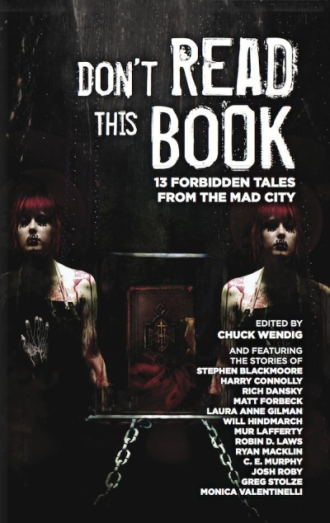
For some, sleep is a peaceful proposition. For others, like me, lights out has always been more of a punishment. The latter is the intended audience of Evil Hat Productions’DRTB Don’t Read This Book, a collection of 13 waking nightmares for the hard of sleeping.

These stories are set in the world of the Don’t Rest Your Head RPG, which I haven’t played, but seems perfectly designed for someone like me. My loose understanding of the game, based on reading this book (despite the admonition of its title) and researching a little about the RPG, is that it takes place in a dystopian dreamland (Mad City) populated with clockwork cops, shadow stalkers and any other gritty creature your mind can conjure up. You are among the Awake—insomniacs who have stayed up far too long and find themselves within the freak show of Mad City.

The Awake are in quite the pickle. Fall asleep and you die. But stay awake for too long and you’ll go mad and permanently inhabit the nightmare.

This is genius. Having been lifelong frenemies with the Sandman, I recognize this world, and it is more terrifying than most fictional places. Probably because I know what it feels like to go to work on your fourth day awake. I know the psychedelic side effects of clocking out from your graveyard shift and then clocking in at your day job a few minutes later. Things move in ways they shouldn’t, you lag a few seconds behind in every conversation and, worst of all, a mechanical noise fills your ears—not a buzz or a ring, but a machine-like pulsing that clouds thought and creates the sensation that someone is constantly following you.

Hallucinate from staying awake? Been there. That’s why the nightmares within Don’t Read This Book, edited by Chuck Wendig, are familiar territory for me.

And thoroughly enjoyable.

Standouts include Stephen Blackmore’s “Don’t Lose Your Patients,” Mur Lafferty’s “Don’t Bleach Your Memories” and Harry Connolly’s “Don’t Chew Your Food,” but this is a solid anthology front to back.

Gamers, steampunks, urban fantasists and horror fiends will find something to love in here. But those who may enjoy it most are us insomniacs.

Those of us who know that the torture of falling to sleep is worse than any nightmare that may be lurking on the other side.

Peter Clines: 14

If I’ve learned anything from my lifelong obsession with horror, it’s that:14
  1. If someone introduces you to an opportunity too good, and too convenient, to be true, you probably shouldn’t take it because it can only mean trouble. And,
  2. If someone introduces you to an opportunity too good, and too convenient, to be true, you definitely should take it because you are guaranteed adventure—most likely one shadowed with conspiracy and gore.

So it goes in 14, by Peter Clines, in which an apathetic data-entry temp (Nate) is referred to a cheap apartment, where rents are suspiciously low, utilities shockingly free and the neighbors… well, the ones who stick around are… interesting.

The setting for this quasi-Lovecraftian, quasi-apocalyptic story is the Kavach building, which seems odd even by L.A. standards. Early in his stay, Nate notices some curious features of the old building: all the units have different dimensions; the plumbing is an inefficient web of pipes; there are discolored lights; green, mutant cockroaches; and, best of all, certain apartments are padlocked shut.

Among them, apartment 14.

This is where Clines truly excels. He develops a chilling atmosphere and social dynamic within the walls of the Kavach, and I absolutely devoured the first half of the book. The dialogue is shallow in spots, but the characters are as mysterious as the building, and as more secrets unfold, we follow a resilient crew of tenants into the deep tunnels beneath the Kavach.

Of all that I loved about the first half of this book, the tunnels were by far my favorite. The subterranean setting is magnificently drawn, and it’s that sweet spot in the book where the characters are fully realized and revealed, and the reader is absorbed in their struggle.

The second half of 14 is very entertaining, particularly the third quarter, but lacks the literary muscle of what came before. The first half was tight, focused, suffocating. It narrows until we get to the bottom of the tunnels, but then we begin expanding and things get a bit turbulent. Clines does a solid job of planting intriguing clues to be sussed out later, but the ending suffers from too much revelation.

I’d like to illustrate this with an anecdote.

My first apartment was a crumbling duplex on Tamplin Street in Sharon, Pennsylvania. It was dumpy and narrow, but the perfect incubator for two eventual writers (me and my roommate, Todd).

Particularly inspiring was the basement.

There was a biohazard sign on the basement door, with the words “Fallout Shelter.” The house was old enough that the sign could have been legit, though we suspected it was decoration. The basement itself was a throwaway slab of concrete—functional, boring, filled with spiders. The only thing scary about it was the rickety set of stairs.

And the unexplained, nailed-shut door on the northern wall.

The mystery door was almost a square, shaped more like a large window than a door, and rather than starting at the floor, the bottom edge was two feet off the ground. The top edge was only a few feet higher. It was the size and shape of a cupboard or a crawlspace. But why was it nailed shut?

Horror fanatic that I am, I tried to pry it open at least enough to glimpse what was on the other side. Thankfully, I wasn’t able to. Most likely, it was just a collapsed storage space (this was a mining/steel town, and it was fairly common for back yards to become ravines). It contained probably nothing more than the earth-packed remnants of a sinkhole.

But because I never got a look behind the mystery door, it has never lost its magic. Instead of a sinkhole, in my mind that door seals off a series of tunnels that burrow beneath our town, perhaps an old Prohibition-era bootlegging route, or perhaps it connects with the old cemetery two blocks away. Instead of storage space, there is a cache of forbidden scrolls. Or, befitting my Poe-obsessed youth, this is the subterranean vault where our slumlord buries alive his tenants.

Who knows, maybe even a bomb shelter.

The point is, I’m still fascinated by that shuttered basement door.

And that’s why the first half of 14 is an absorbing read. This is literature for anyone who has searched every new apartment for secret passages, hiding spots or trapdoors. Crawled through cobwebbed eaves, the musky underbelly of mobile homes and believes, always, that every building has a secret history to tell.

But unlike that basement door on Tamplin Street, we do learn what’s inside those padlocked rooms at the Kavach building. What we find there is original, for sure, but it dispels the magic. Each new revelation takes us further away from believability until 14 enters camp territory. And I’ve got nothing against camp. Truly, this part of the book is fun.

But it doesn’t mesh with the earnestness of the setup.

The action-packed finale further untethers the reader. The sequences are rushed, and where dialogue and observations from the characters should anchor us, we get snarky quips and CGI visuals. There is a nice homage to Lovecraft throughout, but HPL’s great trick was that we seldom saw what his creatures did. Rather, he hinted at what they could do.

Clines is a hell of a writer and storyteller, but here, he opens one door too many.

But that’s not entirely a bad thing, and certainly not a deal breaker (I just have a preference for more existential horror). This is a book I highly recommend. It’s fun, engaging, and I only give it four stars instead of five because of the overload of revelation at the end.

I’d prefer to leave a door or two shut. I want to imagine what’s behind it. A body? A tunnel? Treasure? Or nothing?

The best part is that I’ll never know.
Review: The Mourning House

Ronald Malfi, The Mourning House (Delirium Books)

Dr. Sam Hatch is a soul adrift. Since losing his wife and child a year before, mourning_househe’s tried to outrace his pain, literally, with a series of taped-together cars and sometimes his thumb. Now a transient, he squats for a night in a “vacant shell of a house” in Maryland.

Here is where the past catches up with Hatch.

Ronald Malfi’s The Mourning House (published Dec. 18 by Delirium Books as an e-book and limited edition hardcover) is a short tale of grief, obsession and the fragility of physical and mental structure. It is also a haunted house story, if there is such a thing (I’ll explain in a moment).

Malfi, whose previous novels include the IPPY-award winners Floating Staircase and Shamrock Alley, adds to this great literary tradition, and The Mourning House is a thoroughly enjoyable tale that is more of a character study than a plot-driven thriller. It hooked me with the opening chapter and kept me burning through the pages to the end.

It also got me thinking about the lure of the haunted house. Why is it such an enduring trope? There are the familiar literary explanations: the house as manifestation of the self (“The Fall of the House of Usher”); the lingering energy (aka back story) of past inhabitants (The House of the Seven Gables); the narrative tale that leaves you wondering whether the characters are occupying the house or the other way around (The Shining).

But The Mourning House is part of a lesser-discussed subgenre: the malleable or ever-shifting house. This also happens to be my favorite kind of haunted house story.

I don’t subscribe to the supernatural. I’m not afraid of ghosts, and I’ve yet to fall victim to a family curse. But “The 5 1/2 Minute Hallway” in Mark Z. Danielewski’s House of Leaves is one of the most terrifying passages I’ve ever read. Here, new residents of an old house discover that the interior and exterior dimensions of a hallway are incongruent. There is a geometric dissonance that disturbs the occupants (and the reader).

Malfi taps into that feeling of dissonance. Hatch isn’t visited by apparitions in The Mourning House, and there’s nothing a poltergeist could do that would torment him as severely as his own memories. What is troubling is that items around the house have moved while he was out; his closet seems to be of variable dimensions; and a curious subfloor is revealed beneath his feet.

Each morning, Hatch awakes in, essentially, a new house, and that, my friends, is the crux of great horror fiction. It tickles that spot in our lizard brains that burns for shelter. It’s why the haunted house is a timeless premise—and why I argue that there is, ironically, no such thing.

At the core of every haunted house story is a protagonist troubled long before they ever set foot in the house. The house becomes a metaphor, a hallucination, a projection of mental disturbance. The nature of the haunting reflects the nature of one’s troubles. For Hatch, the ever-shifting house is symbolic of helplessness and fragility. He was a successful doctor with a happy marriage, but in an instant it was taken from him.

Our homes are extensions of ourselves. That’s why home invasions are more traumatic than street muggings. For Hatch, it’s only natural that his haunting plays on his vulnerability. At any moment, the place where he should feel safest could shift forever. And he is helpless to do anything about it.

Malfi handles this masterfully in The Mourning House. The beginning and ending are magnificent, as is the bulk of what comes between. For the most part, the novel is well-paced, the prose solid and the action compelling. Here and there, scenes feel rushed or we get an overload of description without the emotional interiority that anchors us to the story (see chapter two).

But there’s no sense nitpicking over these few moments. Malfi is an excellent storyteller and a demon of description. This is a great piece of writing, and I recommend it for any fan of quality horror fiction or anyone who may fit that description on your holiday shopping list.

For more information, visit the Delirium Books Web site.