Nonfiction

Life After Death, Damien Echols

At the height of the ’80s Satanic Panic, I was a prototypical blasphemer. I played Dungeons & Dragons, blasted Shout at the Devil at maximum volume, plastered Metallica posters on my wall, read the Necronomicon, gorged myself on horror cinema and wore a daily uniform of ripped denim and black T-shirts.

According to Al Gore’s wife, I was a bloodthirsty soldier for Satan. Oh yes, me and my virginal D&D pals—who could perform about 15 push-ups combined—were dangerous, alright.

But the tragic nadir of the Satanic Panic was the case of the West Memphis Three, a trio of teenagers wrongfully convicted of child-murder in rural Arkansas.

The case first attracted media attention for its lurid qualities—abduction, mutilation and supposed Satanic Ritual Abuse. It later attracted attention for the hillbilly witch hunt that resulted in the trial of the West Memphis Three. Two of the boys received life sentences while Damien Echols, the alleged leader of the trio, was sentenced to death.

After two decades of public outcry, numerous books and feature films, the three men were finally released in 2011.

On Sept. 18, Echols recounts his experiences in Life After Death, available in hardcover and e-book. Echols has previously published his poetry, nonfiction and the 2005 memoir Almost Home. I’m excited to read what he has to say about the years since then.

Much has been written on the horrors of the Satanic Panic, but the definitive account should rightfully come from Echols, one of its biggest victims—a man who was nearly put to death on account of mass hysteria.

The saving grace for our justice system is that it’s not a posthumous release.

Check back for info on more upcoming releases throughout the week.
Second-String Sociopaths

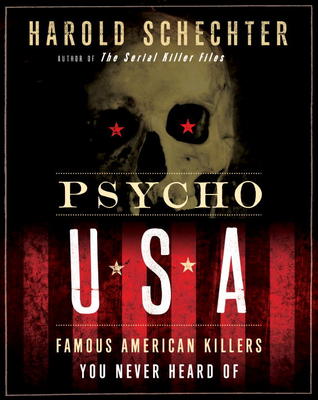
On Tuesday, Harold Schechter‘s new book, Psycho USA, hit the shelves. Last month, I interviewed Dr. Schechter on topics such as the new book, true crime as cultural history and recent rampage violence. He offered insights both witty and wise. Read the full profile here or at Transgress digital magazine.

Killer Reads

Sure, Harold Schechter is a great historian and has a nose for inter­esting subjects. But what makes his writing so compelling is his flair for storytelling. “The challenge I set myself is to transform thou­sands of pages of dry documents into a compelling narrative.”

No surprise. He is, after all, a literature professor. Great writing is also a family affair. He is married to the poet Kimiko Hahn and the father of YA author Lauren Oliver.

Schechter is currently taking a sabbatical to focus on his next book, a full-length treatment of Robert George Irwin, “The Mad Sculptor.” Mean­time, readers can dig into Psycho USA, and newcomers would be wise to explore his earlier works as well. These are narratives that dissect our cul­tural history to the marrow. Profiles that reveal insights about our species usually reserved for psychology texts. Harrowing tales that horrify, in­form and stay with the reader long after the final line.

Deranged

This was my introduction to Schechter’s writ­ing—and the fiendish Albert Fish. The narrative is as gripping as Fish’s actions are nauseating. Pedophilia, murder, canni­balism. This is a must-read for anyone—just not after a heavy dinner. Here you will learn where the tastiest part of the human anatomy is. You’ll learn about the perineum—and its functionality as a pin cushion. You’ll also en­counter the man who took on the electric chair—and won.

Sort of.

Most of all, you’ll get a glimpse of American culture as the Roaring ’20s segued into the Great Depression; taste the deadly cultural cocktail of na­ivety and anonymity that allowed a child-murderer to flourish; and mine the depths of religion and pathology.

Deviant

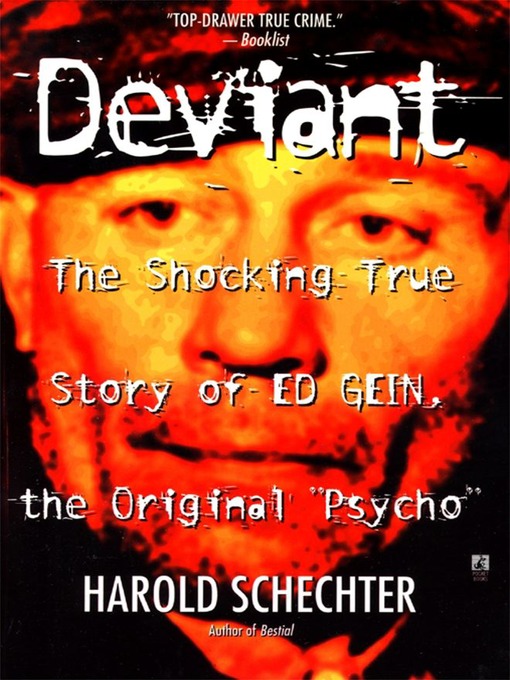
Ed Gein was a mild-mannered grave robber in rural Wisconsin in the 1950s. Nobody back then could have imagined the impact he would have on Hollywood. Gein has served as the inspiration for three successful book and film franchises: Psy­cho, The Texas Chainsaw Massacre and The Silence of the Lambs.

A bio like that would typically earn one a Hollywood star.

It earned Gein a life sentence in a mental in­stitution.

We don’t want to give away too much of the good stuff. Let’s just say you wouldn’t want to hire Gein as your interior decorator—unless you’re re­ally into “organic” lampshades.

Savage Pastimes: A Cultural History of Vio­lent Entertainment

Violence in the media is nothing new, and Schechter chronicles humanity’s obsession with violence through the centuries. An informative and fascinating book.

The Serial Killer Files

It was a toss-up between this and The A-Z Encyclopedia of Serial Killers. I was inclined to blurb the Encyclopedia for nostalgic reasons, as 1997 was a hell of a year—and that was one hell of a book.

It also garnered more buzz as it was in step with the times (think The Profiler). The Serial Killer Files came out post-9/11, and serial killers weren’t the bogeymen they’d once been (think 24).

However, this compendium is the ultimate roadmap to the darker shadows of our species. And it makes a great con­versation piece on your bookshelf.

The Whole Death Catalog

2009’s tour-de-force of final breaths will leave you… well, breathless. It’s Lonely Planet meets Last Rites. What more can you say about a book that markets itself as leaving “no gravestone left unturned”?

To check out more of Schechter’s books, visit www.haroldschechter.com.