Horror

Review: The Cutting Room

The Cutting Room

Ellen Datlow, editor

“With no dreams left to search for, I have only nightmares to anticipate.”The Cutting Room

This is one of the most haunting lines from the tremendous opening story, “The Cutter,” by Edward Bryant. It sets the tone for all the delicious horror in Ellen Datlow’s latest anthology, The Cutting Room: Dark Reflections of the Silver Screen.

Those familiar with Datlow’s work know that she is the go-to authority in the horror/fantasy world. The appeal of any anthology is the prospect of finding some good stories and maybe discovering new authors, but buyer beware: Anthologies themselves can be hit and miss, especially when the stories are crudely arranged with no thought to pacing or theme.

When Datlow’s name is on the cover, however, you know the collection will contain the highest quality writing and arranging, kind of like listening to a Rob Gordon mix tape (or Rob Fleming, for those who prefer the novel version of High Fidelity).

The genius of starting this anthology with Bryant’s “The Cutter” is that:

  1. It is set in a movie theater
  2. It features a film projector, Mr. Carrigan, who cuts and splices the incoming films so that attendees at his theater have a different version of the film than the director intended
  3. It thrusts the reader into a world of altered reality, where nothing is beyond edit and where nothing can be believed or counted on besides death

Of course, I’m a little biased. Not long after I moved to Colorado, Westword profiled Bryant and his fiction, and I’ve been a fan ever since.

Datlow refuses to let off the gas with the next tale, “The Hanged Man of Oz” by Steve Nagy, which plays upon the belief that an on-screen suicide is visible in The Wizard of Oz. I happen to share this belief, though it is denied by some. Nagy’s version gets even crazier, with the protagonist haunted by the scene, the film, the characters and his new girlfriend, who’d shown it to him.

There are also stellar contributions from horror legends, such as Dennis Etchison’s “Deadspace” (in which a small-time producer encounters big-time creepiness), and relatively new talents like A.C. Wise’s “Final Girl Theory.” (To enjoy a wonderfully haunting audio version of “Final Girl Theory,” visit Pseudopod.)

I’ve long loved the Gemma Files and Stephen J. Barringer tale “each thing i show you is a piece of my death,” which I first read in Datlow’s The Best Horror of the Year, Volume Two. While I love the meta-everything tone of the piece, I have mixed emotions about the title. It’s a line from my favorite Marilyn Manson song, “The Reflecting God,” and I appreciate the reference, but it’s such an obscure line (from neither chorus nor verse, but rather spoken beneath a wall of power chords segueing into an instrumental break) I’m not sure enough people will get the reference. Still, it’s a great story (and a great song).

Of a similar tone is Gary McMahon’s “Cinder Images,” which reminds the reader why many of us love horror in the first place: “You try to close your eyes but you cannot. You have to see—you need to see this. There are things that must be endured, sights that cannot be ignored.”

In fact, the idea of disturbing images and the blurring of reality is a common theme in this collection. Stephen Graham Jones’ chilling “Tenderizer,” for example, David Morrell’s “Dead Image” and the wonderfully titled “Filming the Making of the Film of the Making of Fitzcarraldo” by Garry Kilworth.

The final story, “Illimitable Dominion,” is a wonderful story I’d read before (in a Datlow collection dedicated to Poe), but was worth a second read. It re-imagines the complicated relationship between Poe and filmmaker Roger Corman (a creative relationship, that is, not an actual one). By one view, Corman did the world a service by keeping Poe’s stories in the cultural conversation via horrid retelling of his tales. By another view, he also bastardized much of the master’s works, in ways inconceivable to Poe fans.

Newman’s story offers an alternate view, one that loosely weaves fiction with history.

Like any anthology, it’s unlikely that every story will resonate with all readers, but as far as quality is concerned, The Cutting Room is a major success. Even if you only read “The Cutter,” this monster matinee is worth the ticket price.

Anticipate many nightmares within these pages.
Horror Shorts

Tomes of Terror

Mark Leslie

There are two things I like to do anytime I come to a new town:Tomes of Terror

  1. Visit the local book shops
  2. Take a ghost tour to learn about its haunted legends

So you can guess my excitement to read Mark Leslie’s Tomes of Terror, a collection of hauntings set in libraries and bookstores.

Leslie’s first two nonfiction books explored the haunted legends of Hamilton and Sudbury in Canada. This time he travels the globe recounting stories of specters who re-shelve library books, peruse the remainder pile or just want to sit in a quiet corner and enjoy a good book.

I can relate. My ideal afterlife would be spent on the top floor of the Boulder Book Store (with occasional sojourns along Pearl Street to Illegal Pete’s, of course).

As for Leslie’s collection, it’s a great read for any fan of ghost literature. It’s also a mixed bag, with some anecdotes chilling, some sweet, some silly.

There is one shortcoming in this book, but it is no fault of Leslie’s. It’s the medium. Sadly, the written word can’t compete with a spook story shared in hushed whispers around a campfire, so truly visceral frights are few.

Case in point: As much as I enjoyed both installments of Roz Brown and Ann Alexander Leggett’s Haunted Boulder series, their stories truly come to life when performed by master tour guide Banjo Billy. (I highly recommend both the books and the ghost tour, if you happen to be in Boulder, Colo.)

Despite the limitations of the printed page, I love any well-written and –researched book of hauntings. What I like most about them, I think, is that the tales turn out to be more historical than horrific. I’ve come to view ghost books (and tours) more as historical documents than anything else, but the kind that infuse a town with a lot of personality.

For me, it’s hard to truly love a place until I’ve explored its ghostly geography.

Fittingly, some of the most fascinating parts of Tomes of Terror are not the ghosts, but the histories of the libraries and stores themselves.

A sad postscript is that a fair number of the bookstores mentioned in this collection are now closed, becoming a different kind of ghost. And that’s truly terrifying.

But the stories never die, and in that sense, the shuttered stores live on in their own haunting way. Like ghosts, their spirits persist in the pages of Leslie’s collection.

Long may they haunt.


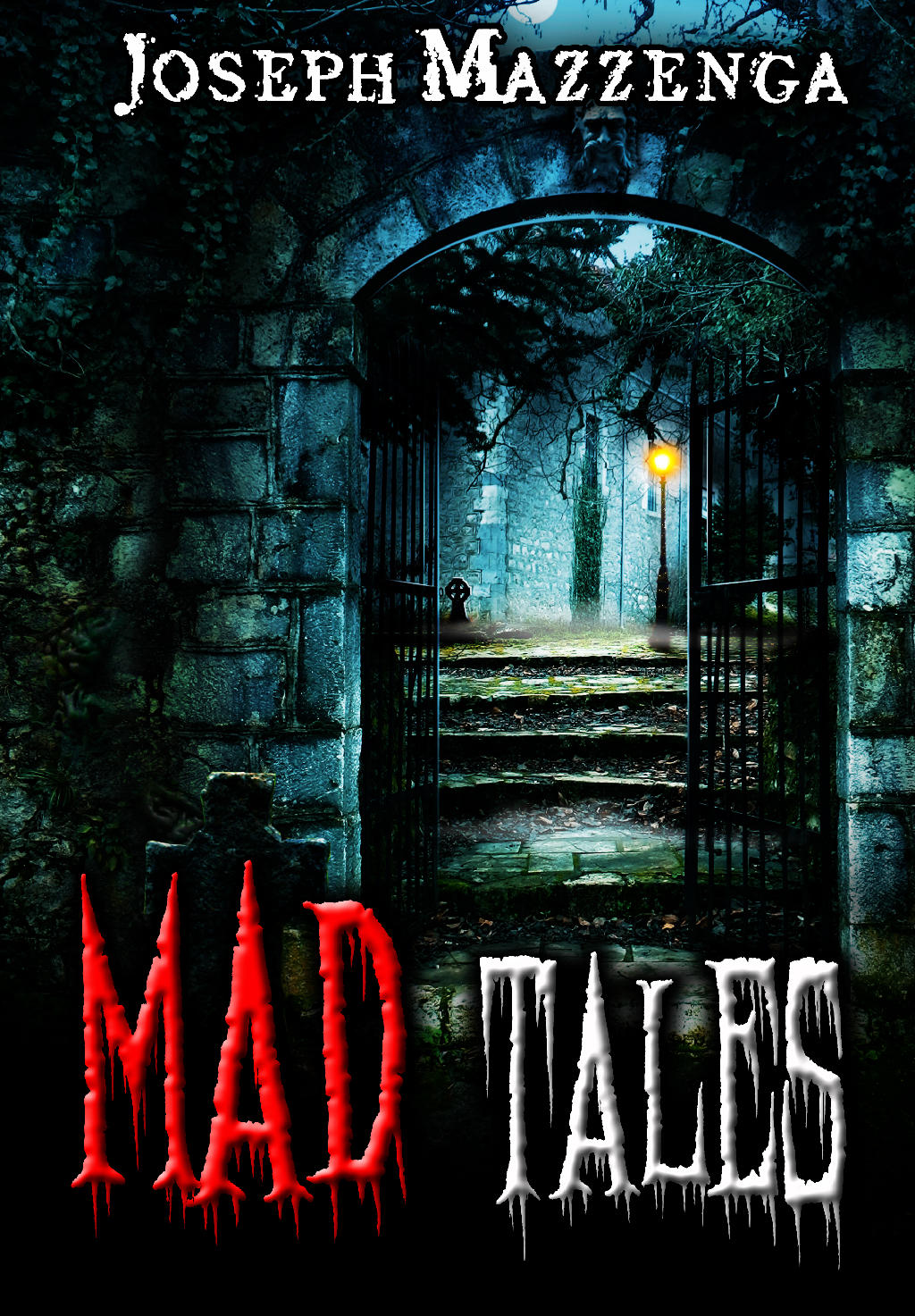
Mad Tales

Joseph Mazzenga

Come October, you can’t go wrong with a collection of horror stories on the nightstand (or anytime, really, if you ask Mad Talesme). While not straight horror (Mazzenga incorporates elements of the weird, sci-fi and urban fantasy), Mad Tales is a collection of the creepy and creative befitting autumn, the best of all seasons.

“Pepperell,” the lead story, truly stands out. It’s a fast-paced thriller fueled with a Twilight Zone aesthetic that disorients as well as it delights. The character development is a bit thin in this tale of outlaw bikers descending upon a quiet mountain town, but the “said the spider to the fly” motif compensates for the broadly sketched personalities.

There is no short-changing on the characters in “Bloody Depths,” a sprawling seascape of uncertainty that delivers its nightmares at an even pace. Here, we have more time to engage with the main character’s plight and share her dread as Mazzenga takes us to some weird—I mean really weird—places.

While they may incorporate elements of fantasy and sci-fi, each of the Mad Tales features a creepy tone that firmly establishes this enjoyable collection in the horror genre.

Review: The Winter People

The Winter People

Jennifer McMahon

What is it about New England that inspires isolated, small-town horror tales in which the Winter Peopleblood runs as cold as the weather? I’m not sure what it is exactly, but having spent many a wintry a night in Maine, I am familiar with that feeling.

And I can’t get enough of it.

Jennifer McMahon captures that frostbite feeling perfectly in The Winter People, a heartbreaker of haunted legends and legacies, curses and karma, and, more than anything, unendurable loss.

The Winter People has a dual narrative—a modern-day mystery in which a teenager, Ruthie, is forced to take charge of her little sis when their mother goes missing. While searching for her mother, she stumbles upon the diary of Sara Harrison Shea, who lived in the house in 1908.

The diary does not have a happy ending. Both Sara and her daughter died in 1908, but the journal entries suggest that death is not exactly the end of the story.

The Winter People is well-written and bursting with heart. There are mysteries at every turn, and reminders that grief can be deadly. Or worse. In one of the book’s most haunting devices, Ruthie discovers that her mother has nailed shut her closet from the outside. For what purpose? Let your imagination go wild with that one.

The soul of the book, though, is the “sleepers.” Ruthie learns of a spell that will raise the dead for seven days’ duration, after which they are gone forever. It’s a universal temptation. Wouldn’t it be great to say a proper goodbye to a loved one who died suddenly? To hold a lover’s hand just a little longer? To actually say the things we think to say only after it’s too late?

Or would it be a daily torment, watching the minutes and hours crumble to dust?

But there is always a price. Like a modern retelling of “The Monkey’s Paw,” there are consequences for disrupting the dead, and The Winter People reminds that despair can drive even the most sensible among us to dangerous depths.

That’s what makes this novel so endearing. And so heartbreaking.

Shine On

When civilization was rebuilding following an interking-007national plague, the epicenter of humanity was Chautauqua Auditorium in Boulder, Colo. At least that’s how it happened in Stephen King‘s The Stand, an epic tale of apocalypse, atonement and the will to persevere.

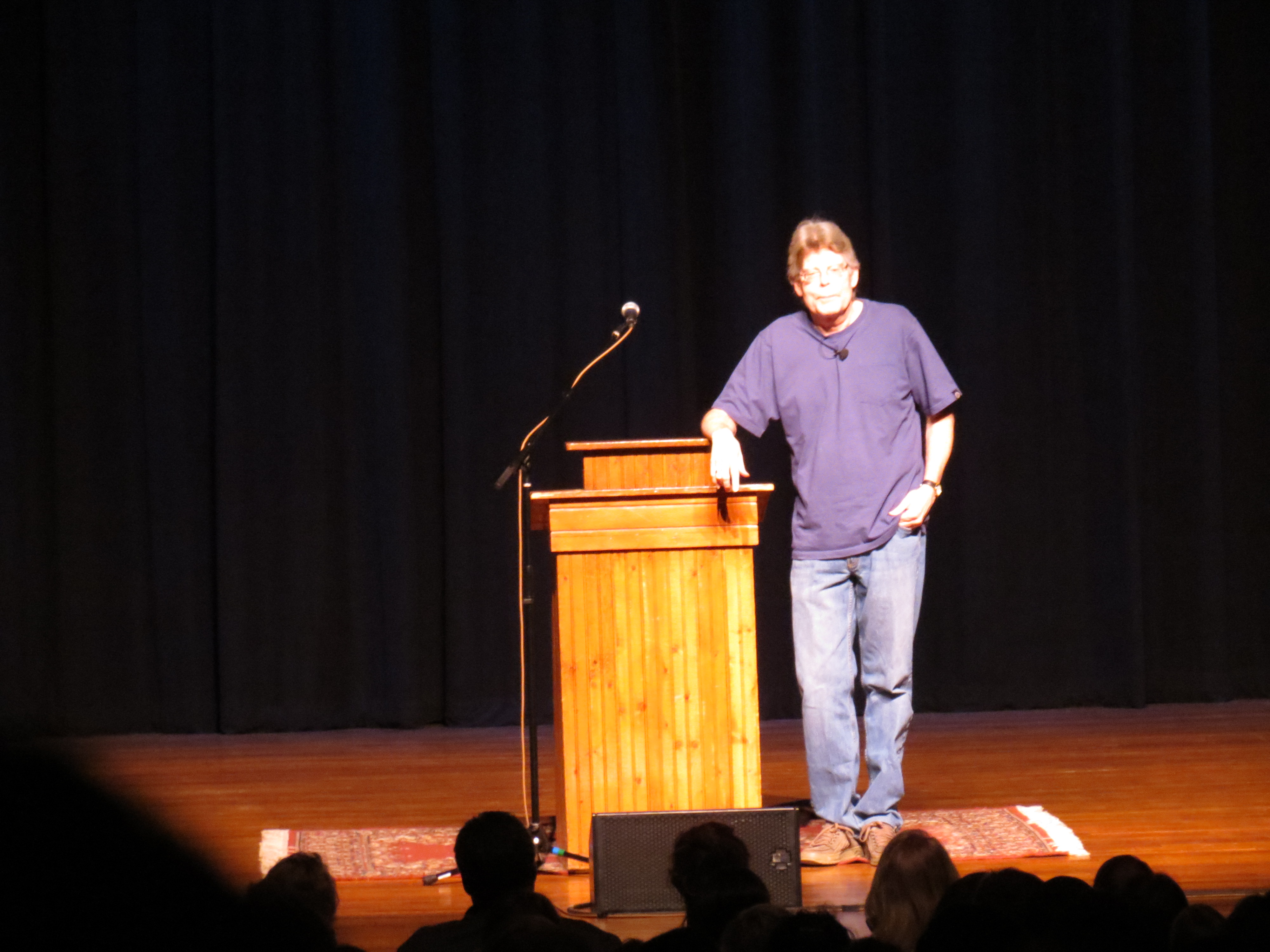
So it was fitting that, in the aftermath of the floods that devastated Colorado’s Front Range, particularly Boulder, a crowd of more than 1,200 gathered in Chautauqua on Sept. 26.

But this time it wasn’t to hear from Stu Redman or Mother Abigail. It was to hear from the man himself.

“This is where the first Boulder Free Zone meeting was held, right here in this auditorium,” King said early in his talk before a sell-out crowd.

King, his wife Tabitha and two of their children briefly lived in the city in the mid-’70s, following the publication of King’s second book, ‘Salem’s Lot. He authored two of his most famous novels in the shadow of the Flatirons, The Stand and The Shining.

So it’s only fitting that he returned to Boulder to celebrate the release of Doctor Sleep, the long-awaited sequel to The Shining.

“I wanted to see if my old King Soopers was still there,” King joked, referring to the grocery store in his former South Boulder neighborhood.

It’s still there, as is the Stanley Hotel an hour up the road in Estes Park.

First published in 1977, The Shining was King’s first hardback bestseller. And while most folks are familiar with the Stanley Kubrick interpretation, the film featured a few exterior shots of Boulder and nothing of the Stanley Hotel on which it was based. (The Stanley is now home to ghost tours, Halloween galas and the Stanley Film Festival—and I highly recommend the pilgrimage.)

King recalled fondly his mountain writing studio and the inspiration he felt there.

“It was the greatest writing time of my life,” he said, though he doesn’t recall the specifics of creating the actual books. “I only remember that I was happy. I was engaged. I think most imaginative writing is like that.”

King’s innate talent and creativity was likely aided by a progressive, anything-goes attitude of a college town in the foothills undergoing the growth spurt that transformed it into one of the country’s top-rated cities—an epicenter of technology, education and craft-brewed beer.

“I stopped to pick up a hitchhiker one day, on Broadway, and I got rear-ended,” King said of one of his more interesting Boulder memories. “The hitchhiker ran off, and I got cited.”

A second vehicular mishap provided the inspiration for another King classic. His car broke down in Boulder Canyon, and he was walking into town for assistance. While crossing a bridge, he noticed the clack of his cowboy boots on the wooden planks. He wondered: What might be underneath this bridge listening to his footfalls?

Perhaps a clown—and thus the seed of Pennywise, the supernatural killer in It, was planted.

But the book he was really here to talk about was Doctor Sleep, which hit shelves on Sept. 25.

“People kept asking me whatever happened to Danny Torrence,” he said. “I decided, finally, that I would try to write a sequel.”

He was fascinated, he said, with the cyclical nature of family dysfunction, how children of abusive or alcoholic parents tend to repeat that behavior as adults. So it’s fitting that Danny’s adult life is, well, complicated.

Now in his 40s, Danny is a hospice worker in New Hampshire, where, along with the help of an intuitive cat, he helps suffering patients come to rest. But though the novel begins in New England, it inevitably takes to the road.

And that road could only lead to one place.

“Eventually, he has to go back to Colorado and to Boulder,” King said.

He read excerpts from Danny’s return to the city, which involved a particularly nasty hangover and an over-the-top gross-out gag that will have his most hardened readers choking up.

It is a sequel decades in the making, and a return to one of King’s greatest triumphs. This is a treat for long-time fans, and new ones. During the Q&A, a question came from a fan who started reading King in their youth, and now their kids are reading the books.

“I think it’s nice when people pass the book down from generation to generation,” King said.

But his literary legacy includes more than his books and films. It also includes his offspring. His youngest son, Owen, is the author of Double Feature, and his oldest son is best-selling author Joe Hill. Joe and his dad have collaborated on two novellas and often share ideas when writing their books. For example, they were simultaneously working on Doctor Sleep and Hill’s NOS4A2, and each included a scene in which their characters cross paths.

“In a strange way, it’s almost like writing with another part of myself,” King said of his collaborations with Joe.

Doctor Sleep will certainly bolster the already absurdly rich King oeuvre. It will take readers back to some cherished places, both physical and psychic: Boulder, the Overlook Hotel and one of the finest and most terrifying works of psychological horror ever penned.

And together, we will once again croak our favorite and most-haunted mirrored phrase: RedRum.

Summer Horror Roundup

Though the days still blister, at night there is a welcome chill and the softest whiff of decay. It’s a beautiful smell, and within a few weeks we’ll hit full-on autumn. Though we’re excited about the fall, we’d be remiss if we didn’t discuss some of the summertime horror we’ve enjoyed throughout the year.

The Hole

William Meikle

Now this is a book I can relate to: hard drinking, manual labor, mines, sinkholes, battles with subterranean evil.The Hole

Ah, to be 23 again.

From the start, this fast-paced small-town horror shudders with ominosity. (Is ominosity a word? If not, it should be.) Intense headaches and nosebleeds afflict the townsfolk, and then the earth comes out from under their feet.

Literally.

A giant sinkhole opens in a back yard (leading to a hilarious septic tank scene) and begins swallowing up the countryside like the San Andreas Fault. At first, the backwoods residents fear a natural disaster.

But then they notice the creatures rising up from the hole.

And so the horror begins…

Enjoy this quick-hit tale of small-town suspicion, working-class gumption and a long-buried secret that won’t stay dead.

Doors

Daniel Brako

Being a dorky loner, I spent most of my summers watching late-night reruns of The Twilight Zone. That certainly figured intoDoors my attraction to Doors, which concerns a psychologist working with a patient who sees doors everywhere he looks. Then, the doctor begins to see them too.

I’ve always loved the idea of another world overlapping with our own, only visible if we squint in just the right light. It has the appeal of a conspiracy theory. It’s the world, just slightly askew. All around us, invisible, with dire consequences. A world within a world. (Don’t get me started on quark theory.)

Having worked in mental health, I’ve conversed with many schizophrenics, delirious alcoholics and addicts in the throes of a psychotic break. Their storytelling has the effect of quicksand—you don’t realize how engrossed you are in their story until you’re up to your neck. They give you a plausible setting and people, then a string of plausible events occur, followed by a string of less-plausible events, then even less and less plausible, and then suddenly, boom, the narrator reveals that the gunshot was stopped by the metal plate inside his head and the rebounding bullet struck the shooter instead.

It’s a dissociative feeling. Everything seemed so normal, so sane, twisting only in slight degrees before you realize it’s all a delusion. Or is only some of it? That’s what makes it so creepy.

It’s our world, slightly askew.

That’s what I was hoping for in Doors, and it begins promising enough. The manic patient begins his tale, and I got that tingle of dissociation. Unfortunately, it doesn’t last. The psychologist, David Druas, buys into the narrative too quickly. I wanted more push-back from David, mainly to prolong that quicksand effect, but also for verisimilitude: No legitimate psychologist would be convinced so quickly.

At this point I realized that the novel rushed through this part to get to the pulse-pounding events that follow. That’s unfortunate. I was hoping for more of a psychological head-trip.

Meeting the book on its own terms, this is a well-conceived novel with thrilling and engaging sequences. And I can certainly except the supernatural in horror fiction. But I wish the story hewed closer to plausibility so I could longer relish that feeling of slowly being drawn in to a nightmare.

The Last Whisper in the Dark

Tom Piccirilli

Yes, we have reviewed this book already, but it’s worth repeating. This is a tremendous book by a gifted author. Put this on yourWhisper “must-read” list.

And for anyone who missed the earlier review, here you are:

There are not enough superlatives when discussing Tom Piccirilli. The man is a brilliant and diverse writer: He’s won awards for his horror, fantasy, thrillers and even poetry—bagging the prestigious Bram Stoker award on four occasions.

Previous novels, such as Shards, A Choir of Ill Children and November Mourns, have shocked and terrified, but with his new release, The Last Whisper in the Dark, Piccirilli takes us to a far more tender place.

A tender place, it turns out, just as disarming as his nightmares.

I’ll sum it up this way: I was shedding tears by page three. I think the only other book that has ever had me crying this early in the narrative is Dave Eggers’ A Heartbreaking Work of Staggering Genius.

Piccirilli has a knack for character development and storytelling, and The Last Whisper in the Dark, a sequel to 2012’s The Last Kind Words, may be his deepest work yet.

Concerning Terrier (Terry) Rand, a young thief from a family of small-time criminals, Piccirilli has given us a protagonist as sympathetic as he is fearless. On the surface, the story is about the disappearance of Terry’s friend Chub and the ensuing search that drives him head on into gangsters, killers and a femme fatale.

But on a deeper level, this is a tale of honor and family and the clumsy way we go about expressing our feelings to the ones we love. The Rands are a proud and tragic clan, with dementia and criminality in their blood—as well as an outlaw tendency that keeps them on the fringes of society.

But their strongest trait is honor. Terry is loyal to an estranged friend who stole the only woman he ever loved. He quietly looks out for his sister, even as she rebels against him and helps desecrate their dead brother’s grave. He remains devoted to a family that can occasionally be distant and dysfunctional, but always has each other’s backs.

You can mess with Terry, but you’d best not fuck with his family.

You’ll fall in love with Terry by the end of the first chapter, and you’ll be cheering him on the rest of the novel. And when it’s done, you’ll applaud Piccirilli for this tender bit of noir literature.

Piccirilli is an established icon within the horror realm, but he has yet to crack through to the mainstream, which is unfortunate. This is a writer worthy of notice, and hopefully this book is the one that reaps him the exposure and attention he deserves.

Review: The Last Whisper in the Dark

There are not enough superlatives when discussing Tom Piccirilli. The man is a brilliantWhisper and diverse writer: He’s won awards for his horror, fantasy, thrillers and even poetry—bagging the prestigious Bram Stoker award on four occasions.

Previous novels, such as Shards, A Choir of Ill Children and November Mourns, have shocked and terrified, but with his new release, The Last Whisper in the Dark, Piccirilli takes us to a far more tender place.

A tender place, it turns out, just as disarming as his nightmares.

I’ll sum it up this way: I was shedding tears by page three. I think the only other book that has ever had me crying this early in the narrative is Dave Eggers’ A Heartbreaking Work of Staggering Genius.

Piccirilli has a knack for character development and storytelling, and The Last Whisper in the Dark, a sequel to 2012’s The Last Kind Words, may be his deepest work yet.

Concerning Terrier (Terry) Rand, a young thief from a family of small-time criminals, Piccirilli has given us a protagonist as sympathetic as he is fearless. On the surface, the story is about the disappearance of Terry’s friend Chub and the ensuing search that drives him head on into gangsters, killers and a femme fatale.

But on a deeper level, this is a tale of honor and family and the clumsy way we go about expressing our feelings to the ones we love. The Rands are a proud and tragic clan, with dementia and criminality in their blood—as well as an outlaw tendency that keeps them on the fringes of society.

But their strongest trait is honor. Terry is loyal to an estranged friend who stole the only woman he ever loved. He quietly looks out for his sister, even as she rebels against him and helps desecrate their dead brother’s grave. He remains devoted to a family that can occasionally be distant and dysfunctional, but always has each other’s backs.

You can mess with Terry, but you’d best not fuck with his family.

You’ll fall in love with Terry by the end of the first chapter, and you’ll be cheering him on the rest of the novel. And when it’s done, you’ll applaud Piccirilli for this tender bit of noir literature.

Piccirilli is an established icon within the horror realm, but he has yet to crack through to the mainstream, which is unfortunate. This is a writer worthy of notice, and hopefully this book is the one that reaps him the exposure and attention he deserves.

Stephen King, Joyland

JoylandJoyland by Stephen King

My rating: 3 of 5 stars

The first three-fourths of
Joyland
are amazing, some of King’s best recent work. The ending, however, is a bit too easy and familiar. King’s previous offering through Hard Case Crime, The Colorado Kid, subverted convention and was far more challenging to the reader.

Infused with heart and the nostalgic thrills of boardwalk carnivals, Joyland is worth the ticket price. The novel begins as a rail-rattling thrill ride, but, in the end, eases too gently into the station.

View all my reviews

June Recommendations

In another day we’ll be heading off to London, and around this time Transgress will publish its annual summer book preview/review. In the coming days, we’ll be dishing out smaller portions of the issue, beginning with today’s blurbs about some books you may have missed this past month.

Joyland, Stephen King

I plan on devouring this little beauty on the first leg of the transatlantic flight. As joylandyou know, we at Ensuing Chapters and Transgress Magazine are all about funhouses and noir. So, a Stephen King paperback original about a funhouse for the imprint Hard Case Crime?

Bring it.

King’s previous offering through Hard Case was The Colorado Kid, a wonderfully creepy tale about an unsolved murder in a small Maine town. Some of you may also know it as the SyFy program, Haven.

I’ve got my ticket, and I’m already chilled thinking of the horrors that await in Joyland.

Creation: How Science is Reinventing Life Itself, Adam Rutherford

I recommend Adam Rutherford’s Creation for any fan of science writingcreation. However, my endorsement comes with a disclaimer: The electronic review copy I downloaded was corrupted and difficult to navigate. The result is that I didn’t read this book front to back, as I normally do. However, I was able to access about half of it, and what I read I thoroughly enjoyed.

Of particular interest to Transgress readers are the graphic details of surface cuts when explaining how the skin recovers from a wound. The squeamish reader might want to tag this book as horror for this reason alone.

Though I doubt there are any squeamish readers this blog.

Stylistically, Creation blends wit and storytelling with fair doses of hard science. Fans of Sam Kean, Mary Roach and Malcolm Gladwell will find much to love in its pages.

The Ocean at the End of the Lane, Neil Gaiman

Not since Joseph Campbell has an author had both a profound understanding oceanof mythology and the ability to present it to a general audience with such passion. I see Gaiman and Campbell as two sides of an intergenerational coin: the academic who deconstructs myths and the author who creates them.

His new novel, his first for adults since 2005’s Anansi Boys, concerns a young boy returning home–and reconsidering odd events from summers past.


The Hole, William Meikle

And what summer would be complete without a subterranean adventure? This twisted treat comes from one of my favorite publishers, DarkFuse, and concerns a chasm (literally, not figuratively) snaking through a rural town. What comes next promises to be delightfully morbid. I’ve got this on my to-read list and can’t wait to descend into its depths. A review will come later this summer.

Come back tomorrow for a review of The Unrest-Cure and Other Stories by Saki, illustrated by Edward Gorey.

A Playground for Insomniacs

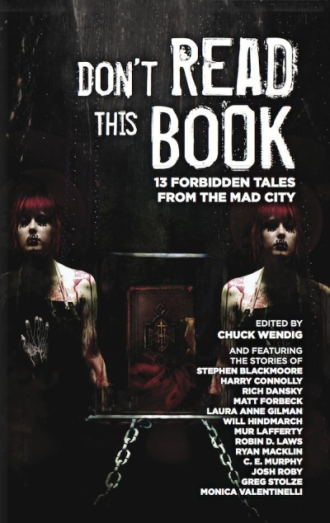
For some, sleep is a peaceful proposition. For others, like me, lights out has always been more of a punishment. The latter is the intended audience of Evil Hat Productions’DRTB Don’t Read This Book, a collection of 13 waking nightmares for the hard of sleeping.

These stories are set in the world of the Don’t Rest Your Head RPG, which I haven’t played, but seems perfectly designed for someone like me. My loose understanding of the game, based on reading this book (despite the admonition of its title) and researching a little about the RPG, is that it takes place in a dystopian dreamland (Mad City) populated with clockwork cops, shadow stalkers and any other gritty creature your mind can conjure up. You are among the Awake—insomniacs who have stayed up far too long and find themselves within the freak show of Mad City.

The Awake are in quite the pickle. Fall asleep and you die. But stay awake for too long and you’ll go mad and permanently inhabit the nightmare.

This is genius. Having been lifelong frenemies with the Sandman, I recognize this world, and it is more terrifying than most fictional places. Probably because I know what it feels like to go to work on your fourth day awake. I know the psychedelic side effects of clocking out from your graveyard shift and then clocking in at your day job a few minutes later. Things move in ways they shouldn’t, you lag a few seconds behind in every conversation and, worst of all, a mechanical noise fills your ears—not a buzz or a ring, but a machine-like pulsing that clouds thought and creates the sensation that someone is constantly following you.

Hallucinate from staying awake? Been there. That’s why the nightmares within Don’t Read This Book, edited by Chuck Wendig, are familiar territory for me.

And thoroughly enjoyable.

Standouts include Stephen Blackmore’s “Don’t Lose Your Patients,” Mur Lafferty’s “Don’t Bleach Your Memories” and Harry Connolly’s “Don’t Chew Your Food,” but this is a solid anthology front to back.

Gamers, steampunks, urban fantasists and horror fiends will find something to love in here. But those who may enjoy it most are us insomniacs.

Those of us who know that the torture of falling to sleep is worse than any nightmare that may be lurking on the other side.

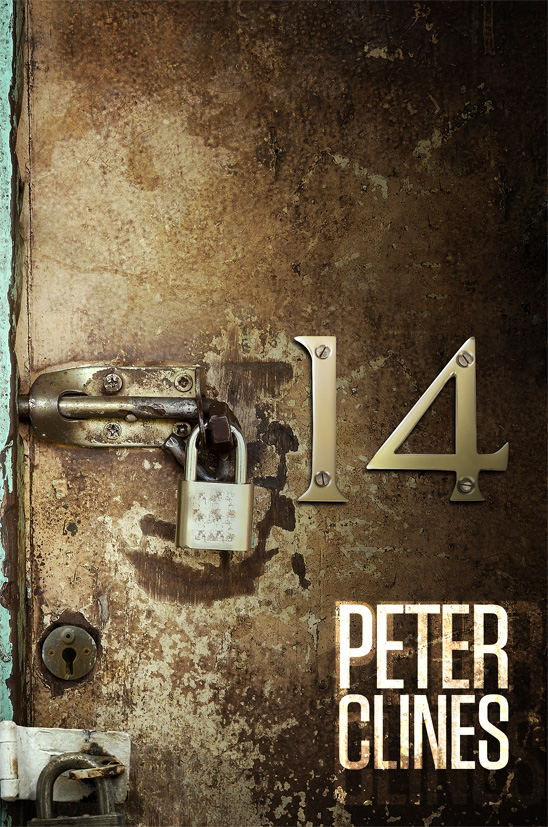
Peter Clines: 14

If I’ve learned anything from my lifelong obsession with horror, it’s that:14

  1. If someone introduces you to an opportunity too good, and too convenient, to be true, you probably shouldn’t take it because it can only mean trouble. And,
  2. If someone introduces you to an opportunity too good, and too convenient, to be true, you definitely should take it because you are guaranteed adventure—most likely one shadowed with conspiracy and gore.

So it goes in 14, by Peter Clines, in which an apathetic data-entry temp (Nate) is referred to a cheap apartment, where rents are suspiciously low, utilities shockingly free and the neighbors… well, the ones who stick around are… interesting.

The setting for this quasi-Lovecraftian, quasi-apocalyptic story is the Kavach building, which seems odd even by L.A. standards. Early in his stay, Nate notices some curious features of the old building: all the units have different dimensions; the plumbing is an inefficient web of pipes; there are discolored lights; green, mutant cockroaches; and, best of all, certain apartments are padlocked shut.

Among them, apartment 14.

This is where Clines truly excels. He develops a chilling atmosphere and social dynamic within the walls of the Kavach, and I absolutely devoured the first half of the book. The dialogue is shallow in spots, but the characters are as mysterious as the building, and as more secrets unfold, we follow a resilient crew of tenants into the deep tunnels beneath the Kavach.

Of all that I loved about the first half of this book, the tunnels were by far my favorite. The subterranean setting is magnificently drawn, and it’s that sweet spot in the book where the characters are fully realized and revealed, and the reader is absorbed in their struggle.

The second half of 14 is very entertaining, particularly the third quarter, but lacks the literary muscle of what came before. The first half was tight, focused, suffocating. It narrows until we get to the bottom of the tunnels, but then we begin expanding and things get a bit turbulent. Clines does a solid job of planting intriguing clues to be sussed out later, but the ending suffers from too much revelation.

I’d like to illustrate this with an anecdote.

My first apartment was a crumbling duplex on Tamplin Street in Sharon, Pennsylvania. It was dumpy and narrow, but the perfect incubator for two eventual writers (me and my roommate, Todd).

Particularly inspiring was the basement.

There was a biohazard sign on the basement door, with the words “Fallout Shelter.” The house was old enough that the sign could have been legit, though we suspected it was decoration. The basement itself was a throwaway slab of concrete—functional, boring, filled with spiders. The only thing scary about it was the rickety set of stairs.

And the unexplained, nailed-shut door on the northern wall.

The mystery door was almost a square, shaped more like a large window than a door, and rather than starting at the floor, the bottom edge was two feet off the ground. The top edge was only a few feet higher. It was the size and shape of a cupboard or a crawlspace. But why was it nailed shut?

Horror fanatic that I am, I tried to pry it open at least enough to glimpse what was on the other side. Thankfully, I wasn’t able to. Most likely, it was just a collapsed storage space (this was a mining/steel town, and it was fairly common for back yards to become ravines). It contained probably nothing more than the earth-packed remnants of a sinkhole.

But because I never got a look behind the mystery door, it has never lost its magic. Instead of a sinkhole, in my mind that door seals off a series of tunnels that burrow beneath our town, perhaps an old Prohibition-era bootlegging route, or perhaps it connects with the old cemetery two blocks away. Instead of storage space, there is a cache of forbidden scrolls. Or, befitting my Poe-obsessed youth, this is the subterranean vault where our slumlord buries alive his tenants.

Who knows, maybe even a bomb shelter.

The point is, I’m still fascinated by that shuttered basement door.

And that’s why the first half of 14 is an absorbing read. This is literature for anyone who has searched every new apartment for secret passages, hiding spots or trapdoors. Crawled through cobwebbed eaves, the musky underbelly of mobile homes and believes, always, that every building has a secret history to tell.

But unlike that basement door on Tamplin Street, we do learn what’s inside those padlocked rooms at the Kavach building. What we find there is original, for sure, but it dispels the magic. Each new revelation takes us further away from believability until 14 enters camp territory. And I’ve got nothing against camp. Truly, this part of the book is fun.

But it doesn’t mesh with the earnestness of the setup.

The action-packed finale further untethers the reader. The sequences are rushed, and where dialogue and observations from the characters should anchor us, we get snarky quips and CGI visuals. There is a nice homage to Lovecraft throughout, but HPL’s great trick was that we seldom saw what his creatures did. Rather, he hinted at what they could do.

Clines is a hell of a writer and storyteller, but here, he opens one door too many.

But that’s not entirely a bad thing, and certainly not a deal breaker (I just have a preference for more existential horror). This is a book I highly recommend. It’s fun, engaging, and I only give it four stars instead of five because of the overload of revelation at the end.

I’d prefer to leave a door or two shut. I want to imagine what’s behind it. A body? A tunnel? Treasure? Or nothing?

The best part is that I’ll never know.