book reviews

Review: The Upside of Your Dark Side

The Upside of Your Dark Side

Todd Kashdan and Robert Biswas-Diener

So, I’m not exactly the target audience for this book, as I long ago embraced my Upside of Your Dark Sidedark side, but I’m glad that Kashdan and Biswas-Diener, a pair of psychologists and professors at George Mason and Portland State Universities respectively, are promoting widespread awareness.

And no, this isn’t a Darth Vader-style enticement to evil, but rather a commitment to intellectual and emotional honesty. Embracing the dark side is being an anti-Pollyanna, acknowledging negative states of consciousness rather than suppressing them. Realizing that feeling bad is inevitable and natural.

Or, to let the scientists speak for themselves, “…we, the authors, reject the notion that positivity is the only place to search for answers. We reject the belief that being healthy is marked by a life with as little pain as possible.”

Perhaps it’s my love of Eastern philosophy, but I’ve always subscribed to an elastic emotional outlook: the greater the highs, the greater the lows. Inoculating oneself from pain only serves to numb one’s experience of joy.

It’s a conundrum that dates at least as far back as the dueling philosophies of the Cynics and the Stoics, but has become especially germane in the decades of post-WWII prosperity. At some point in the past 50 years, the fantasy that you could enjoy the thrills without enduring the chills became an accepted philosophy.

To seek comfort and happiness is natural, but now, the authors argue, it has become an addiction.

The self-help and pharmaceutical industries, along with positive psychology (to a lesser extent), have cultivated a bubble-wrapped culture where discomfort is treated as an abnormal condition. Not only is this unrealistic, it’s not healthy. There’s nothing wrong with feeling down sometimes, feeling angry sometimes.

“People who are whole, those of us who are willing and able to shift to the upside or the downside to get the best possible outcomes in a given situation, are the healthiest, most successful, best learners, and enjoy the deepest well-being.”

I’m reminded of my own experiences in therapy. I was the difficult patient who used my session time to challenge my therapist with my grim view of humanity. I would rattle off atrocities and injustice and point out that our culture rewards the worst kind of people and punishes the good. No, not just our culture—our species. Then I would grin triumphantly as the counselor struggled to argue against that.

I knew I’d finally found the right therapist when, during our first session, I gave her my misanthropy spiel. Her response: “Yeah, you’re right. So what?” Sometimes things are shitty.

This was the jolt I needed to crack my defiant shell and get to work on getting better.

Kashdan and Biswas-Diener hope to provide the same jolt to readers acclimated to a self-help mantra of “I’m OK, You’re OK,” and hopefully they are successful in this task.

They should be, as this is a very interesting read. What I like about The Upside of Your Dark Side is how the authors incorporate scientific research, positive psychology theory and personal anecdote to construct a cogent warts-and-all perspective of the human experience. Even though it features plenty of scientific research, the narrative is very accessible to lay-readers.

The shortcoming of the book, for me, is that the authors can be overly expository—they do a good job of illustrating a point, but then summarize said point as though they don’t trust the reader to draw the correct conclusion. But I wouldn’t mark down a letter grade for that. That’s the inherent risk with science writing. The authors have to take arcane material and present it to an audience that, for the most part, doesn’t share the authors’ background or familiarity with the topic.

Kashdan and Biswas-Diener by and large hit the sweet spot between academic and accessible. This is a book to be enjoyed by all—and to some a revelation.
Horror Shorts

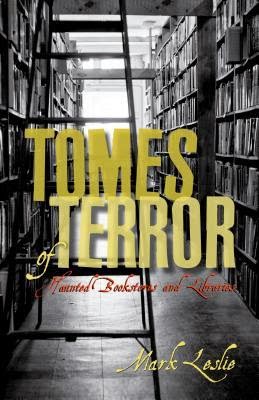
Tomes of Terror

Mark Leslie

There are two things I like to do anytime I come to a new town:Tomes of Terror

  1. Visit the local book shops
  2. Take a ghost tour to learn about its haunted legends

So you can guess my excitement to read Mark Leslie’s Tomes of Terror, a collection of hauntings set in libraries and bookstores.

Leslie’s first two nonfiction books explored the haunted legends of Hamilton and Sudbury in Canada. This time he travels the globe recounting stories of specters who re-shelve library books, peruse the remainder pile or just want to sit in a quiet corner and enjoy a good book.

I can relate. My ideal afterlife would be spent on the top floor of the Boulder Book Store (with occasional sojourns along Pearl Street to Illegal Pete’s, of course).

As for Leslie’s collection, it’s a great read for any fan of ghost literature. It’s also a mixed bag, with some anecdotes chilling, some sweet, some silly.

There is one shortcoming in this book, but it is no fault of Leslie’s. It’s the medium. Sadly, the written word can’t compete with a spook story shared in hushed whispers around a campfire, so truly visceral frights are few.

Case in point: As much as I enjoyed both installments of Roz Brown and Ann Alexander Leggett’s Haunted Boulder series, their stories truly come to life when performed by master tour guide Banjo Billy. (I highly recommend both the books and the ghost tour, if you happen to be in Boulder, Colo.)

Despite the limitations of the printed page, I love any well-written and –researched book of hauntings. What I like most about them, I think, is that the tales turn out to be more historical than horrific. I’ve come to view ghost books (and tours) more as historical documents than anything else, but the kind that infuse a town with a lot of personality.

For me, it’s hard to truly love a place until I’ve explored its ghostly geography.

Fittingly, some of the most fascinating parts of Tomes of Terror are not the ghosts, but the histories of the libraries and stores themselves.

A sad postscript is that a fair number of the bookstores mentioned in this collection are now closed, becoming a different kind of ghost. And that’s truly terrifying.

But the stories never die, and in that sense, the shuttered stores live on in their own haunting way. Like ghosts, their spirits persist in the pages of Leslie’s collection.

Long may they haunt.


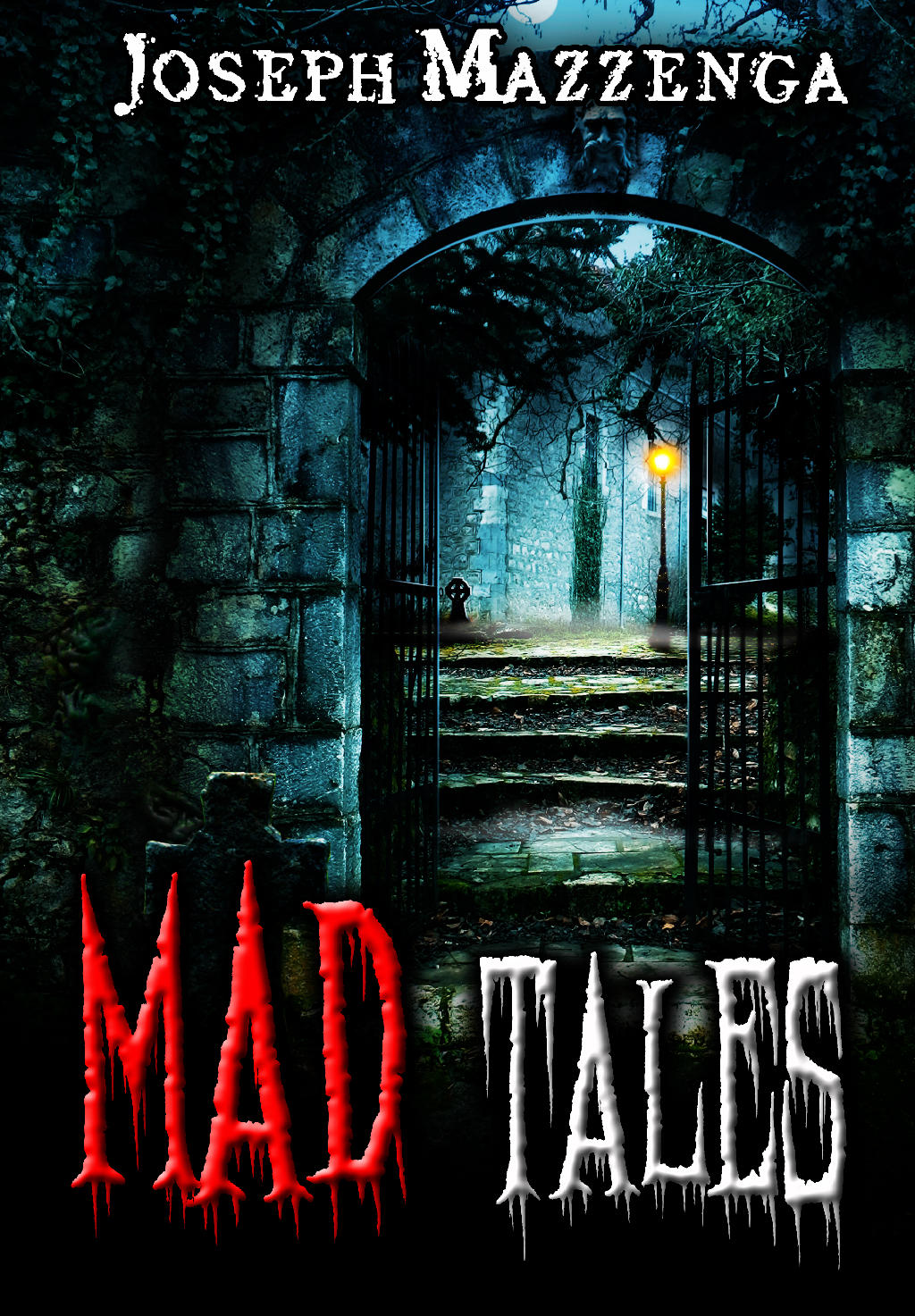
Mad Tales

Joseph Mazzenga

Come October, you can’t go wrong with a collection of horror stories on the nightstand (or anytime, really, if you ask Mad Talesme). While not straight horror (Mazzenga incorporates elements of the weird, sci-fi and urban fantasy), Mad Tales is a collection of the creepy and creative befitting autumn, the best of all seasons.

“Pepperell,” the lead story, truly stands out. It’s a fast-paced thriller fueled with a Twilight Zone aesthetic that disorients as well as it delights. The character development is a bit thin in this tale of outlaw bikers descending upon a quiet mountain town, but the “said the spider to the fly” motif compensates for the broadly sketched personalities.

There is no short-changing on the characters in “Bloody Depths,” a sprawling seascape of uncertainty that delivers its nightmares at an even pace. Here, we have more time to engage with the main character’s plight and share her dread as Mazzenga takes us to some weird—I mean really weird—places.

While they may incorporate elements of fantasy and sci-fi, each of the Mad Tales features a creepy tone that firmly establishes this enjoyable collection in the horror genre.

Review: Waking Up

Waking Up: A Guide to Spirituality without Religion

Sam Harris

My anticipation for the new Sam Harris book turned to anxiety when I learned it would be about spirituality. Was the firebrandtype philosopher and scientist—co-founder of Project Reason and author of The End of Faith and Letter to a Christian Nation—changing teams?

Nah.

Perhaps a better title for this book, though, would be The Atheist’s Guide to Meditation.

At its core, Waking Up is about mindfulness, and as a fellow atheist who has attended a fair share of Buddhist retreats (including a recent one on Mindfulness-Based Stress Reduction), I can relate to some of the conflicts Harris encounters. No matter how secular the retreat, I get nervous when I find myself in a room full of people following the direction of a group leader offering spiritual betterment.

Harris takes out the touchy-feely and goes straight for the scientific foundation of a mindfulness-based approach to life. The result is a book heavy on Buddhist philosophy and refreshingly light on bullshit.

What makes Waking Up different is that it’s also what Harris calls a “seeker’s memoir.” We follow his journey from a skeptical teen to an adult struggling with the feelings of “unsatisfactoriness”—which is his interpretation of the concept of dukkha, rather than the traditional definition of suffering.

He had my attention early in the book, when describing the disquiet of his solitary thoughts and the relief he felt when experimenting with MDMA, LSD and DMT: “It would not be too strong to say that I felt sane for the first time in my life.”

Through his seeking, Harris reveals that, for him, spirituality is not the existence of a higher being in the ethereal realm, but rather the cognizance one has of an immaterial self. “Subjectively speaking, the only thing that actually exists is consciousness and its contents. And the only thing relevant to the question of personal identity is psychological continuity from one moment to the next.”

Speaking of continuity, Harris gets a little far afield the deeper we delve into the book. Beyond memoir, he explores the scientific underpinnings of consciousness and meditation, drops some knowledge about psychedelic drugs and, justifiably, rants on the silliness (and scientific dishonesty) of Proof of Heaven and other accounts of near-death experiences.

While I really enjoyed many of these sections, they didn’t have the cohesion of a linear narrative. It read more like a collection of essays on a single topic—which is fine, just not what I was expecting.

Harris’ informed and enlightened discussion of psychedelics resonates the most with me. Not only do I agree with his observations (and share some of his experiences), but Harris also challenges some of my long-held assumptions.

For instance, Aldous Huxley’s Doors of Perception is a seminal bit of psychedelic literature, and for years I bought in fully to Huxley’s description of the brain as a “reducing valve.” Harris debunks this by drawing on modern neuroscience, causing me to think about mind-manifesting drugs in a new way.

All told, Waking Up is an interesting and enjoyable read. There’s a bit of science writing, philosophy, memoir and a unique take on spirituality and meditation.

Review: Rock ‘n’ Roll Soccer

Rock ‘n’ Roll Soccer

The Short Life and Fast Times of the North American Soccer League

Ian Plenderleith

I recall, from my childhood, soccer on television, cheering for Pelé and watching him slow-motion bicycle kick his way through Nazis alongside Sylvester Stallone. And then it was gone.Rock n Roll Soccer

I don’t remember when it went away, but in the early 1980s, my attention turned to music and girls. So long, Pelé. Farewell slow-motion bicycle kick. We hardly new ye. It didn’t even occur to me, until Major League Soccer started play, that there was no longer an elite professional American league.

Fast forward to 2014, and soccer in America is once again on the rise. It’s now expected that the U.S. men’s team will not only qualify, but advance to the knockout rounds of the World Cup. The bar is even higher for the medal-winning women’s club. MLS is approaching its 20th season, and the future is looking bright.

Couple that with the self-immolation of the NFL and in a few decades Monday Night Football might be a whole different ballgame. Literally.

The groundwork for today’s soccer popularity was laid by the North American Soccer League, the subject of Plenderleith’s Rock ‘n’ Roll Soccer. This is required reading in a World Cup year, and a treat to read anytime.

Plenderleith documents the folly, effrontery and ultimate failure of the NASL—an impressively thorough tome that benefits from solid research and a witty outsider’s perspective (though now living in America, Plenderleith is British and brings a European’s passion and insight to football writing).

One of Plenderleith’s great accomplishments in this book is his ability to zoom in and out of the action while keeping the reader engaged. This is not an easy task. At times, he’ll be recounting the exaggerated drug- and drink-fueled antics of over-the-hill international stars and young Americans performing in a flamboyant, fly-by-night federation that defied, in equal measure, rules, tradition and, ahem, sound business practice.

Then Plenderleith will step back and establish the international and cultural context within which the NASL was operating. At first, the international audience mocked the upstart Americans, and FIFA pushed back against the young league that was tinkering with tradition.

But as the NASL achieved early success, the world took notice. While it didn’t reinvent the sport, the outlaw league reinvigorated it by making it a fan-friendly experience and drove rule changes that increased substitutions and decreased back passes.

The model, though exciting, was as unsustainable as that alcohol-fueled borderline relationship you had in college. The peaks were unforgettable, but the valleys unbearable. Sure enough, the NASL folded following the 1984 season.

It was an experiment and experience that was thoroughly American, and though the league didn’t last, it left a lasting impression on the game and paved the way for MLS success.

Rock ‘n’ Roll Soccer is an excellent work of sports journalism and, regardless of whether you follow football or futbol (or both), it is worthy of any fans’ bookshelf.

Review: The Penguin Book of Witches

The Penguin Book of Witches

Katherine Howe, editor

It’s fitting that Penguin is releasing its annotated Book of Witches in time for Halloween—and not just because of the seasonal correlation of Wicca and the feast of Samhain. The history of the witch is long and complicated. The difficulty of distilling thousands of years of witchery into a single volume is perhaps best illustrated by considering the variety of Halloween Penguin Book of Witchescostumes celebrating the witch.

A cursory search of costume shops gives you such options as sexy witch, crone witch, neon witch or glitter/sparkle/glamor witch. Would you like a traditional black dress with a broom, or something made of lace? You could be a witch from Oz or Salem, Sabrina or American Horror Story.

And would you like a cat with that? Or perhaps a toad or flying monkey?

Oh, you can even dress up your dog as a witch, if you feel like it. Whatever. You go do you.

Point is, the witch is not a singular entity: it’s a character that has assumed many forms in film, folklore and the imagination, be it funny or frightening, sexy or silly, from the East Coast (good) or the West (wicked). In her introduction, author and academic Katherine Howe gives as good a definition as I’ve ever read:

“Witchcraft is less a set of defined practices than a representation of the oppositional, as the intentional thwarting of the machinery of power, whether that power lies with the church, with the king, or with the dominant cultural group” [xii].

Indeed, the bookshelf of my youth was loaded with books on the topic: fiction anthologies devoted to the witch; sensational Satanic Panic potboilers; historical and sociological treatises; feminist takes; and cumbersome source material such as the Malleus Malificarum and The History of Witchcraft and Demonology.

I wish this book would have been around back then. Howe does a great job of sampling the primary sources to create a palatable, yet thorough history. She begins with references to witchcraft in the Bible and guides us, inevitably, to Massachusetts Bay.

The meat of The Penguin Book of Witches are the trial transcripts and testimonies from that dark period of 1692-93. While the prose doesn’t exactly leap off the page here, the importance of these documents, and the clarity of Howe’s introductions, is worth enduring a bit of the old English.

That the Salem Witch Trials remain a relevant cultural reference more than 300 years later speaks to their importance. It remains one of our country’s greatest shames, and its memory serves as a reminder of how far we’ve come and a warning about how low we may sink.

Sadly, no matter how much humanity progresses, the same dark drive that fueled the colonial witch craze still smolders within us. The 20th century alone gave America two Red Scares, internment camps, the West Memphis Three, the Satanic Panic, the War on Drugs and all manner of smaller scale oppression, discrimination and fear-mongering.

The post-9/11 world has given us Guantanamo Bay, George Zimmerman and a Red State/Blue State schism.

Fittingly, Howe offers a word of caution as she segues into the closing section, “After Salem”: “While no witch trial in North America—or Europe, for that matter—would ever again approach the magnitude and fatality of the Salem episode, witch belief did not disappear. It merely changed form” [193].

This line, for me, is the ultimate takeaway from this book. Witches, as portrayed by Halloween costumes, are creatures of the imagination, folklore and literature. But by any name, the women who were burned, stoned and hanged were victims—not of demonic possession or supernatural forces, but of the all-too-human folly of superstition, prejudice and mob mentality.

The same goes for all victims of a witch craze. The importance of studying the witchhunts of the past is that they are difficult to recognize while they are happening. They occur under the insidious guise of patriotism, decency and traditional values. The label “witchhunt” is only applied in the aftermath.

By reading the transcripts of the trials and examinations, and the post-Salem mea culpas, we can hopefully prevent or at least minimize oppression in our time and in the ages to come.

Howe’s collection is a great place to start.

September Shorts: Nonfiction

September. The sunset comes earlier than the day before. That much-agonized-over summer reading list is about to expire, and how far did you get? How many books did you unofficially add?

Book lovers are an ambitious lot. If I never bought another book, I could probably read for a decade with the books I already have but haven’t read yet. Yet, you’ll still find me at the local bookstores, thrift shops and library fairs stocking up for the nuclear fallout that is the ultimate bibliophile fantasy (a la The Twilight Zone, sans the cruel ending, of course).

We’ll never get to all the books we want to read in a lifetime, let alone a summer, so here are some wonderful summer reads that you may have missed.

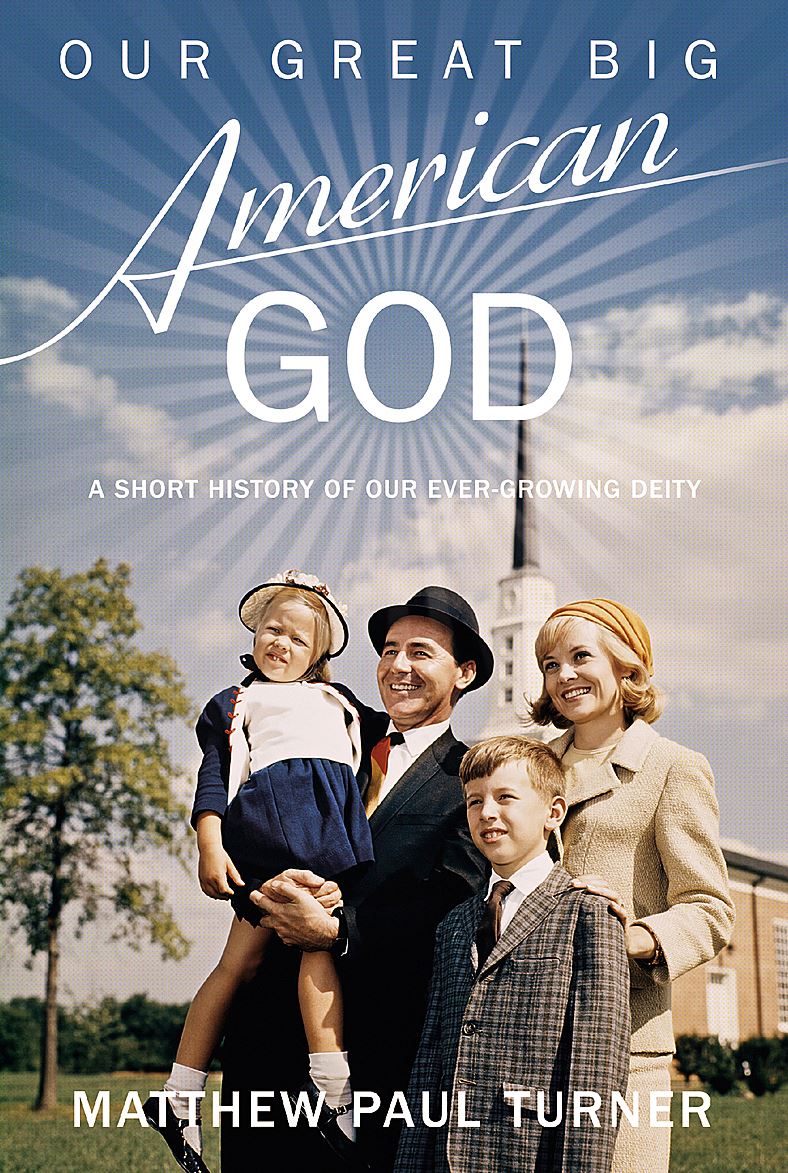
Our Great Big American God: A Short History of Our Ever-Growing Deity

Matthew Paul Turner

America has a complicated history with God. The Puritans, though devout religious misfits in England, laid the American Godfoundation for the most successful secular democracy in the world. The paradox continues to play out through international politics. To Europe, we are considered zealots. To the Middle East, we are either godless heathens or Zionists.

Even within America, it’s complicated. Are we one nation or one nation “under God”? Depends on whom you ask and, perhaps more telling, in which state you pose the question.

Turner’s book begins with a similarly difficult question: “Where would God be without America?”

Well, he probably wouldn’t be as much fun, for starters. Beginning in the early 1800s, Turner writes, the modest ways of the Puritans gave way to rowdy revivals, complete with hops, flips, shakes and mysterious catatonic states followed by fits of frenetic celebration:

“Could the God who was causing people to get down on all fours or lie slain in the spirit really be the same God who led the Puritans across the Atlantic from England to Boston?”

Turner traces the legacy of America’s god, from the earliest settlers through Ronald Reagan and Sarah Palin, exploring the ways in which biblical interpretation got tangled up with political and economic unrest and swelling nationalism.

It’s a fascinating look at the past and future of the deity that America supersized and spread across the globe.

Factory Man: How One Furniture Maker Battled Offshoring, Stayed Local—and Helped Save an American Town

Beth Macy

A Taiwanese businessman once told John D. Basset III that when his country was on top “don’t expect us to be dumb Factory Manenough to do for you what you’ve been dumb enough to do for us.” Americans, he said, would do anything for a bargain.

This fact fueled the offshoring of furniture making to Asia. The result was cheap foreign labor and cheaper products. In exchange, American factory towns were devastated as companies took their plants and their jobs overseas.

Basset, however, showed the eastern businessmen another side of Americans—they would do anything for what’s right, even at the cost of a bargain.

Basset waged a war against offshore vultures and even his own family. He was not necessarily a likable man, but his defense of his factory town is heroic and brilliantly recounted by journalist Beth Macy. One of the best reads of the summer.

All Due Respect Issue 4

Check out the new issue of the crime fiction magazine, All Due Respect, which features a nonfiction piece by yours trADR _4 V3uly. My article is a review of Joe R. Lansdale’s Cold in July, which was released earlier this year in conjunction with the film release. If you haven’t read the book or seen the movie, I highly recommend both.

The issue also includes a powerhouse lineup of crime fiction, including award-winning author Hilary Davidson. Last year, I reviewed her excellent novel, Evil in All Its Disguises, and fans of that novel (and new readers) will enjoy her short story, “A Hopeless Case.”

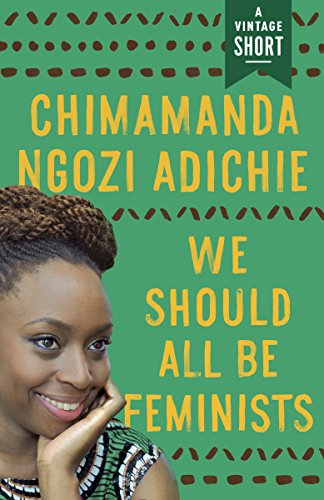
Review: We Should All Be Feminists

We Should All Be Feminists

Chimamanda Ngozi Adichie

This brief and brilliant essay (it comes in around 20 pages) from the celebrated author of Half of a Yellow Sun, Americanah chimamanda-ngozi-adichie-we-should-all-be-feministsand Purple Hibiscus is one of the most interesting pieces I’ve read all year. It was adapted from Adichie’s famous TEDxEuston talk, and whether you prefer the visual or the text, make sure you get a hold of one of them.

“Feminist” is a word long-since stripped of its original meaning: politicized, glorified, demonized. It’s got more ill-fitting baggage than an overhead compartment. Adichie cuts through the connotations to get at the core value of feminism and how it celebrates and benefits both men women.

Reading this essay brought me back to my first day of Human Sexuality class at Penn State. “How many of you consider yourselves feminists?” the teacher asked. None of us men raised our hands (I hadn’t yet learned that, by definition, men could be feminists), and maybe only half the women raised theirs.

The teacher asked the hands-downers why they weren’t feminists, and though the reasons they gave were myriad, every response was prefaced with some variation of “I support equality and fair treatment and don’t believe that women are inferior to men, but…”

Interesting.

The teacher’s point, of course, was to show the class how this word had been bastardized and appropriated by so many groups for so many reasons that half the women disowned the label. Adichie shares similar anecdotes of her own struggles with the term.

This was almost 20 years ago, and the word “feminist” is more loaded than ever. With one or more women expected to compete for the presidency in 2016, attack-ad narrators are surely practicing their intonations for the coming voice-over work.

The Nigerian-born Adichie addresses one of the most common criticisms of feminism: Why the gender-specific language? Why not humanist? Or equalist?

“Because that would be dishonest,” Adichie writes. “Feminism is, of course, part of human rights in general—but to choose to use the vague expression human rights is to deny the specific and particular problem of gender. It would be a way of pretending that it was not women who have, for centuries, been excluded. It would be a way of denying that the problem of gender targets women. That the problem was not about being human, but specifically about being a female human.”

But this isn’t an essay about terminology. It’s a call to arms to imagine a generation of children raised without the biases that, consciously and unconsciously, perpetuate gender norms. It’s a call to rethink masculinity so that the next crop of men grow up healthier than the last. It’s a call for all of us to “do better.”

The essay may be short, but the conversation it generates is long and important.

A Darker Shade of Summer (Nonfiction)

A round-up of true-life horrors to darken you summer.


The Story of Pain: From Prayer to Painkillers

Joanna BourkeThe Story of Pain

(June 26)

In what is  surely one of the most interesting books of the summer, Joanna Bourke, a history professor at Birkbeck, University of London and a Fellow of the British Academy, explores the history of pain—how we describe it, how we think about it, and how we deal with it.

Bourke writes that we’ve spent far more time documenting pain alleviation rather than exploring pain itself, and her detailed survey, focusing on the past three centuries, will surprise and inform all readers.

One would think that pain hasn’t changed much over time—pain is pain, after all—but while migraine accounts have remained similar, our relationship to suffering, and sufferers, has changed in dramatic ways. Once thought of as a supernatural punishment or an opportunity for personal growth, pain is now considered an external evil, an inconvenience, something to be eradicated rather than embraced.

Most striking, for me, is the chapter on estrangement. Pain isolates the afflicted, but remarkably, it’s the person in pain who does the distancing. Be it the stigma of sickness, the desire to insulate loved one’s from their suffering, or simply not to be thought of as a whiner, the sufferer tends to keep their agony to themselves.

And as anyone in the throes of a migraine can attest, communication isn’t a vacation. Bourke writes: “As well as isolating people-in-pain from their families and friends, physical discomfort works against human exchange by blunting the higher senses and intellect” (46).

Paradoxically, pain narratives also create and strengthen communities, such as support groups that arise around particular afflictions.

Bourke is no stranger to uncomfortable topics. Her other works include Fear: A Cultural History; Rape: Sex, Violence, History and Dismembering the Male: Men’s Bodies, Britain and the Great War.

Utilizing a variety of sources—old medical books, doctor’s notes, poetry, anecdotes, letters and others—Bourke compiles a well-rounded account of suffering, accessible to academics and casual readers alike.

Reading The Story of Pain is a bit like enjoying a sad song on a sunny day. This intellectual read might not alleviate that next migraine any better than “Every Rose Has Its Thorn” can dampen the sting of heartbreak, but it’s interesting to contemplate from an academic distance.

Chinese Comfort Women

Peipei Qiu

with Su Zhiliang and Chen LifeiComfort Women

(June 2)

Being obsessed with all things Japanese, it’s difficult to imagine the atrocities committed by Imperial Japan. But the horrors of Dai Nippon Teikoku (which officially ended in 1947, two years after Japan surrendered to the Allies at the end of World War II) still resonate for the victims.

Among them are the “comfort women”—young girls from occupied countries, such as China and Korea, who were forced and coerced into prostitution, enslaved at military brothels.

In Chinese Comfort Women, Peipei Qiu, along with two China-based scholars, provides the oral history of a dozen survivors. It’s a dark, important narrative, an old wound that still stings, a reminder of the darkest hour of the 20th century.

In another generation, there will be no more survivors of WWII, and Qiu, Zhiliang and Lifei have done a great service by recording the personal narratives of these women while they’re still with us.


Coming Soon

Modern Conspiracies: The Importance of Being ParanoidModern Conspiracy

Emma A. Jane and Chris Fleming

(Release date: Aug. 28)

Here is a book certain to lend credence to the quip: Just because I’m paranoid, that doesn’t mean they’re not out to get me. This academic book, authored by two Australian professors, reconsiders conspiracies—and their theorists—not as part of the lunatic fringe, but as a window to our relationship with the truth.

A Darker Shade of Summer (Fiction)

A round-up of ghost stories, thrillers and dystopian anthologies to darken you summer. (Come back tomorrow for our nonfiction edition.)

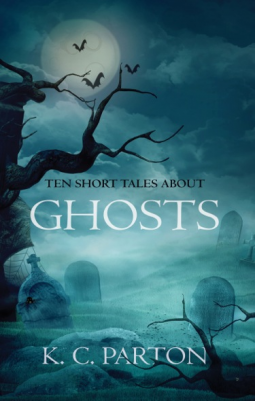
Ten Short Tales About Ghosts

K.C. Parton10 Short Tales About Ghosts

(Released June 28)

Typically, the hallmark of a great ghost story is that it unsettles the reader. When reading K.C. Parton’s collection of English ghost stories, however, one is filled not with dread, but comfort. These 10 tales are reminiscent of the kind my father would tell me over campfires—and those, of course, will always be my favorites.

Parton’s stories have that same appeal. These are not tales of terror, but subtle chillers made all the more spooky for their familiarity. Stories that make you think twice before cutting through the graveyard, not to avoid falling prey to a Saw-like killer, but for that abstract fear that tickles as much as it terrifies.

In “The Last Train,” a modest theater-goer arrives late to the station, but by good fortune, his train is waiting for him. Once aboard, he realizes his destination is somewhere other than home. Likewise, a young factory apprentice stumbles upon a shop-floor oddity in “The Cleaner”—and realizes that what he first thought to be a hoax or a hazing is in fact a haunting.

Perhaps the stand-out tale of this collection is “The Heinkel,” a WWII yarn about a young boy fascinated with a downed German plane.

A big draw for me is that most of the stories have an industrial setting. Growing up in the Rust Belt, I was exposed to the real-life horror of the steel mills (such as my dad’s coworker losing an arm in the blast furnace) and the spooky kind (my grandfather’s otherworldly encounters at the Westinghouse plant).

When it was my turn to work the factories, I found much ghostly inspiration in the rusted machinery, secluded warehouses and the imaginative possibilities of the graveyard shift. Parton’s stories fit that mold, which shouldn’t be surprising, as he came of age in England’s post-war factories. (His first book, Tales from the Toolbox, recounts his industrial experiences.)

My one critique is that there’s not a lot of mystery to these stories. Characters who believe they are having ghostly encounters truly are, and the nature and cause of the hauntings are typically self-evident. But that’s OK. These stories work not through terror or misdirection, but by tapping into that primal need for campfire tales—the kind that give goosebumps, sure, but leave you smiling in the end.

Ominous Realities

Eds. Anthony Rivera and Sharon LawsonOminous Realities

Once again, Grey Matter Press has delivered the anthology goods. Ominous Realities is the finest indie collection I’ve read in a while. These dystopian tales chill and unsettle, balancing skill, imagination and smarts.

Take “On the Threshold,” an eerie, Lovecraftian tale of science and madness from William Meikle. Last year, I read Meikle’s novel The Hole, and thought it was enjoyable but flawed. Here, Meikle is in control from the creepy opener in the lab to the grim finale. HPL would love this tale of science gone wrong.

Keeping up the intensity is “Doyoshota,” by Ken Altabef, a haunting intersection of conspiracy and cacophony that makes tinnitus sound like a Beethoven sonata.

Eric Del Carlo’s “We Are Hale, We Are Whole” is deserving of any “best-of” anthology, a smart, thoughtful piece of writing that should be a must-read for anyone attempting to world-build within the confines of a short story. It also takes a philosophical bent about quality of life, aging, health care and sacrifice.

An excellent collection from a hot new publisher. Also be sure to check out their Dark Visions II anthology.

Coming Soon

Mean Streak

Sandra BrownMean Streak

(Release date: Aug. 19)

Mean Streak has all the makings of a classic Sandra Brown thriller: abduction, deception, moral complexity and a revelatory rabbit-hole twist. In her new novel, Dr. Emory Charbonneau disappears, and her husband is the primary suspect. Part crime novel, Mean Streak is also a survival narrative, as Emory awakes in the hands of a violent captor who may be hiding his true identity. I haven’t read this yet, but it sounds reminiscent of Standoff, which was one of her best works.


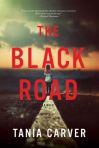
The Black RoadThe Black Road

Tania Carver

(Release date: Aug. 15)

While the plot may be a little, well, plausibility challenged, advance press offers Mo Hayder levels of gore and depravity (aka horrific awesomeness). Following a mysterious explosion, criminologist Marina Esposito’s husband is in a coma and her young daughter is missing. The abductor forces  Marina to complete a series of depraved tasks in the course of three days or her daughter dies. So, yeah, it may be plot-challenged, but if you’re looking to spice up your summer with some gore, The Black Road just may be a detour worth taking.