book reviews

Review: Language, Cognition, and Human Nature

Language, Cognition, and Human Nature: Selected Articles

Steven Pinker

I love science and science writing, and when people ask me why, I have a simple answer: Because I really don’t get most of it. I have a scientific curiosity and Pinker2mathematical brain, but if it weren’t for the grading curve, I’d still be taking Freshman biology.

I’ll never fully grasp the writings of Richard Dawkins or Stephen Hawking, but I love reading them. They pique my interest, and I always come away learning something. Maybe it’s my fear of becoming cognitively rigid in middle age, but the prospect of a static or shrinking intellect keeps me up at night. I’m well past the point of exploring texts that merely reinforce my current knowledge base.

Which brings us to Steven Pinker and his new collection of articles, Language, Cognition, and Human Nature: Selected Articles.

While pursuing my master’s degree, I wasn’t feeling challenged in my English coursework, so I signed on for a semester of Philosophy of Language. I loved it, but I can still barely understand half of it. I did learn one thing, though: I kick ass at propositional logic, but predicate logic turns my brain to creamed corn.

So I was excited to read this collection, which Pinker prefaces with a curious introduction concerning general interest science writing. He talks of the popularity of scientists who are able to write for a popular audience (and science writers who can serve as a go-between), but argues that we’re underestimating readers with this approach. Rather than spoon-feeding the masses distilled information, Pinker provides us with the source material: his actual academic articles.

This is not light reading, and be warned it is challenging.

But it is enjoyable and enlightening. If you haven’t tried to wrap your mind around language theory, you need to read this book. Even if you don’t understand half of it, what information you glean will radically affect your relationship with language and the mind.

If nothing else, it’s a head trip—no lab coat required.

Review: Skyway

Bill DeYoung

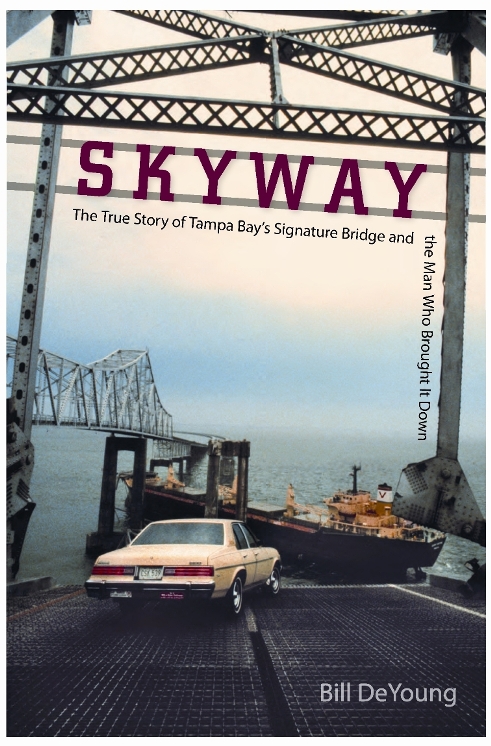
Skyway: The True Story of Tampa Bay’s Signature Bridge and the Man who Brought it Down

It’s hard to elicit raw terror in book form, especially in the opening pages. If the book is Skyway300 pages, you know there is still plenty to come. Real life, however, is a gut-wrencher. For instance, there’s no guarantee I’ll finish writing this review—or that you’ll finish reading it. That’s why well-crafted nonfiction, such as Bill DeYoung’s Skyway, can induce frights greater than most horror novels.

I white-knuckled it through the first two chapters of Skyway, a recounting of the Skyway Bridge disaster of 1980, and was impressed with DeYoung’s narrative talents from stem to stern.

Some background: In 1980 a harbor pilot, John Lerro, was guiding a ship to the Port of Tampa. A freak storm unleashed a nightmare scenario, and without radar or visibility, the ship, the Summit Venture, struck the bridge, collapsing a span of road 150-feet high. Thirty-five vehicle-bound victims, including passengers in a Greyhound bus, plummeted to their death.

It’s a tragedy mostly forgotten outside of Florida, but DeYoung’s brilliant account should change that. With a narrative journalism style, he fleshes out the events of that morning with factual data, news reports and first-hand accounts. We share the helpless terror of the Summit Venture crew as cars plunk into Tampa Bay. We white-knuckle it as a car grinds to a halt inches from the drop. We cheer as motorists band together to halt oncoming traffic and shut down the bridge, saving countless lives.

And then the book really gets good.

DeYoung, a longtime journalist, gives us a longitudinal view of the disaster, from the rise of interstate commerce that necessitated the bridge to the haunted lives of the Skyway survivors decades later. Some of the most interesting bits concern the role the interstate system and mid-20th century financial culture played in building the bridge (and cutting corners from construction to upkeep).

Though it was Lerro who took the blame, it was greed that forced the harbor pilots to take chances in foul weather. Also in play was the exclusionary, good-old-boy culture of the harbor pilots, which deeply scarred Lerro (who was exonerated of any wrong-doing, and in fact was commended for preventing more deaths) following the tragedy.

Skyway put me in mind of Nathaniel Philbrick’s In the Heart of the Sea: The Tragedy of the Whaleship Essex, which is about as high a compliment as you can pay an author of narrative history. Maybe I’ve just got a thing for maritime disasters (I blame Poe and Arthur Gordon Pym for that), but Skyway is a chilling, informative and deeply engrossing narrative.

This is a book worthy of awards and deserving of the bestseller list.

Review: A Brighter Word Than Bright

A Brighter Word Than Bright

by Dan Beachy-Quick

Although A Brighter Word Than Bright is about Romantic poet John Keats, I couldn’t get Keatsmy favorite Oscar Wilde quote out of my head while reading it: “Man is least himself when he talks in his own person. Give him a mask, and he will tell you the truth.”

It’s a cruel irony that nonfiction is thought to be the most accurate medium for Truth—reducing reality to the recitation of facts. If that were so, then the minutes of a company meeting should have more cultural sway than Shakespeare, right? Yet when I was in London, there were scores of young and old gathered at the gates of the Globe Theatre.

I didn’t take a poll, but I’m confident that when people think of London in 1599 (when the original Globe was built), they think of Shakespeare rather than that year’s landmark court ruling, Edward Darcy Esquire v. Thomas Allein of London Haberdasher, which established the foundation for modern antitrust law.

I didn’t see anyone perusing court transcripts outside the Globe.

That’s why Dan Beachy-Quick’s biography of Keats is so refreshing. Rather than retelling his life story or critiquing his work through some previously unexploited element of his personality, Beachy-Quick gives us the biography of the poet’s imagination.

Which, of course, requires a lot of imagination.

No shortage there. Beachy-Quick, author of nearly a dozen collections of poetry, essays and criticism, weaves a fever-dream narrative that treats its subject as more putty than marble, so that Keats, the man, vanishes at times.

Or perhaps Beachy-Quick brings us so close we no longer recognize him.

Either way, A Brighter Word Than Bright engages the reader’s imagination, and the author states from the beginning that:

“I have little interest in offering a portrait of Keats more accurate than those already available… I am more concerned with returning Keats, as best I can manage, back into that half-light that obscures accurate rendering so as to make more brilliant those sudden flashes in his poems and letters that, lightning-like, reveal the storm-tossed grasses in the ceaseless field even as darkness closes the vision again—sudden clarities, and the afterimage that lingers long past the lightning’s strike.”

Our subject is deliberately blurred, grated into the environment with an opacity that is oddly revealing. From an early age, Keats is displaced, yet absorbed by the world. Or perhaps consumed is more like it. Beachy-Quick sketches a grief-burdened man-child weeping beneath a desk for his dead mother. Yet, the boy is not separate from the desk, nor the desk from the room. All is connected in this tragic tableau: “Some music sobs up into song. Some song digs down and confronts what it also must comfort.”

Keats is tormented by his talents, a gift on par with Greek tragedy. Much like Darrin McMahon’s Divine Fury: A History of Genius, Beachy-Quick views genius as something that possesses, rather than something one may possess:

“To listen to genius is to let oneself be guided by that voice in the self that is not the self’s own. It implies an otherness exactly where we expect to find identity; it speaks within us a rumor to us, that we are least ourselves where we are most ourselves.”

This duality zigzags throughout the book, at times we are uncomfortably close and at others removed, disoriented, flipping between past and present tense to remind that art, and the artist’s struggle, belong to all ages. That like Keats’ poems, all is absorbed into a timeless moment—infinity in a single instant and vice versa. (Beachy-Quick cleverly enforces the point with reference to the work of the paradox-obsessed Greek philosopher Zeno.)

As we progress chronologically, Beachy-Quick peppers in some academic critique, for example going through the Odes and incorporating Keats’ letters for context. I was particularly struck by one passage from Keats to his wife, Fanny Brawne:

“I have two luxuries to brood over in my walks, your Loveliness and the hour of my death. O that I could have possession of them both in the same minute. I hate the world; it batters too much the wings of my self-will, and would I could take a sweet poison from your lips to send me out of it.”

Would it be fair to say Keats was the first emo kid?

Actually, that may be as fair as any other portrait. No biography has been able to capture the man in full, which certainly adds to his appeal. Beachy-Quick, with this unconventional and highly original biography, gives us something better than the Truth. He gives us the febrile terror that inhabits the artist’s soul.

Review: The Faceless One

The Faceless One

Mark Onspaugh

The prologue of Mark Onspaugh’s The Faceless One is a primal delight. We begin in Facelessthe forested snow-scape of rural Alaska, 1948, where young Jimmy Kalmaku embarks on a dark journey with his uncle deep into the tundra. Hidden within a remote cave is an evil of which Jimmy has never imagined.

It is also where he learns that he will succeed his uncle as shaman and inherit the task of keeping the Faceless One locked up in that cave.

The uncle says, “Remember our path today… I hope you need never come this way again, but you must remember.”

Clearly, we are not finished with the cave.

And neither is Jimmy.

With this spine-tingling opener, Onspaugh has swirled together the elements of great storytelling: odyssey, myth, duty, loss of innocence. There is a sad inevitability in this scene. Present are the generations of tribesmen, forward and back, guarding this secret place—a never-ending watch against something that exists outside of timespace. Something hallowed. Something in the blood.

Onspaugh has a tender touch that imparts soul into this icy epic which spans generations and locations, jumping ahead to present day when Jimmy, now an elderly man, learns that an archeologist has displaced the mask keeping the Faceless One captive.

With the ancient evil unleashed, Jimmy is called to action. He must remember his uncle’s words… and the way to that dark place.

Releasing this book on Oct. 28 is brilliant marketing—not simply because October is a good time for horror fiction, but because the setting of The Faceless One is a set-piece for a chilly night. What better time than when the veil between the worlds is thinnest to encounter a shapeless evil? To follow its trail from Alaska to New York to Seattle and beyond.

From generation to generation, blood to blood.

Review: Divine Fury

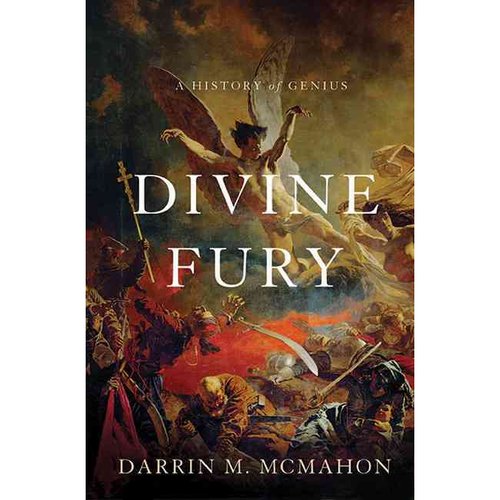
Divine Fury

Darrin M. McMahon

Since 1981, the MacArthur Foundation has bestowed its “genius grant” on 873 Divine Fury(ostensibly) geniuses—“talented individuals who have shown extraordinary originality and dedication in their creative pursuits and a marked capacity for self-direction,” reads the MacArthur Web site.

But is this the truest definition of “genius”? Considering that the title is so commonly conferred upon basketball coaches, celebrities and rock stars (a recent Rolling Stone article referred to Kanye West as a “mad genius”—seriously), is being a “genius” even that impressive anymore?

In Divine Fury, historian Darrin M. McMahon isn’t questioning MENSA credentials so much as tracing the history of this loaded term and how it’s changed over the centuries.

Our etymological quest begins with the ancient Greeks, for whom being a genius was a form of madness. McMahon culls pithy quotes from Plato revealing a lesser-known side of Socrates: He was quite haunted. (This from the Phaedrus dialogues—no wonder the brilliant 20th century philosopher/madman Robert Pirsig chose Phaedrus as his alter ego in Zen and the Art of Motorcycle Maintenance.)

Whereas contemporary culture views genius as something you possess, ancient philosophers believed the inverse: Genius possesses you. More specifically, a demon possesses you, for good and ill, and this was the belief for centuries. McMahon documents many cases of “genius,” from the ancients to modern times, and how the concept evolved and then devolved into our current celebrity-obsessed culture.

It’s a curious evolution, and one I wouldn’t have thought about much before reading Divine Fury. McMahon deftly illuminates this secret and complicated history through literary accounts, keen observation and a strong narrative. His writing can be a bit tangential and academic at times—but hey, the man’s an academic! What do you expect?

I certainly wasn’t expecting to think about genius as a populist concept, but there it is. In some ways, the history of genius is the flow of agency from the elite to the proletariat. While I would rate that as a good thing, an unfortunate consequence is that genius has become just another noun that anyone can claim.

The change is due in part to advanced medical knowledge. In ancient Greece, Socrates believed a demon was whispering in his ear. Today, we’d slip him some Paxil.

Or give him his own TED talk.

Ultimately, it remains a fuzzy line between madness and genius. Is it the possessed or the possessor? Are 98th percentile test-scorers (the threshold for MENSA membership) the elite or merely outliers? Or is each of us capable of becoming an Einstein?

No matter, from now on I’ll be slower to label someone a genius.

Unless that “mad genius” Kanye West splits the atom in his next video.

Trending Now: Trollies

 Thomas Cathcart

The Trolley Problem, or Would You Throw the Fat Guy off the Bridge?: A Philosophical Conundrum

David Edmonds

Would You Kill the Fat man?: The Trolley Problem and What Your Answer Tells Us about Right and Wrong

Not since Rice-a-Roni has the trolley car been so popular.

What started as a philosophical thought experiment (first posed in the 1960s by Trolley ProblemBritish philosopher Philippa Foot) has become fodder for barroom chautauquas and classroom debates. It goes a little something like this: You are the conductor of a runaway trolley, and you’re headed toward five men working on the track. You have no way to stop or slow down, and you know that all five men will die.

Then, you notice a side track, and by simply pulling a switch, you’ll reroute the trolley and spare the workers. However, you see another man on this side track. The worker will surely die, but this lone death will save five.

Do you pull the switch?

What makes the trolley problem so interesting is that it can be reframed in many ways, all essentially asking the same question: Is it better that one person dies in order to save five lives?

The utilitarian gut response is usually affirmative, but the problem gets trickier as you introduce different scenarios. The darkest and most humorous of these is the fat guy on the bridge. Rather than the conductor, you and an obese stranger are on an overpass looking down at the track. In this scenario, there is no side track and no way to reroute the train away from the workers. The only way to spare their lives is to stop the trolley… and the only way to do that is by pushing the obese man off the bridge.

That’s quite the game-changer. But yet, the principle question remains the same: Is it better that one dies to save five?

This dilemma has moved from the classroom to cultural conscience thanks to the work of philosopher Michael J. Sandel and his book/mooc/PBS lectures on justice. This fall, two more intellectual titans offer their take on this ethical dilemma.

In The Trolley Problem, or Would You Push the Fat Guy off the Bridge?: A Philosophical Conundrum, published Sept. 10, Thomas Cathcart presents the arguments before a judge and jury, albeit fictitious. Cathcart is best known for a series of books coauthored with Daniel Klein that explains complicated philosophical ideas through jokes and anecdotes, and as with these bestsellers, like Plato and a Platypus Walk Into a Bar…, the tone is light and irreverent.

Though the jests overshadow the ethics, there is some substance to the work. Ethical arguments are accompanied by short bios of their progenitors, and the introduction and conclusion put forth serious thought.

That said, the jokes amount to insider baseball. The greatness of Cathcart’s other books is that they serve a general audience. The humor in The Trolley Problem, or Would You Push the Fat Guy off the Bridge? is geared toward a readership already familiar with the thought experiment.

Those familiar with the work of Sandel and Foot will enjoy this short, light-hearted laugher. Those looking to explore the complexities of the dilemma should look elsewhere, get up to speed, and then dig into this trial by philosophy.

At least Cathcart gives us something the others don’t (sort of): a juried decision. The final verdict?

You’ll just have to read it for yourself.

The trolley debate gets a deeper look on Oct. 6, with David EdmondsWould You Kill the Fat man?: The Trolley Problem and What Your Answer Tells Us about Right and Wrong.

Edmonds is co-host of one of my favorite podcasts, Philosophy Bites, which has spawned two books and Trolley Problem Edmondsbrought contemporary and historical philosophical concepts to a general audience.

His treatment of the trolley problem traces the history of moral philosophy and modern ethics with the entertaining flair he brings to Philosophy Bites.

Though covering the same topic, these two books offer complementary takes on this complicated thought experiment. Fans of philosophy, moral inquiries or deep thinking in general will enjoy both of these fine book.

Summer Horror Roundup

Though the days still blister, at night there is a welcome chill and the softest whiff of decay. It’s a beautiful smell, and within a few weeks we’ll hit full-on autumn. Though we’re excited about the fall, we’d be remiss if we didn’t discuss some of the summertime horror we’ve enjoyed throughout the year.

The Hole

William Meikle

Now this is a book I can relate to: hard drinking, manual labor, mines, sinkholes, battles with subterranean evil.The Hole

Ah, to be 23 again.

From the start, this fast-paced small-town horror shudders with ominosity. (Is ominosity a word? If not, it should be.) Intense headaches and nosebleeds afflict the townsfolk, and then the earth comes out from under their feet.

Literally.

A giant sinkhole opens in a back yard (leading to a hilarious septic tank scene) and begins swallowing up the countryside like the San Andreas Fault. At first, the backwoods residents fear a natural disaster.

But then they notice the creatures rising up from the hole.

And so the horror begins…

Enjoy this quick-hit tale of small-town suspicion, working-class gumption and a long-buried secret that won’t stay dead.

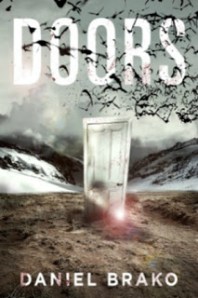
Doors

Daniel Brako

Being a dorky loner, I spent most of my summers watching late-night reruns of The Twilight Zone. That certainly figured intoDoors my attraction to Doors, which concerns a psychologist working with a patient who sees doors everywhere he looks. Then, the doctor begins to see them too.
I’ve always loved the idea of another world overlapping with our own, only visible if we squint in just the right light. It has the appeal of a conspiracy theory. It’s the world, just slightly askew. All around us, invisible, with dire consequences. A world within a world. (Don’t get me started on quark theory.)

Having worked in mental health, I’ve conversed with many schizophrenics, delirious alcoholics and addicts in the throes of a psychotic break. Their storytelling has the effect of quicksand—you don’t realize how engrossed you are in their story until you’re up to your neck. They give you a plausible setting and people, then a string of plausible events occur, followed by a string of less-plausible events, then even less and less plausible, and then suddenly, boom, the narrator reveals that the gunshot was stopped by the metal plate inside his head and the rebounding bullet struck the shooter instead.

It’s a dissociative feeling. Everything seemed so normal, so sane, twisting only in slight degrees before you realize it’s all a delusion. Or is only some of it? That’s what makes it so creepy.

It’s our world, slightly askew.

That’s what I was hoping for in Doors, and it begins promising enough. The manic patient begins his tale, and I got that tingle of dissociation. Unfortunately, it doesn’t last. The psychologist, David Druas, buys into the narrative too quickly. I wanted more push-back from David, mainly to prolong that quicksand effect, but also for verisimilitude: No legitimate psychologist would be convinced so quickly.

At this point I realized that the novel rushed through this part to get to the pulse-pounding events that follow. That’s unfortunate. I was hoping for more of a psychological head-trip.

Meeting the book on its own terms, this is a well-conceived novel with thrilling and engaging sequences. And I can certainly except the supernatural in horror fiction. But I wish the story hewed closer to plausibility so I could longer relish that feeling of slowly being drawn in to a nightmare.

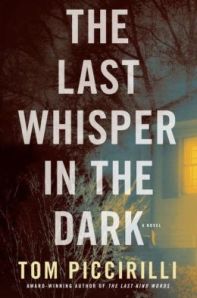
The Last Whisper in the Dark

Tom Piccirilli

Yes, we have reviewed this book already, but it’s worth repeating. This is a tremendous book by a gifted author. Put this on yourWhisper “must-read” list.
And for anyone who missed the earlier review, here you are:

There are not enough superlatives when discussing Tom Piccirilli. The man is a brilliant and diverse writer: He’s won awards for his horror, fantasy, thrillers and even poetry—bagging the prestigious Bram Stoker award on four occasions.

Previous novels, such as Shards, A Choir of Ill Children and November Mourns, have shocked and terrified, but with his new release, The Last Whisper in the Dark, Piccirilli takes us to a far more tender place.

A tender place, it turns out, just as disarming as his nightmares.

I’ll sum it up this way: I was shedding tears by page three. I think the only other book that has ever had me crying this early in the narrative is Dave Eggers’ A Heartbreaking Work of Staggering Genius.

Piccirilli has a knack for character development and storytelling, and The Last Whisper in the Dark, a sequel to 2012’s The Last Kind Words, may be his deepest work yet.

Concerning Terrier (Terry) Rand, a young thief from a family of small-time criminals, Piccirilli has given us a protagonist as sympathetic as he is fearless. On the surface, the story is about the disappearance of Terry’s friend Chub and the ensuing search that drives him head on into gangsters, killers and a femme fatale.

But on a deeper level, this is a tale of honor and family and the clumsy way we go about expressing our feelings to the ones we love. The Rands are a proud and tragic clan, with dementia and criminality in their blood—as well as an outlaw tendency that keeps them on the fringes of society.

But their strongest trait is honor. Terry is loyal to an estranged friend who stole the only woman he ever loved. He quietly looks out for his sister, even as she rebels against him and helps desecrate their dead brother’s grave. He remains devoted to a family that can occasionally be distant and dysfunctional, but always has each other’s backs.

You can mess with Terry, but you’d best not fuck with his family.

You’ll fall in love with Terry by the end of the first chapter, and you’ll be cheering him on the rest of the novel. And when it’s done, you’ll applaud Piccirilli for this tender bit of noir literature.

Piccirilli is an established icon within the horror realm, but he has yet to crack through to the mainstream, which is unfortunate. This is a writer worthy of notice, and hopefully this book is the one that reaps him the exposure and attention he deserves.

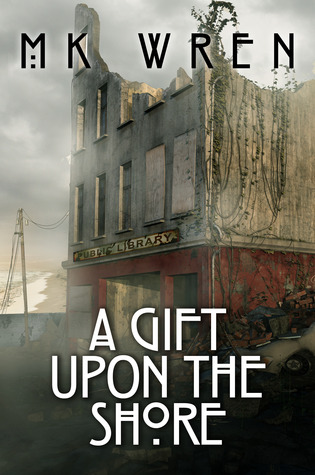
M.K. Wren, A Gift Upon the Shore

It’s interesting reading M.K. Wren’s classic novel nearly a quarter century since its release in 1990. For one thing, a nuclearGift apocalypse sounds downright quaint and makes me eerily nostalgic for my childhood fears of nuclear annihilation.

Aside from that, A Gift Upon the Shore is timeless—and even prescient. Following a wave of destruction, two women begin building a library in coastal Oregon, dedicated to preserving the great works of literature, history, and, by extension, civilization. Unfortunately, their only neighbors are a group of fundamentalist survivors who promote the destruction of all books other than the Bible.

In 2013, libraries and bookstores are struggling, Texas school boards are editing history and I downloaded the novel, in a matter of seconds, from a Web site onto my e-reader (unthinkable in 1990).

OK, Wren isn’t exactly Nostradamus. Folks were probably declaring the death of books within hours of Guttenberg’s invention, and fundamentalists have far less sway than they did during the Satanic Panic of the 1980s. Even Salman Rushdie has been able to come out of hiding.

But like Wren’s protagonists, digital publishing has guaranteed that our literary history will live on, from the freedom of publishing in the medium to noble endeavors like Project Guttenberg.

A Gift Upon the Shore remains a wondrously beautiful novel, whatever the era, and one worthy of a revisit or a first look.

Review: Of Dice and Men

D&D is a cultural phenomenon that has lasted decades, survived the sophistication of video games and artificial intelligence, rival RPGs and even the Satanic Panic. It’s goneDice and Men from nerd pastime to geek chic to sociological interest, and now its history has been documented in the wonderful Of Dice and Men: The Story of Dungeons & Dragons and the People Who Play It, a nostalgic romp through the author’s (and my) childhood.

Ewalt, a senior editor at Forbes and self-described “writer, gamer, geek,” has done a great service to anyone who, with sweaty palms, has had to make a campaign-defining saving throw (or at least knows what that means). His smooth writing style and flair for narrative pacing makes the story of this greatest of games one of general interest, even if you’ve never tossed the 20-sided die.

There are two key threads running through the book. The first, of course, is the history of D&D, from its precursors through its growing pains, its competitors and controversies, and finally its legacy as second- and third-generation dungeon crawlers have been drawn to the table. The second thread is Ewalt’s personal tale of rekindling his love for D&D in adulthood.

While both storylines are interesting, the content of the historical narrative is a bit more compelling, particularly due to the big personality of its founder, Gary Gygax. But the personal narrative is most affecting because it traces a familiar thread: Imaginative loner boy discovers D&D; becomes hooked; discovers women; hangs up the broad sword and chainmail; rediscovers D&D; realizes you can take the halfling out of the dungeon, but you can’t take the dungeon out of the halfling.

Ewalt and I have a lot in common.

The book has been described as being similar to Michael Lewis’ Moneyball, but I disagree with that description. Economics are addressed, but this book is truly about passion, not money. Which is fitting. At the end of every D&D campaign comes the distribution of treasure that the group has acquired, but this is not the reason for playing. The true reward is the quest to find and slay the dragon guarding that treasure.

The only downside to the book is the fantasy sequences in which Ewalt recounts fictional events from his weekly campaigns. Unfortunately, these feel forced and, for me at least, didn’t really add much to the narrative. I feel comfortable in critiquing this element of the book as I have done this myself.

But aside from that, this is an amazing book, a perfect summer read and hopefully the first of many books from Ewalt.

Douglas Murray, Islamophilia

I must confess: About a third of the way through Douglas Murray’s Islamophilia, I tossed it onto the discard pile. (islamophiliaOK, not really, since I was reading it on my Nook.) But before I abandoned this book, my conscience got the better of me. I re-launched the file and read to the end.

I am very glad I did.

If I were to blurb Islamophilia, I would say, “Douglas Murray has provided us with a document that is challenging, bitter, distasteful, and difficult to digest. And it may well be one of the most important books of the past few years.” (Hey Mr. Murray, don’t forget me when the print edition goes to press.)

In this short book (more of an extended essay), Murray vents over post-9/11 media treatment of Islam, which he considers to be inconsistent with treatment of other religions. For Murray, Islam is like an update on the Seinfeld episode when a reporter thought Jerry and George were a couple, prompting qualified denials (“not that there’s anything wrong with that”).

Unfortunately, this is not a book with a strong sense of humor, and it reads more like a polemic than an essay. In the early pages, Murray’s anger overshadows his argument. For example, Murray expends much energy going after the 1001 Inventions multimedia education project, which spotlights Muslim contributions to science and technology. He argues that the exhibit crosses over into historical revisionism, and perhaps he’s right. I’ve never seen the exhibit myself, but he’s not the first person to make this critique. But regardless of the factual accuracy, his mocking tone is more befitting a late-night drunk dialogue.

Here is where I shut it down.

I intentionally avoid politics in this column, particularly because I believe—excepting the extremely polarized rants on the nonfiction bestseller list—that literature is one of the few uniting or at least neutral spaces remaining. (I would say animals and football are the others. Folks love their dogs no matter where they stand on universal health care.)

But due to the subject of this book, I feel some disclosure is appropriate. I am a liberal, yet what drew me to this book is that I agree with Murray, a neoconservative. It’s an area of contention with my liberal friends, who apply inconsistent standards toward Islam. Were the Catholic church to require women to wear hijabs and be accompanied by men in public, it would be denounced as part of the church’s war on women. But when mandated by Islam, it’s dismissed as a cultural difference.

I’m not asking my liberal counterparts to feel one way or another about these religions, but as a matter of intellectual integrity, I do expect them to be consistent.

So, I was drawn to the thesis of this book, but turned off by the tone. What made me pick it back up?

Cartoons.

When it comes to Islam and art, there are three events that are indefensible: the fatwa against Salman Rushdie (for writing a novel); the brutal assassination and near-decapitation of Theo Van Gough (because of an 11-minute film); and the more than 200 people who have been killed in response to Danish cartoons.

And then there was the censorship of the animated show South Park and the death threats aimed at the show’s creators. Murray writes:

“This, however, is the new normal. Cartoons are censored. Any possible offence to Muslims is averted by series and broadcast networks that routinely and enjoyably satirise everything else under the sun, including all other religions.”

Here, Murray hits his stride. He addresses the violent backlash against artists and how it has led to pre-emptive self-censorship. For example, The Jewel of Medina, a book Random House dropped for fear of attack—a merited fear as weeks later a book publisher in Britain was fire-bombed for agreeing to release the book (which Murray says has still not been released in Britain).

What’s happening now, he argues, is self-censorship for fear of reprisal. Something absent following critiques of other faiths:

“Artists and writers have been caught off-guard. Having poked at empty hornets’ nests for so many years they have forgotten the courage required to do the necessary poking at full ones.”

Murray then sounds the call for bravery and the courage to support artistic freedom. He closes with some of the book’s most thoughtful passages and proposes solutions to overcoming both phobias and philias.

It is this last part that really elevates Murray’s argument, and makes me glad I stuck with the book.

Like I said, this is a difficult read, but an important one. I often disagree with Murray, and at times he made me cringe, but in the end, his argument is thorough and thoughtful and worthy of consideration.